The Great Northern Plains - AI-generated fantasy Region

The Great Northern Plains

The Great Northern Plains
Region AtlasFrontierProvince (150-300 miles)

The Great Northern Plains

Wide grass, winding rivers, and the slow hum of frontier life.

PopulationSparse to moderate across the plains with denser…
ClimateTemperate with warm summers, cold winters, and…
TerrainWide sweeping plains with rolling low hills and…
StabilityFractured but functional with frequent local…
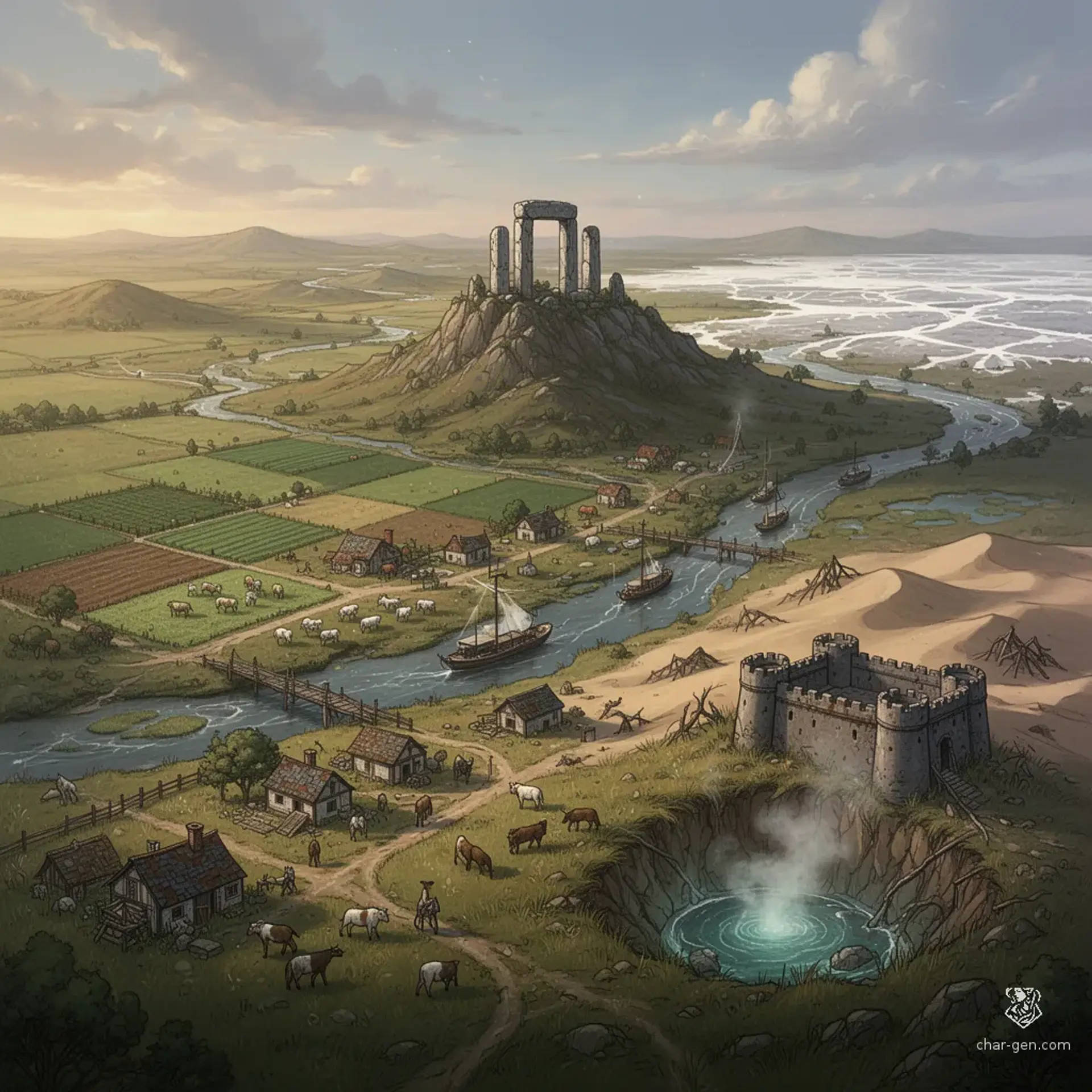
A broad frontier province of temperate plains stretching across a hundred to several hundred miles, the region is a patchwork of rivers, marshes, and rolling hills that support farms, herds, and busy river trade. Magic is common and practical, used for irrigation, weather mitigation, and livestock care, while market towns, waystations, and scattered homesteads form a developing network of trade and fragile alliances.
Field Observations

Main roads follow rivers but break into dirt tracks away from them.,Seasonal rains can turn lowlands into impassable marsh for days.,Winter snows make inland travel slow but leave frozen fords usable.

Cultures

Nomadic herders follow seasonal pastures across the plains.

Settled farming communities tend fields and villages along rivers.

River traders maintain a distinct mercantile culture around ports.

Frontier craftsmen mix practical trade skills with improvised magics.

Industries
Grain farming supplies local tables and wider markets.
Livestock herding produces meat, leather, and wool.
River trade moves goods and passengers between hubs.
Iron foraging supplies raw ore and simple tools.
Trade Goods
Bulk grain carried in barges and wagons.
Dried meat and cured hides traded regionally.
Iron nodules and simple ingots head to coastal markets.
Medicinal herbs and salves from marshlands.
Imports
Luxury cloth and spices arrive by long distance caravans.
Timber for building is imported from upland forests.
Trade Hubs
Market towns at major river crossings serve as trading centers.
Ferry ports and waystations act as collection points for caravans.

Geography

ClimateTemperate with warm summers, cold winters, and strong seasonal winds.
TerrainWide sweeping plains with rolling low hills and river valleys.
Biomes
Open grasslands dominated by tall prairie grasses.
Seasonal wetlands that become marsh in rainy months.
Scattered riparian woodlands along rivers and streams.
Dune edged flats where wind reshapes the soil.
Waterways
A shallow seasonal river that swells in spring and carries barges.
Several slow meandering tributaries that feed marshes and wells.
A chain of marsh channels that form a navigable wet route in summer.
Borders
Rocky foothills rise to the west and break the plain.
Boggy marshes stretch along the southeastern fringe.
Open steppe continues toward colder northern plateaus.

Demographics

Settled agrarians who farm grain and vegetables.
Semi nomadic herders who move flocks by season.
Riverfolk who operate boats, mills, and local trade.
Minor Groups
Reclusive marsh dwellers who harvest reeds and herbs.
Itinerant craftsmen and peddlers who travel between towns.
Languages
Common Tongue serves as the trade language.
Plains Dialect is spoken by many herders.
River Cant is used by boatmen and bargemen.
Old Runic survives among ritual specialists.

Economy

Status

Frontier modest wealth with wealthy merchants and many subsistence households.

Visual sheet

Turn The Great Northern Plains into a sheet

A high-res, share-ready sheet you can post or print.

Gallery

The Great Northern Plains Image

The Great Northern Plains Image

Settlements

Windford

Market townLarge

Major river market and ferry hub.

Red Hollow

Ranching villageMedium

Center of seasonal herding and wool trade.

Northwatch

Fortified waystationSmall

Defensive outpost and toll collection point.

Marshgate

Marsh villageSmall

Marshland trade and herb harvesting center.

Stoneford

River portMedium

Local iron processing and toolmaking hub.