
Best AI Worldbuilding Tools for D&D and TTRPGs in 2026
I tested the AI worldbuilding tools D&D GMs actually use in 2026. Real prices, co-author seat counts, and which ones keep your lore straight mid-campaign.
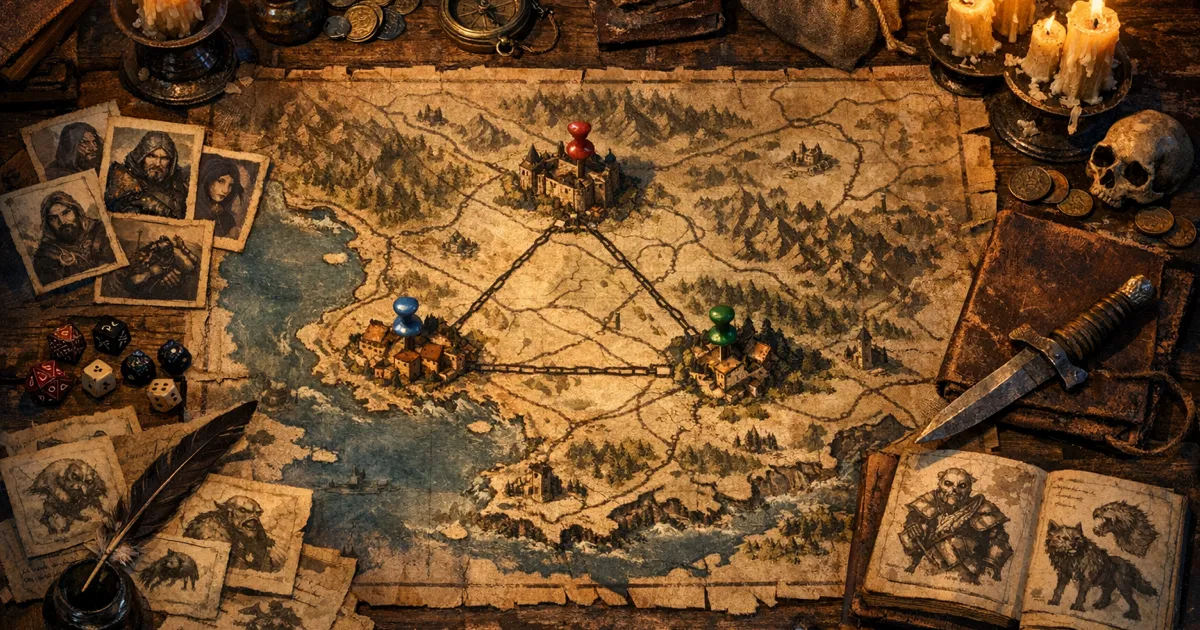
A setting usually goes soft in the same place, five tabs in and thirty minutes after you meant to stop prepping. The search phrase ai worldbuilding tools ttrpg looks a bit awkward, but it points at a real problem. You do not need another random village name toy. You need a way to build a region, give it factions, pin NPCs to it, and still remember why the bridge cult hates the salt guild two sessions later. That is the standard I used here.
I checked the tools that keep surfacing in current worldbuilding searches, then filtered them through one question: can I turn a rough campaign idea into something I can actually run this week? For me, that means clean region setup, searchable notes, linked entities, and enough AI help to speed things up without sanding every idea down into the same bland paragraph.
The shortlist ended up being less about pure prose quality and more about memory. Good worldbuilding tools do not just spit out lore. They help you keep hold of your own setting after players take a hard left turn at the table. That is where some tools earn their keep and others become very pretty clutter.
Updated 30 July 2026: I checked every price and free-tier limit in this post again and added a full cost breakdown table plus a short FAQ for the "which one is actually collaborative" and "which one is chat-based" questions I keep seeing in search.
Updated 29 August 2026: added a section on what "collaborative" actually costs per tool, with co-author seat counts and permission levels checked this month, plus a section on keeping lore consistent once play starts. Two new images.
Updated 21 September 2026: corrected the StormScape entry (see the note under the shortlist table) and added a section on using ChatGPT or Claude as a worldbuilding chat app with your own lore connected. One new image.
AI worldbuilding tools TTRPG GMs should shortlist first
| Tool | Best for | What I like | Where it annoys me |
|---|---|---|---|
| CharGen | playable worldbuilding tied to session prep | regions, entities, notes, art, and follow-up workflow stay connected | less wiki-like than dedicated lore encyclopaedia tools |
| World Anvil | giant lore bibles and public-facing setting docs | articles, maps, timelines, and setting structure are strong | it can feel like homework when you only need tonight's prep |
| Friends & Fables | AI-led play inside a custom setting | AI Game Master plus world tools is a clever mix | less useful if your real table already exists and you just need prep support |
| LitRPG Adventures | fast bursts of hooks, names, and setting fragments | loads of generator output when you need raw material quickly | you still need to organise the good bits somewhere else |
| Kanka | structured campaign notes with light overhead | characters, locations, organisations, calendars, and maps stay tidy | not strongly AI-first, which can be a plus or a minus depending on your mood |
| Summon Worlds | AI world generation with consistent internal lore | focuses on keeping faction, geography, and history coherent across the same setting | newer product, still building out its library of generator types |
| Jenova AI | session prep and campaign notes in one tool | good at turning rough notes into structured session summaries | less focused on visual world building and entity generation |
| Reality Forge | worldbuilding with AI memory across sessions | maintains a persistent world state you can query between sessions | smaller tool set than CharGen or World Anvil |
| StormScape | session memory for groups that play on Discord | records the session, transcribes it with speaker labels, and links NPCs, locations, factions and items in a campaign wiki | it captures and organises what happened at the table; it does not generate factions or faction logic for you |
Correction (21 September 2026): An earlier version of this table described StormScape as "collaborative world creation with faction AI", with "faction logic and inter-group tension built into the worldbuilding layer". That was wrong. StormScape's own feature list names session recording from Discord, automatic transcription with speaker labels, 20-minute interval summaries, a campaign wiki with @mentions for NPCs, locations, factions and items (GM notes stay private), a Discord audio bot, and AI reports after each session. It lists no faction AI. When I checked on 21 September 2026, stormscape.app did not load (it returned a Cloudflare 525 error), so this list comes from its most recent archived homepage, from January 2026. Check the live site before you sign up.
If you want my short answer early, CharGen is the best fit for most active D&D campaigns because it handles the annoying join between worldbuilding and actual play. World Anvil is better if your favourite part of GMing is building a huge setting bible. Friends & Fables is the oddball pick if you want the world to feed directly into AI-run adventures. LitRPG Adventures is great for idea volume. Kanka is the clean notebook option when you want less machine voice and more manual control.
What I actually need from a worldbuilding tool
I am not looking for infinite lore. I am looking for friction removal.
The jobs I care about are simple:
- build a region fast enough that I can still prep a session afterwards
- connect locations, factions, and named NPCs without rewriting the same notes
- keep campaign memory searchable when players revive an old plotline
- create enough visual support that the setting feels real, not just filed away
- avoid spending my whole evening curating AI sludge
One concrete example. Say I want a coast where salt tariffs are rising, ferries keep vanishing at dusk, and a ruined toll bridge has become sacred ground to the wrong sort of pilgrims. That idea should give me a region, three settlements, at least one faction split, and a short list of people who care. If a tool makes me rebuild those links by hand, it is not saving me time. It is moving the mess into a shinier box.
That is why search intent for this topic feels more practical than people assume. Most GMs looking for an ai world builder dnd workflow are not trying to write a setting book for publication. They are trying to stop improvising entire towns from scraps every Thursday night.
1. CharGen is the strongest pick for live campaign worldbuilding
CharGen wins this list for me because it does the boring but important part well. It keeps worldbuilding attached to the rest of campaign prep.
The flow I like starts in Region Generator. The page is blunt about what it is for: geography, settlements, factions, and adventure hooks. That is exactly the right scope. I do not want a thousand optional systems before I have even decided where the river goes. I want one strong regional frame that can support actual sessions.
On the public page, the entry point is literally Generate Region, which is refreshingly direct. From there the tool pushes towards the details that matter at the table, not just decorative lore. The related tool links are also sensible. Region to settlement, region to NPC, region to faction, then battlemap or session summary if the idea sticks. That chain makes sense because it matches how a campaign actually expands.
Here is the sort of seed I would use:
Storm-worn border coast, salt guild squeezing ferry towns, one collapsed saint's bridge treated as holy ground, smugglers working with a shrine faction, local ruler too broke to intervene.
That is enough. Geography, pressure, conflict, and room for players to interfere.
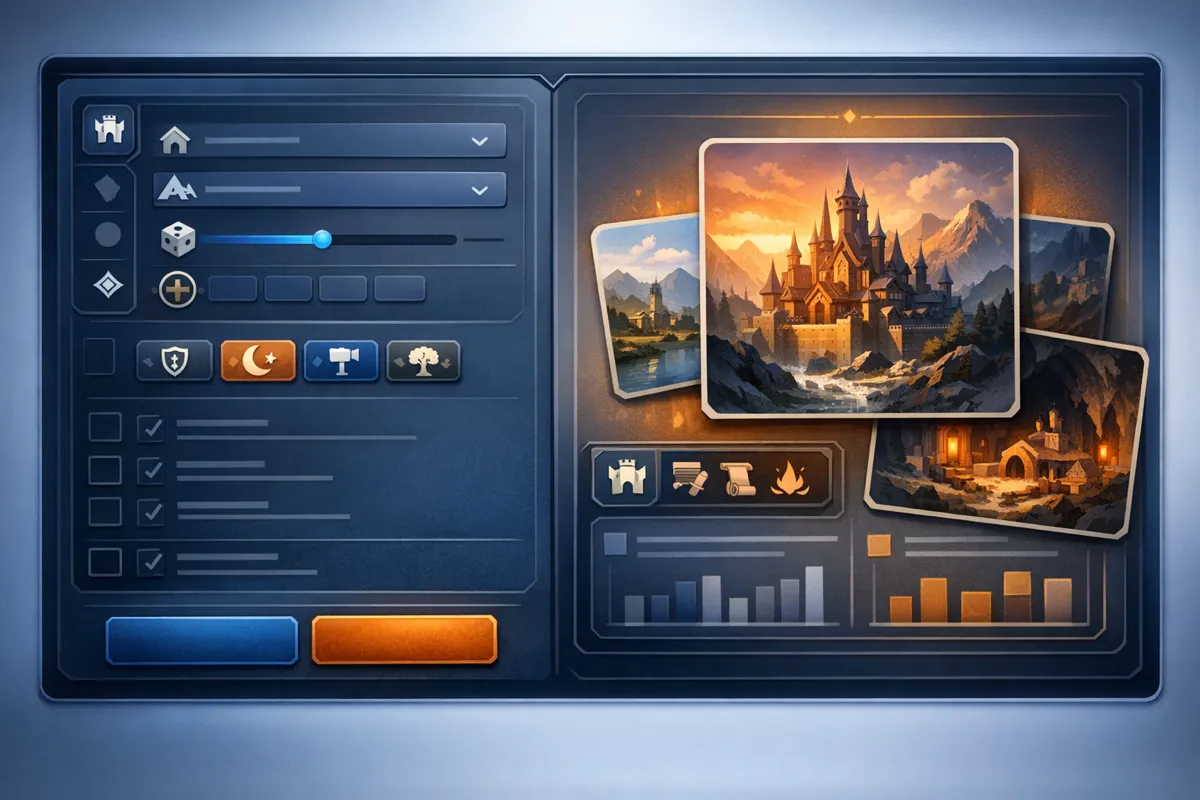
What makes CharGen harder to replace is what happens next. Once I have the region concept, I move into World Codex and keep the setting in a workspace that behaves like campaign infrastructure rather than a pile of floating text. The UI labels tell you what it is built for. There is All Entities in the sidebar, a Search entities... field when your campaign grows teeth, and a Generate New Entity flow that breaks into Choose Generator and Configure & Generate. That sounds mundane, but the mundane part is why it works.
In practice, I can create a collection for Mire Coast Arc, generate a Region, then add a Settlement, NPC, Faction, or Building without leaving the same general workspace pattern. I do not need a second app just to remember who runs the customs house or why the marsh temple hates the guild hall.
The RPG Workshop is useful when I want faster cross-entity ideation. It lets me bounce between generator types like NPC, Faction, Settlement, Region, Poetry & Lore, and Building without pretending that those things live in separate universes. That matters when a world idea changes shape mid-prep. One rumour becomes a faction, the faction needs a hideout, the hideout suddenly wants a named quartermaster, and now you are doing real prep rather than keeping neat categories for their own sake.
This is also where CharGen exploits a gap most competitors still leave open. Plenty of worldbuilding tools help you write lore. Fewer help you carry that lore into art, encounter prep, tokens, or recap notes without duplicating effort. CharGen does not make every other tool obsolete, but it does reduce context loss.
I have already found the best companion reads inside this same blog stack:
- DnD Region Generator Workflow: Build 3 Settlements Fast
- Quick NPC Creation for DMs in World Codex: My Workflow
- Automated RPG Session Summary - How I Stopped Taking Notes in D&D
Honest limitation, though: if your favourite hobby is writing a huge setting wiki for its own sake, CharGen feels more practical than ceremonial. I mean that as a compliment, but it is still a distinction. It is built for playable momentum, not for spending a whole Sunday categorising the migration routes of three forgotten dynasties.
On cost, since that is usually the real question: the free tier logs you 10 gold a day with no account required for the core generators, so a Region, Settlement, NPC or Faction pull costs nothing to try (char-gen.com/pricing, checked July 2026). Plus sits at £8.00 a month for 900 gold, Elite at £16.00 a month adds 2,000 gold plus 5,000 free Flux.Dev images, and Ultimate is £32.00 a month for 4,500 gold plus 15,000 free Flux.Dev images and commercial usage rights. There are 160-plus AI models to pick from across those tiers, which is the widest model range of anything on this list.
2. World Anvil is still the heavyweight for lore obsessives
When I want to see what a fully expanded setting management tool looks like, World Anvil is still the obvious benchmark. Articles, maps, timelines, family links, setting primers, and all the other lore scaffolding are there. If your goal is a world bible you might eventually share with players or publish in some form, it earns the attention it gets.
The upside is depth. World Anvil feels like a proper archive for a setting that has already outgrown rough notes. You can give places and bloodlines real shape, then keep drilling down without the whole thing collapsing into an unsearchable heap.
The downside is pace. On a weeknight, depth can become drag. I do not always want a cathedral. Sometimes I need a usable dock district and one cult schism before the kettle goes cold. World Anvil is good when the setting itself is the project. It is less charming when the project is getting Friday's session ready.
So yes, I rate it highly, but I would choose it for a different temperament. If you enjoy curation nearly as much as play, it makes sense. If you mainly want your notes to stop attacking you, CharGen is the more forgiving pick.
Worth knowing before you commit an evening to it: the free Freeman plan caps out at 2 worlds and 42 published articles, with a 100MB total media allowance and a 10MB limit per image. The paid Guild tier starts from around $5 a month and is really where privacy controls and a proper storage bump (roughly 1GB) kick in. For a lore-heavy campaign that outgrows the free cap fast, budget for Guild from day one rather than hitting the article limit mid-setup.
3. Friends & Fables is the most interesting hybrid
Friends & Fables caught my eye because it does not stop at worldbuilding. It pairs world tools with an AI Game Master and playable adventures. That is a clever angle. Instead of saying, "here is your lore, good luck", it tries to keep the setting active in play.
I can see the appeal straight away. If you are experimenting with solo sessions, duet campaigns, or AI-assisted one-shots, having world creation and play logic tied together is genuinely useful. It also makes sense for people who like building a world, then stress-testing it immediately through scenarios rather than through note maintenance.
My reservation is scope control. If you already run a normal table and your pain point is prep, an all-in-one AI play environment can be more system than you need. It is interesting tech, but it may not solve the everyday "I need three places, two rival groups, and one clue chain" problem as neatly as a tool aimed at direct campaign prep.
Still, it earns a place on this list because it is trying something more ambitious than "AI writes you a kingdom history". I respect that.
Friends & Fables runs a genuinely usable free tier at $0 a month, giving 25 turns a day, unlimited campaign slots, and three-player groups, with the AI Game Master itself named Franz. The catch is the turn cap. Once you want unlimited turns and a fourth player at the table, the Starter plan is $19.95 a month, and Legend at $39.95 a month is what gets you six players and the highest character customisation cap (fables.gg/pricing, checked July 2026).
Try the Free Region Generator4. LitRPG Adventures is good when you need idea volume now
LitRPG Adventures is the kind of tool I reach for when I want raw material in a hurry. Names, hooks, short concepts, bits of lore, faction prompts, setting fragments, all that generator-heavy stuff lands quickly.
That speed has real value. Some nights the problem is not organisation. The problem is that your brain is empty and the session is still happening. In those moments, a tool that can kick loose twenty decent ideas is useful, even if only three survive contact with the campaign.
The trade-off is cohesion. Fast fragments are not the same thing as a world model. LitRPG Adventures helps me fill gaps, but it does not become the source of truth for the campaign unless I move the good parts somewhere more stable afterwards.
So I think of it as a pressure-release valve. Excellent for jump-starting a region name set, a corrupt guild concept, or a local superstition. Less convincing as the place where I want all long-term campaign memory to live.
It runs on a credit system rather than a flat subscription. Individual generators cost between 0 and 25 credits each, and the Bronze Membership at $5 a month gives you 700 credits plus full workshop access. A one-time $6 Starter Pack buys 600 credits for a month if you just want to try it without committing, and the Premium plan at $9 a month is the unlimited option for custom adventures and worlds.
5. Kanka is the quiet pick when you want less AI noise
Kanka deserves a place here even though it is not the loudest AI-first option. In a funny way, that is exactly why I like it.
Kanka is good at staying out of the way. Characters, locations, organisations, calendars, and maps can sit in a clean structure without the tool constantly trying to impress you. If you have ever had an AI paragraph oversell a simple village bakery like it was the hinge point of history, you will understand the appeal.
There are campaigns where I would actively prefer Kanka over a flashier tool. If I already know the world voice I want, and the bigger problem is keeping my notes tidy, Kanka makes a lot of sense. It asks more of you as the writer, but sometimes that is the healthy trade.
I would not choose it first if my goal was rapid ai campaign world generator style output. I would choose it when I want the storage and relationship layer without a lot of extra prose arriving uninvited.
If you want the full breakdown against its closest paid rival, I put Kanka and LegendKeeper side by side against CharGen, free unlimited wiki versus polished nested maps and a whiteboard.
Kanka's free Kobold plan genuinely has no campaign or entry limit, which is rare on this list, and needs no card to start. If you want a premium campaign with more storage, Owlbear is $4.99 a month for one premium campaign, Wyvern is $9.99 a month for three, and Elemental is $24.99 a month for seven, with per-tier file upload caps running from 10MiB up to 100MiB (kanka.io/pricing, checked July 2026).
Which tool I would use for specific TTRPG jobs
| If your real problem is... | I would start with... | Why |
|---|---|---|
| building a playable region tonight | CharGen Region Generator | fastest route from place idea to linked session material |
| keeping a campaign codex tidy over months | CharGen World Codex or Kanka | one is stronger on AI-assisted generation, the other on clean note structure |
| writing a giant setting bible | World Anvil | still the strongest lore archive feel |
| AI-led play inside the world itself | Friends & Fables | worldbuilding and AI Game Master belong to the same loop |
| generating lots of hooks and fragments fast | LitRPG Adventures | quick idea volume when prep energy is low |
That table also explains why CharGen finishes first for me overall. It covers the widest useful band between idea generation and actual table prep. Most of the other tools are sharper in one lane, but narrower across the whole week.
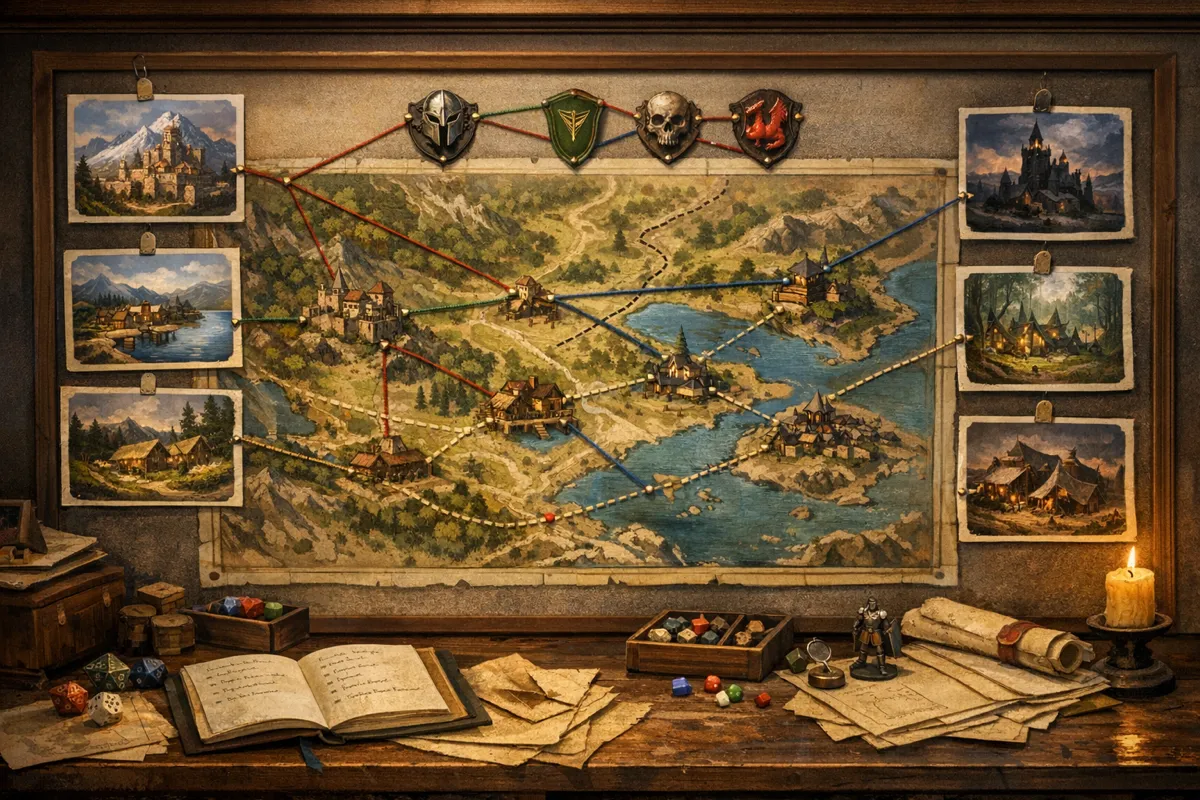
My honest ranking after checking them against real prep
- CharGen
- World Anvil
- Friends & Fables
- LitRPG Adventures
- Kanka
That order is not about which tool can write the fanciest paragraph about an ancient empire. It is about what helps me run games with less waste.
CharGen stays on top because it handles the overlap between ttrpg world builder, session prep, and campaign continuity better than the rest. A region can lead to entities, those entities can stay organised in World Codex, and the same broader platform still has room for NPC art, encounters, notes, and other practical work. That is a stronger proposition than a lore tool that stops at lore.
World Anvil comes second because it is still excellent at scale. If I were building a setting to document for years, it would be hard to ignore. Friends & Fables lands third because the AI GM angle is genuinely interesting and more useful than some people will expect. LitRPG Adventures stays valuable as a hook engine. Kanka rounds the list out because structure is underrated, and sometimes a clean system beats another bright burst of generated text.
The CharGen workflow I would actually recommend
If you want a fast test instead of another comparison tab, do this tonight:
- Open Region Generator and build one pressured region, not a whole continent.
- Move the idea into World Codex and create one collection for that arc.
- Use
Generate New Entityto add one settlement, one faction, and two named NPCs. - Search the collection with
Search entities...and check whether the campaign still makes sense after ten minutes away from it. - If it does, you have found a workflow worth keeping.
That is also where CharGen signup makes the most sense as a call to action. Not because you need another tool account for the collection, but because this is one of the few cases where a quick test tells you more than ten more review posts will.
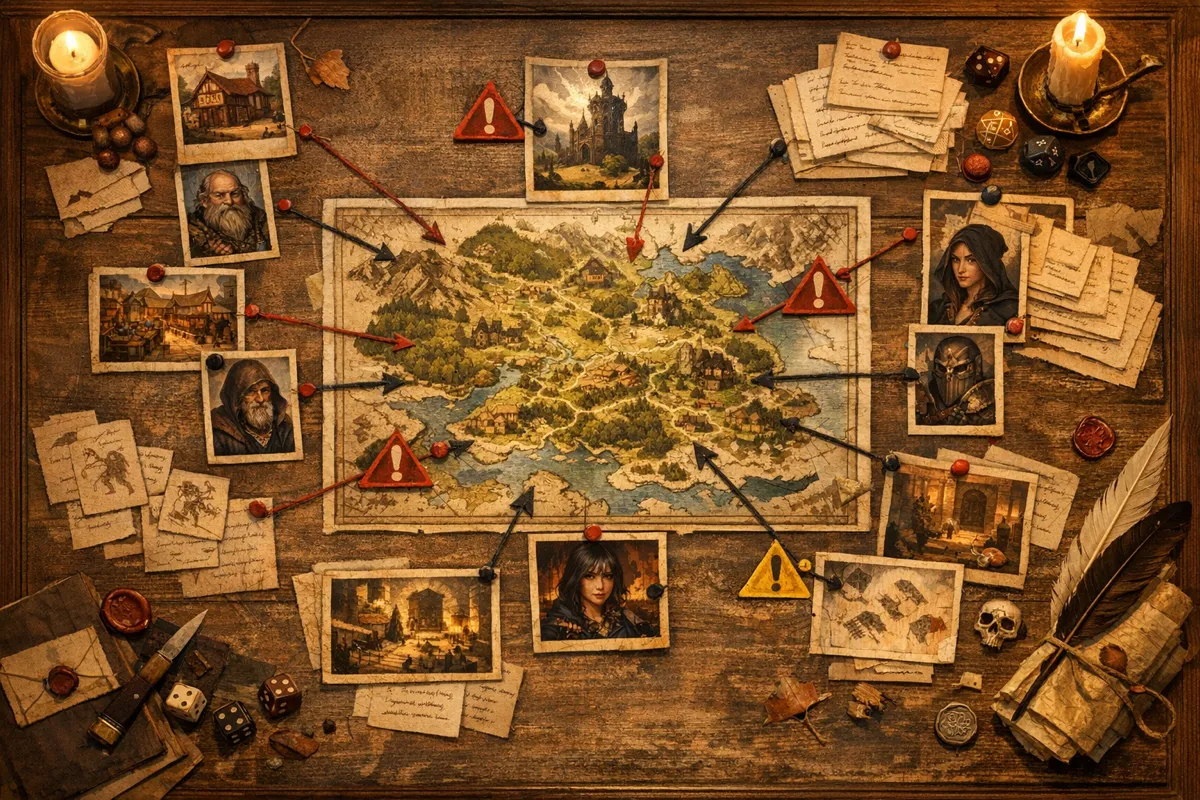
What changed in 2026: AI memory and session consistency
The biggest shift in worldbuilding tools over the past year is not generation quality. It is persistence.
Early AI worldbuilding tools were good at producing a region, a faction description, or a set of NPC hooks. What they could not do was remember what you had already made. Each session you came back to a blank context, and the tool had no idea that the Mire Coast existed, that the salt guild was collapsing, or that the player characters had already burned the bridge cult's headquarters three weeks ago.
That is changing. The 2026 generation of tools, including CharGen's World Codex and newer entrants like Reality Forge, are building what I would call an entity graph: a searchable, persistent record of every person, place, faction, and event in your campaign. When you generate a new NPC or settlement, the tool can reference what already exists instead of inventing from scratch.
The practical difference at the table is real. If I ask CharGen to generate a settlement for the Mire Coast, the World Codex knows the Mire Coast arc exists because I created it as a collection. New entities can slot into a world that already has shape. I am not starting from zero every session.
Reality Forge is taking this further by making the world state queryable. You can ask, "who are the three most politically powerful people in the Salt Dock district?" and get an answer grounded in entities you have already built, rather than a freshly hallucinated answer with no continuity. Reality Forge (reality-forge.com) builds this around article writing, maps, and RPG campaign management in one AI-assisted workspace. StormScape takes a different route into the same problem. It does not model your world state or your factions; it searches what was actually said at the table. It records your actual Discord session, then generates a self-building wiki, player journals written in each character's voice, and an in-world "Chronicle" newspaper from what happened at the table, deleting the raw audio within seven days. Its free Apprentice plan covers 2 campaigns and one recorded session a month up to 6 hours, and the paid Adventurer tier at $9.99 a month steps that up to 5 campaigns and 3 sessions a month (stormscape.app, checked July 2026).
Collaboration is the other 2026 shift worth naming. Summon Worlds is built specifically for building a shared fantasy knowledge base with other people rather than solo, free to start on both iOS and Android, with characters, locations, and lore all living in one connected world multiple contributors can add to. That is a genuinely different shape of tool to CharGen's World Codex, which is built around one GM's account rather than live multiplayer editing, so pick based on whether "collaborative" means your whole table co-writing lore together or one person prepping between sessions.
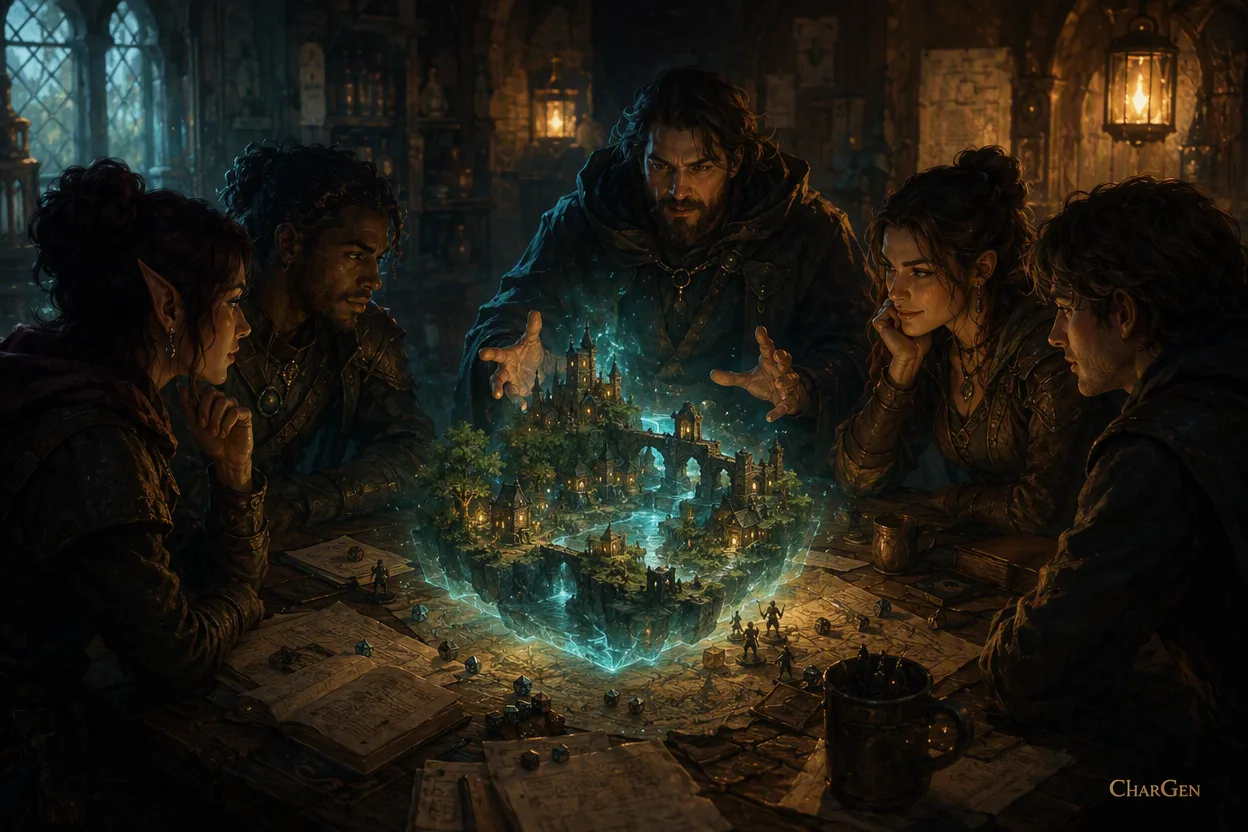
For DMs running long campaigns, this is the capability gap that matters most in 2026. A tool that can generate good lore is useful. A tool that can generate lore and remember what you built last month is genuinely valuable.
The RPG Workshop is worth mentioning here too. It lets you move across generator types (Region, NPC, Faction, Settlement) from a single workspace, which means your creative session can follow the natural shape of a campaign idea rather than jumping between disconnected tools.
Best AI app for collaborative worldbuilding: check the seat count first
"Collaborative" covers three different products. I worked that out after paying for the wrong one.
Shape one is co-authoring. Two or more people write the same setting. Everybody edits. You need permissions, because a player should not read the villain's file.
Shape two is player-facing publishing. One person writes. The rest read. Beta readers and west marches tables want this.
Shape three is shared capture. The tool records your session. It writes the lore up afterwards. Nobody edits by hand.
Most roundups score these as one feature. The tools price them very differently, so the seat count is the number to check before you subscribe.
World Anvil is the clearest case. Co-authoring there is a paid feature. The Master tier at $6.50 a month gives you 0 co-authors. Grandmaster at $12 a month gives you 4 co-author seats and 10 subscriber seats. Sage raises that to 20 co-authors and 1,000 subscriber seats (worldanvil.com pricing and the Guild feature list, checked August 2026). So the honest answer to "can I build a world with my friends on World Anvil" is yes, from $12 a month.
The permission model is the part worth paying for. World Anvil splits co-authors into four levels. Writers draft, but cannot edit published articles or view private content. Advanced Writers keep editing after publication. Edits can create and change anything, private content included. Co-Owners also get the configuration page and the CSS (worldanvil.com co-author documentation, checked August 2026). That matters when a player is also a co-author.
Kanka takes the opposite position. Collaboration costs nothing. You invite people to a campaign and assign roles. Every campaign starts with three: Admin, Player and Public. Admins see and do everything. Player is a catch-all that holds no permissions until you grant them. Public controls what non-members see on a public campaign. You can add roles, and one person can sit in several (Kanka permissions documentation, checked August 2026).
Kanka also does per-entry permissions. Each entry has its own Permissions tab. You can let one named person update one location and nothing else. That is finer control than most paid tools give you, on a free plan.
| Tool | Can other people edit? | Permission control | Cost before a second person can edit |
|---|---|---|---|
| Kanka | yes, invite to the campaign | roles plus per-entry permissions | £0 on the free Kobold plan |
| World Anvil | yes, co-author seats | four co-author levels | $12 a month, Grandmaster, 4 seats |
| CharGen | no live co-editing, one GM account | share a collection, not seat-based | not applicable |
| StormScape | capture only, not editing | Discord-based | free Apprentice, $9.99 Adventurer |
| Summon Worlds | yes, shared knowledge base | not published on-site | free to start |
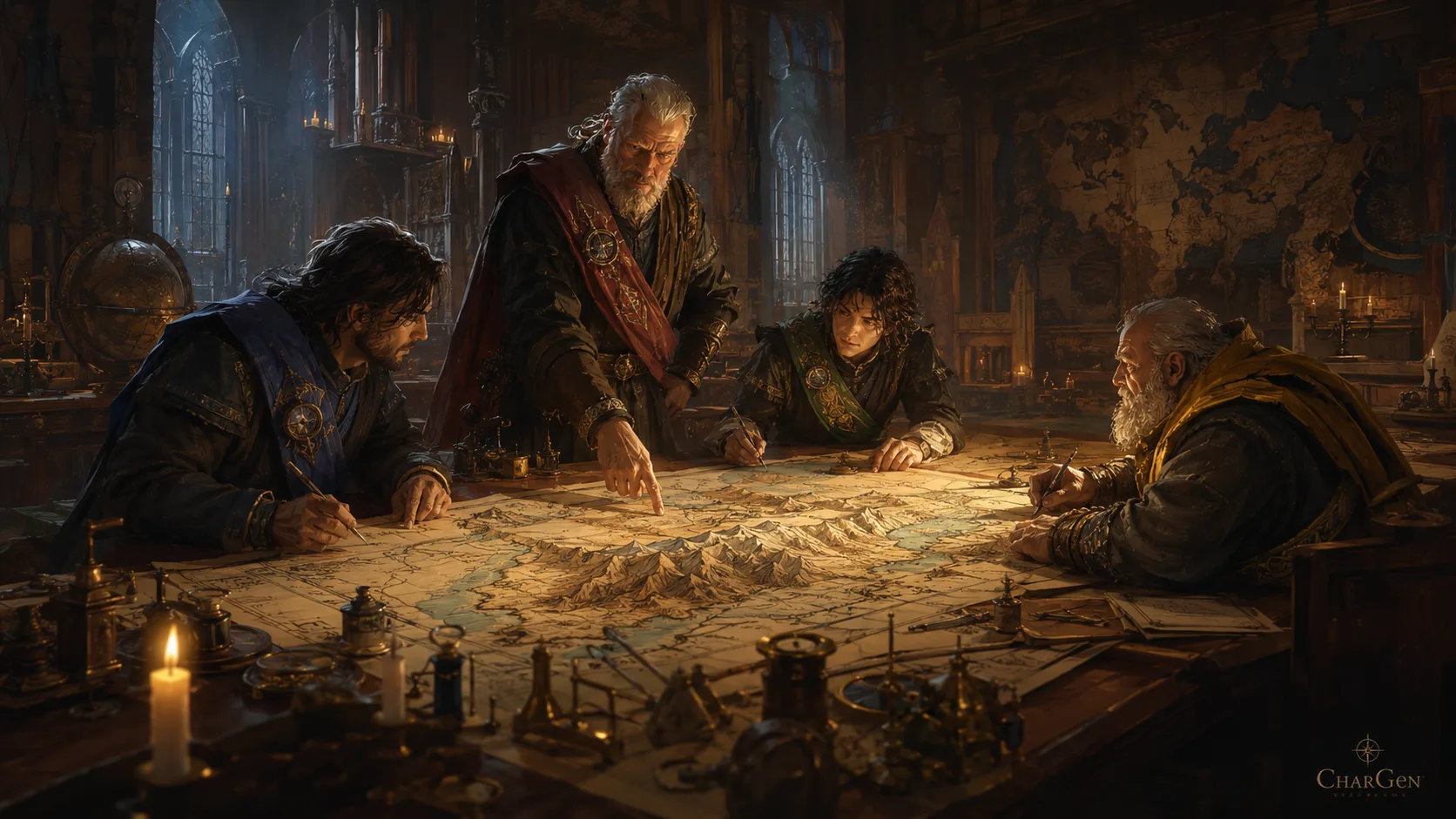
My picks by shape. If your table co-writes lore, Kanka is the cheapest honest answer, and the per-entry permissions are better than the price suggests. If you want a public setting bible with beta readers, World Anvil at Grandmaster is worth the $12. If one person preps and everybody else just turns up to play, you do not need a collaborative tool at all.
That last case is most D&D tables, and it is the one I build for. CharGen's World Codex is built around a single GM account. There is no live multiplayer editing, and I would rather say that plainly than stretch the word "collaborative". You share the output, not the edit rights. If your group genuinely co-writes, take Kanka and use CharGen alongside it for the generation and the art.
Worth reading next to this: I keep a separate field report on World Anvil alternatives, re-tested in August 2026, which goes deeper on the migration question than this roundup does.
Which AI chat app works for worldbuilding?
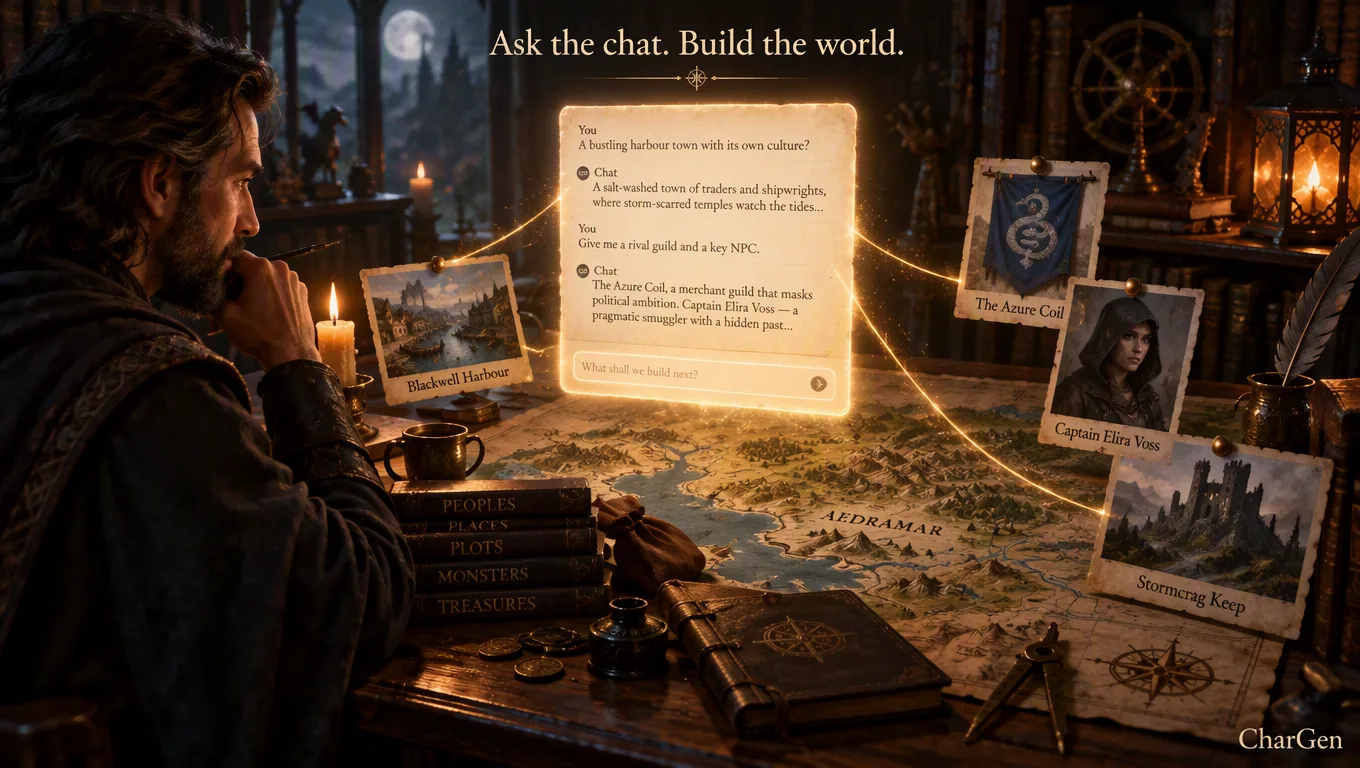
A lot of people search for an AI chat app, not a worldbuilding tool. They already use ChatGPT or Claude. The chat is good at ideas. The problem is memory. A normal chat does not know the harbour town you made last month, so each new answer can contradict your canon.
There are two fixes. The first is a chat-first product built for play, such as Friends & Fables (see the FAQ below). The second is to keep the chat you already use and connect it to your own world data.
The second route uses MCP (Model Context Protocol). Anthropic introduced this open standard in November 2024. CharGen runs an MCP server at https://api.char-gen.com/mcp. You paste that address into the connector settings in Claude or ChatGPT, log in with your CharGen account, and approve the scopes. The server has 48 tools: 25 read, 21 write and 2 generate (char-gen.com/mcp, checked 21 September 2026).
For worldbuilding, four tools do most of the work:
chargen_search_campaignsearches your entities, quests, plot threads, recaps and transcripts for lore you already wrote.chargen_get_relationship_graphreturns who is tied to whom, so a new faction slots into rivalries that already exist.chargen_generate_entitywrites a new NPC, settlement, faction, region or quest, with a free portrait.chargen_link_generationattaches the new entity to your campaign.
A typical prompt from my own prep: "The salt guild is collapsing. Read my factions and give me the group that fills the gap." The assistant reads the graph first and writes second. The new faction then sits in the same campaign as the rest of my lore, so it is still there next week.
The costs are simple. Reading your campaign is free on any CharGen account. Entity generation is free for subscribers, and the write tools need a paid CharGen tier. Claude's custom connectors need a paid claude.ai plan. ChatGPT supports custom connectors on Plus, Pro, Business, Enterprise and Edu. One setting to know: generated entries are public by default, and you can change that in CharGen. The full setup is in my guide to using ChatGPT as a D&D campaign manager.
The honest limit: the chat is still one person's tool. It adds no co-author seats. If your table co-writes lore, the seat-count section above still applies.
Keeping lore straight once roleplay starts
Worldbuilding does not fail on the page. It fails three sessions later, when a player asks who runs the docks and you give a different name than last time.
This is the job behind searches about worldbuilding and lore in roleplay. It is a recall problem, not a writing problem. Generation quality does not fix it. I have run campaigns with beautiful prose and no idea what I had already said out loud.
Four habits fixed it for me.
Write the contradiction-prone facts down first. Names, titles, who owes whom money, who is dead. Not descriptions. Descriptions you can improvise. A name you gave a player in session four is a fact, and facts break when you guess.
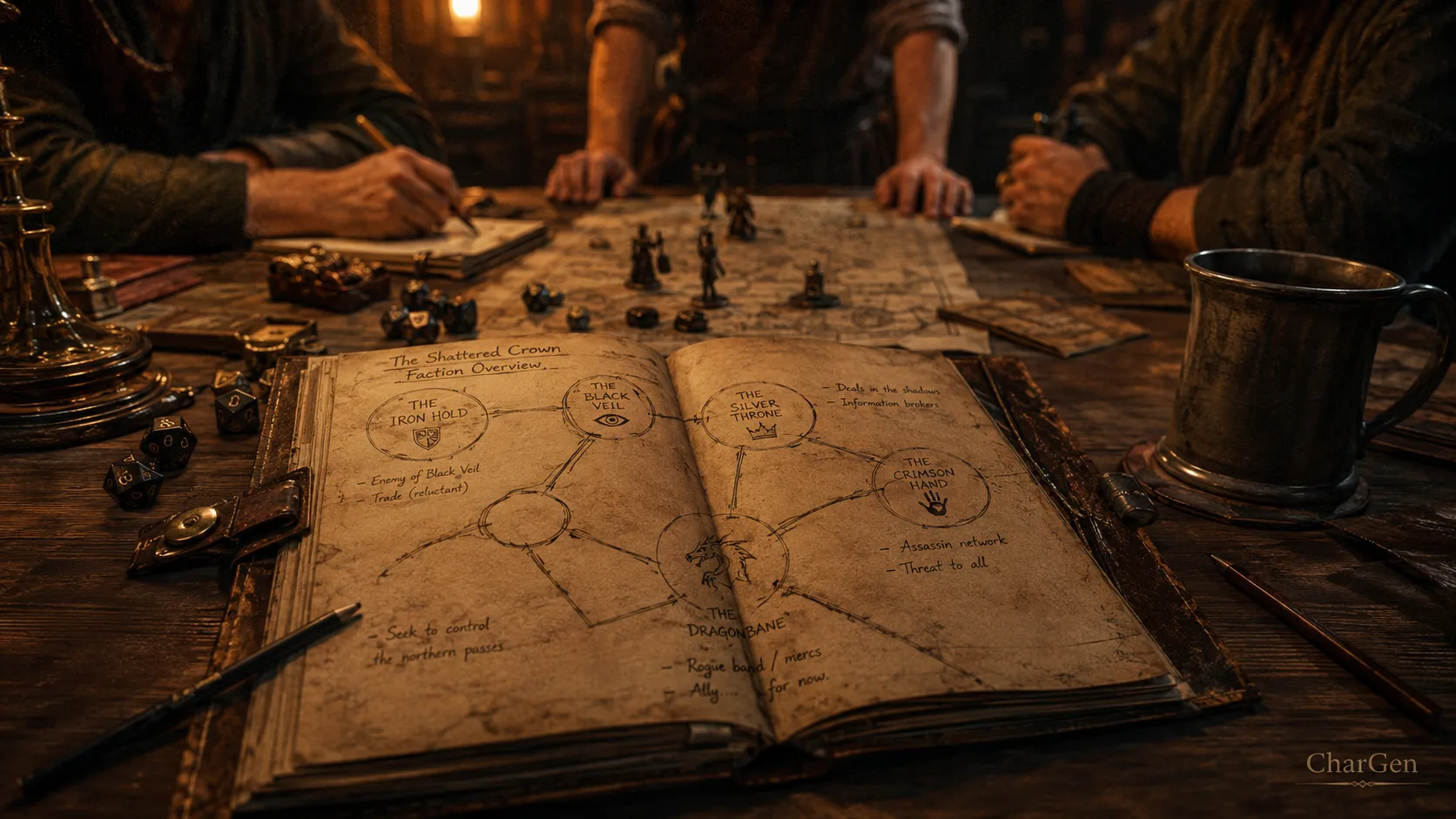
Keep one file per faction, not one per session. Session notes are ordered by time. Questions at the table are never ordered by time. A player asks about the salt guild, so the salt guild needs its own entry with everything on it.
Record the lore your players invent. Players make canon constantly. They name their contact, decide their character's home village, invent a family rivalry. Half my best material came in sideways like that. If it only lives in your memory, it is gone by the next session.
Check the file before the session, not during. Two minutes reading beats thirty seconds of silence at the table.
A tool helps when it does the recall for you. That is why the entity graph matters more than the prose. When I generate a dungeon or a settlement for an arc that already exists, the point is that it lands inside a world with shape, not that the description reads well.
Where AI still gets this wrong: it will happily invent a consistent-sounding answer for something you never wrote. That is worse than a blank, because it sounds right. I only trust a tool's answer here when I can click through to the entity it came from. If it cannot show me the source, I treat it as a suggestion and write the real answer myself.
What these AI worldbuilding tools actually cost in 2026
Price is the thing most worldbuilding roundups leave vague, so here is what each tool on this list actually charges, checked in July 2026.
| Tool | Free tier | Cheapest paid tier | What paid adds |
|---|---|---|---|
| CharGen | 10 gold/day, no account needed for generators | Plus, £8.00/month (900 gold) | premium models, batch portraits, 160+ AI models total |
| World Anvil | Freeman: 2 worlds, 42 articles, 100MB storage | Guild, from $5/month | privacy controls, ~1GB storage |
| Kanka | Kobold: unlimited campaigns and entries | Owlbear, $4.99/month | 1 premium campaign, larger uploads |
| Friends & Fables | $0/month: 25 turns/day, 3-player campaigns | Starter, $19.95/month | unlimited turns, 4-player groups |
| LitRPG Adventures | limited stories, credit system | Bronze, $5/month (700 credits) | full workshop tool access |
| StormScape | Apprentice: 2 campaigns, 1 session/month | Adventurer, $9.99/month | 5 campaigns, 3 sessions/month |
| Summon Worlds | free to start, solo or collaborative | not published on-site | not published on-site |
The pattern that jumps out: every tool on this list meters something, whether that is turns, credits, campaigns, or storage. None of them are unlimited-and-free forever once you go past a light hobby pace. If your table wants a linked workflow from region to settlement to session prep without hitting a hard wall, start with the Region Generator and the RPG Workshop, both usable before you create an account, and only add a paid tier once you know which limit you actually bump into first.
FAQ
What is the best AI worldbuilding tool for D&D right now?
For playable weekly prep, I would pick CharGen. It is the best balance I found between idea generation, entity organisation, and campaign follow-through.
Which tool is best if I want a public setting wiki?
World Anvil. It is better suited to deep lore presentation, timelines, and article-heavy world documentation.
Can I use CharGen for worldbuilding and session notes together?
Yes. That is one of the main reasons it ranks first here. The worldbuilding side connects more naturally to the rest of prep than most competitor tools do.
What if I only need prompts and hooks, not a whole codex?
LitRPG Adventures is a good place to start if your brain mainly needs a shove. I just would not leave the final campaign memory there.
Is an AI tool even necessary if I already have a notes app?
Not always. If your notes are tidy and your world voice is stable, Kanka or even a plain notes stack may be enough. AI helps most when speed and recall are the pain points.
Frequently Asked Questions
What are the best AI worldbuilding tools for D&D in 2026?
CharGen, World Anvil, Friends & Fables, Kanka, Summon Worlds, and Reality Forge are the strongest options in 2026. The best choice depends on whether you prioritise active campaign prep (CharGen), lore encyclopaedias (World Anvil), or AI-run play (Friends & Fables).
Can AI worldbuilding tools remember what happened in previous sessions?
Yes, this is the defining shift in 2026. Tools like CharGen's World Codex and newer entries like Reality Forge maintain a searchable entity graph that persists between sessions. You can query what the blacksmith's name was three campaigns ago without digging through notes.
Are AI worldbuilding tools free?
Most offer a free tier with some limits. CharGen is free to start with no account required for basic generation. World Anvil has a free tier. Friends & Fables and LitRPG Adventures have paid plans. Kanka is free for most features.
What is the best free AI worldbuilding tool for D&D?
CharGen is the most feature-complete free option for active campaigns, with free generation, no account required, and the World Codex accessible without payment. For pure lore writing, World Anvil's free tier is strong.
Do I need an account to use AI worldbuilding tools?
CharGen's generators (region, NPC, settlement, faction) work without an account. Saving to the World Codex requires a free account. Most other tools require a free account to access generation features.
What's the best AI for D&D world building?
For live campaign prep, CharGen. It links Region Generator, World Codex and RPG Workshop into one workspace, the core generators work with no account, and the free tier resets 10 gold a day (char-gen.com/pricing, checked July 2026). If you only need faster names and hooks rather than a linked campaign memory, LitRPG Adventures is the quicker but shallower option.
What's the best AI app for collaborative worldbuilding?
Summon Worlds is built specifically for that: a free-to-start iOS and Android app where you build a shared fantasy knowledge base solo or with other contributors in the same connected world (summonworlds.com, checked July 2026). CharGen's World Codex handles the collaborative side differently, a collection shared through one account rather than live multiplayer editing, which suits a GM prepping between sessions more than a group co-writing lore in real time.
What's the best AI chat app for fantasy worldbuilding?
Friends & Fables is the clearest fit if you want worldbuilding through conversation. Its AI Game Master, named Franz, narrates scenes and reacts in natural language, with a free tier at $0 a month covering 25 turns a day and three-player campaigns, and a Starter plan at $19.95 a month removing the turn cap (fables.gg/pricing, checked July 2026). CharGen and World Anvil are structured entity and article tools rather than chat interfaces, so if chat-first is the actual requirement, Friends & Fables is the one built for it. If you would rather keep using ChatGPT or Claude, you can connect either one to your CharGen campaign over MCP, so the chat reads your existing factions and NPCs before it writes anything new.
How much does it cost to world-build with my friends?
It depends entirely on the tool, and the gap is wide. Kanka is free: you invite people to a campaign and assign roles on the free Kobold plan. World Anvil charges for it, because the Master tier at $6.50 a month includes 0 co-author seats and you need Grandmaster at $12 a month for 4 seats (both checked August 2026). Check the seat count before you subscribe, not after.
Which worldbuilding tool has the best permission controls?
Kanka, and it is free. Every campaign has Admin, Player and Public roles, you can add more, and each individual entry has its own Permissions tab so one person can edit one location and nothing else. World Anvil's four co-author levels (Writer, Advanced Writer, Edits, Co-Owner) are close behind and better documented, but they start at the $12 a month Grandmaster tier.
How do I stop my campaign lore contradicting itself?
Write down the facts that break, which are names, titles, debts and deaths, and skip the descriptions you can improvise. Keep one file per faction rather than one per session, because questions at the table never arrive in date order. Record the canon your players invent. Then read the file before the session rather than during it.
Image credits
- Fallback used for this post: existing CharGen-generated and CharGen UI asset images already in the repository were reused for this article after WaveSpeed Google Nano Banana 2 image requests were blocked by content review during this run on 15 April 2026.
If you only test one tool from this list this week, make it the one that leaves you with cleaner notes the next morning. That is usually the difference between worldbuilding you admire and worldbuilding you can actually run.
Start Worldbuilding Free