
DnD Horror One-Shot Prep with Ravenloft AI Tools
I use CharGen to build a dnd horror one-shot with Ravenloft-style NPCs, monsters, dungeon pacing, and battlemaps in under an hour.
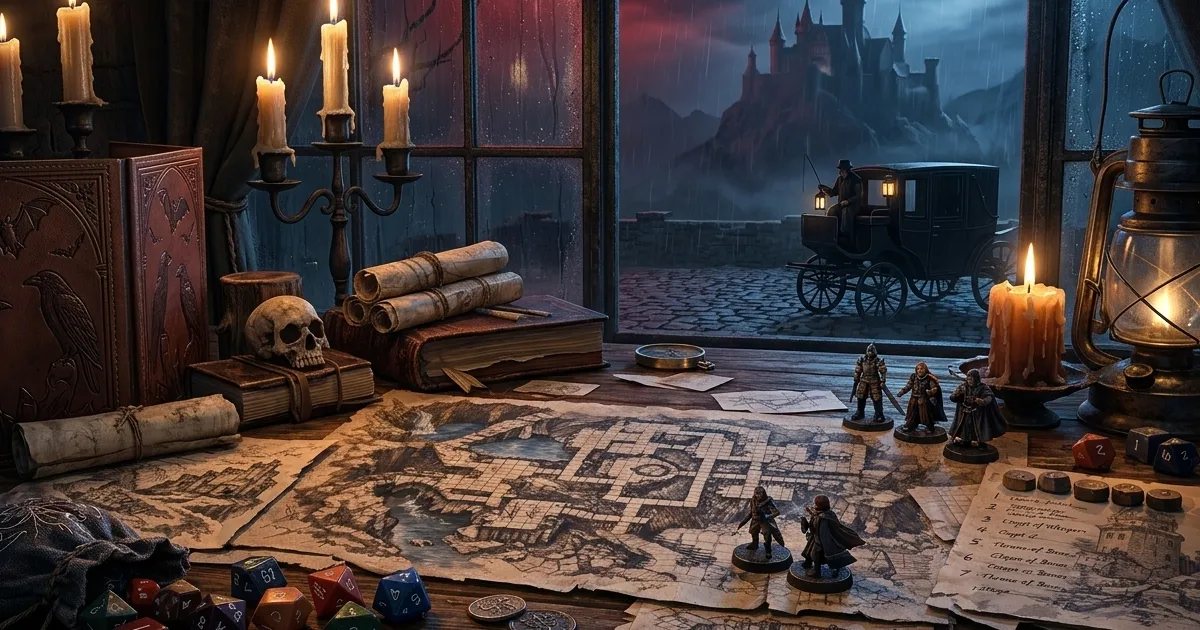
Half an hour before a session, the weak point in a dnd horror one-shot is almost never the stat block. It is tone. I can fix a loose armour class in ten seconds. I cannot fix a horror game that feels like a normal dungeon crawl with extra candles. That is why my prep for Ravenloft-style games starts with mood, then moves to faces, then room pressure, and only then lands on mechanics. CharGen is useful here because it lets me build the cast, the monster, the dungeon frame, and the battlemap in one run instead of scattering those jobs across six tabs and a notes file I will absolutely forget to reopen.
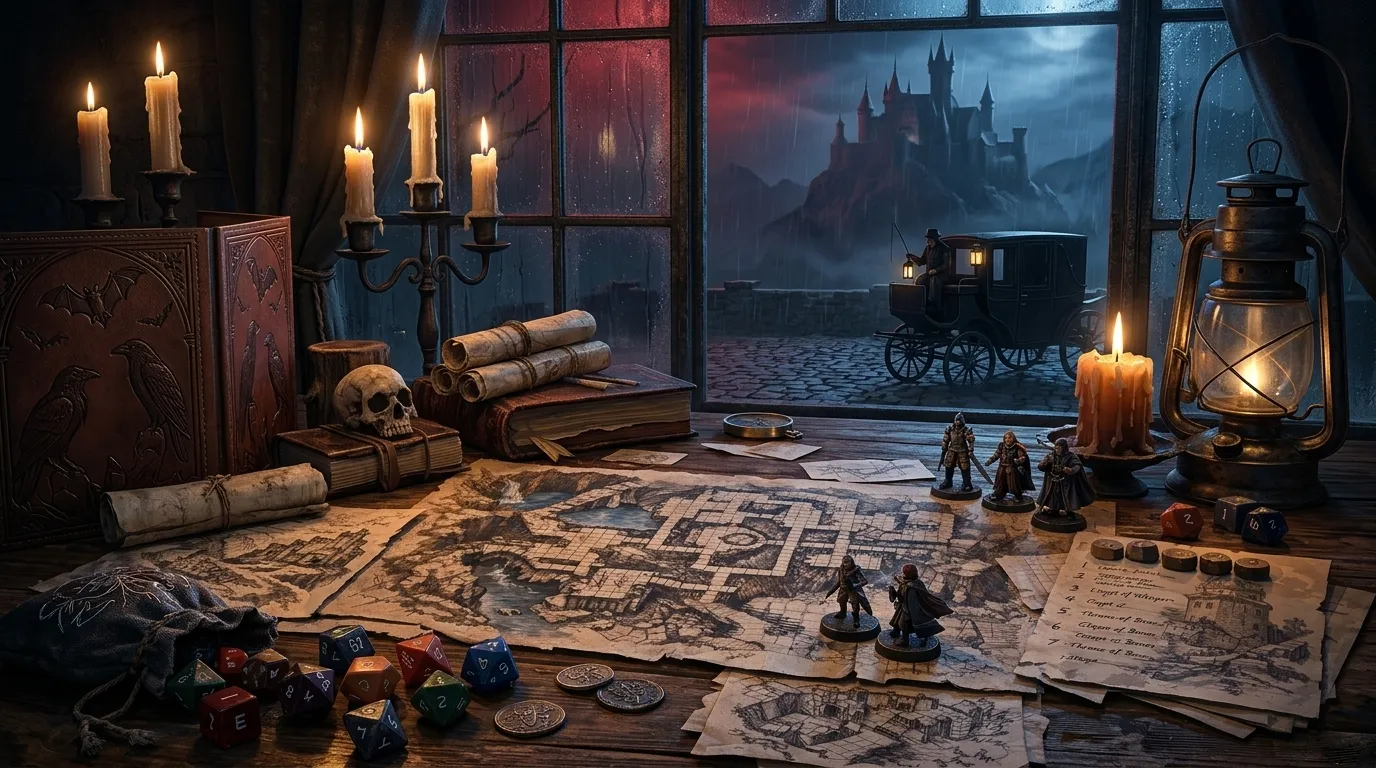
When I say Ravenloft-style, I do not mean you need to copy Barovia room by room. I mean you want the same pressure points that make gothic horror work: dread before combat, social discomfort before violence, and one place that feels wrong the moment the party steps inside. If you want official tone references, Curse of Strahd and Van Richten's Guide to Ravenloft are still the cleanest starting points. I am not trying to recreate those books scene for scene. I am trying to steal the bits that matter and get a playable one-shot ready tonight.
The trick is staying small. Horror gets weaker when I overexplain it. One strong village, one unsettling host, one monster that feels personal, and one map that turns movement into a bad decision is usually enough. If I keep those pieces connected, the session lands. If I build them separately and hope the mood appears on its own, the game turns into regular fantasy with wetter weather.
Why a dnd horror one-shot goes flat so quickly
Most horror one-shots miss for the same reason, they prep danger but not discomfort.
A hard combat is not horror by itself. Neither is a grotesque monster portrait. Horror needs anticipation. The group should feel a little off balance before initiative starts. They should realise that the ferryman knows too much, that the inn has no mirrors, or that the abbey bells ring a beat too late after midnight. Those details cost almost nothing in prep, but they do far more work than another sack of hit points.
I also think many DMs make the map too large. A sprawling castle sounds grand until the session runtime collapses under empty travel, five backup encounters, and players forgetting which staircase matters. In a horror one-shot, I would rather have six meaningful rooms than sixteen decorative ones. Tight spaces make clues matter and escape routes feel thin.
Here is the checklist I keep in my head before I generate anything:
| Horror job | What I actually need |
|---|---|
| Social unease | one NPC the party does not fully trust |
| Visual dread | one strong exterior, one strong interior |
| Combat fear | one memorable creature, not a zoo |
| Pacing | a short route with no dead wings |
| Aftertaste | one image or line players repeat after the game |
That last one matters more than people admit. If the group finishes the session and immediately says, “Right, the wet footprints stopped outside the locked chapel door,” the one-shot worked.
My CharGen workflow before I roll a single die
I use four CharGen tools for this job (the full prep stack, and how it compares to the solo-play AI DMs, is in my best AI dungeon master tools roundup):
| Tool | What I use it for |
|---|---|
| NPC Generator | one or two faces that define the mood |
| Monster Generator | the central threat and its behaviour |
| Dungeon Generator | the route, room count, and pressure points |
| Battlemap Generator | the final confrontation space |
I keep RPG Session Notes nearby as well if I think the one-shot might seed a longer campaign, but the core prep sits in those four tools.
The order matters. I do not start with the monster because horror is personal before it is tactical. I want to know who opens the door, who lies to the party, and what the place smells like before I decide whether the boss should be CR 5 or CR 7.
Start with one place, one face, one wrong detail
The opening image in my head for this sort of session is usually simple: a village lane after rain, a door that should be open but is shut, and one local who speaks as if they have rehearsed their grief. That is enough to start.
In NPC Generator, I keep the form tighter than I would for a long campaign. The fields I care about most are Race, Class, Gender, Age, Level, Game System, and Additional Details (Optional). I only touch Occupation (Optional) if the job itself is the point of the scene.
For a Ravenloft-style opener, I might build:
- a ferryman who insists the river only takes payment in silver buttons
- an abbey caretaker who smiles at the wrong moments
- a child messenger who refuses to step inside any building after dusk
The important bit is the wrong detail. Without that, the NPC is only decorative.
One example I would actually use:
Occupation: Ferryman
Age: Middle Aged
Game System: D&D 5E
Additional Details (Optional): Keeps his gloves on indoors, smells faintly of lilies and river mud, speaks politely but never answers a question the first time.
That gives me enough to improvise from. I do not need twelve paragraphs of lore. I need one person the players remember because something about him is off.
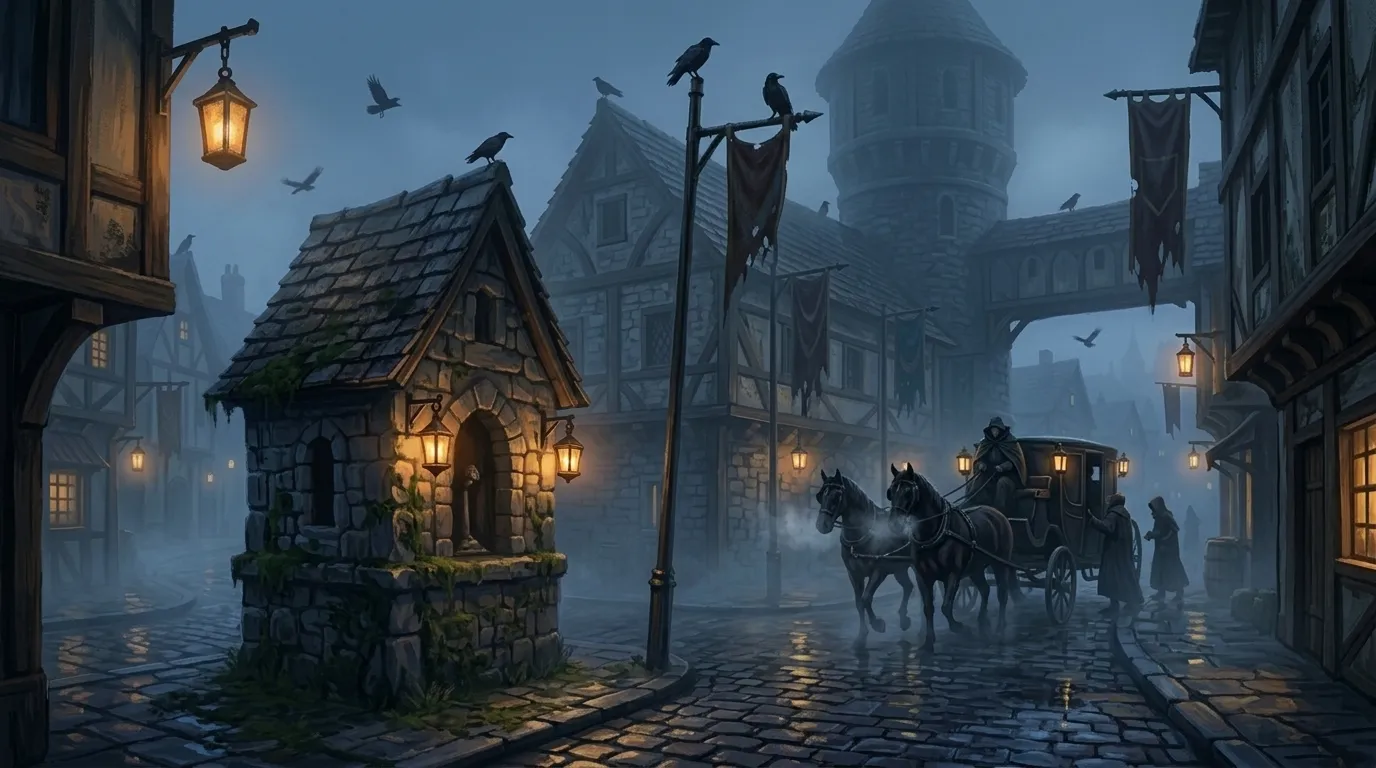
This is also where I stop myself from overbuilding the village. One inn, one chapel, one house nobody enters, and one road out is plenty. If the opening settlement has more moving parts than the actual horror site, the session loses shape immediately.
Build the dungeon like a trap, not a sandbox
Once the opening mood is locked, I move to Dungeon Generator. The fields here are exactly the sort of thing that decide whether your horror session feels sharp or baggy:
Dungeon SizeExact Room Count (Optional)ThemeDifficultyParty LevelMonster TypesLoot RarityTrap DensityAdditional Details
For horror, I bias small.
My default settings for a 3 to 4 hour session are:
| Field | What I usually pick | Why |
|---|---|---|
Dungeon Size | Small (5-8 rooms) or Medium (10-15 rooms) | horror needs rhythm, not sprawl |
Exact Room Count (Optional) | 7 or 8 | enough for discovery and escalation |
Theme | Crypt, Castle, or Temple | instant gothic shape |
Difficulty | Hard | tension without automatic disaster |
Party Level | real party level | keeps the climax fair |
Monster Types | undead, humanoids, spirits | coherent fear profile |
Trap Density | Light | pressure is good, admin is not |
The field I rely on most is Additional Details. That box is where the one-shot stops being generic.
A prompt I would genuinely use:
Abandoned chapel above a drowned village. The abbey bells ring even though the tower is cracked. Final room should contain a ritual chamber with a chained reliquary. Include signs that the caretaker still serves somebody who died years ago. Keep travel between rooms short and tense.
That is enough. Short. Concrete. Playable.
If I pour in every scrap of backstory, the output gets muddy. If I give the generator a place, a wound, and one active lie, the rooms come out cleaner.
Worth saying plainly, this is where horror one-shots often die. DMs build a lovely location, then stuff it with too many unrelated enemies because the empty rooms look lonely. I do the opposite. I let the rooms breathe, then make each sign of trouble count.
Make one monster feel personal
The boss in a horror one-shot should not feel like it wandered in from a random encounter table. It should look as if the place itself produced it.
Try the Dungeon GeneratorThat is why I use Monster Generator after the dungeon draft, not before. By then I know the room tone, the social angle, and the sort of fear I want the players to feel.
The fields I focus on are:
Quick Description (Optional)Challenge RatingMonster Type (Optional)Combat Role (Optional)Environment (Optional)Party Level (Optional)Difficulty (Optional)Reskin Of (Optional)Additional Details (Optional)
My usual horror rule is one central monster, two minor supporting threats, and no more. If everything is weird, nothing is weird.
One example that worked well for me in testing:
Quick Description (Optional): An abbey warden who stitched prayer-cloth into his own robes and now guards a saint's empty coffin.
Challenge Rating: 6
Monster Type (Optional): Undead
Combat Role (Optional): Controller
Environment (Optional): Ruins
Difficulty (Optional): Hard
Reskin Of (Optional): Wraith
Additional Details (Optional): Speaks in soft liturgical phrases, extinguishes candles before attacking, avoids direct sunlight and mirrors.
I like Reskin Of (Optional) for horror because it keeps the mechanics familiar while the presentation does the unsettling work. Players do not need a completely new rules engine every time they enter a cursed abbey. They need a threat that feels rooted in the story.
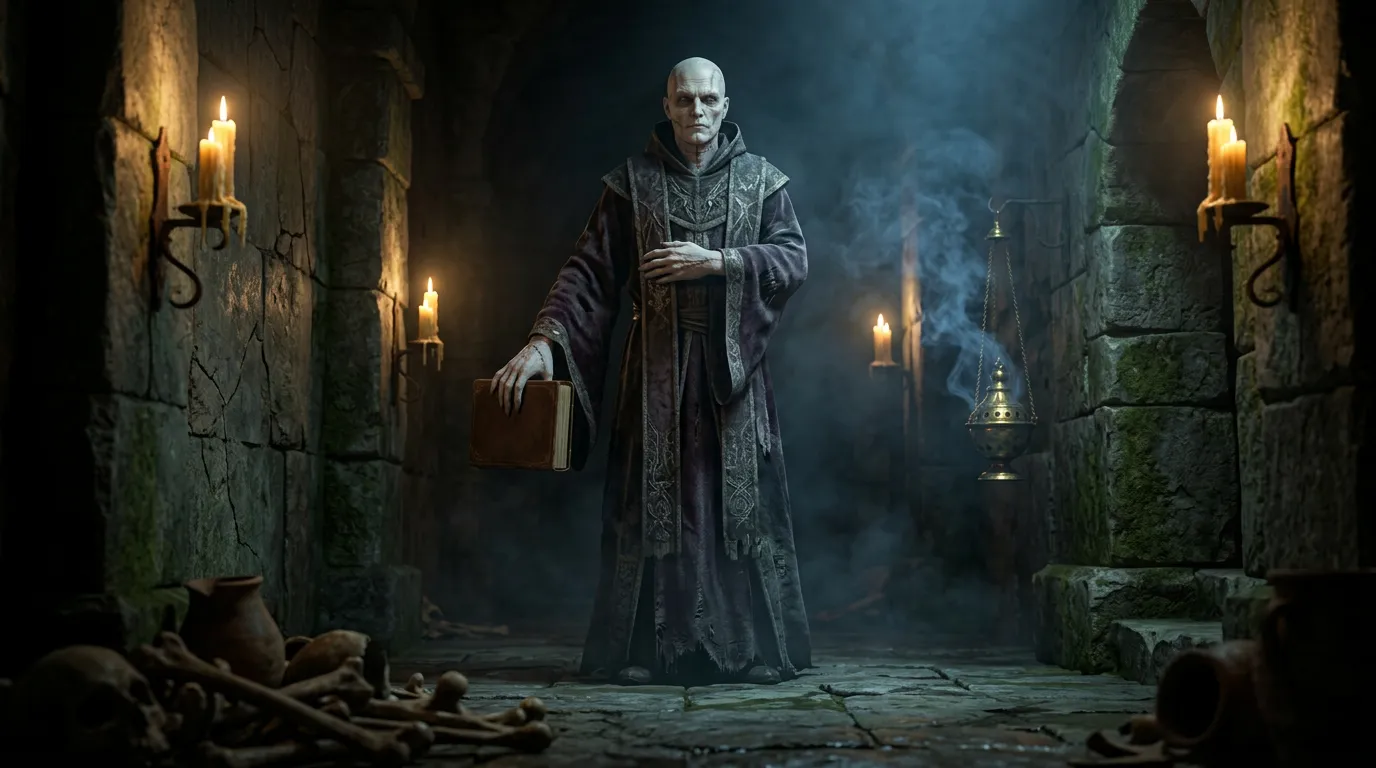
And yes, I keep the body horror restrained. A little goes a long way. Too much detail turns the scene from eerie to silly. A cracked jaw, damp linen, and a ceremonial bell tied to the wrist is often stronger than another paragraph of flesh description.
Use the battlemap like a pressure cooker
I only make one detailed battlemap for a horror one-shot unless the group is unusually combat-heavy. The rest of the session can live off theatre of the mind, quick sketches, or rough room references. The final confrontation, though, needs a space with obvious bad choices.
For Battlemap Generator, I keep the brief blunt. On the image side of CharGen, I switch to the Battlemap category, fill Battlemap Name, and keep the prompt focused on movement problems rather than decoration. I want players asking, “Can we get behind the altar without crossing the lit aisle?” not, “What colour is the carpet?”
My favourite horror map features are:
- narrow lanes that split the party if they panic
- one central focal point, usually an altar, coffin, or well
- difficult ground that slows retreat
- sightline breaks where something can vanish for one round
- one source of light the players immediately start worrying about
A battlemap prompt I would use:
Haunted chapel nave, broken pews, central altar, wet stone floor, moonlight through cracked stained glass, guttering candles, side crypt doors, enough open space for a final confrontation but no easy straight retreat.
That gives me a room with a shape the players can read quickly. Horror combat does not need complicated geometry. It needs a space that feels dangerous the moment the minis land.
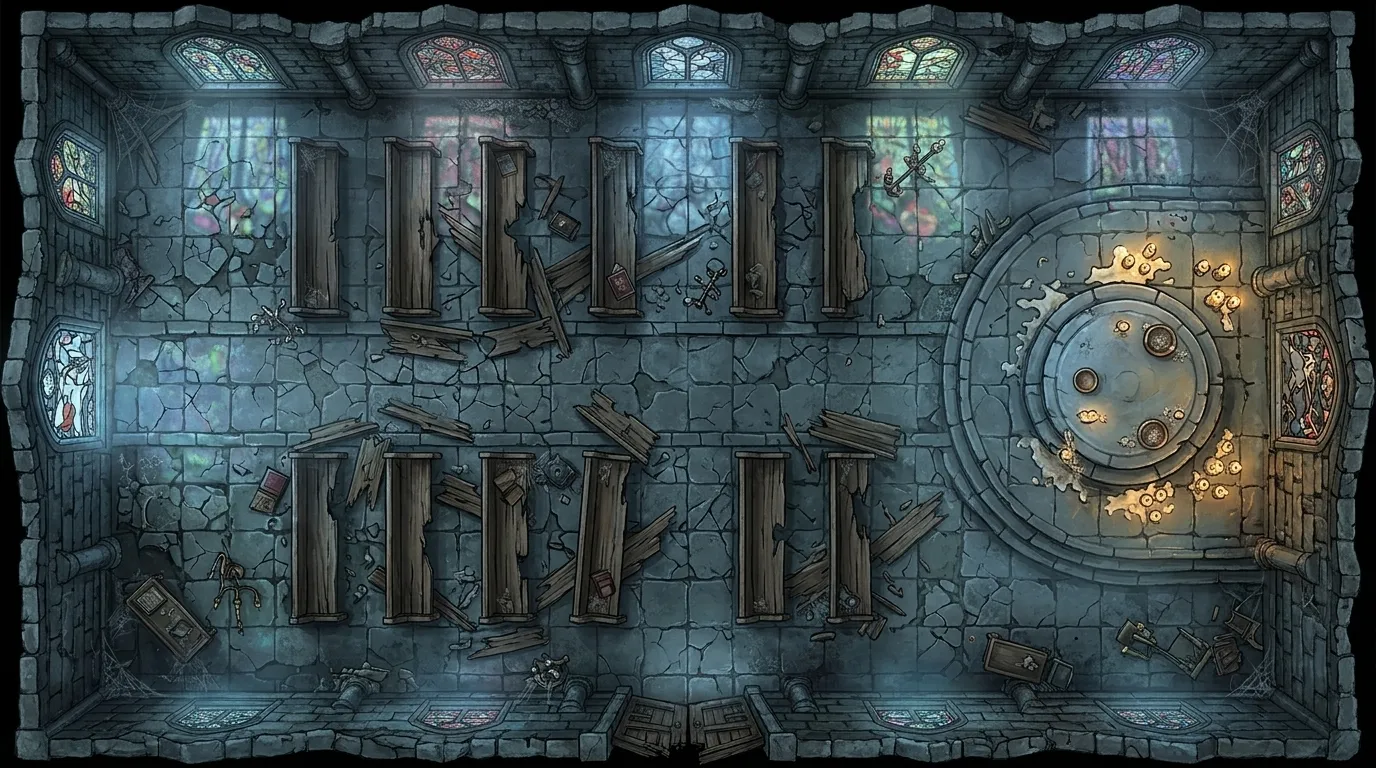
The thing is, good horror maps do not look fair. They can be mechanically fair, but they should not feel comfortable. If the players are delighted by how tactically tidy the room is, I probably missed the tone.
My 50-minute Ravenloft prep loop
When I need this done on a work night, I give myself 50 minutes and stop pretending I am writing the next great gothic campaign book.
| Block | Time | What I do |
|---|---|---|
| opening concept | 8 minutes | choose one village, one host, one lie |
| NPC pass | 10 minutes | build 2 or 3 locals in NPC Generator |
| dungeon pass | 12 minutes | set room count, theme, difficulty, and details |
| monster pass | 10 minutes | make one boss and two lesser threats |
| battlemap pass | 10 minutes | build one final room with pressure points |
That schedule works because horror is mostly subtraction. I am stripping away the unnecessary rooms, the spare villains, and the funny side plots that belong in a longer campaign. I am keeping the single thing that will bother the group all evening.
One concrete example. If I only had fifty minutes tonight, I would prep this:
- village: Mourning Ford, where everyone hangs black cloth outside but nobody names the dead
- host: Sister Ilva, who invites the party to the abbey and refuses to ring the chapel bell herself
- site: seven-room hill chapel over catacombs
- monster: a reliquary warden built from grief and ritual obedience
- battlemap: candlelit nave with side crypts and one blocked west door
That is already enough for a proper session. The players will investigate, meet someone disquieting, enter a place they should probably have avoided, and eventually confront a creature tied to the same lie that opened the story.
What AI helps with, and what it does not
AI is very good at giving me draft structure, visual anchors, and rapid variants.
It is not good at deciding what my players fear.
That part still belongs to me.
If my table hates helplessness but loves social dread, I need more whispered politeness and fewer paralysis effects. If the group enjoys tragic horror more than shock, I need a monster they can pity before they try to kill it. If the players are deeply suspicious already, I can make the opening NPC warmer and let the location do the creeping instead.
CharGen helps because it shortens the boring parts:
- getting a believable opening cast
- keeping the location tight
- making the monster match the place
- giving the finale a visual shape
It does not replace judgement. It gives me more room to use judgement where it counts.
I also keep one rule for myself with horror AI prompts: never ask for ten weird ideas when one good one will do. Horror gets cheap fast when every corridor has a new gimmick. The session should feel like one bad truth unfolding, not a parade of spooky wallpaper.
The practical recommendation
If you want to run a dark fantasy D&D session next week, do not start with the whole domain. Start with one road, one house of worship, one local who has already made peace with something unforgivable, and one monster that belongs there.
Open NPC Generator first. Then move to Dungeon Generator, keep the room count short, build one proper threat in Monster Generator, and finish with a cramped Battlemap Generator layout that gives the players nowhere comfortable to stand. That is enough for a strong night of play.
If you want the fast route, give yourself fifty minutes and keep every choice slightly meaner than your first instinct. Wetter stones. Colder bells. Kinder smiles that feel wrong. That is usually where the good stuff starts.
If you have not used the tool stack yet, sign up for CharGen and build the opening village plus the final chapel tonight. Once those two pieces exist, the rest of the session becomes much easier to finish.
Image notes
All images for this post were created in WaveSpeed Nano Banana 2 using the helper script's edit workflow against existing CharGen source imagery. Raw text-to-image smoke generations were blocked by moderation checks during this automation run, so the final assets were produced by WaveSpeed edits only.