
AI NPC Generator: Make D&D Characters Players Remember
Use an ai npc generator to build D&D NPCs with clear roles, motives, portraits, tokens, and recap hooks your players remember.
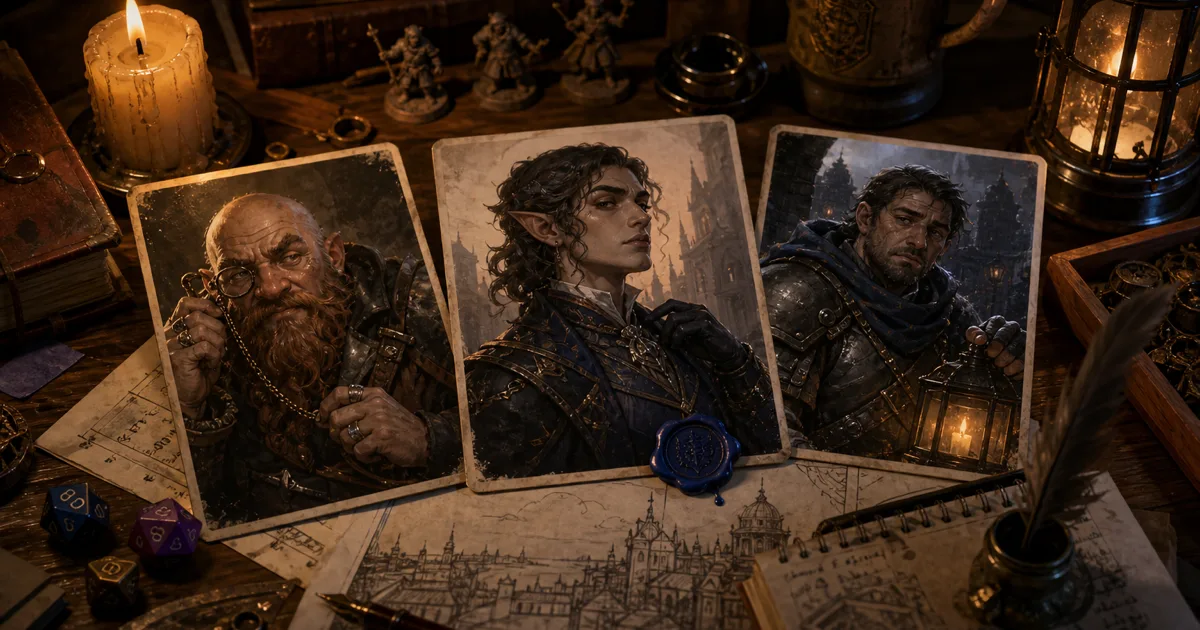
An ai npc generator is only useful if the character survives contact with the table. I do not mean combat. I mean the far more brutal test where a player says, three sessions later, "Wait, was that the ferry captain with the cracked lantern?" If they remember the face, the want, and the trouble attached to that NPC, the generator did its job.
I have made plenty of forgettable AI NPCs. They had names, tragic histories, five traits, and the personality of wet cardboard. The problem was not that the tool failed. I asked for the wrong thing. A D&D table does not need a biography for every dockworker. It needs a playable person with a role, pressure, a visual hook, and one reason the party might come back.
That is the difference I care about in 2026. A good CharGen NPC Generator pass is not a wall of lore. It is a clean starting point I can use during play, turn into a portrait, crop into a VTT token, and tie back into a session summary after the game. If the NPC becomes important, I can grow them. If they stay minor, I have not wasted half my prep night writing their grandfather's tax history.
Why the ai npc generator result is not the final NPC
The generator gives you material. The DM makes choices.
That sounds obvious, but it is where most bad NPC prep starts. If I click Generate, accept every field, and read the whole thing aloud, I have not made an NPC. I have made homework for my players. The useful move is to decide what the scene needs, then keep only the output that supports that job.
The 2024 NPC guidance in the Roll20 D&D compendium says NPCs rarely need much more complexity than a distinctive detail, while prominent NPCs deserve fuller notes. That matches how I actually prep. The barkeep needs a hook and a voice. The rebel priest who might become a campaign ally needs motive, pressure, secret, portrait, and recap history.
Recent DM chatter points the same way. In a February 2026 r/dndnext thread about an NPC generator focused on roleplay, one commenter said the hard part was personality and motivation, while another asked for fewer fields and more scene-ready purpose. That is a useful signal. DMs do not always want more output. They want the right output.
So my rule is simple: generate more than you need, then cut until the NPC fits on one screen.
The five-part NPC recipe I use
I use the same five-part recipe whether I am in CharGen, writing notes by hand, or rescuing a character I invented mid-session.
| Part | What it answers | Example |
|---|---|---|
| Role | Why are they in this scene? | harbour quartermaster |
| Want | What are they trying to get right now? | hide missing cargo records |
| Pressure | What makes them act today? | the customs guild is auditing the docks |
| Tell | What will players remember? | cracked brass spectacles chain |
| Offer | What can the party gain from them? | a ferry route past the patrols |
That is enough.
Notice what is missing: a full childhood, three paragraphs of faction history, and a stat block unless the NPC might fight. I can add those later. During play, I need to know how they behave when the players push.
Here is a thin prompt:
Dwarf merchant at the docks.
Here is the version I would actually put into CharGen's Quick Description (Optional) field:
Dwarven harbour quartermaster in a rain-soaked customs office. Public face: fussy and rule-bound. Private pressure: hiding missing cargo records before a guild audit. Visual tell: cracked brass spectacles chain and ink-stained fingers. Can offer a ferry route past the patrols.
The second version gives the generator a job. It knows the scene, the social mask, the pressure point, the image anchor, and the reason the party might care.
Start in CharGen without overfilling the form
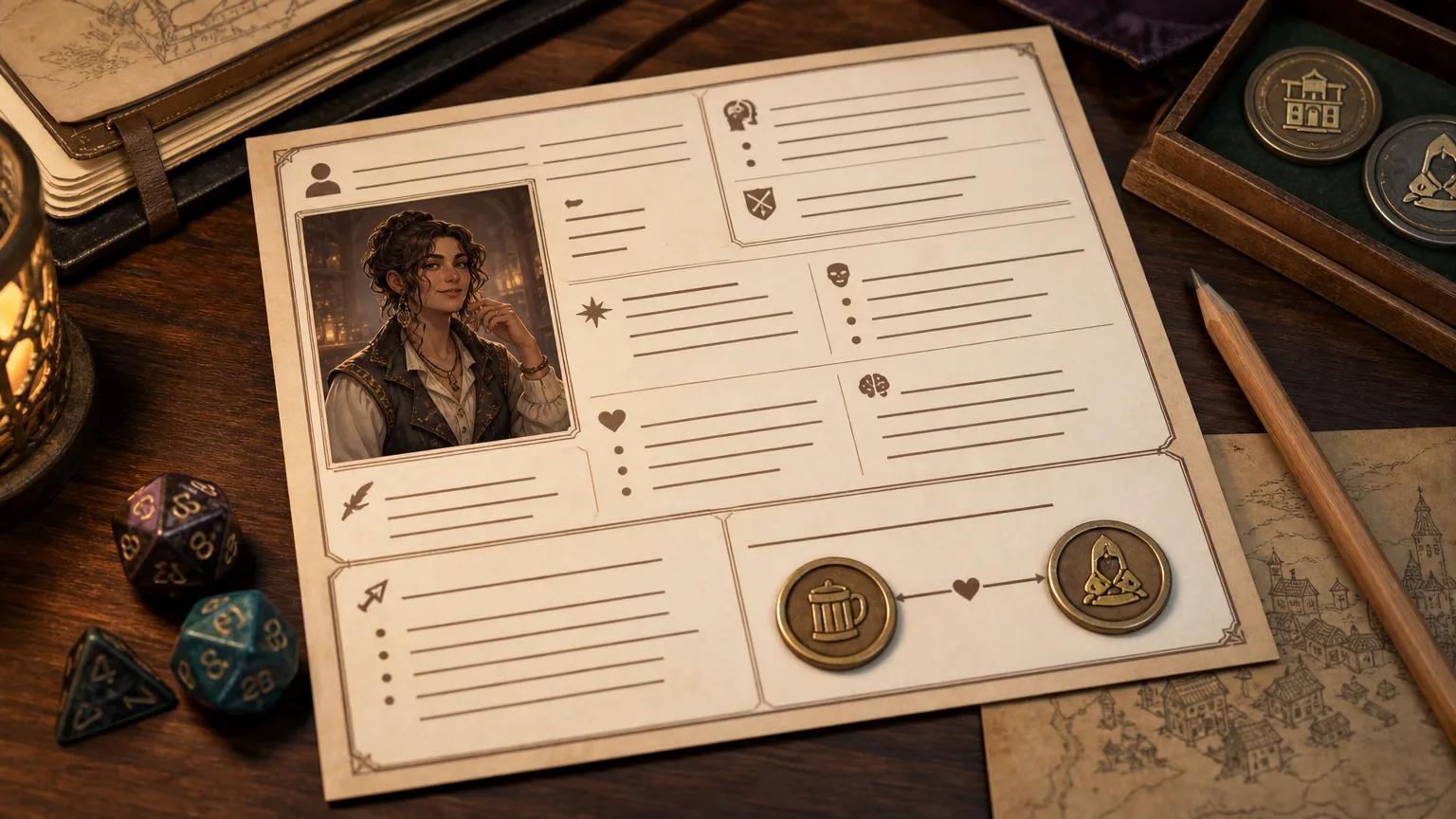
When I use CharGen for NPCs, I usually start from the NPC Generator rather than a blank image prompt. The point is to get the profile and visual direction together, not to juggle text in one tab and art in another.
My quick flow looks like this:
- Open
NPC Generator. - Choose the game system if it matters for the campaign.
- Set only fields that change the result, usually
Age,Level,Gender, and sometimes race or occupation. - Put the five-part recipe into
Quick Description (Optional). - Click
Generate. - Save the useful bits, then cut anything that makes the NPC harder to run.
Right, so that last line is the part people skip. I treat generated output like a draft from a helpful assistant who does not know my table. If it gives me three secrets, I pick one. If the portrait has the perfect expression but silly shoulder spikes, I keep the expression and edit the outfit later. If the motivation is too grand for a minor NPC, I shrink it.
Concrete example from my prep: I needed a half-orc ferry captain for a city chase. The first result made her a disgraced naval commander with a dead brother, a revenge plot, and a hidden royal connection. Too much. I kept the image, kept "counts coins twice before answering", and changed the motive to "needs enough silver to repair the ferry chain before morning". Suddenly she was playable.
Make the NPC memorable with one visual tell
Players remember faces and props better than lore. A portrait helps, but the portrait needs one anchor they can describe out loud.
Good visual tells are small, specific, and linked to behaviour:
- a chipped green tooth from chewing alchemical mint
- a prayer ribbon tied around a sword hilt
- burn marks on the left glove only
- a raven-feather hat pin they touch when lying
- cracked spectacles repaired with brass wire
Bad visual tells are vague:
- mysterious aura
- noble bearing
- dark past
- beautiful face
- intimidating armour
Those can be true, but they are not sticky. If a player cannot point at the portrait and say "the one with the brass wire glasses", the tell is too soft.
In CharGen, I put the tell near the end of the Quick Description if it is a roleplay cue, and near the start if it must appear in the portrait. Image models tend to prioritise clear physical details when they are stated plainly. Cracked brass spectacles chain works better than looks scholarly but stressed.
Give every NPC a pressure point
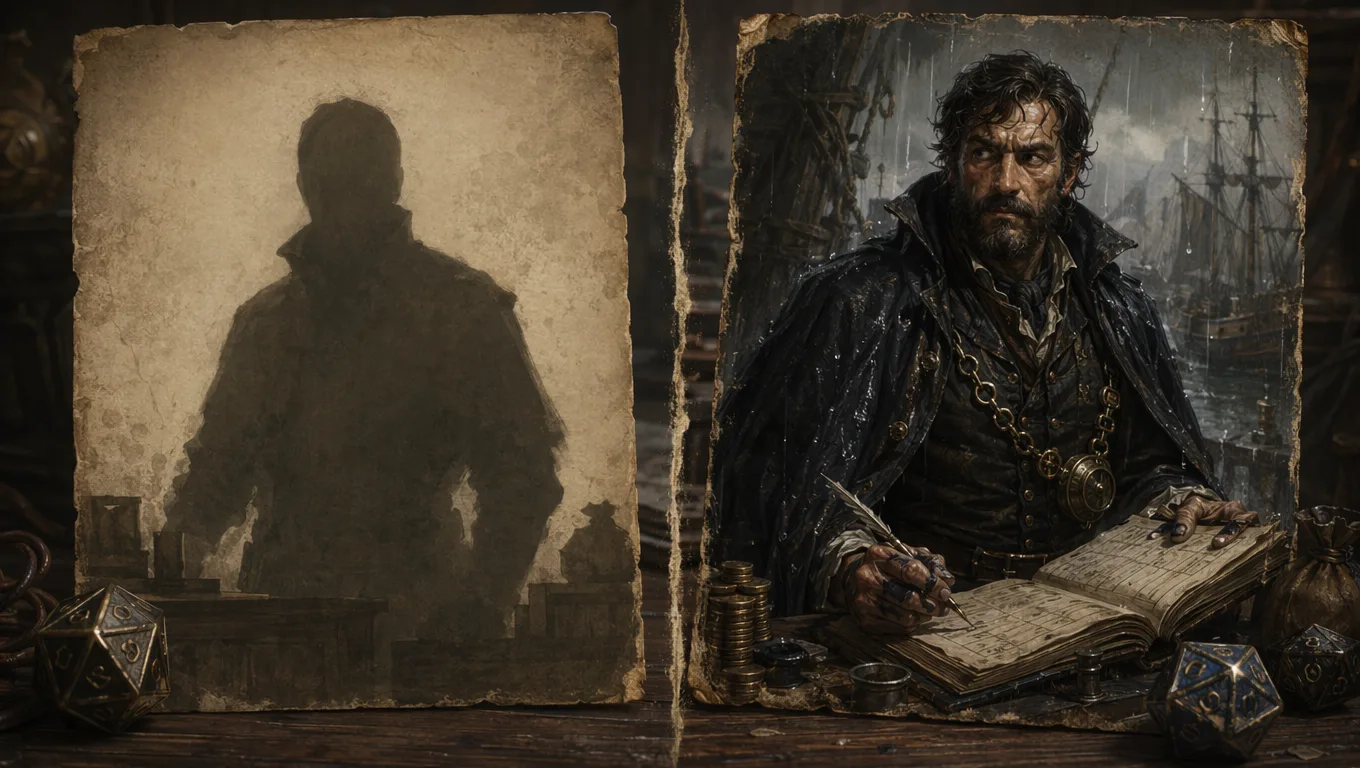
Motivation is broad. Pressure is immediate.
Wants respect is a motive. Has ten minutes before the magistrate arrives and finds the forged permit is pressure. The second one tells me how to roleplay the scene. It gives the NPC a reason to interrupt, lie, hurry, bargain, or panic.
I try to write pressure in one sentence:
The temple bursar needs the relic debt hidden before morning prayer.The road warden's nephew is being held by the mercenary band he claims to hate.The shopkeeper knows the cursed ring is fake, but the buyer is standing behind the party.The tavern singer saw the assassin leave, but naming them will cost her stage contract.
That pressure does not need to become the main plot. It just makes the NPC react like a person. If the players ignore it, fine. If they pull on it, the scene has somewhere to go.
This is where I think an ai npc maker beats a random table. Random tables are brilliant for sparks, and I still like them. But a good AI tool can connect role, pressure, portrait, and offer in one pass. The trick is asking for that connection directly instead of asking for "a detailed NPC".
Keep minor NPCs small and recurring NPCs tracked
I split NPCs into three sizes.
| NPC size | Prep depth | What I store |
|---|---|---|
| Walk-on | one line | role, tell, offer |
| Scene NPC | one short profile | role, want, pressure, tell, offer |
| Recurring NPC | full record | profile, portrait, token, session notes, state changes |
Most NPCs are walk-ons. They do not need names unless the players ask. That sounds harsh, but it keeps prep sane. When they do ask, I keep the D&D name generator open in a tab: pick a race and a cultural style and it hands back 10 names with short meanings, free and with no account.
Scene NPCs get the five-part recipe. These are the people who make tonight's session work: the witness, the guard captain, the shopkeeper, the rival apprentice, the ferryman with bad news.
Recurring NPCs get stored properly. I keep their portrait, visual anchor, relationship notes, and session recap changes together. If the party embarrassed the quartermaster in session eight, that should be visible when I bring him back in session twelve. Otherwise I will accidentally roleplay him as friendly and the table will remember better than I do, which is always humbling.
CharGen helps because the path from NPC to image to token to recap is short. I can generate the profile, make the portrait usable at the table, then keep the post-session state in the same prep system. For campaign play, that storage matters more than making one perfect picture.
Use portraits and tokens as memory aids, not decoration
I like nice fantasy art. I also know it can become a trap.
If I spend twenty minutes polishing the portrait of a shop assistant who exists to sell rope, I have made my session worse. The art budget belongs where memory matters: recurring NPCs, suspects, rivals, allies, and anyone the players will see on a VTT.
My portrait rule:
- walk-on NPCs get no art unless I already have a fitting image
- scene NPCs get a quick portrait if their face matters
- recurring NPCs get a portrait, token, and visual anchor note
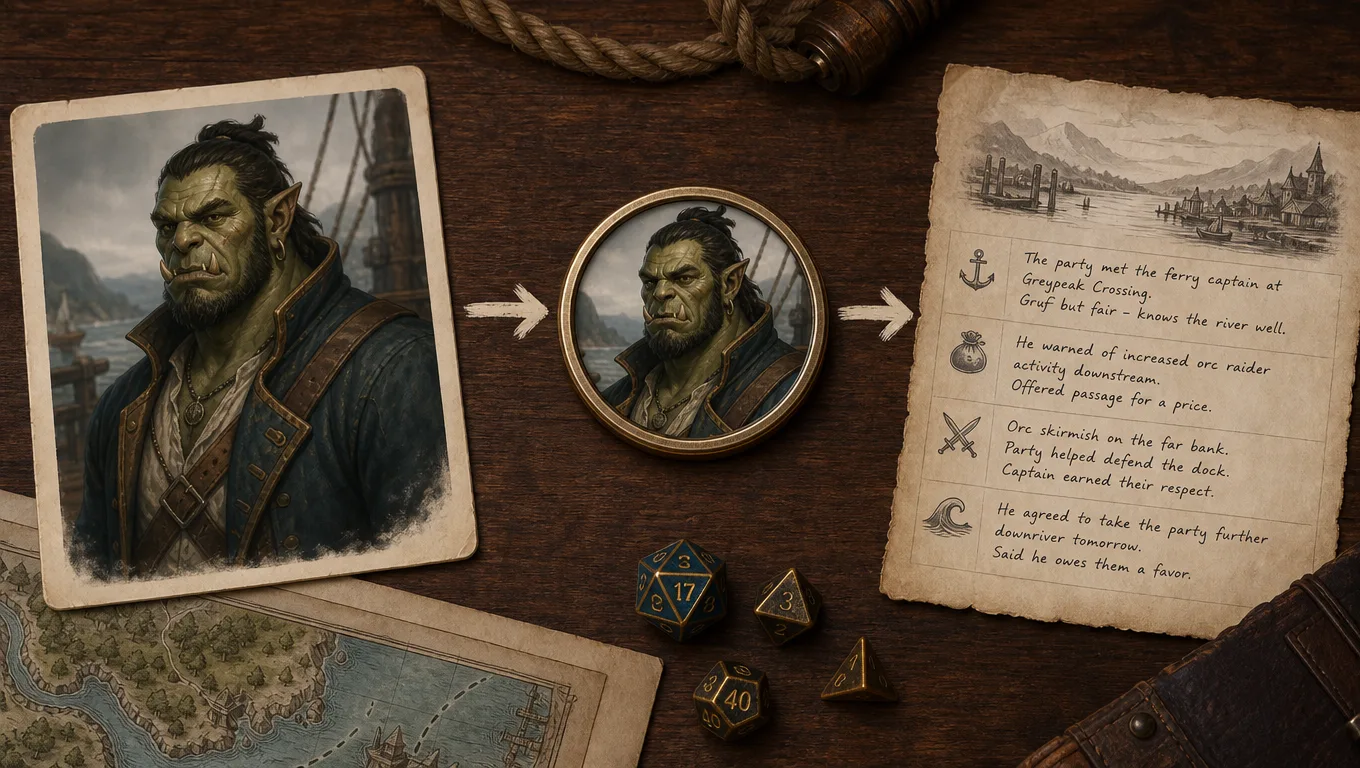
I generate those portraits with CharGen's AI NPC Generator, then for VTT sessions send the important ones through Token Maker. A circular token does more than look tidy. It makes the NPC feel present on the map. The guard captain is not "that blue marker". She is the woman with the white scarf and broken spear badge.
A 12-minute example workflow
Here is the fast version I use before a session.
| Minute | Action | Output |
|---|---|---|
| 0-2 | Decide the scene job | "party needs a dock contact who can move them past patrols" |
| 2-4 | Write the five-part recipe | role, want, pressure, tell, offer |
| 4-7 | Generate in CharGen | profile plus portrait direction |
| 7-9 | Cut and edit | one motive, one tell, one useful offer |
| 9-11 | Make a token if needed | Roll20 or Foundry-ready portrait |
| 11-12 | Add recap reminder | what changes if the party helps or threatens them |
That is enough for a strong scene NPC.
Full example:
Vela Brinehook, half-orc ferry captain in the Old Lock district. Wants enough silver to repair the ferry chain before the tide turns. Pressure: a patrol inspector is checking licences tonight. Tell: cracked storm lantern she refuses to replace. Offer: a silent route under the customs bridge.
I can run that character immediately. Her voice is practical. Her decisions are obvious. If the players pay her, she helps. If they threaten her, she delays them and signals the inspector. If they fix the ferry chain, she becomes an ally. No novel required.
Build an NPC FreeWhat to do when the generator gives you too much
AI loves adding drama. Secret heirs. Ancient curses. Former assassins. Missing twins. Fine for a main NPC, exhausting for everyone else.
When the output is too large, I cut in this order:
- remove backstory that will not affect tonight's choices
- remove any secret that competes with the main scene
- remove extra relatives unless one is in the room
- remove lore names the players have not heard before
- keep the pressure point, because that drives behaviour
I also avoid making every NPC morally complicated. A city needs ordinary people. The stablehand can want payment. The guard can be bored. The baker can be proud of her almond cakes and nothing else. If every person hides a cult tattoo, players stop trusting the tone of the world.
That said, one small secret works beautifully when it changes how the NPC reacts. The quartermaster is not secretly a prince. He is secretly selling seized goods to pay his sister's healer. Much better.
Where a dnd npc generator fits with rules
Rules matter when the NPC can affect combat or checks. For most social scenes, I do not need a full character sheet. I need DCs, instincts, and maybe a rough stat block if swords might come out.
My simple split:
- no combat expected: no stat block
- possible scuffle: use a simple guard, scout, mage, commoner, or bandit-style base
- named rival or ally: build or adapt a proper block after the session
This keeps the dnd npc generator focused on character play instead of pretending every shopkeeper needs class levels. If Vela Brinehook gets dragged into a fight, I can use a tough commoner or bandit captain style base and adjust later. I do not need a full naval subclass build before the party even meets her.
Common mistakes I still make
I still catch myself doing these.
I generate before deciding the scene. The output looks fine, but it does not solve the actual prep problem.
I keep too many names. Five named NPCs in one tavern is not helpful unless the scene needs them.
I over-polish portraits. Token-size readability matters more than perfect fabric texture.
I forget the offer. An NPC with no offer often becomes scenery. Give them information, access, danger, shelter, a bargaining chip, or a complication.
I store nothing after the session. If the NPC mattered, I add one recap line before I forget. Helped party cross bridge, now expects favour at next tide. That is all future me needs.
FAQ
What is the best ai npc generator for D&D?
The best ai npc generator for D&D is the one that gives you a usable table workflow, not just a long profile. I use CharGen because it combines NPC profiles, fantasy portraits, token creation, and recap follow-up in one place. If you only need text, a simple random npc generator dnd tool can still be enough for one-off characters.
How do I make AI-generated NPCs less generic?
Give the generator a role, want, pressure point, visual tell, and offer. Avoid prompts like interesting elf merchant. Try elven spice broker in a flooded market, hiding a forged import seal, touches a blue wax ring when lying, can offer a canal route past the guards.
Should every NPC have a portrait?
No. Use portraits where memory matters. Recurring NPCs, suspects, allies, rivals, and VTT combat pieces deserve art. Minor walk-ons can stay as one-line notes.
Can CharGen make NPC tokens for Roll20 or Foundry?
Yes. Generate the portrait with CharGen's AI NPC Generator (or save one you already have), then use CharGen's Token Maker to create a circular VTT token. I use that for recurring NPCs and anyone likely to appear on a map.
Image credits
Images in this article were generated for CharGen with WaveSpeed GPT Image 2 and edited only for sizing and web format.
Create a Memorable NPC