
DND Puzzle Generator: Build Table-Ready Puzzles
Use a dnd puzzle generator to build fair dungeon puzzles with clear clues, solutions, hint ladders, handouts, failure states, and a quick DM review.
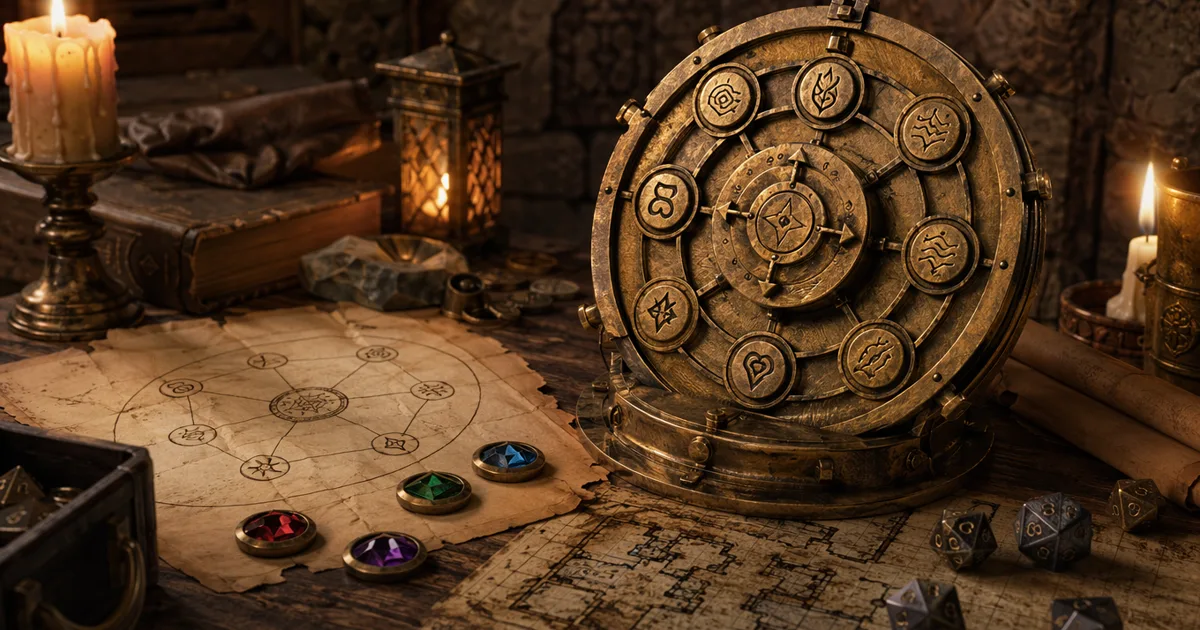
A good dnd puzzle generator should do one job before anything else: stop the table from staring at a door for forty minutes while the DM slowly regrets every life choice that led to a moon-rune riddle. I like puzzles in D&D. I do not like puzzles that depend on players guessing the exact sentence I had in my notes.
The best puzzle encounters feel physical. Players can touch pieces, ask questions, test theories, get partial feedback, and move closer to a solution even when their first answer is wrong. The worst ones are crossword clues wearing a dungeon hat. One player solves them instantly, or nobody solves them, and the rogue starts checking every flagstone because at least that has rules.
CharGen's new Puzzle Generator is built for the version I actually want to run. It creates puzzle components, triggers, checks, a canonical solution, alternate solutions, partial progress, a graded hint ladder, player handouts, a top-down apparatus diagram, embedded loot, and a DM run-of-show. It defaults to Pathfinder 2E because that system likes explicit DCs and skill structure, but it works for D&D 5E, OSR, Daggerheart, and generic fantasy if you set the Game System field.
Right, so this guide is not a list of thirty riddles. You can find those anywhere. It is a practical workflow for building dungeon puzzles that players can solve without mind-reading you.
Why a dnd puzzle generator needs more than a riddle
Most puzzle prep fails because the DM writes an answer, not an encounter. The page says put the silver key in the owl statue under moonlight, but it does not say what players see first, what happens when they try the wrong statue, how to reward a clever workaround, or when to give a hint without sounding like a frustrated schoolteacher.
The 2024 D&D Basic Rules section on the DM's Toolbox makes a useful point about traps: they work best when they are used sparingly, can be detected, and give characters ways to respond. Puzzles need the same discipline. A puzzle with no clues is not mysterious. It is just hidden information.
Reddit threads about D&D puzzles say the quiet part often. DMs want puzzles and traps that make sense in a living dungeon, not rooms that feel like a video game level bolted into a castle. One r/DMAcademy discussion puts the problem neatly: if inhabitants still use the dungeon, why would they keep getting stuck behind their own security system?
That is the test I use now. Before I run a puzzle, I ask:
| Question | Why it matters |
|---|---|
| Who built it? | The puzzle should fit the dungeon's culture, magic, and purpose. |
| Who uses it safely? | Residents, cultists, or guardians need a bypass, password, key, or routine. |
| What can players inspect? | The clues need to exist in the room, not only in my head. |
| What happens on a wrong attempt? | Failure should create pressure, cost, or new information. |
| What other answers count? | Players will invent something better than your solution eventually. |
That last line is where many generated puzzles either shine or break. A strict puzzle punishes creative play. A playable puzzle gives you a main answer and a few alternate routes you can reward without pretending the room only understands one phrase.
What CharGen's puzzle generator creates
CharGen's Puzzle Generator lives at /puzzle-generator and also appears inside the RPG Workshop. The empty state says Your Next Puzzle Is Waiting, and the main call to action is Generate a Puzzle Now. The form is compact enough to use mid-prep, but it asks for the parts that matter.
| UI field | How I use it |
|---|---|
Quick Description | The short table idea, such as a drowned chapel bell puzzle under a ruined abbey. |
Party Level | Tunes DCs, damage risk, and complexity. I use 4 to 6 for most low-mid campaigns. |
Game System | Defaults to Pathfinder 2E, but I switch to D&D 5E for my regular table. |
Puzzle Type | Riddle, logic puzzle, cipher, mechanism, glyph ward, maze, ritual, pattern, lock, or social negotiation. |
Difficulty | Simple, Moderate, Hard, or Devious. I use Moderate unless the puzzle is the main set piece. |
Environment | The room context, such as temple, tomb, sewer, academy, mine, or fey crossing. |
Theme | The identity of the puzzle, such as necromantic, divine, elemental, clockwork, or fae. |
Required Skills | Skills I want to matter, such as Investigation, Arcana, Religion, Thievery, or Perception. |
Embedded Loot / Usable Items | Whether the puzzle includes keys, lenses, scrolls, components, or rewards. |
Additional Details | Faction hooks, time pressure, monsters nearby, or a clue I already want to keep. |
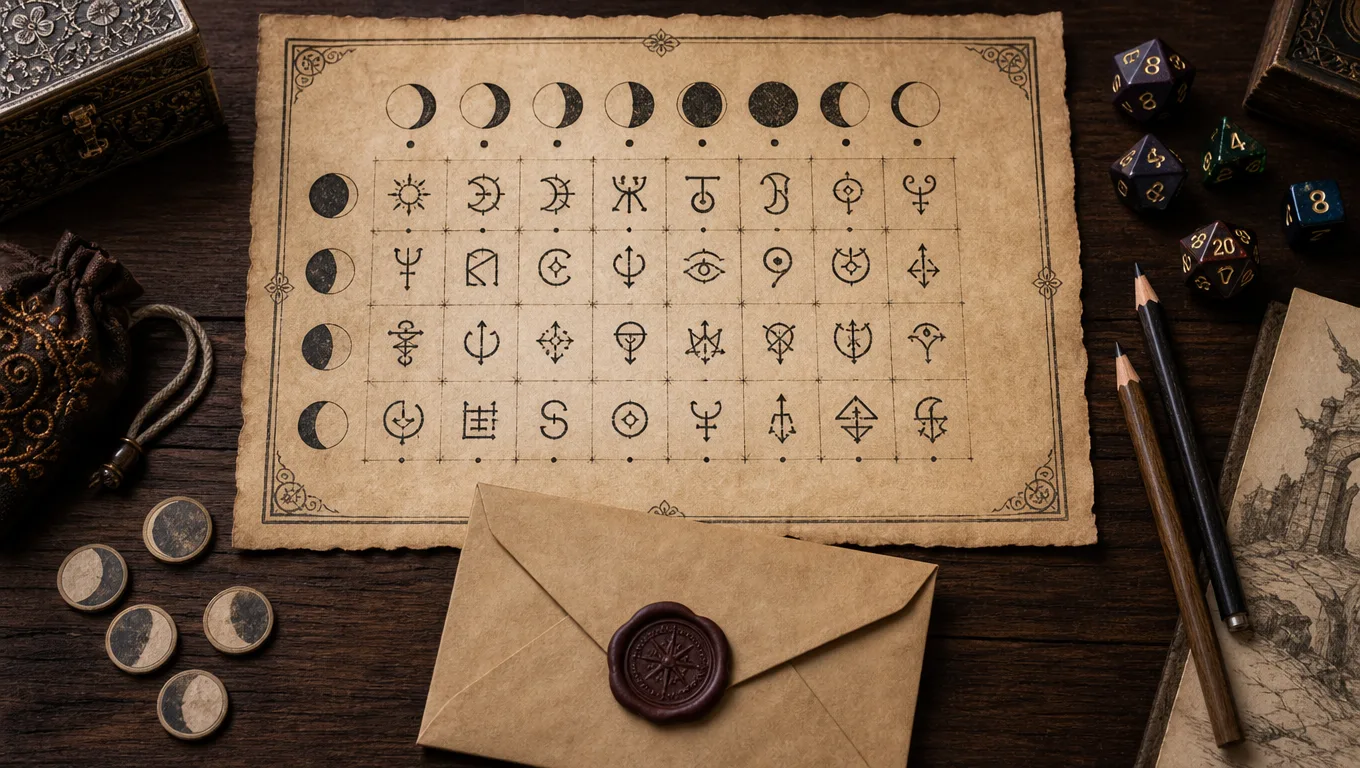
The output is more useful than a plain paragraph. It includes the puzzle name, game system, level, puzzle type, difficulty, environment, theme, description, discovery text, interactable components, trigger, checks, time limit, failure condition, solution, alternate solutions, partial progress, hints, GM tips, success outcome, failure outcome, usable items, rewards, backstory, hooks, scaling notes, and art direction.
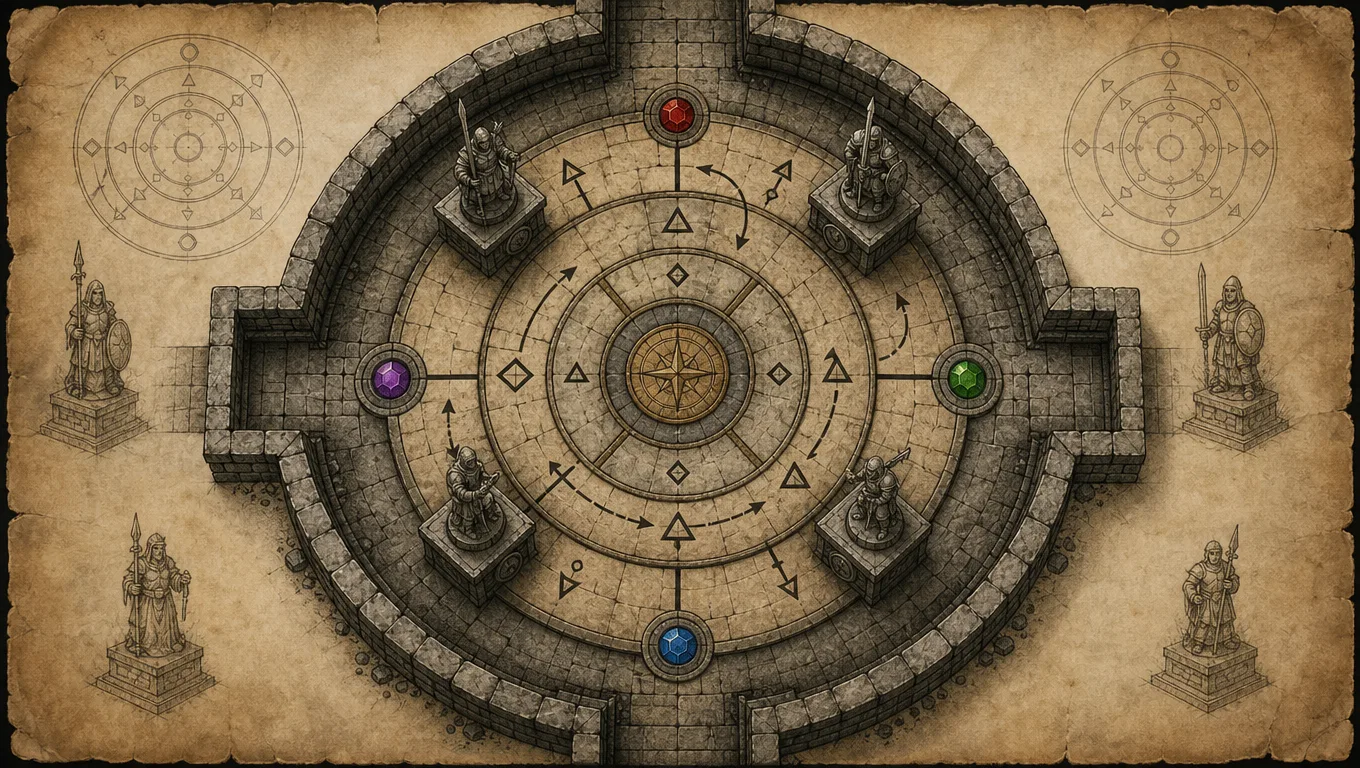
The newer part I like most is the player-facing material. Every generated puzzle can now include a Puzzle Handout, an Answer Key behind a reveal, and a DM Script with introduction, lead-up notes, and pacing notes. The top-down apparatus diagram helps too. A room puzzle is easier to run when I can glance at the layout instead of translating a paragraph into space while players wait.
My 2026 check before I run a generated puzzle
The generator gives me a strong starting structure, but I still run a short table-read before I put the puzzle in a session. I ask a player-facing question for every important fact: what can the party see, what can they touch, what changes when they try something, and what new information appears after a wrong attempt?
The D&D Basic Rules DM's Toolbox is a useful reference here. A trap needs a trigger, a way to notice or respond to it, and a consequence that fits the danger. I use the same check for a puzzle. The room should tell players enough to begin, and the failure state should change the situation instead of erasing their progress.
My current review has six passes:
| Pass | What I check | A useful repair |
|---|---|---|
| Start | Can the group name one object or relationship without a roll? | Make one clue visible in the room description. |
| Test | Can players try a theory and get feedback? | Add a sound, movement, light change, or partial result. |
| Skills | Can more than one character contribute? | Give different skills different facts, not different gates. |
| Failure | Does a wrong answer create pressure or information? | Wake a guardian, spend time, raise water, or reveal a clue. |
| Bypass | Could a clever spell, tool or class feature help? | Write a cost and accept the solution if it fits the fiction. |
| Payoff | Does the result matter to the adventure? | Tie the opened space to a person, reward, threat or route. |
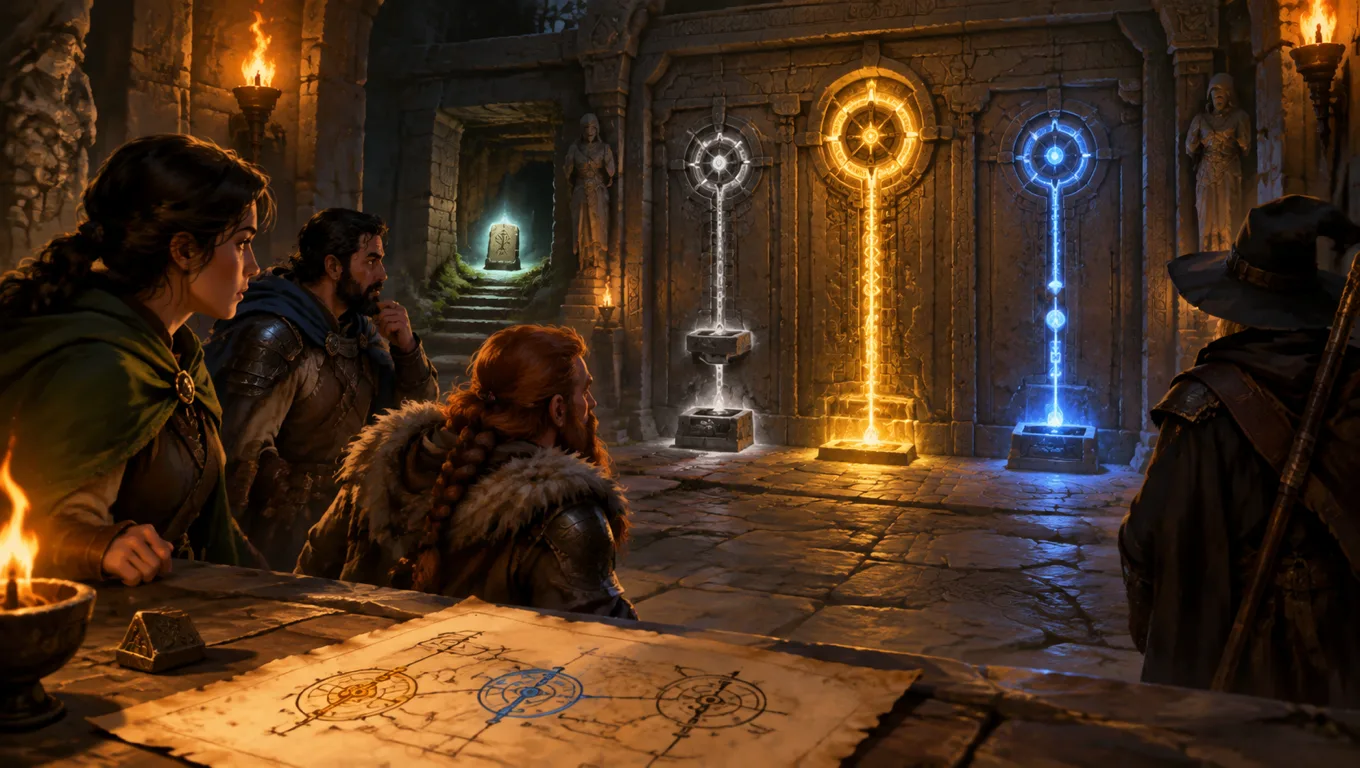
I do not treat the canonical solution as a contract with the players. It is the answer I keep behind the screen so I can explain the room consistently. If the party finds a better answer that uses the clues and the fiction, I count it. The alternate solution field helps me prepare for that moment, but the table still gets to surprise me.
Failure needs the same care. A wrong sequence can summon a patrol, drain a resource, change the room, or reveal that one symbol is false. I avoid a failure that leaves the players with no new option. The room should become more urgent or more legible.
The five-minute review before play
My existing five-minute workflow gets the puzzle on the page. The review happens afterwards, and it is the part that makes the result runnable. I read only the material I need during play:
- The entrance description, with one obvious object to inspect.
- The clue list, with the first clue marked as visible.
- The canonical solution and two alternate routes.
- The hint ladder, with a trigger for each tier.
- The failure outcome, including what players learn.
- The reward or route that makes the puzzle worth solving.
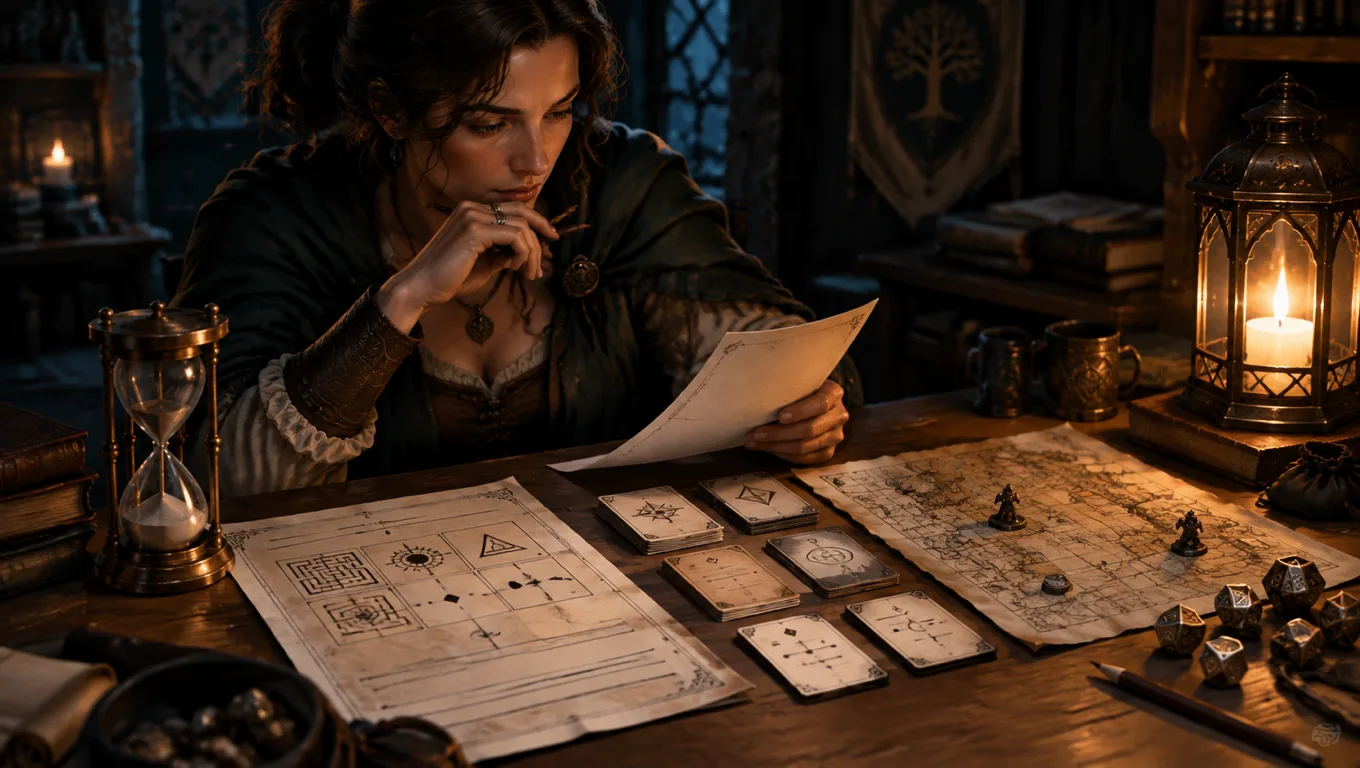
I keep the handout separate from the answer key. Players should see the symbols, diagrams or short clue text without seeing the check DCs, solution order or failure notes. The top-down apparatus image belongs with my notes unless the map itself is part of the challenge.
That separation also helps when I revise a puzzle during a session. I can hand out a clue, read a description, or give a hint without searching through a long block of generated text. The exact rules text remains in my notes, and the player-facing material stays clean.
My five-minute dungeon puzzle workflow
Here is the exact routine I use when I need a puzzle and do not want to spend the whole evening designing one.
| Minute | Action | Output |
|---|---|---|
| 0-1 | Write the room purpose | A lock, ward, trial, test, memorial, prison seal, or hidden archive. |
| 1-2 | Pick the interaction type | Mechanism, cipher, ritual, glyph, social negotiation, pattern, or spatial puzzle. |
| 2-3 | Add one sensory clue | Sound, colour, smell, temperature, dust pattern, footprints, old scorch marks. |
| 3-4 | Generate in CharGen | Puzzle components, solution, checks, hints, handout, and outcomes. |
| 4-5 | Cut one thing and strengthen one clue | Remove noise, make the first clue obvious enough to start play. |
My favourite prompt shape is:
Level 5 D&D 5E puzzle in a flooded moon chapel. Four cracked bell ropes, silver fish mosaics, tide marks on the walls. The puzzle opens a reliquary door. Include a fair hint ladder and one alternate solution using a cleric's Turn Undead or a bard's performance.
That prompt gives the generator a place, a level, a goal, props, sensory details, and permission to accept class-based play. The class clause matters. Without it, many puzzles accidentally become intelligence tests for the players rather than character moments for the party.
A shorter prompt works too:
Moderate mechanism puzzle, dwarven mine lift, three counterweights, party level 4, D&D 5E, make it safe for a working mine but dangerous for intruders.
That one usually produces something I can run as a practical room obstacle. The mine workers have a routine. The party can observe scuff marks, test weights, jam gears, or talk to a captured foreman. It feels like infrastructure, not a wizard's escape room.
The hint ladder is the whole point
The hint ladder is the feature that decides whether I trust a puzzle generator. A puzzle without staged hints is a bet that your players think exactly like you. They do not. Mine once spent twenty minutes trying to poison a statue because I described its mouth too well.
CharGen's generated hints are tiered. I treat them like this:
| Hint tier | When I use it | What it should do |
|---|---|---|
| 1 | Players inspect the right object or ask a smart question | Confirm they are looking in the right place. |
| 2 | The table has tried one or two wrong ideas | Point to a relationship between components. |
| 3 | Momentum is fading | Give a stronger clue without naming the full answer. |
| 4 | The scene is becoming dull | Offer a direct route, a cost, or a partial success. |
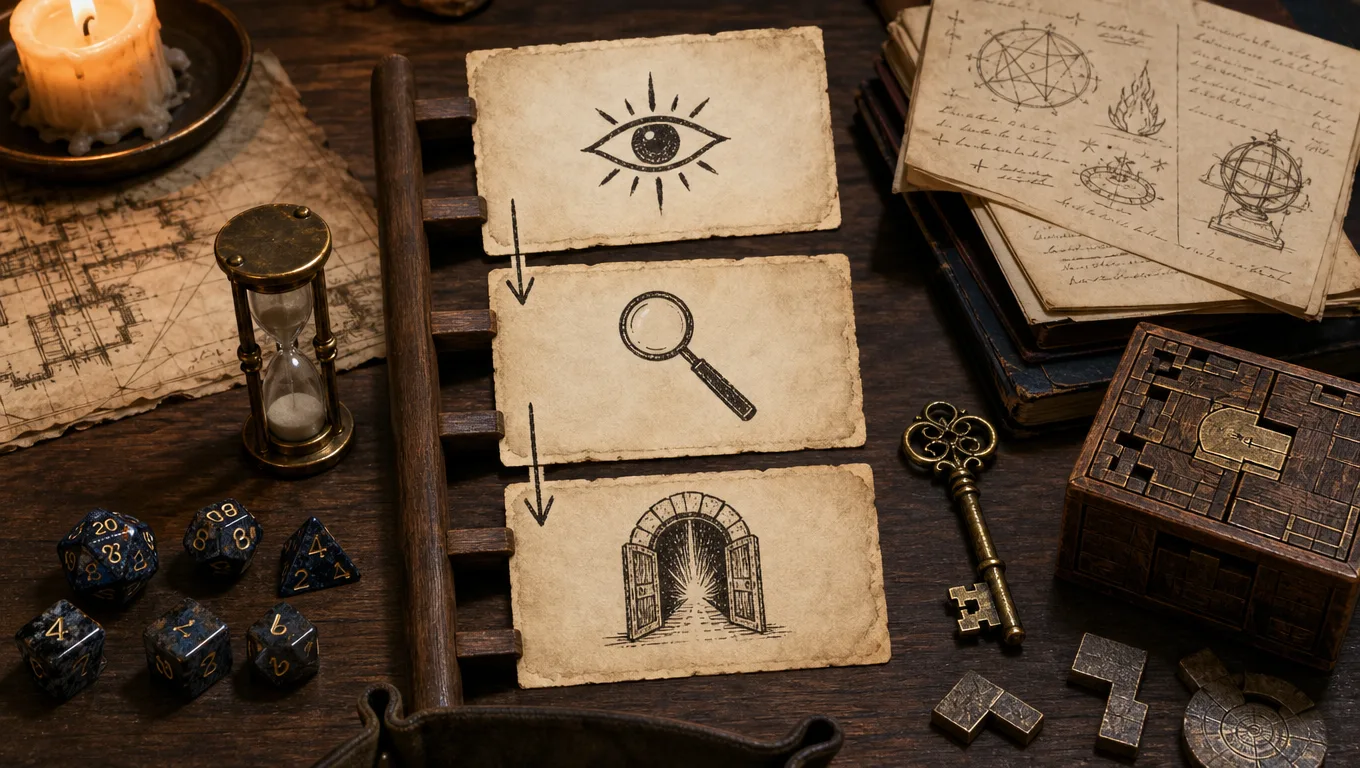
The trick is to attach hints to actions, not pity. I do not say, "You seem stuck, here is a clue." I say, "When the cleric wipes soot from the third bell, the moon symbol underneath is not painted. It is inlaid silver, and it is much newer than the stone around it."
That gives the player credit for interacting with the room. Even if I am using the generated hint behind the screen, it arrives through the fiction.
For D&D 5E, I also avoid locking hints behind one skill. A character with Investigation should get one route. Religion might notice temple structure. Arcana might spot ward logic. Thieves' Tools might reveal wear on a mechanism. Players built different characters; the puzzle should let more than one of them matter.
For Pathfinder 2E, I am happier using explicit DCs because the game supports that style cleanly. Recall Knowledge, Thievery, Occultism, Religion, and Crafting can all point to different facts. The important part is still the same: one failed check should not kill the whole scene.
Turning generated puzzle parts into table action
A generated puzzle is not finished when the text appears. It is finished when you know how you will describe the first thirty seconds.
I pull out five pieces:
| Piece | My table note |
|---|---|
| entrance description | one sentence to read when the party sees the room |
| obvious interaction | one thing players can touch immediately |
| hidden clue | one thing a skill check or clever description reveals |
| pressure | what gets worse if they delay or force it |
| payoff | what changes when the puzzle is solved |
Here is a concrete example from a generated puzzle I would keep.
| Generated detail | Table version |
|---|---|
| puzzle type | Magical Glyph / Ward |
| environment | flooded shrine below a ruined road |
| components | four bell ropes, silver fish mosaic, cracked tide dial, reliquary door |
| canonical solution | ring bells in the order shown by moon phases on the tide dial |
| alternate solution | freeze the water to reveal the submerged phase marks, or perform the shrine hymn from a nearby mural |
| failure condition | wrong sequence wakes drowned guardians and raises the water level |
That is enough. I do not need a huge speech. I need a room, props, the first clue, and a consequence.
The top-down apparatus image helps when the components are spatial. If the puzzle has four statues, two levers, and a rotating floor ring, I want a map-like view before I run it. CharGen now produces that kind of reference, which pairs naturally with the Dungeon Generator when the puzzle belongs inside a larger site.
I also like linking puzzle rewards to other prep. A glyph vault might hide a cursed item from the Magic Item Generator. A clockwork gate might protect loot from the Loot Generator. A social negotiation puzzle might belong to a guild from the Faction Generator. The puzzle stops feeling like a detached minigame once it protects something the campaign already cares about.
Puzzle types that work well in D&D
Some puzzle categories run better at the table than others. My ranking is not about cleverness. It is about how easily players can test ideas.
| Puzzle type | Table feel | Best use |
|---|---|---|
| Mechanism / Apparatus | physical, inspectable, forgiving | doors, lifts, bridges, vaults, clockwork rooms |
| Magical Glyph / Ward | strong fantasy identity | temples, arcane locks, curses, planar seals |
| Sequence / Cipher | good with handouts | spy notes, tomb inscriptions, wizard archives |
| Ritual | party collaboration | shrines, fey crossings, necromancer labs |
| Social / Negotiation | character-led | sphinxes, bound spirits, faction gatekeepers |
| Logic Puzzle | risky but satisfying | small set pieces with clear constraints |
| Riddle / Wordplay | very table-dependent | quick gates, optional clues, comic relief |
| Spatial / Maze | good with diagrams | puzzle rooms, shifting corridors, VTT scenes |
| Memory / Pattern | fast if visual | repeating traps, music rooms, elemental cycles |
| Combination Lock | simple and reliable | treasure doors, safes, prison seals |
Riddles are the dangerous one. I still use them, but I never make a riddle the only path through a main story door. A riddle can hide bonus loot, a safer route, or an extra clue. If the campaign stops until someone guesses the word "shadow", the puzzle has too much power.
Mechanism puzzles are safer because players can experiment. Pull the lever. Rotate the ring. Put the red gem in the left socket. Hear the click. Watch the water move. That feedback loop keeps the scene alive.
Social puzzles are underrated. A bound angel who can only answer questions in courtly protocol is a puzzle. A goblin toll office with three contradictory permits is a puzzle. A ghost who will reveal a password only if the party reconstructs her final dinner is a puzzle. Not every puzzle needs stones sliding into slots.
Common mistakes to fix before running the puzzle
Generated text still needs DM judgement. I always check for these problems before play.
| Mistake | Fix |
|---|---|
| one exact answer only | Add two alternate solutions and one costly bypass. |
| clue hidden behind a failed check | Make the first clue visible without a roll. |
| no reason for the puzzle to exist | Tie it to a builder, owner, faction, ritual, or security routine. |
| wrong failure mode | Use pressure, damage, noise, lost time, or partial progress instead of hard stop. |
| too many components | Cut one statue, one symbol set, or one stage. |
| no character skills | Add Arcana, Religion, Investigation, History, Thievery, Nature, Performance, or tool use. |
| reward feels random | Link the reward to the room's purpose. |
The first clue should be obvious enough that players can start. Obvious does not mean easy. It means the puzzle has a handle. A locked door with no handle, no writing, no sound, and no visible mechanism is not a puzzle. It is a wall with homework behind it.
I also make peace with bypasses. If the barbarian spends a rage to hold the counterweight while the wizard scrambles through the door, brilliant. If the druid turns into a rat and finds the maintenance tunnel, fair enough. If the party uses Stone Shape to skip the whole room, they spent a resource and felt clever. That is a win, unless the puzzle was meant to be the only dramatic beat of the session.
Using puzzles with traps, hazards, and monsters
Puzzles are strongest when they interact with the rest of the dungeon. A puzzle alone can become a quiet logic test. A puzzle with a moving hazard becomes a scene.
Here are combinations I like:
| Combo | Example |
|---|---|
| puzzle plus trap | wrong glyph sequence triggers darts, but each dart reveals which glyph was false |
| puzzle plus hazard | rising water covers the clue marks after three rounds |
| puzzle plus monster | skeletons ignore the puzzle but attack anyone who touches the reliquary |
| puzzle plus faction | cultists know the safe order, but one captured acolyte lies about it |
| puzzle plus loot | the solution requires using a treasure item, then lets the party keep it |
CharGen already has a Hazard Generator, so I often make the puzzle first, then add the hazard second. The puzzle tells me what players are trying to do. The hazard tells me why they cannot take all day.
For example:
Puzzle: three brass mirrors must redirect moonlight onto a sealed sarcophagus.
Hazard: each wrong reflection wakes a memory echo that repeats the last spell cast in the room.
That is more playable than a static riddle. Players can solve, fight, improvise, and panic a bit. Good dungeon rooms should support several verbs.
FAQ
What is the best dnd puzzle generator?
For my table, CharGen is the best fit when I need a runnable puzzle rather than a loose riddle list. It gives components, checks, solution, alternate solutions, hints, handouts, DM notes, and outcomes. If you only want a list of riddles, a static riddle site is faster.
Can I use CharGen's puzzle generator for D&D 5E?
Yes. The tool defaults to Pathfinder 2E, but the Game System field supports D&D 5E and custom systems. I set Game System to D&D 5E, add a party level, then use Required Skills for Investigation, Arcana, Religion, Thieves' Tools, or whatever matters in the room.
How hard should a D&D puzzle be?
Most main-path puzzles should be moderate. Hard puzzles work better for optional rewards, hidden vaults, or set-piece rooms where the group expects to spend time. If the story cannot continue until the puzzle is solved, add a hint ladder, alternate solutions, and a costly bypass.
Do D&D puzzles need skill checks?
Not always, but skill checks help character sheets matter. I prefer using checks to reveal clues, confirm theories, reduce risk, or buy time. I avoid making one failed check block the whole puzzle.
Should puzzles include failure states?
Yes, but failure should usually mean pressure, cost, noise, partial damage, lost time, or a changed situation. A total dead end is rarely fun. A wrong bell sequence that wakes guardians is better than a wrong bell sequence that does nothing.
My practical recommendation
Use a puzzle generator for structure, not authority. Let it give you the room, props, checks, hints, solution, handout, and outcomes. Then cut anything that does not help the table make decisions.
For a main dungeon route, keep the puzzle moderate, make the first clue visible, add at least two valid solution paths, and prepare one costly bypass. For optional treasure, you can be crueller. Players forgive a nasty puzzle much more easily when the campaign does not stop behind it.
I would start with CharGen's Puzzle Generator, generate one mechanism puzzle and one glyph ward, then run the better one after trimming it to five table notes: room purpose, obvious interaction, hidden clue, pressure, and payoff. That is enough to make the puzzle feel designed without letting it eat the whole session.
Image credits
All images in this post were generated for CharGen using WaveSpeed GPT Image 2 at medium quality, then resized and converted for web use.