Skip to content
Create
The Brass Sultanate - AI-generated fantasy Faction

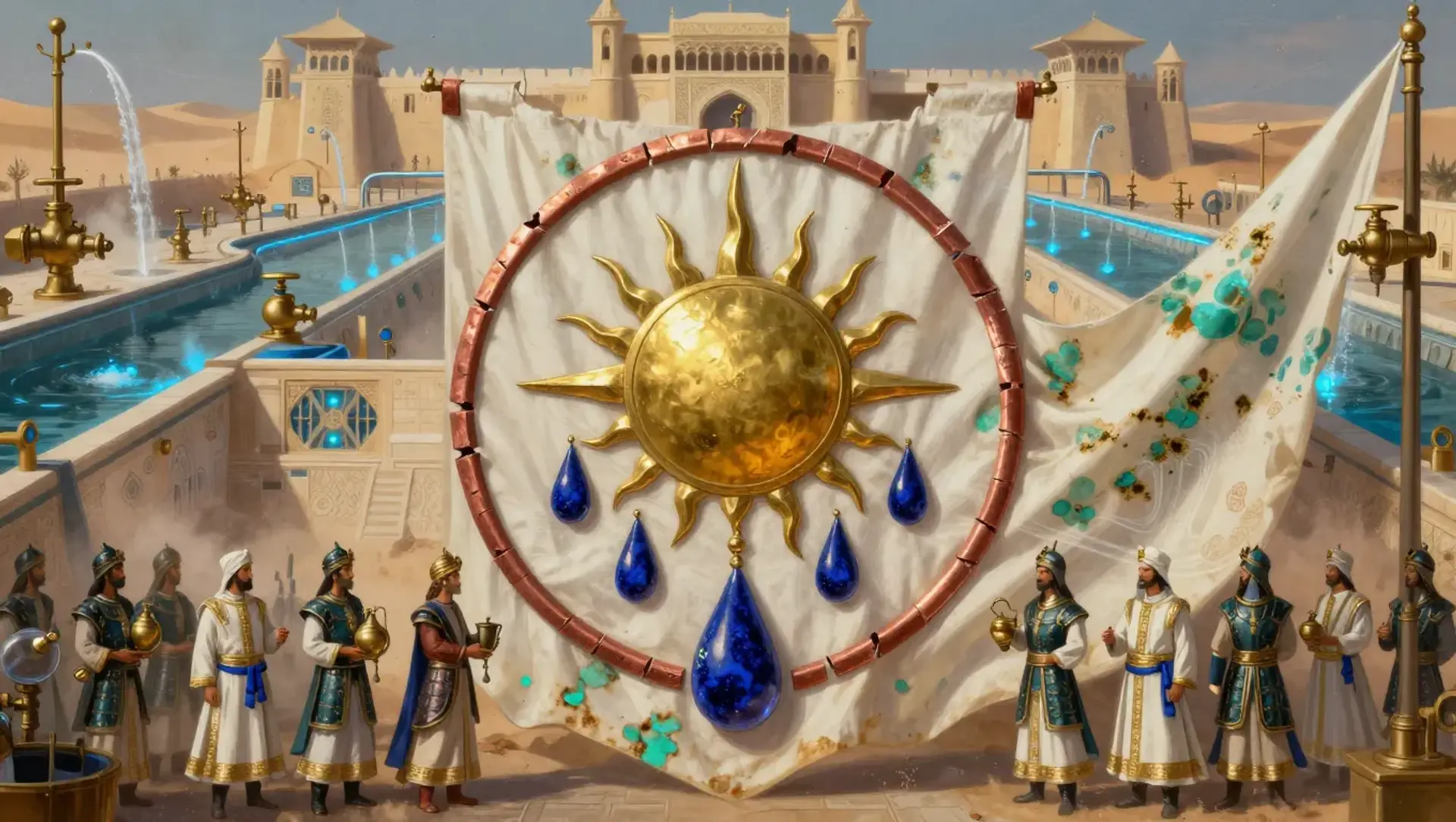
The Brass Sultanate

The Sultanate's first century was defined by consolidation. Its early rulers connected the seven treaty cities with the Pilgrim's Aqueduct, ending the recurring wars that had made water caravans a military necessity. The project was a triumph, but its construction displaced thousands and created the first class of people who believed the Sultanate protected cities at the expense of the countryside. During the Brass Fever, a mineral contamination crisis poisoned two aquifers and killed entire districts. The government survived only because the newly formed Brass Examiners discovered that several officials had falsified purity reports. This led to the culture of obsessive measurement and documentation that still defines the faction. The watershed moment came during the Saltwind Crisis, seventy years ago. Orsavan forces occupied three treaty wells and declared the Compact void. Sultan Namar III ordered the opening of emergency elemental gates beneath Qasr Vey. The resulting surge flooded the invaders' supply lines and forced their withdrawal, but it also destroyed the old city of Meraz and awakened something beneath the basin. The Sultanate publicly celebrated the victory as proof that centralized power had saved Verulana. Privately, the court sealed records describing voices in the floodwater and the first appearance of the Drowned Court. In the current era, the Sultanate is wealthy, sophisticated, and indispensable. Its aquifers support trade routes, its courts settle international water disputes, and its engineers export elemental infrastructure across the continent. Yet every new conduit intensifies the old question: is the government preserving a shared resource, or converting survival into empire?

The Brass Sultanate

Government · Lawful with pragmatic, paternalistic, and occasionally authoritarian tendencies

The Brass Sultanate

What is measured can be protected. What is shared must be defended.

TypeGovernment
SizeApproximately 8400 official me…
InfluenceStrong across courts, aquifer…
WealthExtremely wealthy in land, tra…
AlignmentLawful with pragmatic, paterna…
AgeOne hundred eighty-seven years…

Chronology

The Sultanate's first century was defined by consolidation. Its early rulers connected the seven treaty cities with the Pilgrim's Aqueduct, ending the recurring wars that had made water caravans a military necessity. The project was a triumph, but its construction displaced thousands and created the first class of people who believed the Sultanate protected cities at the expense of the countryside. During the Brass Fever, a mineral contamination crisis poisoned two aquifers and killed entire districts. The government survived only because the newly formed Brass Examiners discovered that several officials had falsified purity reports. This led to the culture of obsessive measurement and documentation that still defines the faction. The watershed moment came during the Saltwind Crisis, seventy years ago. Orsavan forces occupied three treaty wells and declared the Compact void. Sultan Namar III ordered the opening of emergency elemental gates beneath Qasr Vey. The resulting surge flooded the invaders' supply lines and forced their withdrawal, but it also destroyed the old city of Meraz and awakened something beneath the basin. The Sultanate publicly celebrated the victory as proof that centralized power had saved Verulana. Privately, the court sealed records describing voices in the floodwater and the first appearance of the Drowned Court. In the current era, the Sultanate is wealthy, sophisticated, and indispensable. Its aquifers support trade routes, its courts settle international water disputes, and its engineers export elemental infrastructure across the continent. Yet every new conduit intensifies the old question: is the government preserving a shared resource, or converting survival into empire?

Founder’s Story

The Brass Sultanate began during the Year of Empty Wells, when seven rival cities of Verulana faced drought, famine, and civil war. Sultan Avaris the Listener summoned the engineers, jurists, priests, and caravan leaders of each city to the dry basin of Qasr Vey. There, an old brass instrument called the Meridian Astrolabe revealed seven surviving underground aquifers. Avaris proposed that no city would own the water alone. Instead, all seven would recognize a common sovereign authority responsible for measuring, protecting, and distributing it. The resulting Seven Wells Compact created the Sultanate and bound the cities together through shared water rights. The first sultans were not absolute monarchs. They were custodians whose authority depended on maintaining the flow. Over generations, the custodianship became hereditary, the aquifers became the backbone of the economy, and the government developed an elaborate culture of contracts, public ceremonies, engineering guilds, and diplomatic ritual. The faction became known as the Brass Sultanate after engineers began plating critical valves and treaty seals in brass, a metal chosen because it resisted both corrosion and magical tampering.

The Mechanism of Intent

Public Goals
  • Preserve Verulana's treaty rights
  • Guarantee reliable access to water for every recognized settlement
  • Prevent wars caused by resource scarcity
  • Expand elemental infrastructure to improve transportation, agriculture, defense, and trade
  • Maintain peace among the seven original treaty basins
  • Secret Goals
  • Control the Saffron Deep before any independent power can claim it
  • Discover a way to communicate with or command the entity beneath Qasr Vey
  • Use the Emberline Conduit to make Verulana indispensable to foreign militaries and major trade leagues
  • Erase evidence of the forced relocations and manipulated treaties that enabled the Sultanate's expansion
  • Prevent a popular reform movement from gaining access to the faction's infrastructure network
  • Current Objectives
  • Defend Verulana's treaty rights in three disputed border basins
  • Complete the Emberline Conduit before the neighboring Kingdom of Orsava can build a competing network
  • Secure control of the recently discovered Saffron Deep aquifer
  • Prevent evidence of illegal elemental binding beneath the capital from reaching foreign diplomats
  • Prepare a peaceful succession while ensuring the next ruler remains loyal to the Sultanate's expansionist program
  • Long-Term Vision

    A continent-spanning network of treaty-bound elemental infrastructure in which Verulana serves as the indispensable mediator, provider, and protector of water, energy, and transport. The Sultanate claims this future will prevent wars over scarcity. Its hidden danger is that every participating nation would become dependent on Verulanian expertise and control.

    StructureCentralized treaty monarchy with bureaucratic, provincial, engineering, and diplomatic branches
    SuccessionThe throne is nominally hereditary, but succession must be ratified by five of the Seven Measures and publicly confirmed at the Seven Wells Ceremony. If the heir is judged incapable, the council may appoint a Steward Sultan for seven years. In practice, succession depends on control of the Cistern Guard, the treaty archives, the capital's water system, and the support of at least three major basin families. A disputed succession can quickly become a water crisis because provincial officials may obey different claimants.

    Leadership

    The Brass Sultan, Malik Vardan ibn-Alim Sultan of the Seven Measures

    Malik is warm, attentive, and surprisingly patient with ordinary people, yet formal and exacting with officials. He believes mercy must be structured or it becomes favoritism, while law without mercy becomes cruelty in ceremonial clothing. He laughs readily in private, especially at dry jokes from canal workers, but grows quiet around ancient magic. With strangers he is generous because he wants to know what they need. With family and trusted advisers he is guarded, demanding, and sometimes unfair, believing they can survive the standards he sets for himself. When calm, he makes compromise feel like shared ownership. When afraid, he turns every conversation into a hearing and every feeling into evidence.

    Shani bint-Tariq First Treaty Magistrate and leading voice of the Flowkeepers

    Patient, incisive, gracious in public, and merciless when confronted with legal dishonesty.

    Varis ibn-Kaelen Master of Conduits

    Brilliant, vain, restless, and genuinely convinced that only technological dominance can keep Verulana safe.

    Zephyr bint-Yusuf Basin Vizier of the Saffron Marches

    Direct, compassionate, politically shrewd, and visibly exhausted by the compromises of office.

    Captain Jafar ibn-Salim Commander of the Cistern Guard

    Disciplined, dryly humorous, protective of subordinates, and terrified of what lies beneath Qasr Vey.

    Naima bint-Kaelen Archivist of Restricted Compacts

    Curious, irreverent, socially fearless, and incapable of leaving a contradiction unexplored.

    Visual sheet

    Turn The Brass Sultanate into a sheet

    A high-res, share-ready sheet you can post or print.

    Gallery

    No images yet. Click to add.

    Relationships