Skip to content
Create
The Gutter Psalms - AI-generated fantasy Faction

The Gutter Psalms

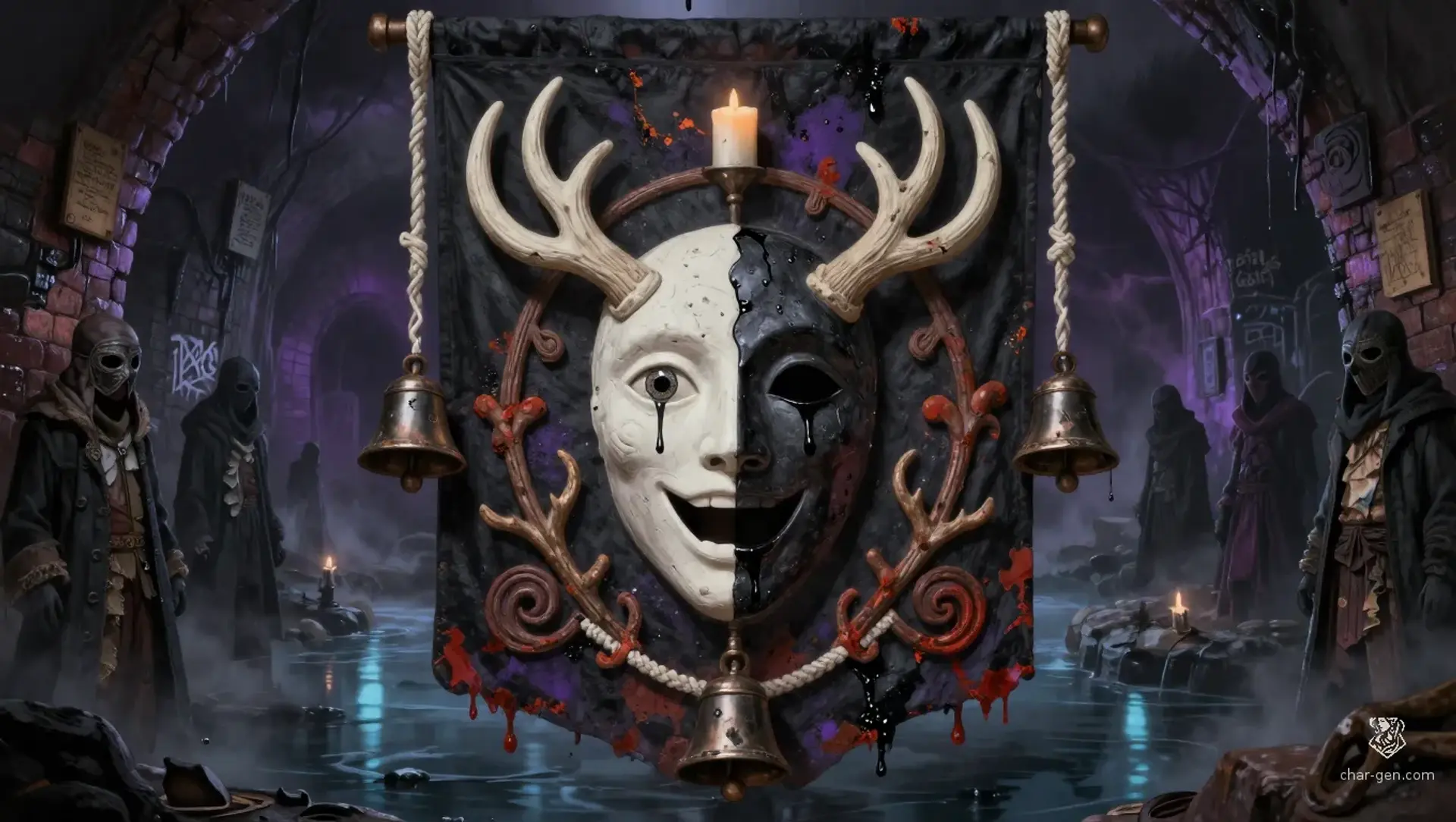
The Gutter Psalms began as an emergency food gang during the Winter of Nine Ashes. Their first great success was the Grainhouse Sunday raid, when they emptied three warehouses and humiliated a Brasterdenese magistrate by replacing the official sermon books with forged scripture praising rats and hunger. Their first setback came seven years later, when a young leader named Pel Vey betrayed the gang to the Church. Twelve members were executed, and the survivors learned to divide knowledge between cells. The watershed moment came during the Flood of Saint Orra, when a storm burst through the eastern drainage works. Sarra and Hesh could have escaped with their hidden treasury, but instead used the gang's tunnels to evacuate hundreds of tenants. The rescued residents began treating the gang as protectors rather than criminals. In the aftermath, the Gutter Psalms seized control of several ruined buildings, installed sympathetic caretakers, and demanded regular payments from landlords. This was when their criminal enterprise became a shadow government. In recent years, the gang has adopted more Mercian symbolism. Seasonal feasts, antler masks, mock sacrifices, and songs about victory, fertility, and the land now accompany robberies and punishments. Some members consider this theater. Others see it as the return of an older faith. The gang's current tension comes from the fact that both interpretations appear to work.

The Gutter Psalms

Thieves' Guild · Neutral Evil

The Gutter Psalms

What the high bells deny, the low waters remember.

TypeThieves' Guild
SizeSmall, approximately 40 member…
InfluenceLocal
WealthModest but liquid. The gang ha…
AlignmentNeutral Evil
AgeThirty-eight years as an organ…

Chronology

The Gutter Psalms began as an emergency food gang during the Winter of Nine Ashes. Their first great success was the Grainhouse Sunday raid, when they emptied three warehouses and humiliated a Brasterdenese magistrate by replacing the official sermon books with forged scripture praising rats and hunger. Their first setback came seven years later, when a young leader named Pel Vey betrayed the gang to the Church. Twelve members were executed, and the survivors learned to divide knowledge between cells. The watershed moment came during the Flood of Saint Orra, when a storm burst through the eastern drainage works. Sarra and Hesh could have escaped with their hidden treasury, but instead used the gang's tunnels to evacuate hundreds of tenants. The rescued residents began treating the gang as protectors rather than criminals. In the aftermath, the Gutter Psalms seized control of several ruined buildings, installed sympathetic caretakers, and demanded regular payments from landlords. This was when their criminal enterprise became a shadow government. In recent years, the gang has adopted more Mercian symbolism. Seasonal feasts, antler masks, mock sacrifices, and songs about victory, fertility, and the land now accompany robberies and punishments. Some members consider this theater. Others see it as the return of an older faith. The gang's current tension comes from the fact that both interpretations appear to work.

Founder’s Story

Thirty-eight years ago, Sarra was a sewer scavenger and Hesh was a dismissed church chorister. During the Winter of Nine Ashes, the Brasterdenese authorities closed the eastern grain warehouses while priests preached patience and civic obedience. Sarra and Hesh broke into a condemned chapel, stole its ceremonial bells, and used them to coordinate raids on hoarded food stores. They distributed some of the grain, sold the rest, and discovered that fear could be organized as effectively as hunger. Their first followers were smugglers, rat catchers, abandoned apprentices, and tenants hiding from debt collectors. They called themselves the Gutter Psalms because Sarra claimed every city had a holy song, and theirs was the sound of water carrying secrets beneath the streets.

The Mechanism of Intent

Public Goals
  • Protect Eastern Slum residents from abusive landlords and corrupt officials
  • Expose hypocrisy within the Brasterdenese Church
  • Preserve old Mercian songs, customs, and seasonal festivals
  • Prevent outside criminal organizations from exploiting the district
  • Secret Goals
  • Turn the Eastern Slums into a territory where no external authority can safely operate.
  • Recover and restore the drowned Mercian shrine beneath the harbor.
  • Use the gang's evidence of Church crimes to trigger a political crisis across Helsotivl.
  • Make Asinus Sentina absorb responsibility for the gang's current crimes before replacing him with a puppet landlord.
  • Force Ar Rud to recognize the Gutter Psalms as an independent criminal power.
  • Current Objectives
  • Force three especially abusive landlords to sell their properties through intimidation and forged debts.
  • Recover a stolen Mercian bronze mask before the Brasterdenese Church discovers its importance.
  • Identify the informant supplying Ar Rud with reports on the gang's movements.
  • Make Asinus Sentina dependent on the Gutter Psalms by arranging evidence of his corruption to surface at the right moment.
  • Recruit enough desperate tenants to create a neighborhood watch that secretly answers to Sarra and Hesh.
  • Long-Term Vision

    To make the Eastern Slums a self-governing district ruled through neighborhood protection, criminal taxation, seasonal ritual, and control of the underground routes. Sarra imagines a disciplined shadow republic. Hesh imagines a renewed Mercian sanctuary where the city belongs to its people, its dead, and its forgotten spirits.

    StructureMarried dual leadership supported by ritualized criminal cells
    SuccessionSarra and Hesh claim that they will choose successors together, but no written succession law exists. Sarra favors Marn Vetch, while Hesh favors Eira Nine-Fingers. If one founder dies, the other may appoint a successor, though the Bell-Keepers can reject that decision by withholding tribute and support. If both die, the gang will likely divide between a practical criminal faction, a Mercian revival faction, and those who seek protection under Ar Rud.

    Leadership

    Sarra and Hesh The Twin Cantors

    Sarra is controlled, sardonic, and observant. Hesh is theatrical, intuitive, and emotionally volatile. Sarra wins through preparation. Hesh wins through symbolism, charisma, and the willingness to take risks that appear foolish until they succeed.

    Marn Vetch First Bell-Keeper and treasurer

    Patient, dry-witted, suspicious, and frighteningly practical. Marn remembers every debt and never forgets an insult.

    Eira Nine-Fingers Ritual keeper and recruiter

    Warm with children, severe with adults, superstitious, and capable of sudden brutality when sacred objects are threatened.

    Odran Pike Fence master and possible traitor

    Charming, vain, cowardly under pressure, and gifted at making betrayal sound like moderation.

    Talla Brine Leader of the young runners

    Bold, funny, reckless, and unusually compassionate. She steals from the gang's stores to feed families the leaders have overlooked.

    Brother Caldus Forger, interrogator, and keeper of stolen church records

    Former Brasterdenese acolyte, articulate, guilt-ridden, and fascinated by forbidden theology.

    Visual sheet

    Turn The Gutter Psalms into a sheet

    A high-res, share-ready sheet you can post or print.

    Gallery

    No images yet. Click to add.

    Relationships