
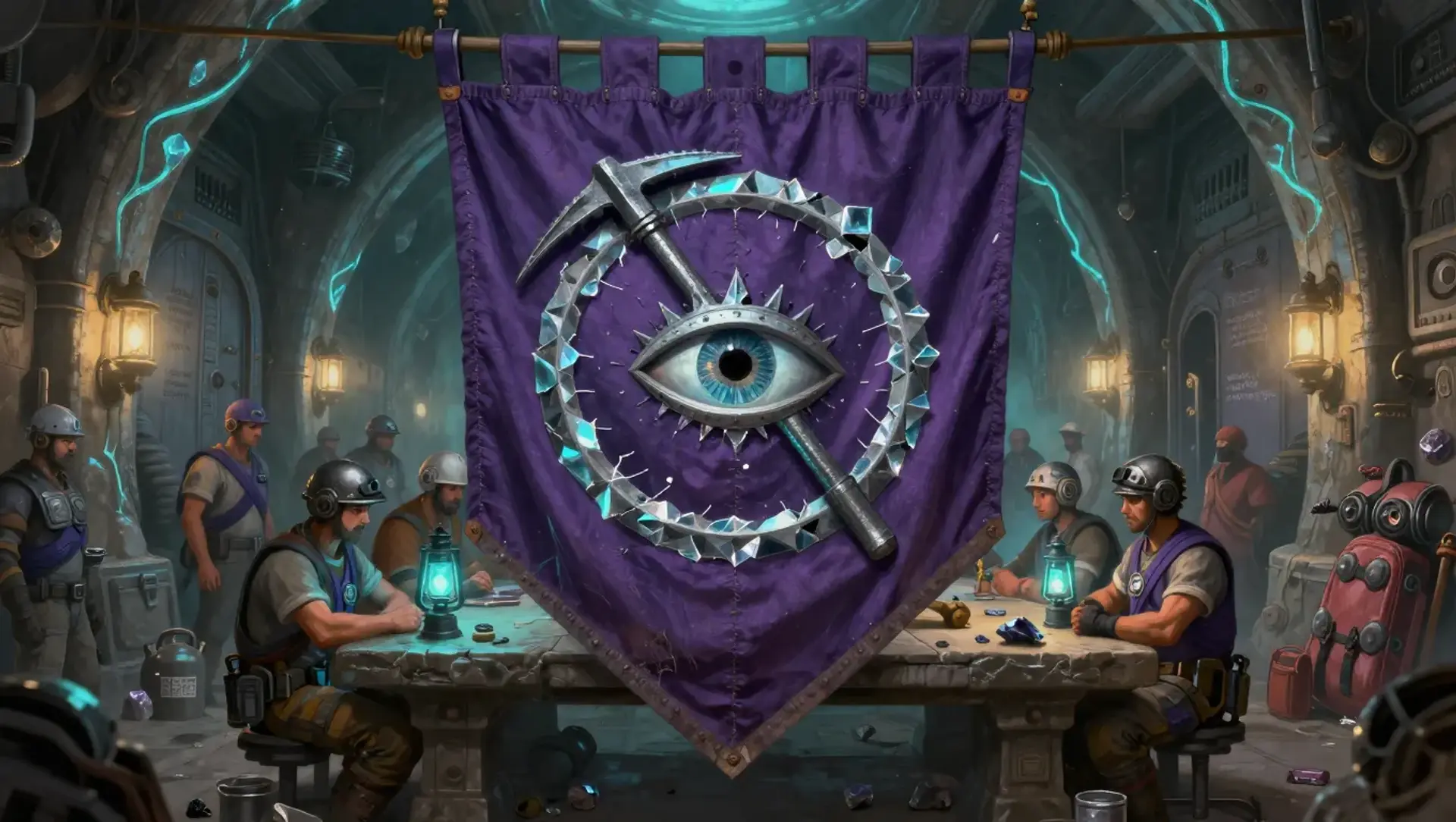
The Deep-Vein Labor Accord
Before the Accord existed, workers in the Crucible Depths survived through informal rescue pacts and burial funds. These groups were local, secretive, and easily crushed by contract holders who controlled food, transport, and access to safer tunnels. The Lanternfall Collapse transformed scattered resentment into organized solidarity. The first leaders established three permanent practices: every work crew must maintain a witness ledger, every extraction contract must list hazard conditions in language workers can understand, and every dead worker’s family receives aid before any company debt is collected. During the Accord’s early expansion, its stewards uncovered a pattern of laboratory disappearances disguised as cave-in deaths. The revelation led to the 1217 TF Black Ledger hearings, where the coalition forced several research supervisors to testify. The hearings won compensation for hundreds of families but failed to close the implicated facilities. In 1231 TF, the Quiet Strike demonstrated the Accord’s economic power and secured recognition from several major transport hubs. Later victories included standardized rescue beacons, hazard pay for gravity-sink operations, and communal ownership of emergency ventilation equipment. Setbacks followed. The 1268 TF Ashglass Purge saw dozens of organizers arrested, while the 1289 TF Fracture Winter split the coalition over whether to cooperate with Gearforged liberationists who had sabotaged a major laboratory. The Accord survived both crises, but the old question remains unresolved: can workers reform Azimut’s industrial system, or must they eventually replace it?
Labor Union, Workers’ Rights Coalition, and Extractive Guild · Neutral Good
The Deep-Vein Labor Accord
“No vein runs alone.”
Turn The Deep-Vein Labor Accord into a sheet
A high-res, share-ready sheet you can post or print.