Skip to content
CreatePricing
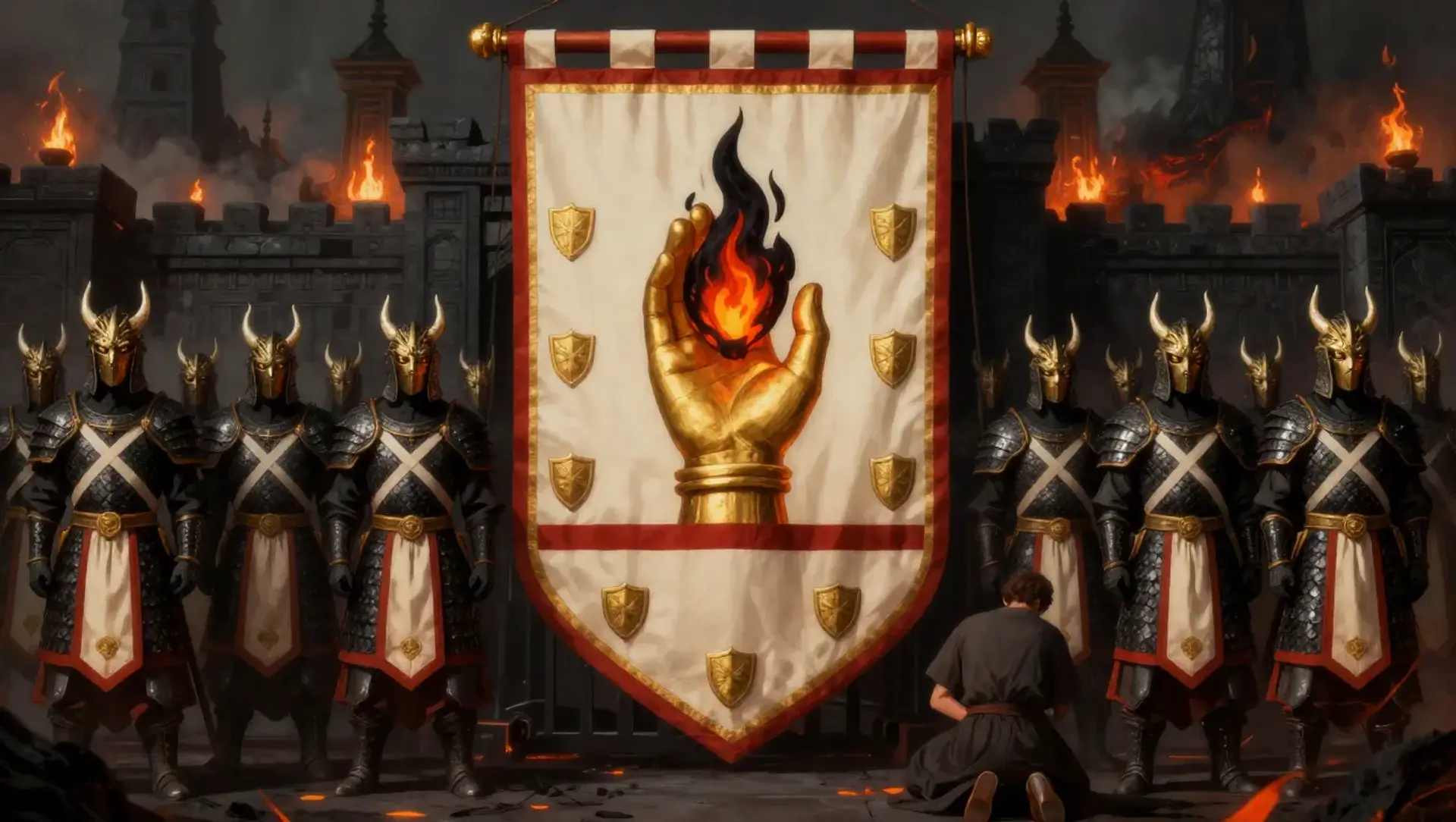
Bastion Sanctum Wardens - AI-generated fantasy Faction

Bastion Sanctum Wardens

The order's first centuries were defined by consolidation. It absorbed rival temple guards, standardized watch bells, and created the first sanctum maps beneath the Gilded Bastion. During the Nine-Beacon Winter, the Wardens held the city's inner terraces while the Scaled Aegis rebuilt the eastern watchtowers. Their stand became the order's foundational triumph, although later chronicles exaggerate how close the city came to falling. The watershed moment came during the Ash-Tithe Rebellions. A relic vault seal failed while the Wardens were deployed to enforce emergency levies. The commandant chose to secure the relic instead of evacuating a crowded workers' quarter. The vault was contained, but hundreds died in the resulting fire and ash surge. The order survived only because lower-ranking Wardens broke formation, opened the temple gates, and carried civilians into the sanctum courts. Since then, the order has maintained the Mercy Clause, which requires civilian evacuation to take priority over relic preservation unless the Ember-Marshal personally overrides it. In the present era, the Wardens have become both shield and symbol. They guard high holy ceremonies, escort relics through the Marches, and secure council sessions where military policy and religious law overlap. The failing Vault of the First Ember has made every duty more dangerous. Some Wardens believe their purpose is to preserve the old order. Others believe the old order is precisely what must be protected against.

Bastion Sanctum Wardens

Elite Temple Guard and Paladin Order · Lawful Good

Bastion Sanctum Wardens

Hold the flame. Open the gate.

TypeElite Temple Guard and Paladin…
SizeMedium, approximately 490 swor…
InfluenceHigh within the Gilded Bastion…
WealthComfortable and well supplied,…
AlignmentLawful Good
AgeApproximately 600 years as a f…

Chronology

The order's first centuries were defined by consolidation. It absorbed rival temple guards, standardized watch bells, and created the first sanctum maps beneath the Gilded Bastion. During the Nine-Beacon Winter, the Wardens held the city's inner terraces while the Scaled Aegis rebuilt the eastern watchtowers. Their stand became the order's foundational triumph, although later chronicles exaggerate how close the city came to falling. The watershed moment came during the Ash-Tithe Rebellions. A relic vault seal failed while the Wardens were deployed to enforce emergency levies. The commandant chose to secure the relic instead of evacuating a crowded workers' quarter. The vault was contained, but hundreds died in the resulting fire and ash surge. The order survived only because lower-ranking Wardens broke formation, opened the temple gates, and carried civilians into the sanctum courts. Since then, the order has maintained the Mercy Clause, which requires civilian evacuation to take priority over relic preservation unless the Ember-Marshal personally overrides it. In the present era, the Wardens have become both shield and symbol. They guard high holy ceremonies, escort relics through the Marches, and secure council sessions where military policy and religious law overlap. The failing Vault of the First Ember has made every duty more dangerous. Some Wardens believe their purpose is to preserve the old order. Others believe the old order is precisely what must be protected against.

Founder’s Story

The Wardens began after the First Ember Procession, when a sacred flame carried from Mount Ignis-Vulkanis reached the Gilded Bastion surrounded by ash, wounded pilgrims, and three rival temple retinues. Each retinue claimed the right to guard the flame. The argument became a battle in the basilica court until the flame went cold. In the silence that followed, the surviving guards swore a common oath to defend the sanctum before defending any temple, prelate, or personal claim. Their first name was deliberately boastful, the Bastion Sanctum Wardens, a promise that no holy wall would ever again fall through divided command. Centuries later, their title sounds less like a promise and more like an accusation whenever the city's defenses fail.

The Mechanism of Intent

Public Goals
  • Keep the Gilded Bastion secure against invasion, sabotage, and magical catastrophe.
  • Protect high prelates, sacred relics, and the continuity of religious law.
  • Maintain peace during council sessions and major rites.
  • Ensure that dangerous powers remain contained and properly witnessed.
  • Defend the sanctum without allowing political factions to seize its sacred authority.
  • Secret Goals
  • Force the high priesthood to accept the Mercy Clause as binding religious law.
  • Recover the erased First Ember Procession records and restore the order's original purpose.
  • Prevent any faction from turning the failing Vault of the First Ember into a weapon.
  • Prepare an evacuation and continuity plan for the Gilded Bastion if the Vault ruptures.
  • Identify a moral and voluntary resolution for the Unbound Ember before containment becomes impossible.
  • Current Objectives
  • Secure the inner temples and council chambers of the Gilded Bastion during escalating frontier tensions.
  • Reinforce the containment protocols surrounding relics connected to the Vault of the First Ember.
  • Prevent panic if corrupted leyline pressure reaches the sanctum district.
  • Create a lawful succession plan that prevents the high prelates from turning the Wardens into a private political army.
  • Identify whether the recent disturbances at Scaled Aegis are sabotage, planar bleed, or evidence of a deeper conspiracy.
  • Long-Term Vision

    Aethelgard's sanctuaries should become places where law protects the vulnerable rather than merely preserving hierarchy. The Wardens envision a disciplined but reformed temple defense system, one capable of containing ancient powers while acknowledging that obedience without conscience can become another form of tyranny.

    StructureOath-bound temple military order
    SuccessionWhen the Ember-Marshal dies, resigns, or is removed, the Seven Seal-Captains enter the Oath Court and surrender their command seals. Each must present a record of one decision in which they obeyed the law, one in which they challenged it, and one in which they placed civilian safety above institutional prestige. The Cinder Votaries and Sanctum Lances then submit sealed evaluations. The high prelates confirm the result only if the chosen successor receives five of seven captain votes and a majority of the lower-rank evaluations. If no candidate qualifies, Tavri Sorn's last surviving predecessor's sealed emergency protocol activates, placing the order under temporary collective command.

    Leadership

    Tavri Sorn Ember-Marshal of the Bastion Sanctum Wardens

    Steady, compassionate, and formidable. Tavri dislikes grand speeches, prefers written testimony, and has no patience for cruelty disguised as procedure.

    Tavri Sorn Ember-Marshal

    Measured, patient, and difficult to intimidate. Tavri speaks softly in council and becomes terrifyingly decisive once civilians are threatened.

    Seshai Vard First Seal-Captain

    Polished, severe, and intellectually brilliant. Seshai remembers every oath violation and forgives almost none of them.

    Miko Goldbound Preceptor

    Blunt, practical, and warm with recruits. Miko has a talent for turning rigid rules into humane procedures.

    Shesh of the Lower Steps Relic Quarantine Preceptor

    Breathy and contemplative, with a habit of pausing before every answer as if listening to something beneath the floor.

    Rok Sanctum Lance Sergeant

    Short-spoken, stubborn, and physically fearless. Rok treats ceremonial rank with open skepticism.

    Hessa Tuur Cinder Votary Chirurgeon

    Plainspoken and observant, with a dry humor that disarms frightened witnesses.

    Visual sheet

    Turn Bastion Sanctum Wardens into a sheet

    A high-res, share-ready sheet you can post or print.

    Gallery

    No images yet. Click to add.

    Relationships