Skip to content
CreatePricing
Museum of Unquiet History - AI-generated fantasy Faction

Museum of Unquiet History

The museum's first century was defined by survival. The founders protected their collection by moving it between freight depots, abandoned chapels, and private libraries. They learned that some historical objects became less dangerous when displayed with competing accounts of the same event. This led to the museum's central doctrine: no artifact is complete without contradiction. Forty years after its founding, the museum prevented a provincial government from demolishing a battlefield whose dead had begun appearing in mirrors. The rescue made the institution famous and attracted scholars, smugglers, railway workers, and professional guides. Seventeen years later, a wealthy patron attempted to weaponize a collection of royal execution records. The resulting gallery revolt killed three curators and shattered the public trust. The museum responded by adopting neutrality, refusing to endorse any government, religion, rebellion, or commercial power. Its greatest setback came during the Brass Mile Fire, when half a regional archive was destroyed and nine field teams vanished. The museum's greatest triumph followed when its surviving Track Wardens recovered the names of more than four thousand displaced people from the ashes. In the present day, the museum is a global guild with branches hidden in cities, border stations, desert forts, ship holds, and frontier settlements. Its arrival in Elpine is the first time it has established a permanent branch in the Brackwater Below.

Museum of Unquiet History

Guild · True Neutral

Museum of Unquiet History

Let the dead disagree.

TypeGuild
SizeLarge, approximately 586 activ…
InfluenceGlobal
WealthComfortable but liquid, with l…
AlignmentTrue Neutral
Age148 years

Chronology

The museum's first century was defined by survival. The founders protected their collection by moving it between freight depots, abandoned chapels, and private libraries. They learned that some historical objects became less dangerous when displayed with competing accounts of the same event. This led to the museum's central doctrine: no artifact is complete without contradiction. Forty years after its founding, the museum prevented a provincial government from demolishing a battlefield whose dead had begun appearing in mirrors. The rescue made the institution famous and attracted scholars, smugglers, railway workers, and professional guides. Seventeen years later, a wealthy patron attempted to weaponize a collection of royal execution records. The resulting gallery revolt killed three curators and shattered the public trust. The museum responded by adopting neutrality, refusing to endorse any government, religion, rebellion, or commercial power. Its greatest setback came during the Brass Mile Fire, when half a regional archive was destroyed and nine field teams vanished. The museum's greatest triumph followed when its surviving Track Wardens recovered the names of more than four thousand displaced people from the ashes. In the present day, the museum is a global guild with branches hidden in cities, border stations, desert forts, ship holds, and frontier settlements. Its arrival in Elpine is the first time it has established a permanent branch in the Brackwater Below.

Founder’s Story

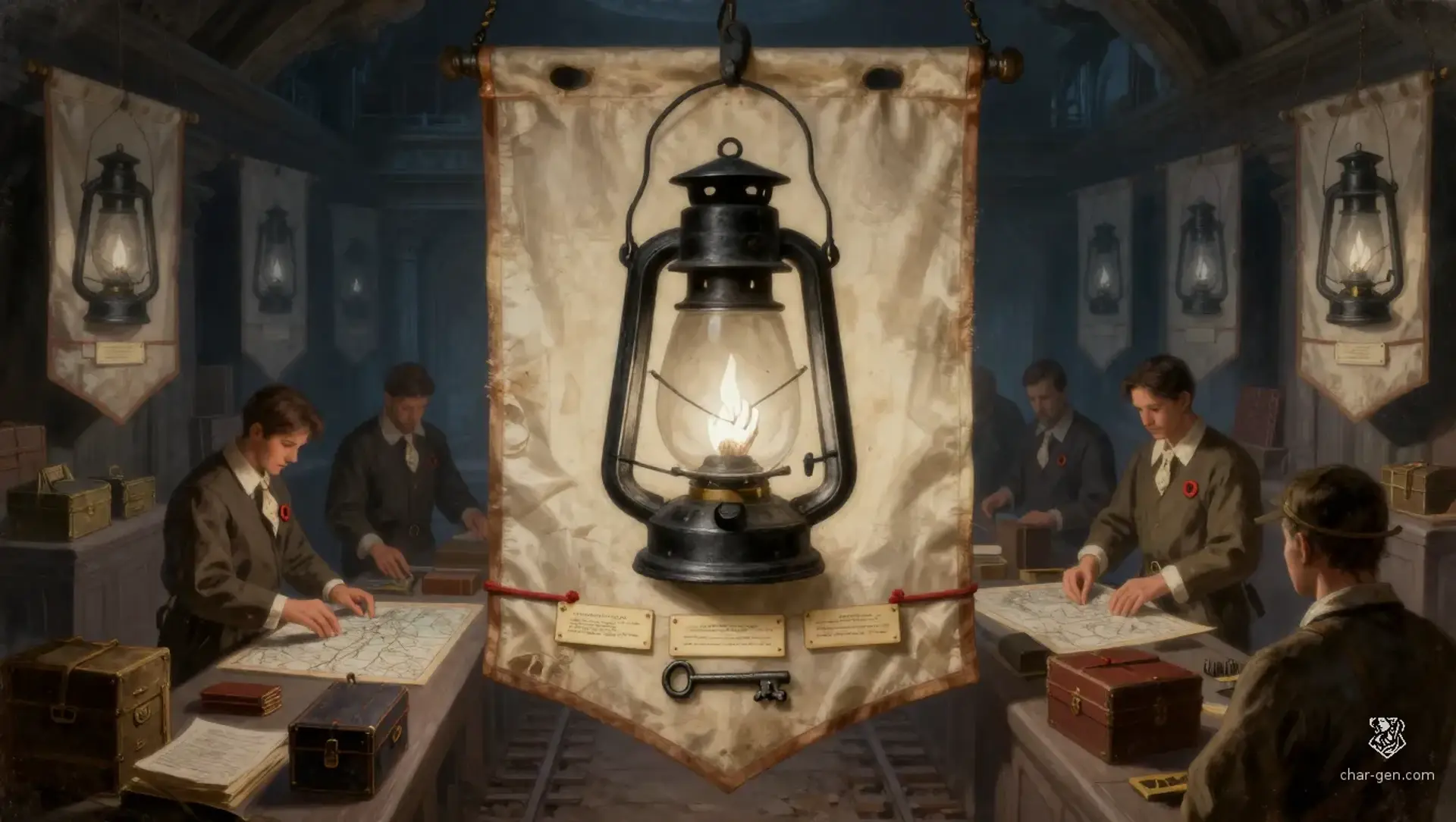
The Museum of Unquiet History began after a railway cutting exposed a buried settlement beneath a dry cattle route. The first surveyors expected pottery and graves. Instead, every recovered object displayed the final moment of a different dead person when touched. A brass cup showed a drowning. A child's shoe showed a courthouse fire. A broken rail spike showed the murder of a worker who had died decades after the settlement was buried. The surveyors argued over whether the objects were evidence, curses, or witnesses. Their disagreement became violent when a local official ordered the site burned. During the fire, a lantern fell into a collapsed chamber and its flame burned white without consuming the oil. Six survivors carried the lantern, the objects, and the surviving testimony to a freight shed. They called the collection a museum, though outsiders misunderstood the name as a boast that the museum itself was haunted. The founders meant that history was unquiet whenever the living forced it to lie.

The Mechanism of Intent

Public Goals
  • Preserve endangered history
  • Provide neutral access to records and artifacts
  • Educate the public about forgotten cultures and disasters
  • Prevent the destruction of historic sites
  • Offer impartial expertise to communities, scholars, and governments
  • Secret Goals
  • Identify the source of the future artifacts entering the collection.
  • Keep the Lantern Survey's operational network hidden from governments and corporations.
  • Find a way to preserve historical spirits without binding them to objects or sites.
  • Determine whether the museum's neutrality has become an excuse for moral cowardice.
  • Prepare selected communities to survive the predicted catastrophe without telling them what is coming.
  • Current Objectives
  • Secure the Brackwater Below branch before local authorities discover its true purpose.
  • Determine why several exhibits worldwide have begun recording events that have not yet happened.
  • Preserve twelve endangered historical sites before rail expansion, war, mining, or planar disturbances erase them.
  • Find the missing ledger of the museum's first curator, which allegedly identifies every place where history has become physically unquiet.
  • Prevent a faction within the museum from turning the institution into an international power rather than a neutral archive.
  • Long-Term Vision

    A world where endangered history cannot be erased by fire, conquest, profit, or official decree, and where every community can preserve its own account without surrendering it to kings, scholars, or spirits.

    StructureInternational preservation guild and historical containment institution
    SuccessionThe First Keeper is chosen by the Seven Cases after a year of public service, private testimony, and an examination conducted by the White Lantern. The candidate must answer questions from living members, deceased former members, and at least one historical witness who cannot be proven to have existed. The Seven Cases may reject the lantern's choice, but doing so has only happened twice. The centralist faction wants succession decided by formal vote, while field workers insist that no one who has not personally endangered themselves for a site should lead the museum.

    Leadership

    Oren Dast First Keeper

    Courteous, stubborn, and exhausted. He listens carefully, refuses dramatic gestures, and becomes frighteningly decisive when anyone threatens the museum's independence.

    Nahlia Vey Interim curator of the Brackwater Below branch

    Patient, dryly humorous, observant, and difficult to intimidate. She treats every conversation as a deposition and every kindness as evidence.

    Gor Kesh Master of restoration and likely successor to the First Keeper

    Blunt, methodical, suspicious of magic, and unexpectedly tender toward damaged objects.

    Toma Rusk Chief registrar and keeper of disputed names

    Warm, practical, quick with a joke, and deeply afraid of being remembered as a coward.

    Bek Arat Senior Track Warden and covert Survey courier

    Restless, charismatic, and reckless. He can read a railway timetable like a military map and lies best when telling the truth.

    Keti of the Long Cut Curator of occult containment and leader of the centralist faction

    Severe, brilliant, and theatrical. She collects apologies from people who once underestimated her.

    Visual sheet

    Turn Museum of Unquiet History into a sheet

    A high-res, share-ready sheet you can post or print.

    Gallery

    No images yet. Click to add.

    Relationships