
The Reed-Bound Compact
After the famine years, the faction spent decades as a quiet emergency network rather than a true political body. It learned to survive by controlling measures, knowing who was hungry, and speaking with one voice when the Crown's agents arrived. Its first triumph came when it tricked a sheriff's men into taking flood-damaged grain as tithe, leaving the village enough seed to replant the spring fields. Its first setback came 41 years ago, when a young Bowl-Tender sold secret storehouse locations to a noble household in exchange for land title. The betrayal led to arrests, a public hanging, and the destruction of one of the hidden granaries. The faction nearly died then, but the survivors adapted, making the organization more decentralized and embedding secrecy into ordinary village customs. The watershed moment came 31 years ago with the Granary Edict, when the kingdom standardized quotas and weights across the region. Briarford's leaders responded by formalizing the Reeds as a legal charity for disaster relief while continuing their covert mutual-defense work. Since then, they have become both indispensable and suspect. They keep the village fed in lean years, yet they also decide who suffers first when the numbers do not add up.
The Reed-Bound Compact
- Type
- Village association and…
- Size
- 60 members
- Reach
- Local but potent
- Base
- Briarford, a small farming village of roughly 400 souls on the king's river road
Overview
After the famine years, the faction spent decades as a quiet emergency network rather than a true political body. It learned to survive by controlling measures, knowing who was hungry, and speaking with one voice when the Crown's agents arrived. Its first triumph came when it tricked a sheriff's men into taking flood-damaged grain as tithe, leaving the village enough seed to replant the spring fields. Its first setback came 41 years ago, when a young Bowl-Tender sold secret storehouse locations to a noble household in exchange for land title. The betrayal led to arrests, a public hanging, and the destruction of one of the hidden granaries. The faction nearly died then, but the survivors adapted, making the organization more decentralized and embedding secrecy into ordinary village customs. The watershed moment came 31 years ago with the Granary Edict, when the kingdom standardized quotas and weights across the region. Briarford's leaders responded by formalizing the Reeds as a legal charity for disaster relief while continuing their covert mutual-defense work. Since then, they have become both indispensable and suspect. They keep the village fed in lean years, yet they also decide who suffers first when the numbers do not add up.
How it began
The faction began as a panic bargain made in the dead of winter. Ninety-three years ago, after raiders burned three farmsteads and a blight ruined the upper fields, the village elders gathered in the threshing barn to decide which households would eat and which would starve. Instead of submitting to the reeve's demand that all surplus be sent to the Crown's war stores, a miller named Odrin Hale, a shrine-keeper called Mother Sella, and seven landholders swore to hide a portion of the grain in sealed clay pits beneath the old byre. Their pact, later called the Reed Oath, kept the village alive through the famine and made them dangerous. What began as a desperate theft became a permanent arrangement, because once the people learned the village could survive without waiting for distant mercy, no one wanted to surrender that power again.
How to know them
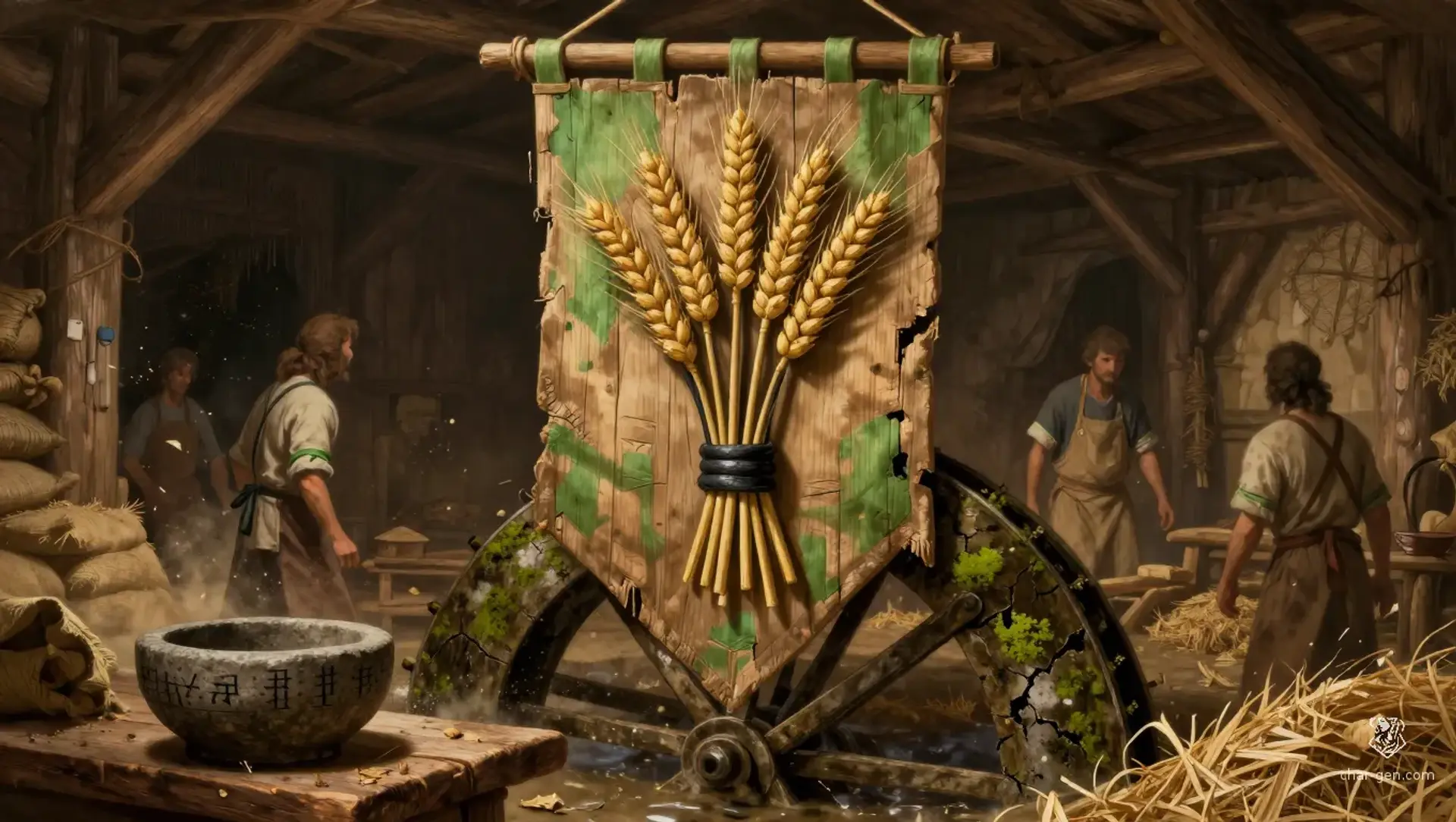
weathered green, straw gold, mud brown
- a bound sheaf of wheat
- three black reeds
- a cracked water wheel
- a grain bowl marked with tally lines
Standing
What they say they want
What they are doing now
Where it leads
To turn Briarford into a village that can negotiate as a power rather than beg as a dependency, preserving its fields, mills, and water rights under local control while remaining technically loyal to the kingdom.
How others see them
Among villagers they are seen as necessary, protective, and a little frightening. Outsiders often describe them as stubborn peasants with a talent for paperwork, but county officials know they are organized enough to delay levies, hide stock, and make an example of anyone who threatens the fields.
People
5 ranks
Reed Warden
Measured, protective, and ruthless when cornered. She prefers compromise, but once she decides, she can be colder than any noble taxman.
- Reed Warden1 member
Sets emergency policy, negotiates with outsiders, and has authority to break deadlocks in crises.
- Bowl-Tenders5 members
Manage grain stores, rationing, seed reserves, and the hidden ledgers that track who owes what.
- Field Speakings12 members
Represent hamlets, farm clusters, and labor families; carry grievances upward and orders downward.
- Reed Hands18 members
Trusted enforcers, runners, and covert messengers who conduct intimidation, surveillance, and sabotage.
- Bound Households40 members
Core supporters who contribute grain, labor, shelter, and silence when the faction acts.
Other key members
- Mother Sella Vane Shrine-keeper and oath witness
- Tovin Varren Mill factor and ledger keeper
- Bran Kettle Field Speaking for the lower commons
How they are organised
- Be a resident of Briarford or tied to a household that depends on its fields
- Contribute labor, grain, coin, or useful information
- Swear not to reveal storehouse locations to outsiders
- Accept that in a crisis the faction decides who gets seed, repairs, and protection first
Relations
11 factionsThe mill family depends on the faction for grain allotments, and in return quietly adjusts weights, hides surplus, and warns of tax inspectors.
Operations
What they do
How they do it
Services for hire
- ConcealmentA favor, a secret, or one sack of good grain per month of supportThey can hide people, food, or documents from casual inspection.
- Guided PassageRepair labor, coin for salt, or access to legal counselThey provide village guides, weather knowledge, and safe route planning through the fields and marsh roads.
- MediationA public endorsement or a promise to back a petitionThey will help settle local disputes, usually by forcing compromise or exposing who has lied.
- Ration ReliefInfluence with the mill or access to seed stockThey can arrange emergency food relief in a crisis, but only if the request serves the village first.
What they can do
What they have
Where they are weak
Territory
Headquarters
Briarford, a small farming village of roughly 400 souls on the king's river roadTheir informal seat is the Threshing House, a broad timber hall beside the mill where grain is measured, petitions are drafted, and debts are settled over weak ale. Beneath its floor are old storage tunnels, a counting room, and a hidden stair to the flood culvert.
Lands they hold
Outposts
- The Stone of Three ReedsNorth field boundary stoneDead drop for messages and emergency meeting point
- Sump DoorOld flood culvert beneath the river roadHidden route for moving grain and evacuees during inspections or raids
- The Keg YardBehind Hollow's End TavernStorage for contraband, smuggled medicine, and temporary prisoners
Secrets
Plot hooks
5 hooks- 1The Missing SeedLowReward: Favor, food, and local goodwillA farmer asks the party to retrieve stolen seed grain before the planting window closes, but the thieves are actually faction members hiding it from a confiscation order.
- 2Counting the BarrelsModerateReward: Coin, legal leverage, and political accessThe quota officer offers the party paid work to audit the village mills. If they accept, they may expose corruption, trigger a crackdown, or gain proof of the faction's usefulness.
- 3The Levee ChoiceModerateReward: Reputation, supplies, and future allianceSpring floods threaten to breach the east levee. The faction wants the party to reinforce one section while secretly abandoning another, a choice that will decide which households survive dry.
- 4Ash Under the FloorboardsHighReward: Political influence, rare allies, or a village uprisingA young hardliner wants to expose the faction's hidden stores and force a public uprising. The party can help prevent bloodshed, join the revolt, or turn the rebel into a bargaining chip.
- 5The Forged SurveyHighReward: Land rights, legal standing, or a powerful enemyAn old map reveals a royal survey marker proving the village owns more water rights than the manor has been using. The faction needs someone brave enough to take it to court or steal the newer forged record.
Work they offer
What gets in the way
Rumours
Media
0 imagesNo images yet.
Turn The Reed-Bound Compact into a sheet
A high-res, share-ready sheet you can post or print.