
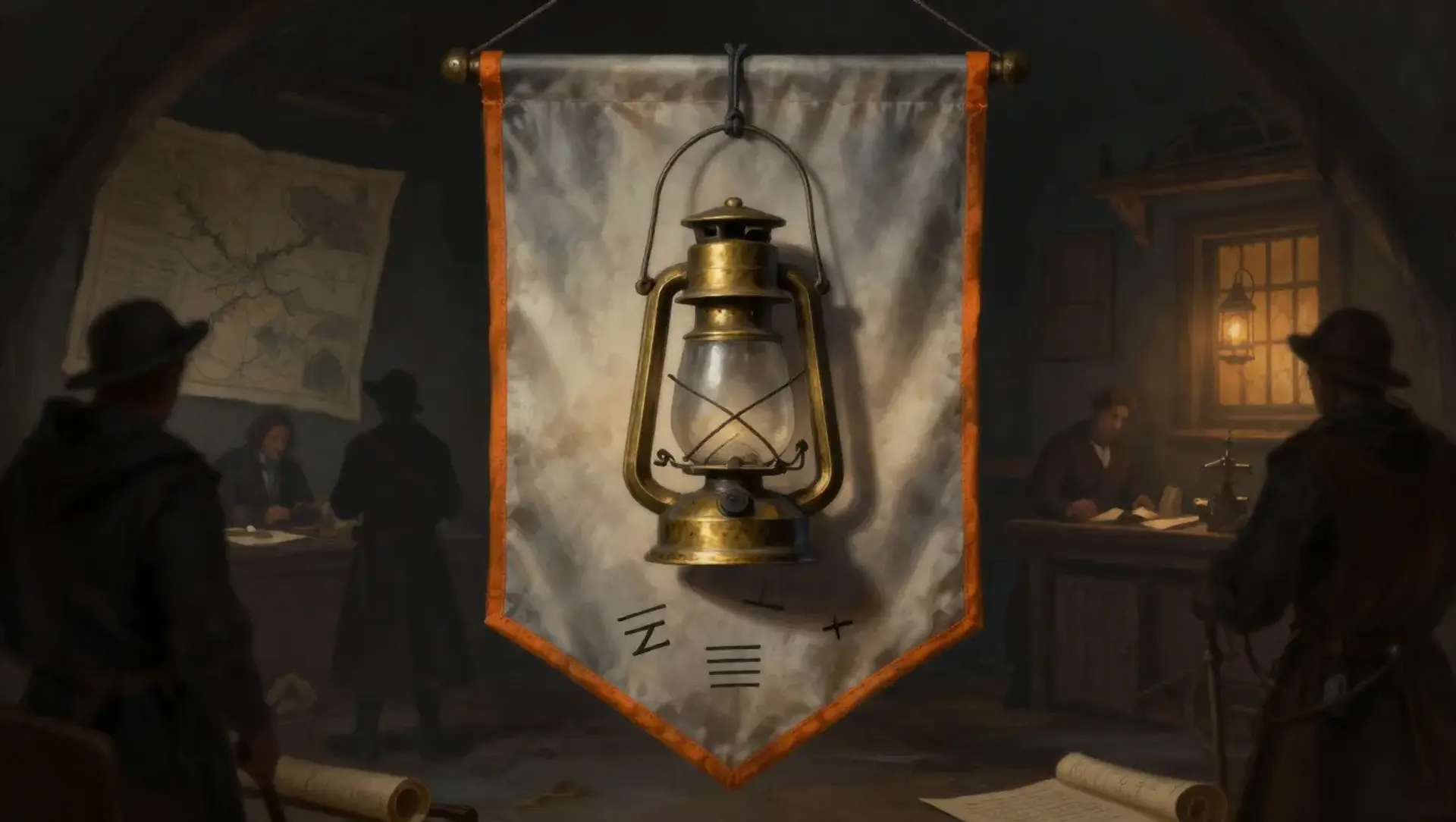
The Lantern Thread
The Lantern Thread's earliest ancestors were informal household circles that hid fugitives during the imperial advance. These circles lacked coordination and often saved people by luck rather than design. Oren and Tazra transformed them into a system based on commercial paperwork because cargo records crossed borders more safely than letters. The faction's first triumph was the Grain Winter operation, which exposed diversion of food and allowed several districts to resist starvation. Its first major setback was the Ash Ledger betrayal, when a frightened forger sold a partial list of safe homes. The network lost twenty-seven members and abandoned half its original routes. It responded by dividing knowledge into layers, ensuring that most members knew only one contact and one purpose. During the Census of Empty Doors, the network reached its greatest scale, falsifying thousands of household entries and moving people through freight convoys. This success made the faction famous among resistance circles, but it also attracted ambitious politicians who wanted to use the network for postwar power. Today, the Lantern Thread survives because it appears smaller and less heroic than it really is. It is no longer trying merely to outlast the occupation. It is trying to decide what kind of country will exist after the occupation ends.
Covert intelligence network and civilian evacuation organization · Pragmatic resistance with strong communal ethics, compromised by secrecy, blackmail, and a growing willingness to manipulate the people it protects.
The Lantern Thread
“A covered light still shows the way.”
Turn The Lantern Thread into a sheet
A high-res, share-ready sheet you can post or print.