
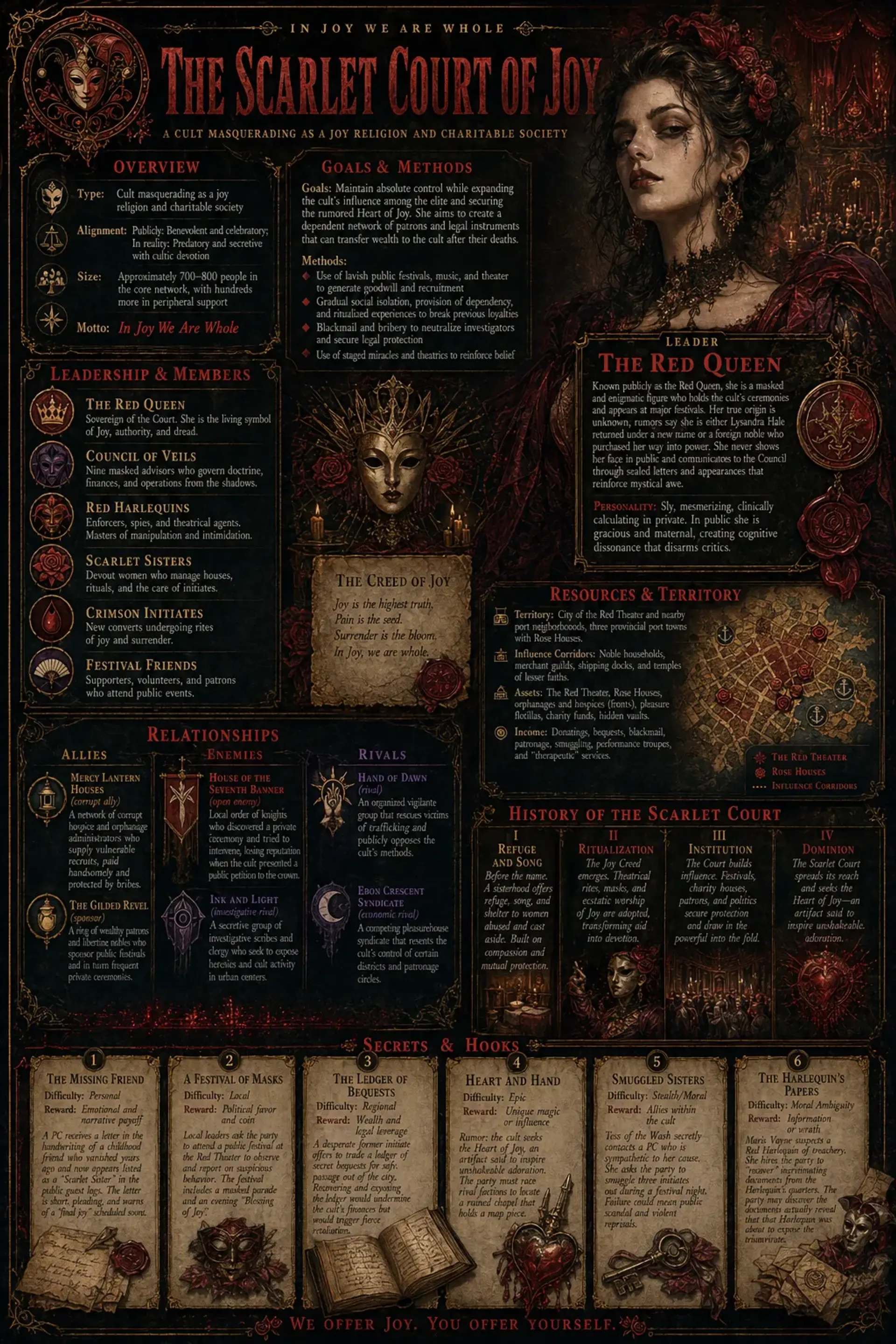
The Scarlet Court of Joy
Phase 1: Refuge and Song. Founding as an informal refuge for abused women. The group offered shelter, counseling, and mutual protection. Phase 2: Ritualization. Under a second leader the group adopted theatrical rites, symbols, and a creed that elevated ecstatic joy to divine status. Phase 3: Institutionalization. Chapters were established across the region. Public festivals and philanthropic works built legitimacy. Phase 4: Consolidation and Corruption. The leadership developed covert mechanisms: recruitment pipelines worked via corrupt institutions, and secrecy became institutional. A watershed moment occurred when a reform-minded magistrate attempted to investigate after a missing-persons case tied to a local chapter. The chapter mounted a public relations campaign that framed the magistrate as a moral enemy, leading to their exile and cementing the cult's ability to neutralize threats. Phase 5: Present. The cult now operates as a regional network with strong footholds in several cities. It is more politically cautious, seeking influence rather than overt confrontation, but retains brutal internal methods to secure obedience.
Cult masquerading as a joy religion and charitable society · Publicly: Benevolent and celebratory; In reality: Predatory and secretive with cultic devotion
The Scarlet Court of Joy
“In Joy We Are Whole”
Turn The Scarlet Court of Joy into a sheet
A high-res, share-ready sheet you can post or print.