
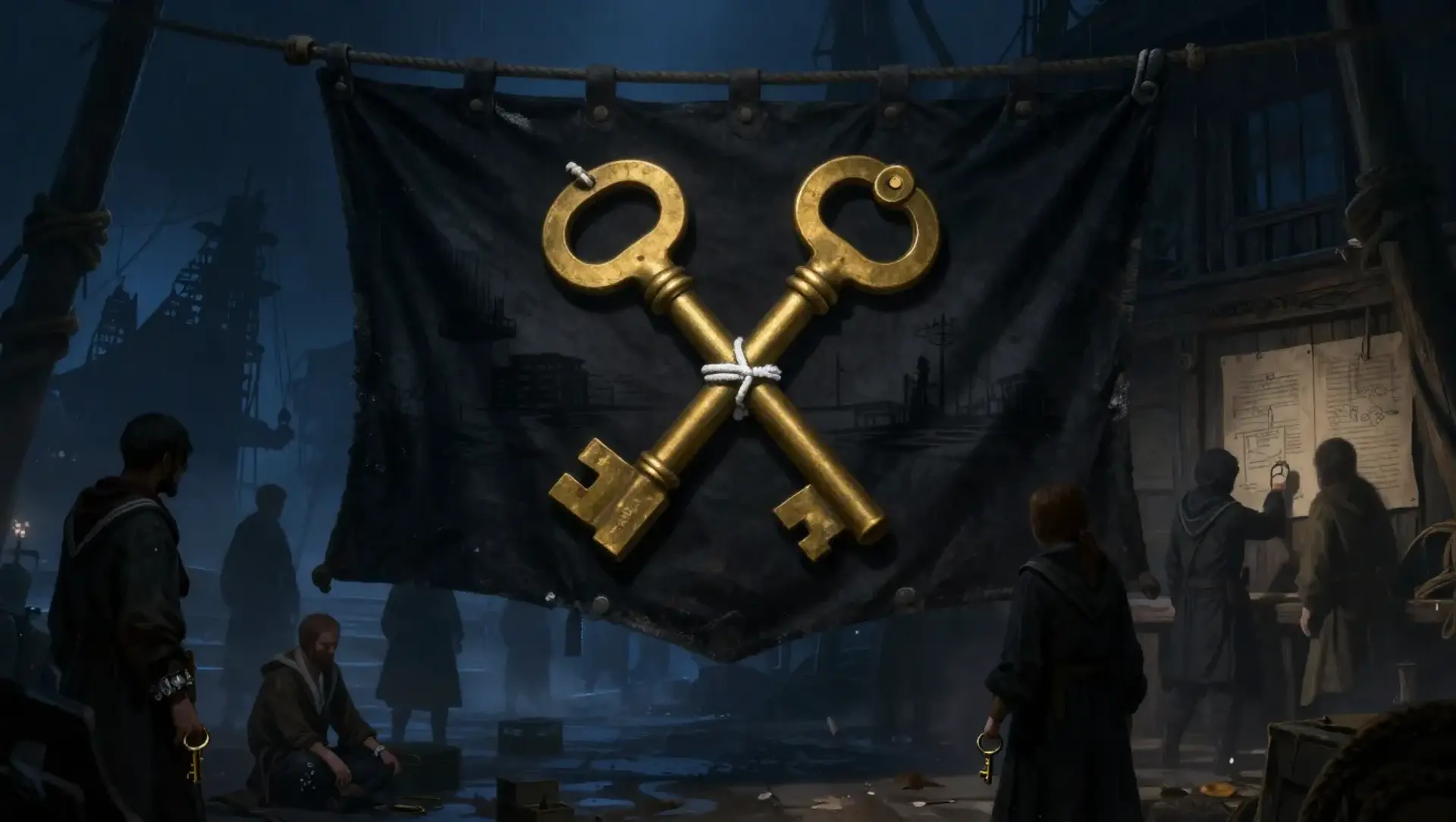
The Crown and Cinder
Before the occupation, imperial intelligence in Alethkar was already divided between naval surveillance, counter-smuggling, and political espionage. The hostile religious takeover shattered that structure. Some agents were converted. Some were executed. Others vanished into ordinary professions. The surviving cell first concentrated on observing the new regime. It mapped confession houses, tracked military shipments, and learned that the occupiers preferred to move forces through religious festivals, when civilian crowds made resistance difficult. The spies achieved their first major triumph by exposing a planned purge of dockside families. Their warning allowed hundreds to flee before the arrests began. Their first great setback followed when a courier named Odruma carried a message inland and never returned. The occupiers later displayed her signet in a public sermon, suggesting that someone inside the resistance had betrayed her. The faction has never learned whether she was captured, turned, or killed. During the next decade, the cell became more cautious and more effective. It built relationships with tide clerks, smugglers, undertakers, and minor priests. It also became more morally divided. Some members saw themselves as the hidden government of a future free empire. Others believed any replacement government would become oppressive unless the truth of the old regime was preserved. Today, the faction is small enough to be destroyed by one arrest, but experienced enough to notice patterns that larger resistance movements miss. Its greatest strength is patience. Its greatest weakness is that patience may soon become paralysis.
Revolutionary Movement · Neutral Good
The Crown and Cinder
“Count the doors. Leave one open.”
Turn The Crown and Cinder into a sheet
A high-res, share-ready sheet you can post or print.