
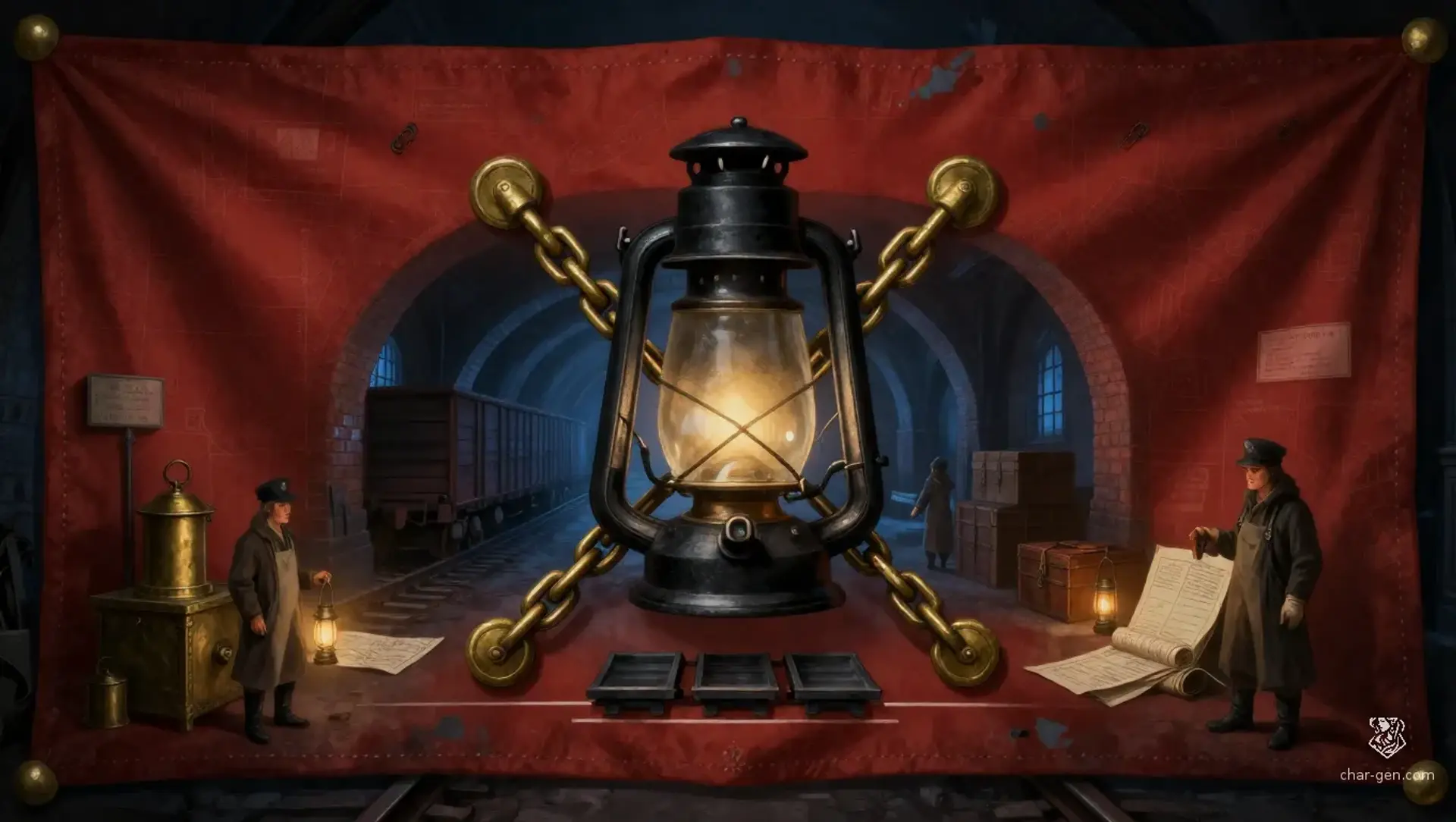
The Lantern Survey
For its first twenty years, the Survey was a loose band of route finders who hid artifacts in freight cars and sent copied maps to distant scholars. Its first major triumph came when its members prevented a mining company from blasting open the Cinder Archive, a buried complex whose walls recorded the names of thousands of people erased from colonial records. The Survey smuggled the archive's stone panels out piece by piece, leaving behind false geological reports. Its watershed moment came during the Black Lantern Evacuation, 51 years ago. The Survey discovered that a growing frontier town had been built over a sealed underground observatory. The Last Light ordered an immediate evacuation and sabotaged the town's rail access, believing the observatory would awaken if disturbed. Hundreds died in the resulting panic and winter isolation. The observatory did open, but only after a private military force entered the abandoned town. The disaster permanently divided the faction. One side became committed to secrecy and containment. The other argued that secrecy had killed more people than the buried danger would have. Since then, the Survey has expanded worldwide. It preserves ruins, oral histories, cemeteries, abandoned industrial works, battlefields, magical research sites, and premodern roads. It has also become more willing to manipulate governments, forge ownership records, and move entire collections into hidden repositories. Today it is both a safeguard against cultural erasure and an unaccountable power that decides which parts of the past the public is allowed to inherit.
Secret Society · Pragmatic good with lawful traditions and opportunistic methods. The Lantern Survey protects history, but it does not always protect people, governments, or property while doing so.
The Lantern Survey
“Keep the lamp low. Keep the road open.”
Turn The Lantern Survey into a sheet
A high-res, share-ready sheet you can post or print.