
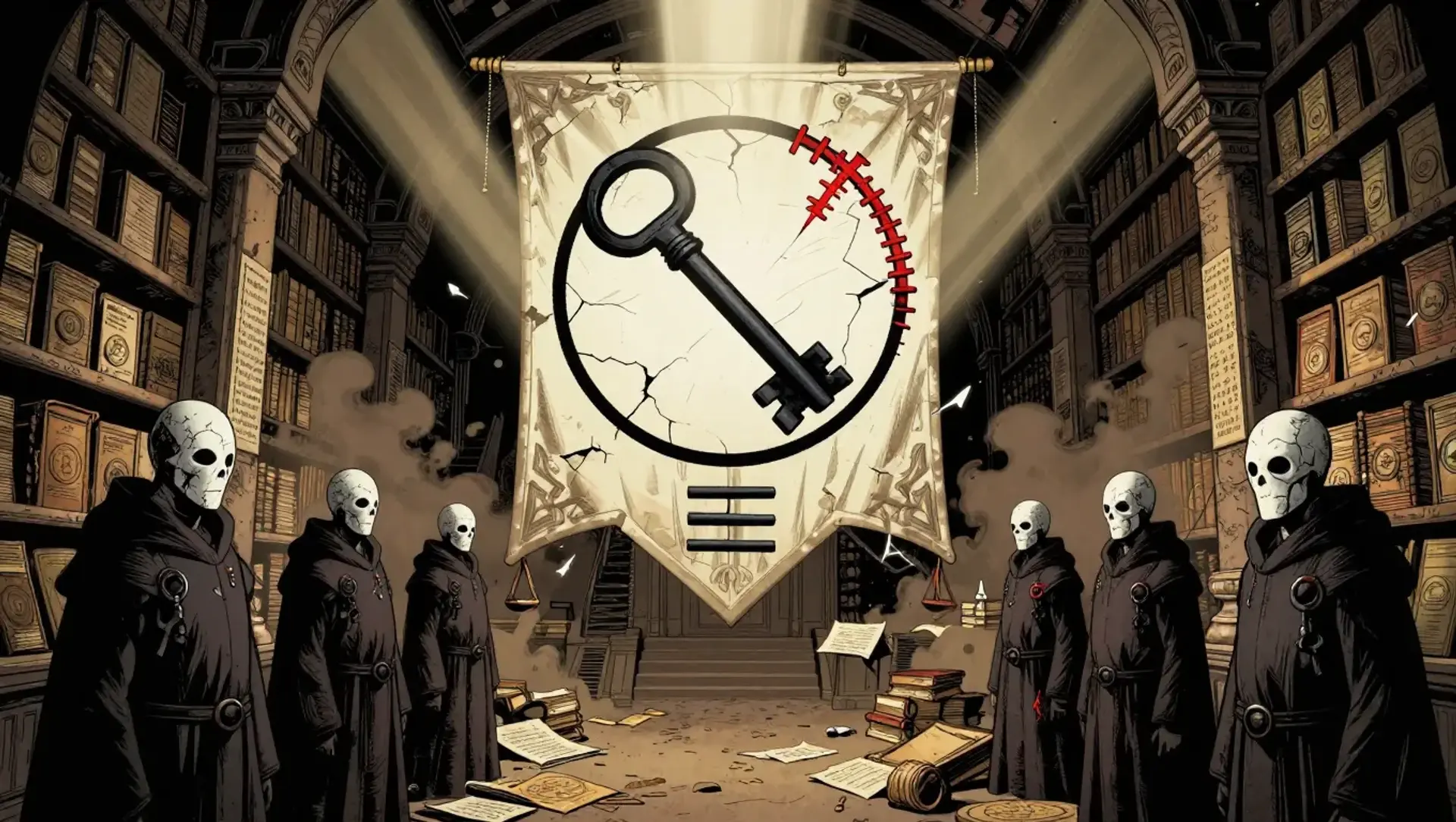
Order of Corrections
The Order began as a small network of court clerks and displaced witnesses after the Bellwether Trial. During its first decade, it specialized in exposing forged confessions, fabricated debts, and manipulated inheritance claims. Its first triumph came when it proved that a war between two city-states had begun because both sides had received counterfeit diplomatic seals. The Order became respected among ordinary citizens who had been denied justice by corrupt officials. Its first major setback came when a Correctionist publicly revealed a noble family's secret crimes without securing safe passage for the witnesses. The witnesses were killed, the city erupted in violence, and the Order was declared an extremist conspiracy. Forced underground, the organization adopted compartmentalized cells and began altering records instead of merely exposing them. The watershed moment was the Quiet Revision, a seven-month campaign during which the Order replaced hundreds of legal documents connected to a succession crisis. The operation prevented a civil war, but it also installed a ruler who later imprisoned thousands. The Order has argued about the Quiet Revision ever since. Restorationists call it a tragic necessity. Severance agents call it the moment the Order became indistinguishable from the tyrants it opposed. In the present day, the Order operates as investigator, censor, fixer, and covert political weapon. It still rescues people from false accusations, but it also decides which truths the public is allowed to survive.
Secretive corrective intelligence order · Lawful with a strong authoritarian tendency, tempered by a genuine belief that uncontrolled truth can destroy innocent lives.
Order of Corrections
“Correct the record. Spare the living. Remember the cost.”
Turn Order of Corrections into a sheet
A high-res, share-ready sheet you can post or print.