
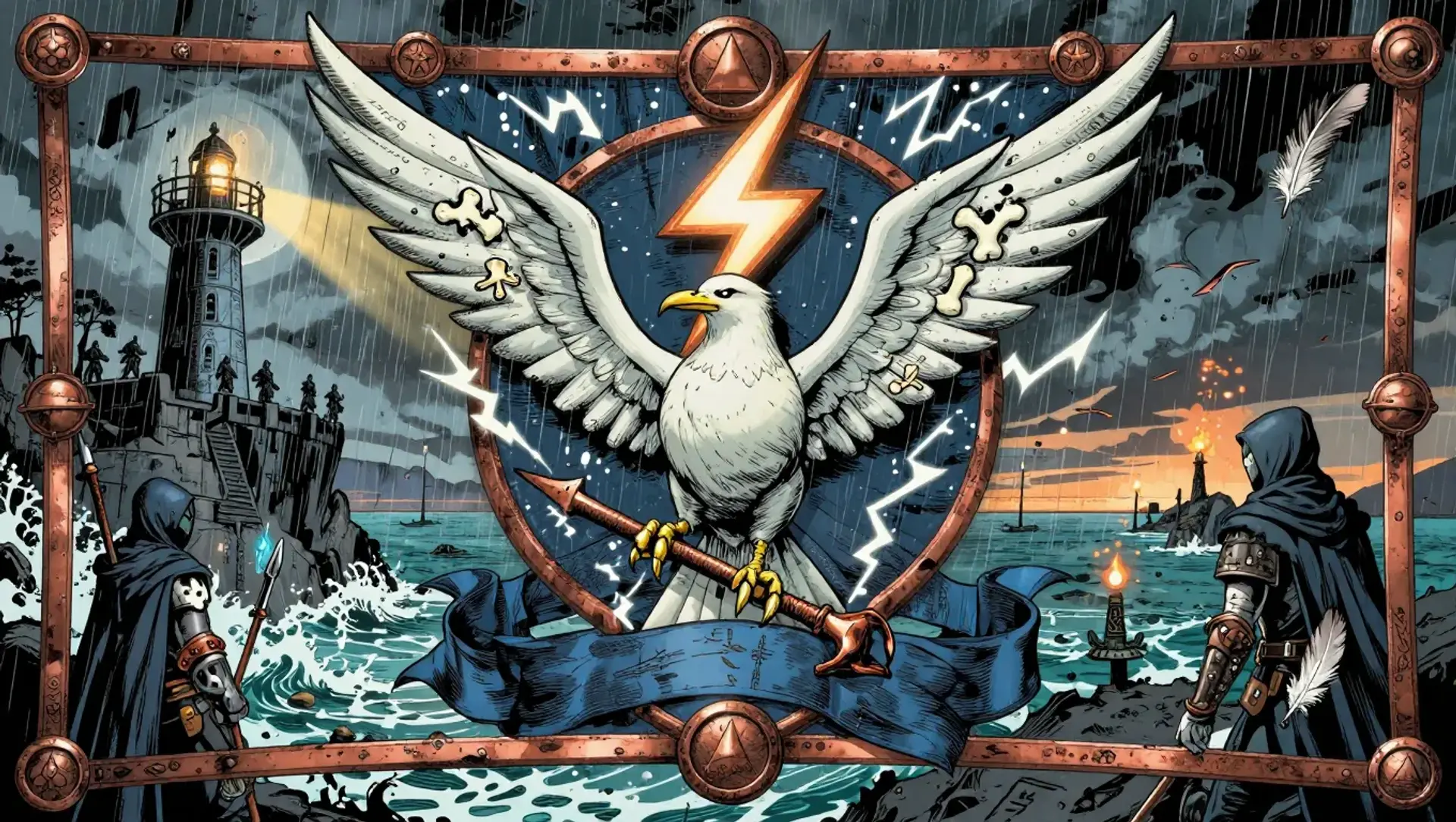
Quen’Naes
The roots of the Quen’Naes lie in the old hunting bands that moved between fishing villages, salt marshes, and upland forests. These bands were not a single army, but a web of families who exchanged warnings, food, and safe routes. During the occupation, the network was deliberately broken. Watchfires were extinguished, traditional paths were blocked, and many protective artifacts were confiscated or sold overseas. The returning tribespeople survived through scattered communities, with each generation losing more knowledge of the coast. Bubu’s return changed that decline into a movement. They gathered hunters from rival families and trained them together, forcing old enemies to share patrols and supplies. The earliest Quen’Naes fought raiders, protected harvests, and sabotaged occupation infrastructure. Their first great triumph was the Night of Thirty Fires, when coordinated signal towers allowed them to evacuate four villages before an invading force arrived and then cut off the invaders’ retreat. Their defining setback came three years later at Blackwater Inlet. A trusted guide betrayed the Quen’Naes, leading a raiding army through a supposedly impassable marsh. Twenty-one protectors died, along with hundreds of civilians. The tragedy convinced Bubu that courage without intelligence was insufficient. The Quen’Naes created their current intelligence network and began demanding formal loyalty oaths from village leaders. The watershed moment was the Breaking of the Salt Crown Road. The Dominion attempted to build a fortified road through sacred coastal territory. Rather than meet the army in open battle, the Quen’Naes redirected streams, destroyed supply bridges, freed conscripted laborers, and used storms to isolate the garrisons. The road project collapsed within a single season. The victory made the Quen’Naes symbols of independence, but it also convinced their leaders that they could shape the future of the homeland rather than merely defend it. Today, the Quen’Naes are no longer an improvised band of hunters. They are guardians, investigators, diplomats, and political forces. Some villages see them as the only institution capable of preserving freedom. Others fear that the protectors are becoming a government that no one elected.
Coastal protectorate and hunter-warrior order · Usually neutral good, with strong lawful traditions and a willingness to break laws that threaten the coast or its people.
Quen’Naes
“When the storm breaks, stand where others cannot.”
Turn Quen’Naes into a sheet
A high-res, share-ready sheet you can post or print.