Skip to content
CreatePricing
The Order of the White Bar - AI-generated fantasy Faction

The Order of the White Bar

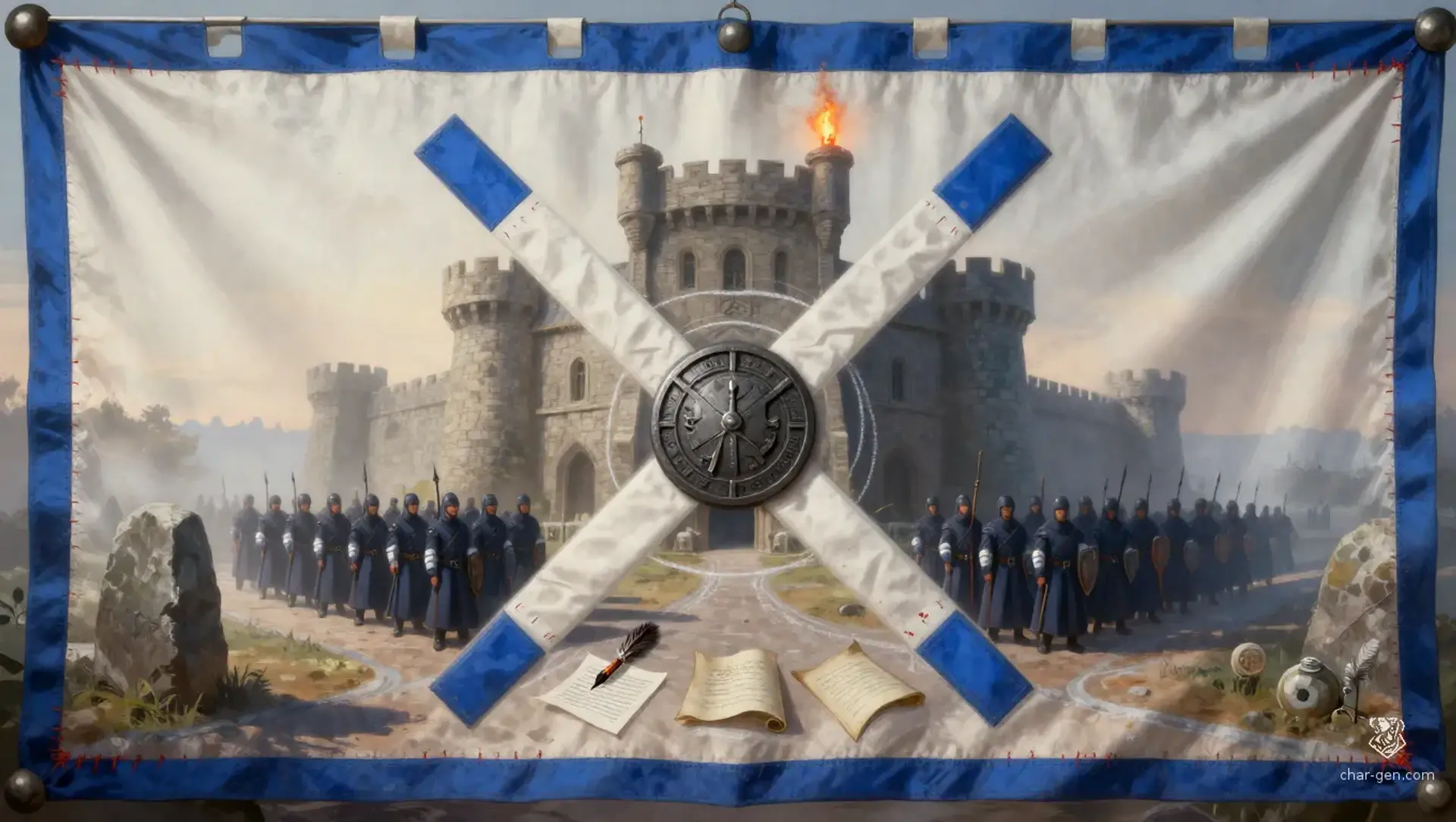
The order began as eleven veterans gathered at Three Stones during the Year of Three Fires. Its early years were defined by public judgments, escort work, and brutal road-clearing campaigns against bandits. It gained legitimacy when it protected grain caravans during the Long Frost, but its reputation darkened during the Red Sluice Quarantine, when officers sealed several villages to contain a fever and forcibly removed anyone attempting to leave. The watershed moment came at Kett Gorge, where the order defeated a rebel army but executed prisoners after a field tribunal conducted without civilian witnesses. The resulting scandal almost dissolved the order. Instead, the survivors rewrote their procedures, requiring three witnesses for any judgment involving death, and adopted the white bar as a symbol of law restrained by proof. In recent decades, the order has expanded from road guardians into investigators, arbiters, escorts, and emergency commanders. Its members now argue over whether this broader role fulfills the founding oath or betrays it.

The Order of the White Bar

Military Order · Lawful Neutral

The Order of the White Bar

Proof before punishment.

TypeMilitary Order
SizeSmall, with thirty-one sworn a…
InfluenceModerate in the duchy, limited…
WealthComfortable but not rich. The…
AlignmentLawful Neutral
AgeSeventy-three years since its…

Chronology

The order began as eleven veterans gathered at Three Stones during the Year of Three Fires. Its early years were defined by public judgments, escort work, and brutal road-clearing campaigns against bandits. It gained legitimacy when it protected grain caravans during the Long Frost, but its reputation darkened during the Red Sluice Quarantine, when officers sealed several villages to contain a fever and forcibly removed anyone attempting to leave. The watershed moment came at Kett Gorge, where the order defeated a rebel army but executed prisoners after a field tribunal conducted without civilian witnesses. The resulting scandal almost dissolved the order. Instead, the survivors rewrote their procedures, requiring three witnesses for any judgment involving death, and adopted the white bar as a symbol of law restrained by proof. In recent decades, the order has expanded from road guardians into investigators, arbiters, escorts, and emergency commanders. Its members now argue over whether this broader role fulfills the founding oath or betrays it.

Founder’s Story

During the Year of Three Fires, the duchy lost control of its northern roads. Soldiers deserted, magistrates fled, and armed bands claimed every bridge and caravan yard. Captain Jorren Kett gathered eleven veterans beside a pale limestone outcrop at Three Stones. They swore that no command would be obeyed unless it was written, witnessed, and answerable to the people it protected. Their first act was not a battle but a public trial of a corrupt road captain. They returned the stolen cargo, hanged the captain, and posted the judgment where every traveler could read it. The act won them both loyalty and enemies. Within two years, the order had become the duchy's preferred force for enforcing difficult laws beyond the reach of regular troops.

The Mechanism of Intent

Public Goals
  • Keep major roads open and safe.
  • Apply the law consistently regardless of wealth or rank.
  • Protect civilians during war, famine, plague, and magical disaster.
  • Prevent private armies and criminal leagues from replacing lawful authority.
  • Preserve written evidence so future judgments do not depend on rumor.
  • Secret Goals
  • Force the High Bench to recognize the order as independent from the duchy's army and courts.
  • Recover the original charter and use it to invalidate several noble monopolies on roads and tolls.
  • Eliminate the Open Toll League's leadership before it can unite the quarry holds, river crews, and highland clans.
  • Determine whether the Ash Covenant has infiltrated the order's archive and remove every compromised record.
  • Create a succession system that prevents the order from becoming a personal instrument of the First Witness.
  • Current Objectives
  • Recover the missing founding ledger before the High Bench audits the order's charter.
  • Stop a series of coordinated attacks on toll stations without allowing the crisis to become a regional war.
  • Identify which senior member is leaking patrol schedules to smugglers.
  • Secure a permanent garrison at the ford known as Three Stones.
  • Recruit enough new members to maintain three field patrols without abandoning the headquarters.
  • Long-Term Vision

    A permanent network of neutral military courts and protected roads stretching across the region, with the order serving as an impartial authority above local feuds, dynastic claims, and mercantile interests.

    StructureChartered military order with judicial and emergency powers
    SuccessionIf the First Witness dies or is removed, the three Iron Witnesses each nominate one candidate from among the Road Captains. The Sworn Blades then question the candidates in closed session before a final vote. The candidate must receive two-thirds support from the full sworn membership. If no candidate achieves that threshold, the order enters a temporary three-month command shared by the Iron Witnesses. This process is deliberately slow, and enemies may exploit it during a crisis.

    Leadership

    Tarsk Vey First Witness

    Restrained, incisive, and genuinely committed to fairness. She treats emotional appeals as evidence of stakes rather than evidence of truth. Her greatest flaw is that she considers herself uniquely capable of bearing morally ugly decisions.

    Tarsk Vey First Witness

    Controlled, patient, and almost impossible to provoke in public. Privately, she is exhausted by compromise and believes only a disciplined seizure of authority can prevent civil collapse.

    Hekka of Three Stones Iron Witness of Law

    Blunt, observant, and severe about procedure. She asks practical questions that make grand speeches uncomfortable.

    Gat Rusk Iron Witness of External Affairs

    Warm in conversation, ruthless in negotiation, and addicted to being underestimated. He can make coercion sound like compromise.

    Kettai Sorn Road Captain

    Energetic, sarcastic, and fearless in the field. She dislikes nobles, dislikes smugglers slightly less, and hates being forced to choose between law and mercy.

    Brannik Holt Road Captain

    Quiet, physically imposing, and deeply superstitious about archives and oaths. He remembers every injury suffered by a subordinate.

    Qazim Pell Chalkhand archivist

    Polite, anxious, and meticulous. He overexplains small matters to conceal the enormous thing he is hiding.

    Visual sheet

    Turn The Order of the White Bar into a sheet

    A high-res, share-ready sheet you can post or print.

    Gallery

    No images yet. Click to add.

    Relationships