Skip to content
CreatePricing
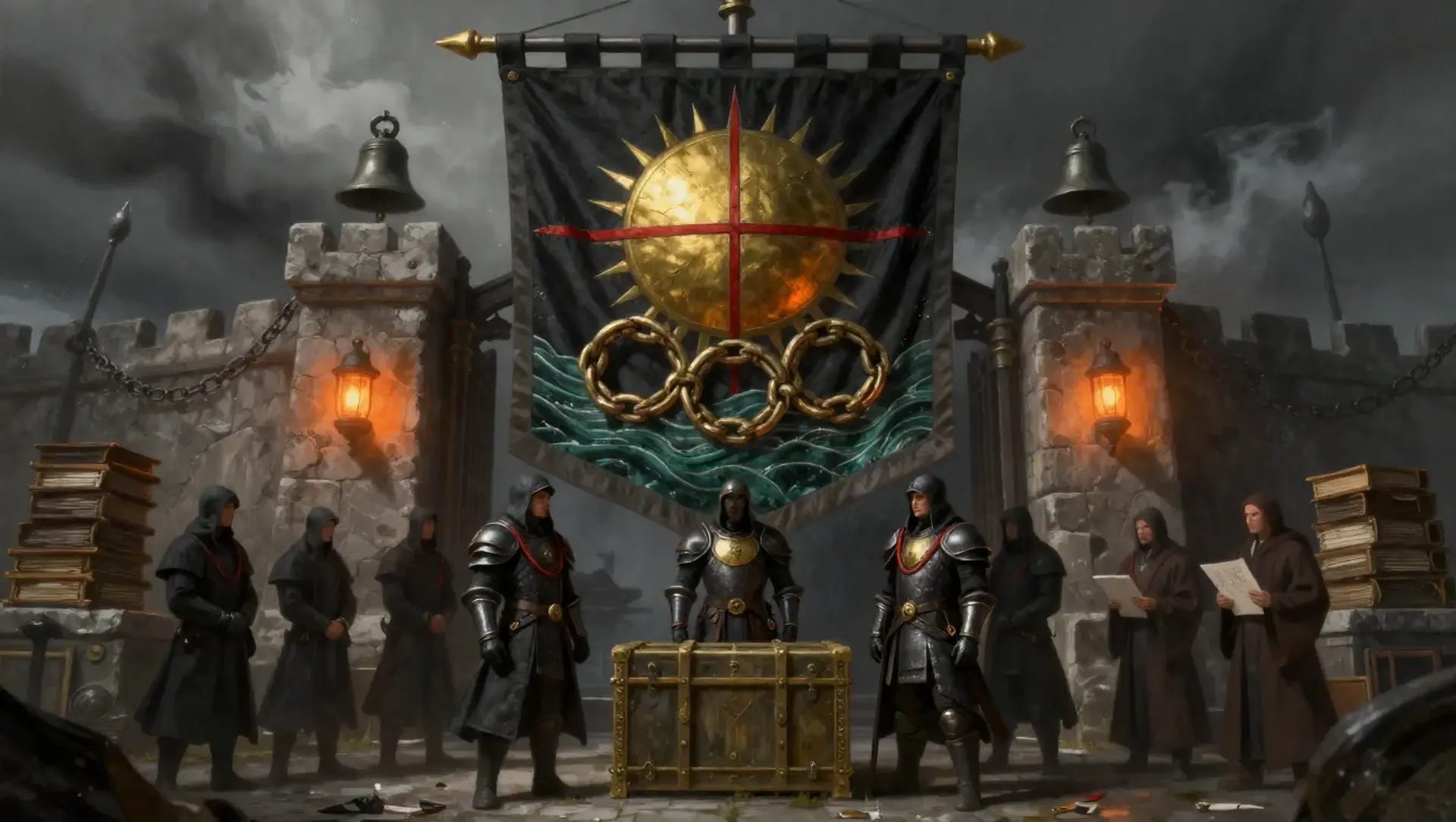
The Strait Maritime Customs Directorate - AI-generated fantasy Faction

The Strait Maritime Customs Directorate

The Directorate’s first century was defined by chain gates, torch signals, and arguments over whether a military vessel could refuse inspection. Its founding charter gave it authority over merchant traffic but left warships under Marches command. That division endured until the Watersmoke Incident of 1012 AE, when a naval transport carrying refined Star-Sand exploded inside Saltmark’s inner basin. Directorate officers had discovered a false ballast declaration but were ordered to release the vessel without opening the sealed lower hold. The resulting blast killed forty-three people, damaged two tidal gates, and filled the harbor with burning mineral dust. The Directorate responded by refusing all exemptions, including those claimed by military officers and temple envoys. For seven days, every vessel remained outside the basin until its hold had been opened and its cargo weighed. This became the watershed moment known as the Seven-Day Closure. It saved the office from being dissolved, but transformed it from a clerical harbor service into an enforcement institution feared by captains and quietly respected by ordinary dockworkers. Over the following centuries, the Directorate developed its current system of brass seals, layered manifests, rotating inspection crews, and independent evidence vaults. It broke several smuggling confederacies, prevented a Draknaar agent from entering the Marches under a pilgrim convoy, and exposed a forged Star-Sand export license issued by a noble household. It also accumulated enemies. In 1248 TF, a fire destroyed nearly half the eastern ledger loft. The official report blamed lamp oil. Senior scribes believe the fire was meant to erase proof that several high-ranking officers had permitted unregistered shipments for decades. Today, the Directorate stands between the military frontier and Saltmark’s crowded harbor. It claims to defend lawful trade, but every inspection forces it to choose which law matters most: the charter, military necessity, draconic command, or the survival of the town beneath its jurisdiction.

The Strait Maritime Customs Directorate

State harbor bureau and customs enforcement guild · Lawful Neutral

The Strait Maritime Customs Directorate

What enters by water leaves by record.

TypeState harbor bureau and custom…
SizeSmall, with approximately 52 a…
InfluenceSignificant within Saltmark an…
WealthComfortable and institutionall…
AlignmentLawful Neutral
AgeFounded in 873 AE, during the…

Chronology

The Directorate’s first century was defined by chain gates, torch signals, and arguments over whether a military vessel could refuse inspection. Its founding charter gave it authority over merchant traffic but left warships under Marches command. That division endured until the Watersmoke Incident of 1012 AE, when a naval transport carrying refined Star-Sand exploded inside Saltmark’s inner basin. Directorate officers had discovered a false ballast declaration but were ordered to release the vessel without opening the sealed lower hold. The resulting blast killed forty-three people, damaged two tidal gates, and filled the harbor with burning mineral dust. The Directorate responded by refusing all exemptions, including those claimed by military officers and temple envoys. For seven days, every vessel remained outside the basin until its hold had been opened and its cargo weighed. This became the watershed moment known as the Seven-Day Closure. It saved the office from being dissolved, but transformed it from a clerical harbor service into an enforcement institution feared by captains and quietly respected by ordinary dockworkers. Over the following centuries, the Directorate developed its current system of brass seals, layered manifests, rotating inspection crews, and independent evidence vaults. It broke several smuggling confederacies, prevented a Draknaar agent from entering the Marches under a pilgrim convoy, and exposed a forged Star-Sand export license issued by a noble household. It also accumulated enemies. In 1248 TF, a fire destroyed nearly half the eastern ledger loft. The official report blamed lamp oil. Senior scribes believe the fire was meant to erase proof that several high-ranking officers had permitted unregistered shipments for decades. Today, the Directorate stands between the military frontier and Saltmark’s crowded harbor. It claims to defend lawful trade, but every inspection forces it to choose which law matters most: the charter, military necessity, draconic command, or the survival of the town beneath its jurisdiction.

Founder’s Story

The Directorate began after a merchant convoy carrying furnace salt, whale oil, and red clay for signal beacons was destroyed in a night crossing. The surviving captains claimed that rival pilots had opened a chain gate without authority. The first harbor commandant, a half-dragon surveyor known only as Gate-Captain Uro, gathered pilots, pier-riggers, tally clerks, and military signalmen into a single office. Their first charter required every vessel entering Aethelgard waters to declare its cargo, crew, route, and intended port. The name came from the old trade of gatefall tolling, when harbor crews lowered weighted chains at dusk to count and control passing vessels. The trade has vanished, but the phrase remains in every formal title.

The Mechanism of Intent

Public Goals
  • Protect Saltmark from smuggling, sabotage, foreign espionage, and dangerous cargo.
  • Ensure that all lawful merchants pay the same tariffs and follow the same clearance procedures.
  • Keep military and commercial traffic moving safely through the strait.
  • Preserve accurate records of every vessel entering Aethelgard waters.
  • Prevent foreign religious and political material from destabilizing the Ironscale Marches.
  • Secret Goals
  • Force the Five-Fold Hierarchy to recognize the Directorate as a permanent neutral authority over all strait crossings.
  • Control the movement of leyline-sensitive Star-Sand before the Basalt Breach spreads into Saltmark.
  • Expose enough noble corruption to justify a sweeping charter revision without triggering the Directorate’s dissolution.
  • Preserve the hidden evidence vault as leverage against military command, temple authorities, and merchant cartels.
  • Determine whether the old leyline channel beneath Saltmark is a dormant engine, a warning system, or the entrance to something sealed below the strait.
  • Current Objectives
  • Seal every navigable approach to Saltmark before the next major military exercise.
  • Locate the source of forged clearance seals circulating among foreign captains.
  • Identify whether unmanifested Star-Sand is being smuggled into Aethelgard or out through the strait.
  • Recover several missing inspection ledgers before their contents reach hostile powers.
  • Preserve the Directorate’s independence from both military command and private extraction interests.
  • Long-Term Vision

    A permanent, professional maritime authority that protects the strait through transparent law, independent records, and trained inspectors rather than noble privilege or military improvisation. The Directorate’s secretive faction envisions a customs state powerful enough to control every legal crossing between Aethelgard and Draknaar.

    StructureChartered civil bureau with guild customs, military liaison, and internal adjudication
    SuccessionWhen the Gatefall Prefect dies, resigns, or is removed, the three Tide Assessors appoint an acting Prefect for one month. During that month, every Harbor Captain and senior scribe submits a sealed recommendation. The final choice requires two of three Assessor votes and confirmation from the commander of the Ironscale Marches. If the Assessors cannot agree, the Directorate’s charter requires a public review before Saltmark’s senior harbor households. This clause has never been used, and several powerful officials would prefer it remain forgotten.

    Leadership

    Othuma Gatefall Gatefall Prefect

    Controlled, incisive, and quietly compassionate. Othuma speaks softly enough that others must lean toward her, then remembers precisely who did so. She has no patience for theatrical intimidation and a deep fear of becoming the kind of official who mistakes obedience for justice.

    Othuma Gatefall Gatefall Prefect

    Measured, dryly humorous, and almost impossible to provoke. Othuma remembers every debt, contradiction, and favor. She dislikes cruelty but considers disorder a greater danger.

    Brek Harbor Captain of the Inner Basin

    Blunt, vigilant, and physically imposing. Brek treats every inspection as a battlefield exercise and every uncooperative captain as a potential infiltrator.

    Nayeli Saren First Tide Assessor

    Warm in private, incisive in public, and gifted at making hostile witnesses speak too much. Nayeli believes accurate records are a form of protection.

    Avaru Mol Senior Tariff Scribe

    Polished, restless, and fascinated by systems. Avaru can recite tariff law from memory and views people as entries in a pattern that can be corrected.

    Toma Vek Lead Hold-Inspector

    Quiet, patient, and observant. Toma rarely speaks during disputes, but notices damaged hinges, altered knots, and the smell of unfamiliar forge smoke.

    Onair of Saltmark Harbor Captain of the Outer Basin

    Charming, theatrical, and generous with drinks. Onair thrives on rumor and believes every rule exists to define who can afford to break it.

    Visual sheet

    Turn The Strait Maritime Customs Directorate into a sheet

    A high-res, share-ready sheet you can post or print.

    Gallery

    No images yet. Click to add.

    Relationships