Skip to content
CreatePricing
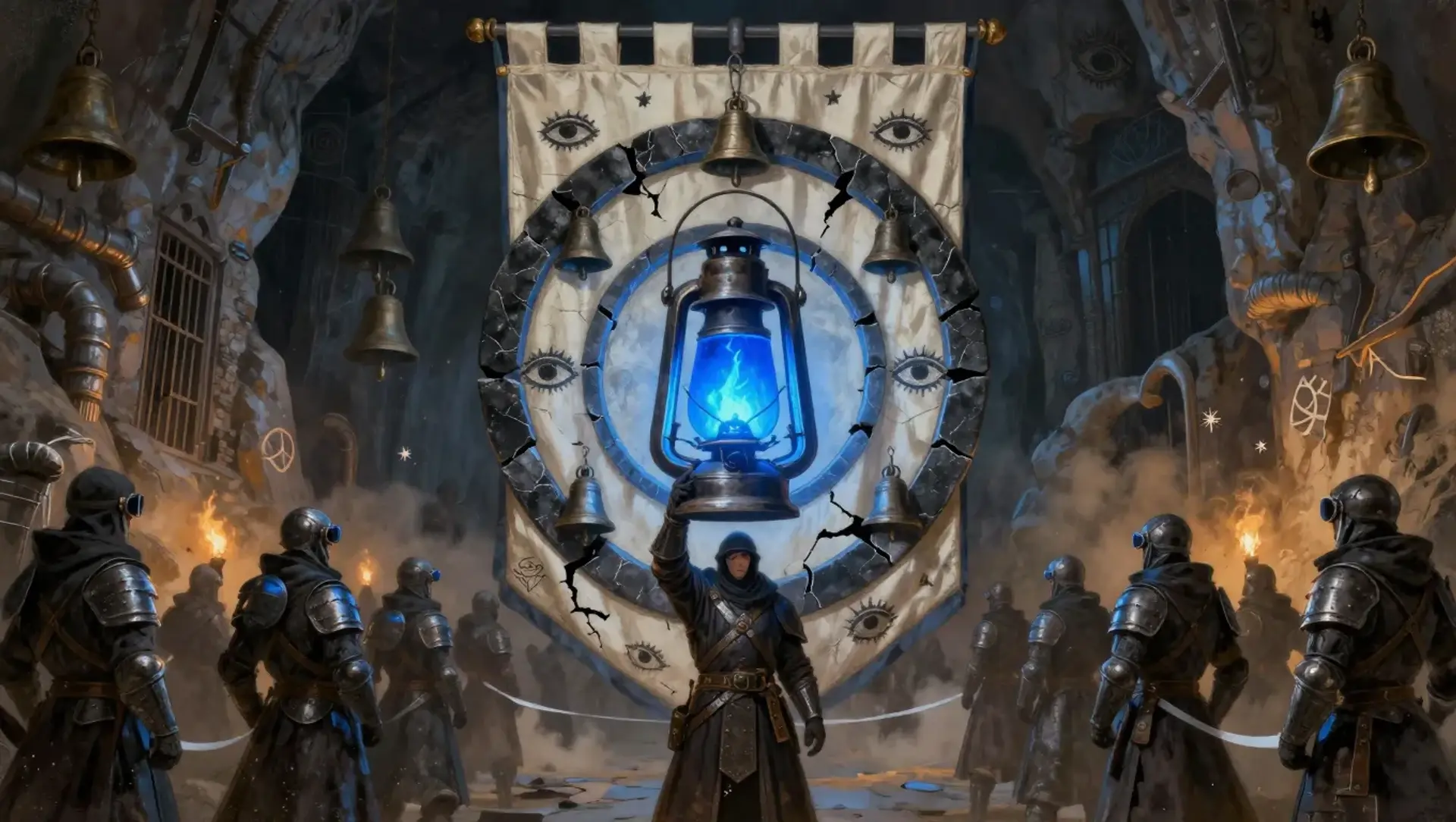
The Deep Wardens - AI-generated fantasy Faction

The Deep Wardens

The Deep Wardens began as an improvised miners' watch in 612 AE, when the first Agscapeviw excavation caused a chain of tremors and opened passages into an older subterranean complex. Their early years were defined by practical survival. Miners taught soldiers how to read stress fractures, while soldiers imposed patrol discipline on settlements that had previously treated cave-ins as ordinary hazards. In 701 AE, the order received its first formal charter from the Kharbal Holdfasts after the Lantern Siege. For nine days, a wave of pale subterranean predators attacked three connected mining colonies. The Wardens held the central lift shaft long enough for thousands to escape, then collapsed the shaft beneath themselves. The survivors became the order's first recognized veterans, and the phrase Hold the dark became a binding oath. The watershed moment came in 843 AE during the Black Resonance. A deep Star-Sand seam began pulsing in time with the Agscapeviw leyline, causing hallucinations, violent sleepwalking, and structural collapse across dozens of miles. The Wardens sealed the region, but the decision came too late for six settlements. The event killed more civilians than any previous breach and permanently changed the order. Since then, the Wardens have treated information as a weapon, maintained false maps, and placed containment above rescue when the two objectives conflict. During the 1100 TF consolidation of extraction rights, the United Smithing Cartels attempted to fold the order into their security apparatus. The Wardens resisted publicly, though several commanders accepted private contracts and equipment. This compromise created the order's modern internal divide between those who see the Cartels as necessary patrons and those who regard them as the primary cause of every new breach. In recent decades, the Deep Wardens have confronted increasingly organized incursions. Tools have been returned neatly stacked outside sealed tunnels. Patrol bells have rung from chambers with no surviving entrances. Miners report hearing familiar voices beneath the stone. The order now suspects that the Fracture is not merely a wound in the earth, but a boundary watched from the other side.

The Deep Wardens

Military order and subterranean containment authority · Lawful Neutral, with strong protective and pragmatic tendencies. Individual Wardens range from compassionate defenders to ruthless utilitarians.

The Deep Wardens

Carry the light downward. Bring the living back.

TypeMilitary order and subterranea…
SizeApproximately 720 active membe…
InfluenceMajor regional influence in th…
WealthModerate institutional wealth.…
AlignmentLawful Neutral, with strong pr…
AgeFounded in 612 AE, the Deep Wa…

Chronology

The Deep Wardens began as an improvised miners' watch in 612 AE, when the first Agscapeviw excavation caused a chain of tremors and opened passages into an older subterranean complex. Their early years were defined by practical survival. Miners taught soldiers how to read stress fractures, while soldiers imposed patrol discipline on settlements that had previously treated cave-ins as ordinary hazards. In 701 AE, the order received its first formal charter from the Kharbal Holdfasts after the Lantern Siege. For nine days, a wave of pale subterranean predators attacked three connected mining colonies. The Wardens held the central lift shaft long enough for thousands to escape, then collapsed the shaft beneath themselves. The survivors became the order's first recognized veterans, and the phrase Hold the dark became a binding oath. The watershed moment came in 843 AE during the Black Resonance. A deep Star-Sand seam began pulsing in time with the Agscapeviw leyline, causing hallucinations, violent sleepwalking, and structural collapse across dozens of miles. The Wardens sealed the region, but the decision came too late for six settlements. The event killed more civilians than any previous breach and permanently changed the order. Since then, the Wardens have treated information as a weapon, maintained false maps, and placed containment above rescue when the two objectives conflict. During the 1100 TF consolidation of extraction rights, the United Smithing Cartels attempted to fold the order into their security apparatus. The Wardens resisted publicly, though several commanders accepted private contracts and equipment. This compromise created the order's modern internal divide between those who see the Cartels as necessary patrons and those who regard them as the primary cause of every new breach. In recent decades, the Deep Wardens have confronted increasingly organized incursions. Tools have been returned neatly stacked outside sealed tunnels. Patrol bells have rung from chambers with no surviving entrances. Miners report hearing familiar voices beneath the stone. The order now suspects that the Fracture is not merely a wound in the earth, but a boundary watched from the other side.

Founder’s Story

The order was founded after Warden-Commander Odran Deep-Bell led a desperate evacuation through the first stable galleries beneath the Agscapeviw Fracture. A mining company had broken through a wall of black crystal and released a pressure wave that killed hundreds, silenced every lantern, and caused the stone itself to whisper. Odran gathered surviving miners, tunnel guides, and discharged soldiers around a single iron lantern. They swore that no breach would ever again be left unwatched, and that no report of danger would be dismissed because it threatened profit or pride.

The Mechanism of Intent

Public Goals
  • Protect the people and mineral infrastructure of the Kharbal Holdfasts
  • Keep the Agscapeviw Fracture sealed and monitored
  • Prevent subterranean horrors from reaching the surface
  • Maintain safe routes for miners, engineers, and sanctioned expeditions
  • Preserve stability during periods of leyline disturbance
  • Secret Goals
  • Determine whether the entities beneath the Agscapeviw Fracture are enemies, prisoners, or unwilling guardians
  • Gain permanent veto power over all deep mining and leyline construction
  • Recover the lost charter clause that defines the order's final obligation
  • Expose the officials and industrial powers responsible for deliberate destabilization
  • Create a successor order capable of protecting the deeps without relying on secrecy or sacrifice
  • Decide whether the Kharbal Holdfasts can survive if the deepest mining operations are permanently abandoned
  • Current Objectives
  • Maintain the sealed perimeter around the deepest accessible chambers of the Agscapeviw Fracture
  • Determine why dormant Star-Sand veins have begun emitting rhythmic pulses
  • Locate three missing patrols before their equipment and memories are recovered by something below
  • Prevent the United Smithing Cartels from reopening a quarantined extraction route
  • Identify the source of recent leyline disturbances beneath the Kharbal Holdfasts
  • Prepare a contingency plan in case the oldest seal beneath the Fracture fails
  • Long-Term Vision

    The Deep Wardens ultimately want a self-sustaining network of fortified settlements, sealed research vaults, and trained local defenders extending throughout the Kharbal deeps. The order's ideal future is one in which no mining operation begins without Warden approval and no surface authority can command a breach response from a safe distance.

    StructureChartered military order with emergency civil authority and specialized containment branches
    SuccessionWhen the Lantern Marshal dies, disappears, or is judged incapable, the Bell Council begins the Vigil of Seven Bells. Each Deep Captain presents a record of a crisis in which they chose between competing lives or duties. The council then selects a successor, but the final confirmation must come from the keeper of the original lantern, a position traditionally held by the oldest active Sealwarden. If the council cannot agree, command passes temporarily to the most senior field captain, often creating a dangerous period of factional maneuvering.

    Leadership

    Warden-Captain Dorin Fracturewatch Lantern Marshal of the Deep Wardens

    Measured, relentless, protective, and difficult to deceive. Dorin distrusts grand speeches and judges people by what they do after the first casualty.

    Warden-Captain Dorin Fracturewatch Supreme commander and keeper of the original seal keys

    Controlled, observant, and quietly compassionate. Dorin speaks softly during disasters, forcing everyone nearby to listen. She believes sacrifice is sometimes necessary, but hates that the order has made sacrifice its easiest answer.

    Valen Iron-Grip Deep Captain of the eastern mining marches

    Blunt, disciplined, and politically astute. Valen appears cynical but genuinely fears that independence would leave the order without supplies or reinforcements.

    Valka "Iron-Hand" Morvath Chief of breach response and commander of the Ash Choir

    Severe, tireless, and prone to interpreting uncertainty as evidence of deception. She has never removed the gloves she wore during the Black Resonance.

    Iven Vance-Khar Master of subterranean signs and anomaly research

    Curious, patient, and unnervingly calm around supernatural phenomena. Iven records every voice heard in the tunnels, including voices that answer questions no one asked.

    Barnaby "The Provider" Vance Quartermaster and suspected internal conspirator

    Charming, practical, and generous with exhausted recruits. He can make every betrayal sound like a rescue operation.

    Visual sheet

    Turn The Deep Wardens into a sheet

    A high-res, share-ready sheet you can post or print.

    Gallery

    No images yet. Click to add.

    Relationships