
The Sirocco Veil
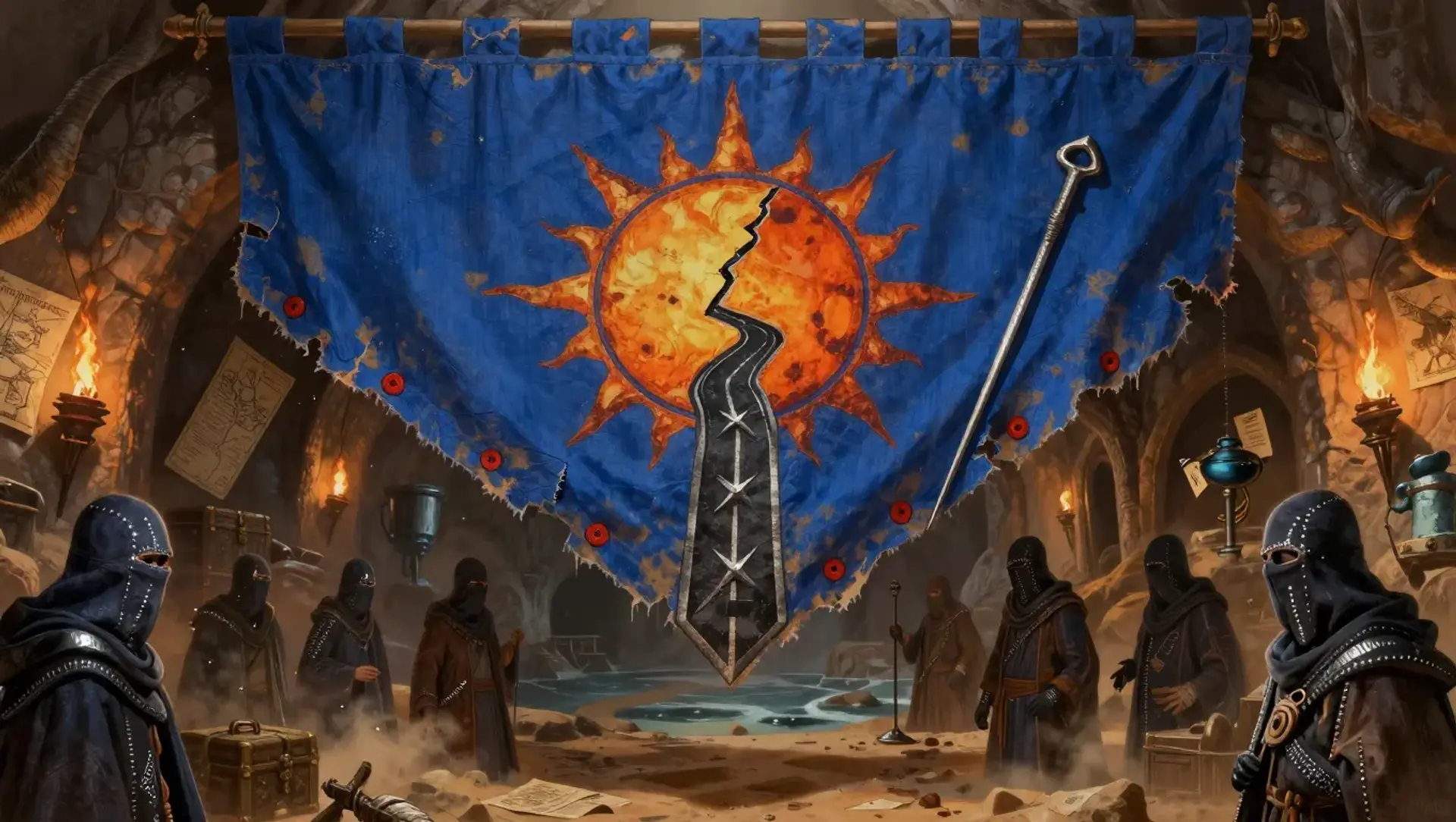
After the Red Quarantine, the founders discovered that emergency smuggling could become a permanent enterprise. They expanded from medicine and fugitives into luxury goods, banned texts, weapons, and political correspondence. During the War of Seven Salt-Marches, the Veil supplied both sides while quietly evacuating villages caught between them. This made the network rich, but it also cemented its reputation as an organization willing to profit from any crisis. Its first great triumph came when the Veil redirected an imperial supply caravan through a false oasis route, causing an entire border campaign to collapse without a major battle. Its greatest setback followed three years later, when the captured Threadrunner Lio Venn betrayed fourteen safehouses under torture. The resulting purges killed dozens of members and caused the network to abandon its old system of centralized route ledgers. The defining watershed moment was the Night of Unsealed Gates. During a succession crisis, the imperial court ordered every southern gate closed and authorized mass arrests among border communities. The Veil opened seven forbidden crossings in a single night, moving thousands of people into neutral territory. The operation saved lives, but it also exposed the network's scale. Since then, the Sirocco Veil has been both a smuggling enterprise and a shadow power capable of humiliating the Sultanate.
Smuggling network · Pragmatic and self-serving, ranging from neutral to chaotic depending on local leadership
The Sirocco Veil
“Every wall has a shadow, and every shadow has a road.”
Turn The Sirocco Veil into a sheet
A high-res, share-ready sheet you can post or print.