
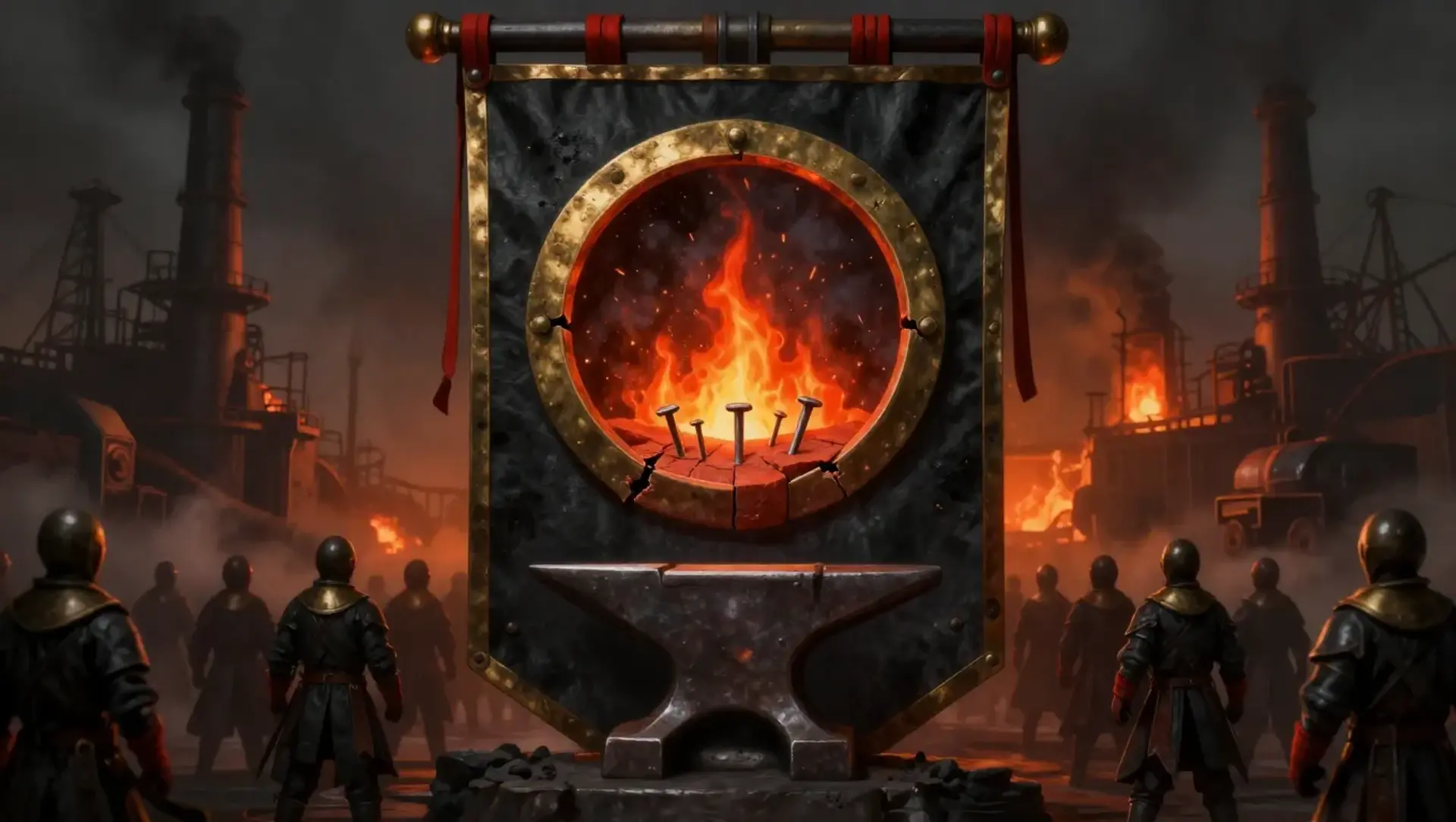
Cinderwright Compact
The Compact began as a mutual rescue agreement among six troubled foundries. Its first triumph came during the Ash-Toll Winter of 1134 TF, when its shared fuel stores kept the eastern ramparts supplied after a volcanic storm buried the main roads. The alliance gained enormous prestige by repairing signal towers and producing replacement spearheads while rival guilds hoarded ore. Its influence expanded through debt relief. When settlement councils could not pay for walls, cisterns, furnace brick, or bridge fittings, the Compact supplied materials in exchange for long-term procurement rights. These agreements prevented several towns from collapsing, but they also converted civic dependence into industrial control. The defining watershed moment came during the Nine-Day Blackout of 1189 TF. A chain of furnace failures left much of the Ironscale Marches without weapons, signal lamps, or stable heating. The Compact's masters ordered every member foundry to halt private production and obey a unified military schedule. The decision saved the border garrisons, but the Compact also seized independent workshops that refused to comply. After the blackout, the alliance stopped presenting itself as a cooperative and began acting as a regional authority. Since the formation of the United Smithing Cartels in Karr-Vazhar around 1100 TF, the Compact has watched foreign industrial powers with equal admiration and suspicion. It adopted cartel-style supply guarantees while insisting that Aethelgard's metal remain under local draconic law. In recent decades, corrupted leyline activity near the Marches has produced strange grain in Star-Sand and unpredictable behavior in old furnaces. The Compact has concealed much of the evidence, fearing that a public panic would invite direct temple control.
Industrial Guild Alliance and Foundry Syndicate · Lawful Neutral
Cinderwright Compact
“Keep the warning lit.”
Turn Cinderwright Compact into a sheet
A high-res, share-ready sheet you can post or print.