Skip to content
CreatePricing
Quarter Nine - AI-generated fantasy Region

Quarter Nine

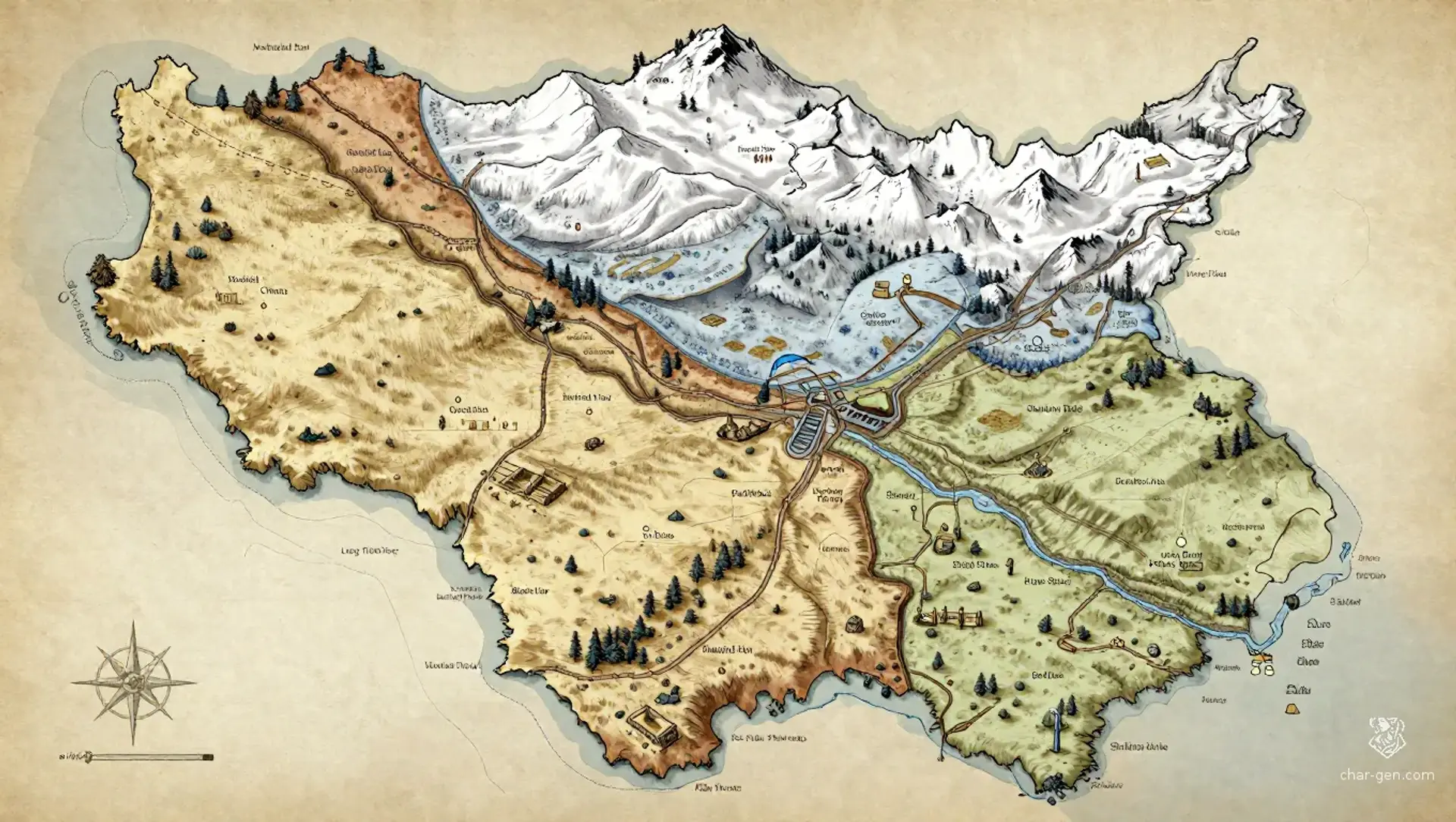
Region AtlasMilitarized mythic frontierA large frontier region spanning several days of mounted travel from the southern escarpment to the northern passes.

Quarter Nine

Where the frontier moves one measured step each night.

PopulationSparse overall, with dense settlement around…
ClimateThe region has sharp sunlight, dry winds, short…
TerrainHigh grassland rolls between cold ravines, broken…
StabilityStrained but functional, with peace maintained by…
Quarter Nine is a broad militarized frontier of high grassland, cold valleys, and fortified caravan roads. Hardy cavalry patrols protect farms, grazing circuits, and survey stations while competing authorities argue over contracts written into the land itself. At its center, a numbered fortress guards a marker that shifts several paces every night. The movement threatens maps, borders, inheritance, and the buried magical lines that hold Kharu's geography together.
Field Observations

Mounted travel is swift on the plateaus but dangerous when fog hides ravines.,Valley roads remain passable in winter only where garrison crews clear marker stones.,The moving marker causes maps, compasses, and familiar landmarks to disagree near Quarter Nine.

Cultures

The Quarterfolk value contract keeping, mounted skill, and practical hospitality shaped by generations of frontier service.

The Valley Kin preserve seasonal songs, bloodline oaths, and communal winter stores among the cold ravines.

The Grass-Sea Riders follow wide grazing circuits and judge status by horse breeding, escort service, and generosity.

The Marker-Bound tradition treats survey stones as sacred witnesses whose positions define lawful memory.

Industries
Hardy horse breeding supplies cavalry remounts and civilian couriers.
Cold-valley farming produces roots, barley, medicinal herbs, and winter fodder.
Fort construction and survey maintenance employ masons, scribes, and spellwrights.
Caravan escorting remains the most reliable source of independent wealth.
Trade Goods
Mountain wool and felted riding cloaks are prized beyond the frontier.
Trained steppe horses and sure-footed valley ponies command high prices.
Survey tablets, ward nails, and measured contract seals are exported under guard.
Salted meat and blue-veined cold herbs travel south in long caravans.
Imports
Fine steel and replacement armor arrive from southern foundries.
Grain, lamp oil, and preserved fruit are purchased from warmer lowlands.
Written contract materials and alchemical inks come through distant trade houses.
Trade Hubs
Ninefold Yard is the main military market beneath the numbered fortress.
Hushwind Fair gathers seasonal horse traders where the western grass sings.
The Long Throat crossing links valley farms to the outer caravan roads.

Geography

ClimateThe region has sharp sunlight, dry winds, short summers, sudden hail, and winters that seal high passes for months.
TerrainHigh grassland rolls between cold ravines, broken ridges, spring-fed hollows, and ancient military embankments.
Biomes
Wind-brushed high grassland covers broad plateaus and rolling military pasture.
Cold valleys cut through the uplands, sheltering farms, villages, and narrow roads.
Frost heath spreads across exposed ridges where only tough shrubs and lichen survive.
Blue herb meadows bloom briefly around mineral springs during the thaw.
Waterways
The Hushwind Run carries meltwater through western pasture and seasonal camps.
The Long Throat River cuts a narrow trade corridor between the main valleys.
The Nine-Mile Springs emerge from buried stone channels near the fortress.
The Pale Thread drains eastern snowfields into a chain of cold tarns.
Borders
The southern escarpment descends toward warmer grain provinces and older imperial roads.
The eastern rim rises into unmapped peaks where survey lines vanish beneath snow.
The western grass sea fades into nomad country beyond reliable patrol range.
The northern cold valleys narrow into disputed passes and abandoned fort country.

Demographics

Quarterfolk garrison families and military settlers dominate the fortified corridors.
Grass-Sea Riders move between upland pastures with hardy cavalry herds.
Valley Kin farm sheltered slopes and maintain the region's oldest roads.
Survey clerks and oathbound contractors administer magical boundary work.
Minor Groups
Pilgrim mapmakers travel between marker shrines during the thaw.
Distant merchants maintain small winter compounds near major crossings.
Exiles and deserters form hidden communities in abandoned watch posts.
Languages
Kharic trade speech is used in forts, markets, and military records.
Valley Cant blends clipped commands with long vowels suited to echoing ravines.
Grass-Tongue carries dense horse terms and seasonal names across the open uplands.
Measured Name is a ritual language used for contracts, wards, and survey magic.

Economy

Status

Moderate and uneven, with military institutions wealthy beside subsistence settlements and debt-bound herders.

Visual sheet

Turn Quarter Nine into a sheet

A high-res, share-ready sheet you can post or print.

Gallery

No images yet. Click to add.

Settlements

Quarter Nine

Numbered fortressLarge fortified settlement

Military headquarters and survey authority

Ninefold Yard

Caravan yardLarge market settlement

Military market and caravan exchange

Hushwind Fair

Seasonal trade campMedium seasonal settlement

Seasonal horse market and grazing council site

Long Throat

Terraced valley townMedium permanent settlement

Valley farming center and river crossing

Bellless

Shrine hamletSmall permanent settlement

Religious court and contract archive