
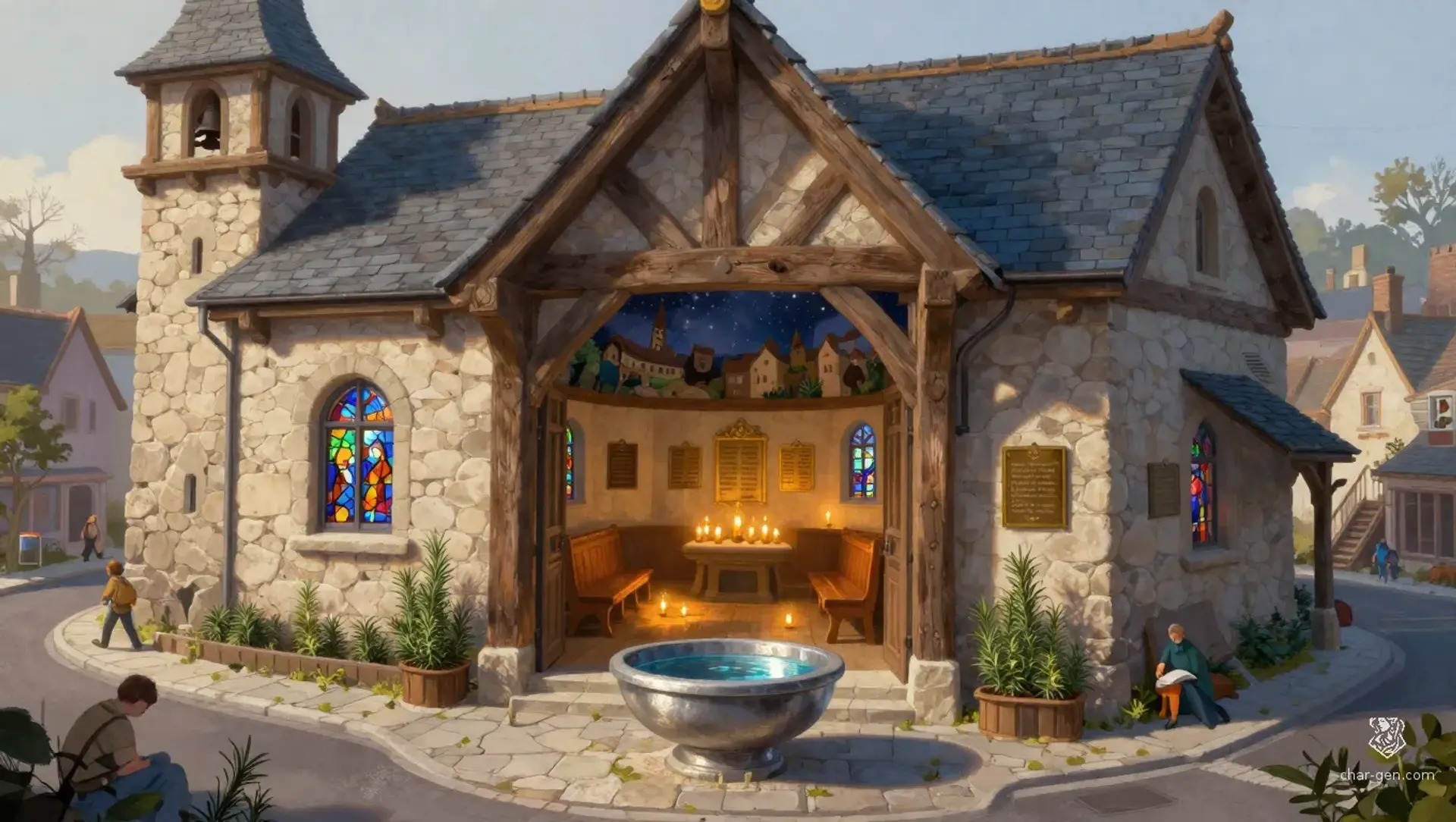
The Silver Basin
The Silver Basin is a medium-sized temple dedicated to Alena, Lady of the Hearth and Keeper of the Last Light. It stands near the center of town, where three roads meet, and serves as a place of worship, healing, burial, and refuge. Its doors remain open from sunrise until late evening. Though modest compared with a grand cathedral, the shrine is respected by merchants, farmers, travelers, and local officials alike. The temple's broad central hall can hold about sixty worshipers, while adjoining rooms provide space for priests, guests, patients, and stored supplies.
The Silver Basin
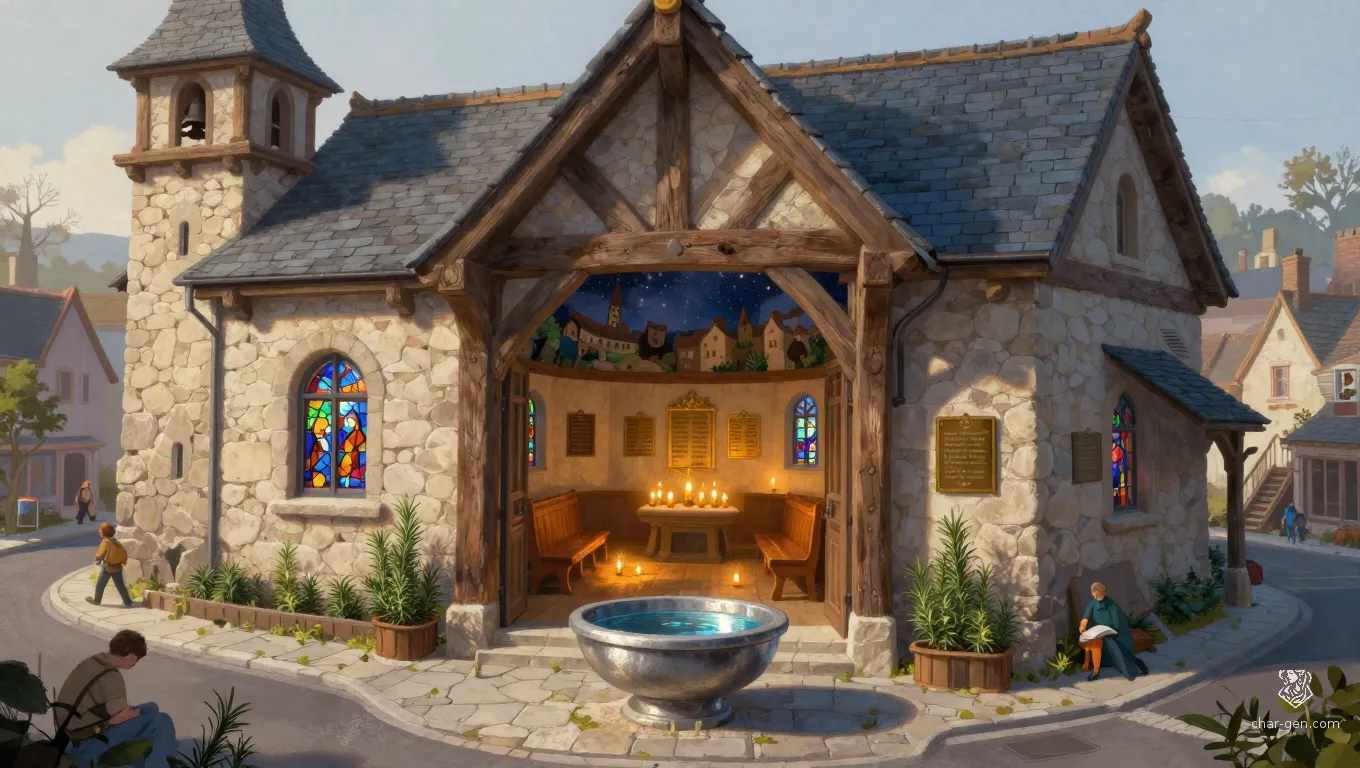
Calm, clean, and quietly busy. The scent of beeswax, rosemary, and fresh water fills the air. Sunlight falls across polished wooden benches and whitewashed walls. Soft conversation, the clink of offering coins, and the occasional bell give the shrine a feeling of safety, though the priests have become more watchful since strange sounds began coming from the crypt.
The Silver Basin is a medium-sized temple dedicated to Alena, Lady of the Hearth and Keeper of the Last Light. It stands near the center of town, where three roads meet, and serves as a place of worship, healing, burial, and refuge. Its doors remain open from sunrise until late evening. Though modest compared with a grand cathedral, the shrine is respected by merchants, farmers, travelers, and local officials alike. The temple's broad central hall can hold about sixty worshipers, while adjoining rooms provide space for priests, guests, patients, and stored supplies.
Compassionate, practical, observant, and quietly stubborn. Hessa prefers useful deeds to dramatic vows and will challenge anyone who uses faith as an excuse for cruelty. She is patient with frightened people, firm with bullies, and reluctant to admit when she needs help.
History
Divine Services
The shrine offers dawn blessings, midday healing, funeral rites, marriages, and evening prayers for safe travel. Every seventh day, the priests wash the public stone basin and invite anyone in need to speak with a cleric. Visitors may leave a written petition, a lock of hair, a coin, or a small cup of water as an offering. The temple does not turn away the sick or hungry, though it asks those who can afford it to contribute supplies or labor.
Sacred Relics
The shrine's most sacred relic is the Cup of Saint Orra, a plain bronze vessel said to have held water during a famine three centuries ago. Once each month, the cup is filled from the temple well and used to bless every household that brings a token. The relic is kept behind a locked wooden screen when not in use. The temple also safeguards a cracked ivory prayer wheel, several saint-bones sealed in wax, and a weathered bell that is rung during disasters.
Crypt and Burial Rites
Beneath the main sanctuary lies a quiet crypt containing the remains of former priests, local benefactors, and travelers who died without family nearby. The crypt is not a place of punishment or dark secrets by tradition, but it has become a refuge for restless spirits. The priests perform regular rites to keep the dead at peace. Recently, several candles have gone out on their own, and one sealed tomb has begun to produce a faint knocking sound after midnight.
Healing House
The temple maintains a small room with four beds, a cabinet of herbs, splints, clean bandages, and two healing potions reserved for emergencies. The priests can cast healing word, cure wounds, lesser restoration, and remove curse for appropriate donations or acts of service. They also offer practical aid, including meals, temporary shelter, letters of introduction, and care for abandoned children. Adventurers who earn the temple's trust may request limited healing supplies before a dangerous expedition.
Denizens
Compassionate, practical, observant, and quietly stubborn. Hessa prefers useful deeds to dramatic vows and will challenge anyone who uses faith as an excuse for cruelty. She is patient with frightened people, firm with bullies, and reluctant to admit when she needs help.
Mother Hessa is a broad-shouldered woman in her late fifties with iron-gray hair and a warm but direct manner. She remembers every regular visitor's name and dislikes wealthy donors who expect special treatment. Hessa is an experienced negotiator and healer who has quietly trained several former criminals to serve as temple guards.
Tomas is a thoughtful young acolyte who keeps the temple records and tends the lamps. He is fascinated by old burial customs and has noticed that the disturbances in the crypt follow no known pattern. Tomas is brave when helping others but easily frightened by anything he cannot explain.
Mara served as a town watch officer before losing her left eye in a warehouse fire. She now guards the shrine, teaches basic self-defense to refugees, and oversees the night watch. Mara is suspicious of strangers but respects anyone who speaks plainly and keeps their word.
Berren is a retired caravan guard who came to the temple after a near-fatal ambush. He helps with repairs, carries supplies, and tells travelers which roads are safe. Berren appears cheerful, but he recognizes the symbol found on several recent grave offerings and refuses to explain where he has seen it before.
Rumors & Plot Hooks
- 1.The shrine's water can reveal whether a person has broken an oath, though the priests deny this and insist the basin is only blessed water.
- 2.Someone has been leaving black thread tied around the crypt's brass door handle. Every time it appears, another name on the memorial wall becomes unreadable.
- 3.Mother Hessa once turned away a noble family's donation because the money was earned through illegal slave trading.
- 4.A ghostly child has been seen sitting beneath the sanctuary altar after the evening bell, but no child is buried in the temple crypt.
- 5.A hidden passage connects the shrine to an abandoned well outside town. Some claim the priests use it to move refugees, while others say smugglers built it long ago.
- 6.The bell tower sometimes rings once before a death, even when no one is near the rope.
Classified Entry
The strange disturbances in the crypt are caused by the spirit of Orra Vale, the shrine's founder. Orra's soul is not hostile, but it has been unable to rest because one of the original plague victims was secretly buried beneath the temple without rites. That victim was a murderer who died while saving several children, and Orra concealed the truth to protect the children from the dead man's family. A recent thief disturbed the hidden grave while searching for an old donation cache, weakening the seal around the restless spirit. If the party discovers the grave, learns the victim's name, and performs an honest rite acknowledging both the crime and the sacrifice, the haunting will end. If they simply destroy the spirit, the temple's blessings will gradually fail and the basin water will turn bitter.
Turn The Silver Basin into a sheet
A high-res, share-ready sheet you can post or print.