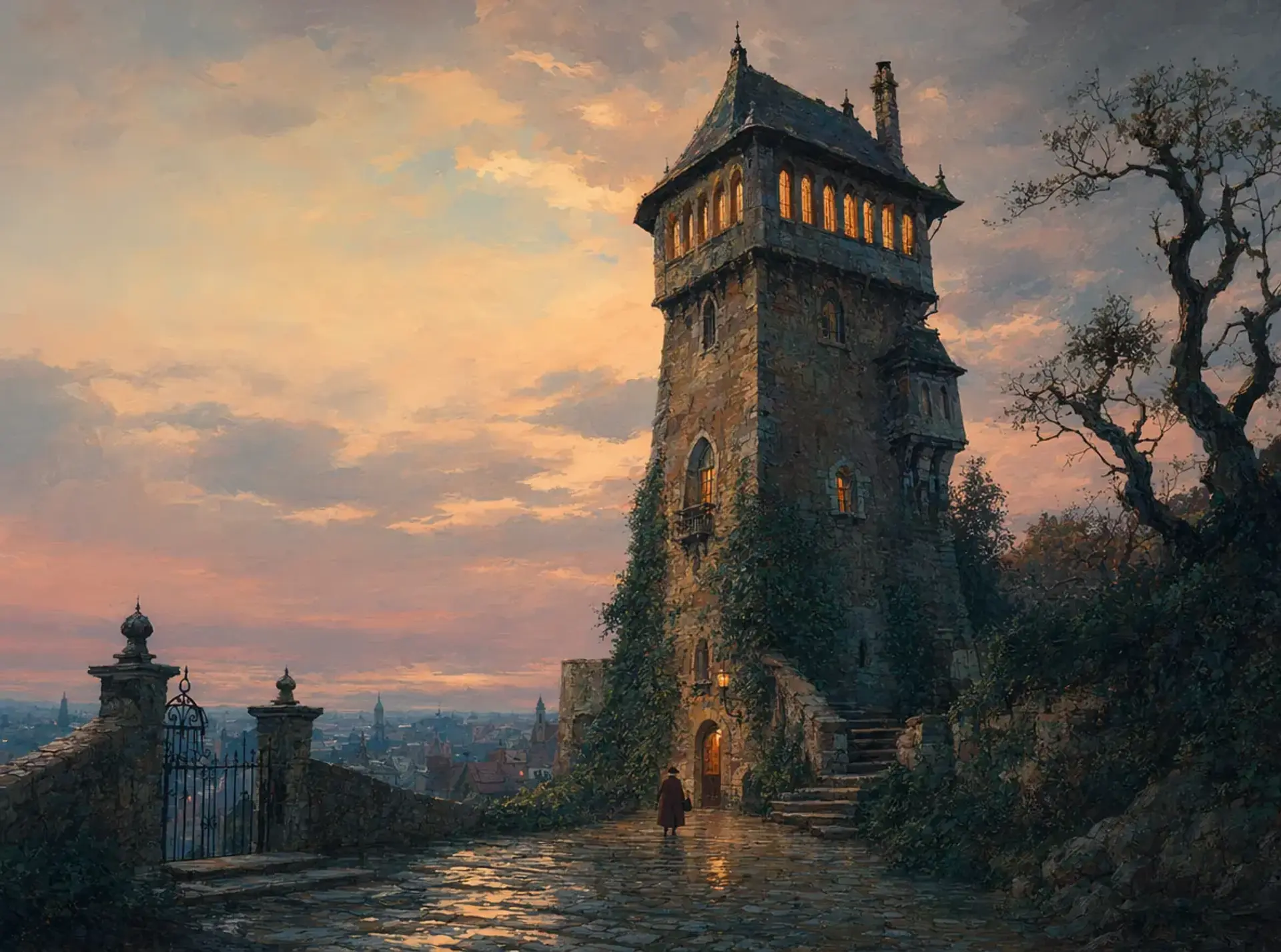
Create detailed temples, guild halls, libraries, prisons, and any building for your RPG campaign. Each building comes with history, NPCs, secrets, and game-system-specific details.
Each building comes with a unique origin story, past owners, and historical events that shaped its current state.
02
Detailed NPCs & Staff
Generate the key inhabitants of each building — priests, librarians, guards, guild masters — with personality and motivations.
03
Secrets & Plot Hooks
Every building hides something. Hidden rooms, buried scandals, ancient relics, and adventure hooks baked in.
How to Use the Fantasy RPG Building Generator
Use the building's history to tie it to your broader campaign lore
Give key NPCs goals that conflict with what the players need
Place secrets in logical locations — a hidden room behind the altar, not random
Match the building's condition to the local political situation
Use building quirks as memorable landmarks players will remember
Don't make every building a generic empty dungeon room
Avoid NPCs with no opinions about the building's history
Don't ignore the building's relationship to surrounding factions
Avoid plot hooks completely disconnected from your campaign
Don't forget that buildings have regular visitors and routines
Fantasy RPG Building Generator Questions
What is the RPG Building Generator?
The RPG Building Generator is a tool designed for Dungeon Masters and Game Masters to create detailed fantasy buildings for their tabletop roleplaying games. It generates unique structures like temples, guild halls, libraries, and prisons with history, NPCs, secrets, and plot hooks for D&D 5E, Pathfinder, and other fantasy RPG systems.
How does the generator work?
Select a building type, specify your game system and party level, and optionally add themes or special requirements. The generator creates a complete building with unique history, key NPCs, hidden secrets, and adventure hooks tailored to your campaign.
Does it generate fully random buildings?
You set the controls first (building type, game system, party level, condition, size, and optional extra details), then the generator randomly composes the narrative details each time: the name, history, resident NPCs, hidden secrets, and plot hooks. Generate the same setup twice and you'll still get different results, so it works well as a quick random building generator for session prep while respecting your inputs.
What types of buildings can I generate?
You can generate 13+ building types including temples, guild halls, libraries, archives, prisons, barracks, academies, manor houses, bathhouses, marketplaces, alchemist workshops, thieves dens, and custom structures.
Which game systems are supported?
The generator primarily supports D&D 5E and Pathfinder, but the output is designed to be easily adaptable to any fantasy RPG system. Game-system-specific details like DCs and encounter difficulty are tailored to your chosen system.
Is the building generator free to use?
Yes. You can generate buildings for free after a quick sign-up. Editing by hand is free; premium plans add Change with AI, advanced controls, and more exports.
Can I generate building artwork too?
Yes. CharGen can also generate matching fantasy artwork and architectural visuals to accompany your building descriptions.
The CharGen Building Generator is an AI tool that creates fantasy temples, guild halls, libraries, prisons, warehouses, and any single structure for tabletop RPG campaigns in under 45 seconds. Each generated building includes a thematic name, an AI exterior portrait, a floor-plan description with named rooms and their function, a roster of resident NPCs with personalities and roles, the building's history and current purpose, hidden secrets (caches, escape tunnels, false rooms), and 3-5 plot hooks tied to the building's owner or function.
Unlike static location tables, every building links to its parent settlement through the World Codex and connects to local NPCs and factions. Outputs export to PDF and share as public crawlable pages. Compatible with D&D 5E, Pathfinder 2E, Call of Cthulhu, and system-agnostic fantasy. Free to start; richer buildings on Plus and above.
Compare alternatives
Compare generation depth, editing controls and how each tool fits into campaign prep. These field reports are based on current public features and hands-on testing.
How CharGen's building generator compares to map and image tools.