
Temple of the Cleared Hill
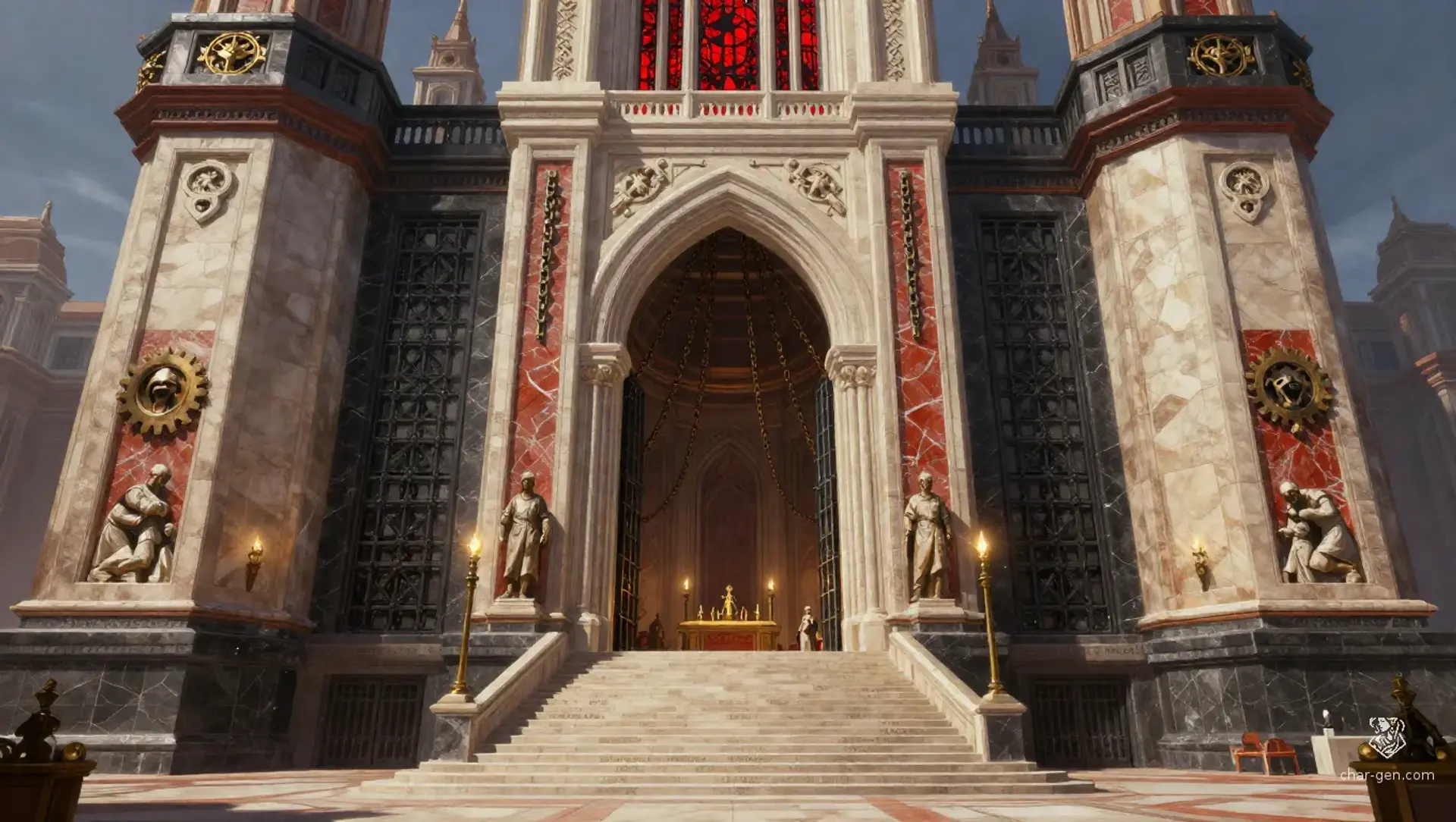
The Temple of the Cleared Hill dominates the heart of Velundra, standing where an entire fortified ridge was cut down to make room for the Dominion's holiest monument. Its name is an old warning. Before the temple was built, the hill was used for executions, and citizens were told that anyone who spoke against the Dominion would one day stand upon it. When the hill was cleared, the executions continued on the same ground. The name was never changed, because the clergy claim that doing so would invite rebellion.
Temple of the Cleared Hill
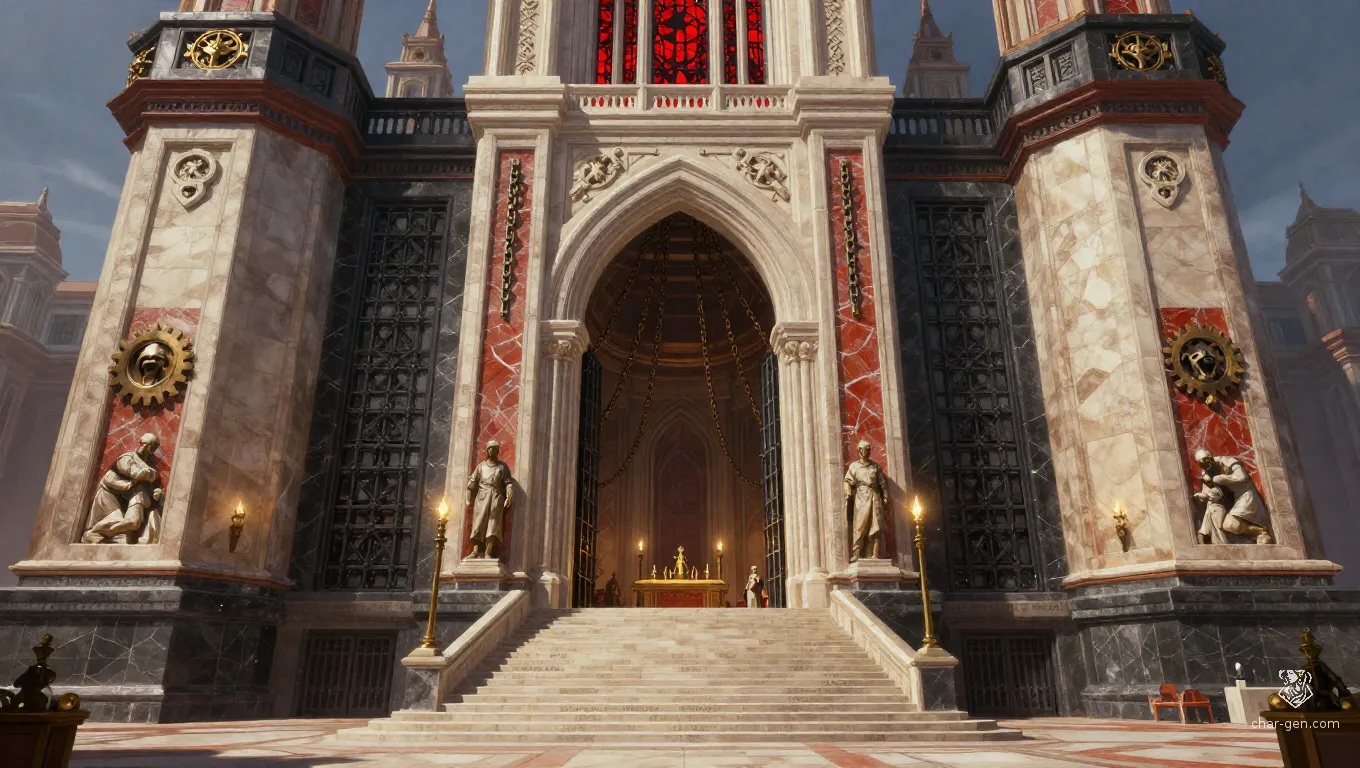
The air smells of hot metal, incense, wax, and expensive perfume. Every sound carries unnaturally far, so whispered bargains can be heard across a chapel and a single footstep can silence a crowd. The temple is immaculate, brightly lit, and full of disciplined movement. Priests record every offering, guard every door, and correct every posture. Beneath the calm order lies constant pressure. Visitors feel watched not only by the clergy, but by the statues, the chains, and the shadows cast by the five towers.
The Temple of the Cleared Hill dominates the heart of Velundra, standing where an entire fortified ridge was cut down to make room for the Dominion's holiest monument. Its name is an old warning. Before the temple was built, the hill was used for executions, and citizens were told that anyone who spoke against the Dominion would one day stand upon it. When the hill was cleared, the executions continued on the same ground. The name was never changed, because the clergy claim that doing so would invite rebellion.
Remote, absolute, and obsessed with hierarchy. Mordafain does not appear in person, but the clergy claim that every command issued by the high hierophant is reviewed by him through dreams, omens, and sudden changes in the temple's shadows.
History
Divine Services
The temple conducts five principal services each day, one for each honored arch devil. Mordafain receives the dawn oath, in which magistrates and officers swear obedience before a black iron altar. Amaron is praised at midday by engineers, scribes, inventors, and merchants seeking advancement. Banzuth receives the counting of debts at dusk, when offerings are weighed and recorded by chained clerks. Maaroc is honored before every military departure, duel, and public execution. Phaerion is served during the evening rite, when artists, heralds, actors, and orators compete to create a work worthy of infernal notice. The high clergy insist that all five services are necessary, since no single virtue can sustain the Dominion.
Sacred Relics
The most sacred relic is the Crown of Five Nails, a circlet of black iron said to have been forged from the shackles of the first city governor who refused infernal rule. Four nails are fixed into the crown, each bearing a sigil of one arch devil. The fifth socket is empty, reserved for Mordafain's final command. Other relics include the Ledger of Unpaid Names, a war banner taken from the Iron Wastes, a broken gear that turns without any visible mechanism, and a crimson theater mask that whispers criticisms of anyone who wears it.
Civic Authority
The temple is also the civic heart of Velundra's infernal government. Its lower halls contain oath chambers, tithe vaults, contract rooms, and a public court where disputes may be settled by clerical judgment or ritual combat. Noble families send their heirs here to receive instruction in law, military command, negotiation, and public performance. Every major civic decree is read from the Temple Steps, and the bells of the temple mark the opening and closing of the city's markets.
Wards and Trials
The temple's upper sanctum is protected by five overlapping wards. Each ward answers to a different arch devil and tests a different quality: obedience, ambition, possession, courage, and expression. A creature that fails a ward is not immediately attacked. Instead, the temple brands the failure onto the creature's shadow, allowing every senior priest in Velundra to recognize the offender. The inner sanctum can only be reached by presenting a confession, a valuable offering, a military token, a completed work of art, and a sworn promise to obey the next command spoken by the high priest.
Denizens
Remote, absolute, and obsessed with hierarchy. Mordafain does not appear in person, but the clergy claim that every command issued by the high hierophant is reviewed by him through dreams, omens, and sudden changes in the temple's shadows.
A tall human woman with a clipped manner and an immaculate crimson mantle. She believes mercy is useful only when it produces obedience. Her public sermons are measured, persuasive, and terrifyingly calm. She knows the location of every hidden passage in the temple and personally approves all punishments involving high-ranking citizens.
A broad-shouldered hobgoblin with a soft voice and a habit of polishing coins while speaking. He oversees the tithe vaults and can identify the origin of any forged currency by touch. He is patient with honest thieves, contemptuous of careless ones, and secretly terrified that Banzuth will someday decide his own accounts are incomplete.
A lean tiefling priest with an unexpectedly gentle expression. He maintains the Chain Choir and hears every oath that fails inside Velundra. Neshan rarely threatens anyone directly. Instead, he repeats the exact words a person spoke when they believed themselves unheard.
A veteran dwarf covered in old ritual scars and metal inlays. She commands the temple guard and trains them in formation fighting, counterspell tactics, and the capture of powerful intruders. She respects courage even in enemies, but considers hesitation a form of treason.
A flamboyant half-elf poet who dresses in white, gold, and theatrical red. He supervises Phaerion's contests and has the authority to declare a performance heretical, brilliant, or both. He is vain, observant, and genuinely devoted to the belief that a beautiful lie can reveal a deeper truth.
Rumors & Plot Hooks
- 1.The empty socket in the Crown of Five Nails is not waiting for a command from Mordafain. It is waiting for the name of the next arch devil to be born.
- 2.A sealed room beneath the old citadel contains the original city charter, signed by a mortal ruler who willingly offered Velundra to the infernal powers.
- 3.The Chain Choir has rung three times without any known oath being broken. The clergy refuse to explain what this means.
- 4.The temple keeps a private list of citizens whose talents have attracted Phaerion's attention. Some names are invited to the Open Face. Others disappear before receiving an invitation.
- 5.The Counting Vaults contain a debt that cannot be paid in coin, blood, years, or souls. Banzuth's priests have begun searching for adventurers capable of fulfilling it.
- 6.One of the five colossal statues changes its expression whenever a powerful outsider enters the city.
Classified Entry
The temple was not built merely to honor the five arch devils. Its foundations form a vast infernal seal around the surviving heart of the old citadel, where a bound celestial intelligence is forced to power the wards and listen to every oath spoken in Velundra. The high clergy believe the captive is a source of divine legitimacy. In truth, the celestial has been quietly altering the temple's prophecies for generations, steering the Dominion toward internal conflict. If released, it could collapse the wards protecting the city, but it may also reveal that the Dominion's founding contract was never valid.
Turn Temple of the Cleared Hill into a sheet
A high-res, share-ready sheet you can post or print.