
The Red Covenant
The Red Covenant began as a circle of mourners during the Lean Winter, then became a neighborhood cult of protection. Its first triumph was the end of the fever and the arrival of a grain barge, both credited to the blood rite. Over the next twenty years it built kitchens, burial funds, and a network of household shrines. During the Cistern Riot, a generation after its founding, angry citizens broke into the sanctuary after learning that several Hodne had vanished. The order's founders negotiated a truce by opening their stores and feeding the very crowd that had come to attack them. That watershed moment defined the Covenant: charity would be its public face, and secrecy its means of survival. In the following decades, the order secured a place in civic ceremonies and quietly replaced voluntary offerings with purchased, coerced, or abducted victims. A succession dispute nearly split the Table when one leader argued that the rites should end; she was removed, and the order blamed a string of fires on her disloyalty. Today, the Covenant is one of Vladmet's largest charitable institutions and its most carefully protected secret. Its influence is local, but its kitchens, funeral aid, and claims over the city's luck reach almost every household.
The Red Covenant
- Type
- Religious order
- Size
- 376 members
- Reach
- Local
- Base
- Vladmet
Overview
The Red Covenant began as a circle of mourners during the Lean Winter, then became a neighborhood cult of protection. Its first triumph was the end of the fever and the arrival of a grain barge, both credited to the blood rite. Over the next twenty years it built kitchens, burial funds, and a network of household shrines. During the Cistern Riot, a generation after its founding, angry citizens broke into the sanctuary after learning that several Hodne had vanished. The order's founders negotiated a truce by opening their stores and feeding the very crowd that had come to attack them. That watershed moment defined the Covenant: charity would be its public face, and secrecy its means of survival. In the following decades, the order secured a place in civic ceremonies and quietly replaced voluntary offerings with purchased, coerced, or abducted victims. A succession dispute nearly split the Table when one leader argued that the rites should end; she was removed, and the order blamed a string of fires on her disloyalty. Today, the Covenant is one of Vladmet's largest charitable institutions and its most carefully protected secret. Its influence is local, but its kitchens, funeral aid, and claims over the city's luck reach almost every household.
How it began
The Covenant teaches that it began during the Lean Winter, when firewood and grain ran short and a fever swept through Vladmet. The first members were household mourners who gathered in a drained cistern to pray for the city. According to their account, a dying Hodne was brought to them by a frightened keeper. Its blood was poured into a cracked cup, and the following morning a storehouse thought empty yielded enough grain to feed the ward. The order kept the cup and the warning scratched into the cistern wall: 'Do not let the red run dry.' The warning became the name Red Covenant, because its founders believed renaming it would invite the very want it described. Their earliest rites were improvised and supposedly voluntary. As the city recovered, the founders organized the rites, offered blood at civic festivals, and claimed each stroke of good fortune as proof that the city had been spared.
How to know them
Dried-blood red, Ash white, Blackened iron
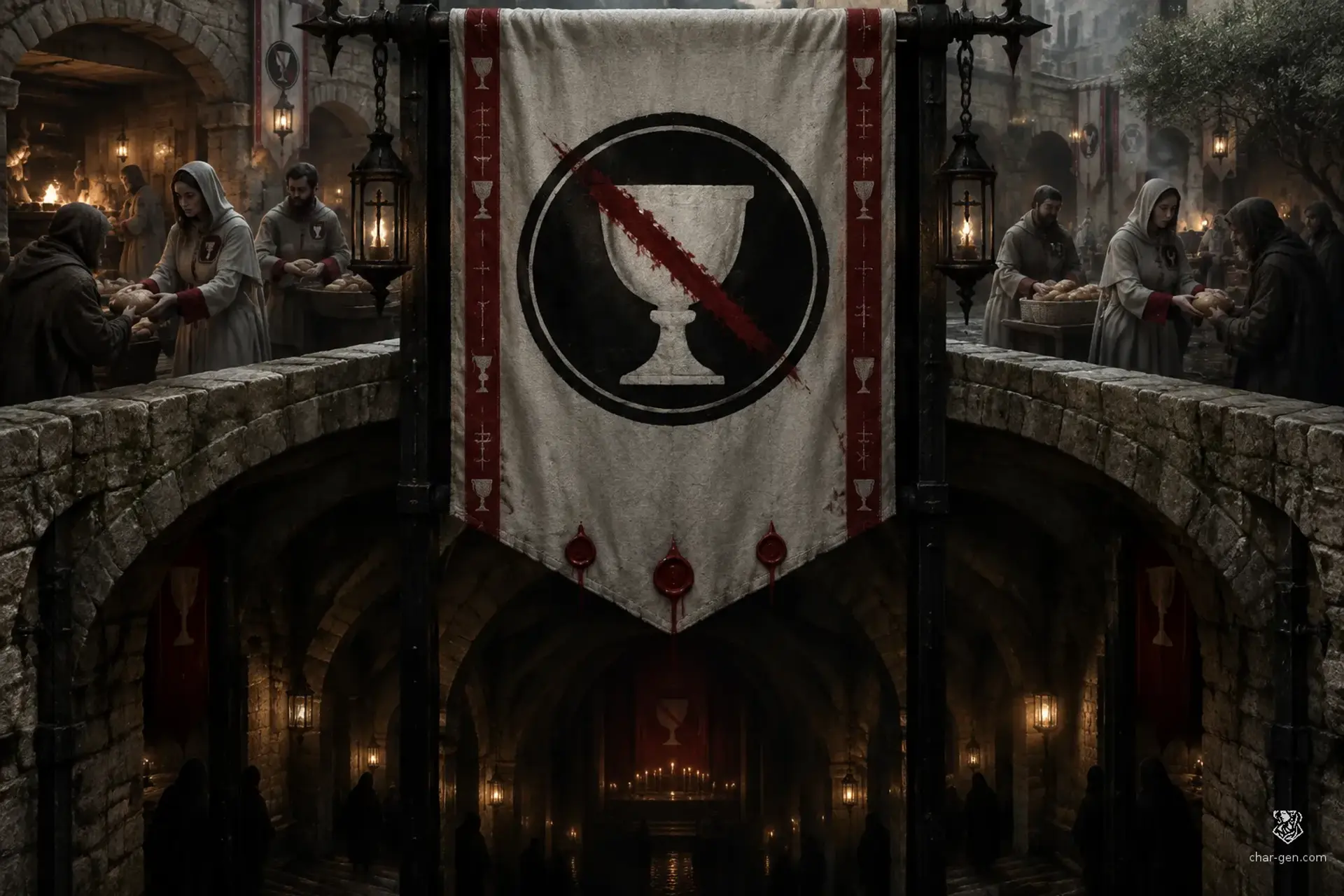
- A white cup marked by a red slash
- A single red thread worn beneath the sleeve by sworn ritual officers
- Three drops of red wax on sealed Covenant notices
Standing
What they say they want
What they are doing now
Where it leads
A Vladmet in which every household contributes to the Covenant, every civic decision is preceded by its blessing, and the city never has to ask whether its good fortune has a price. Oru imagines permanent dependence; the hardliners imagine permanent rule.
How others see them
To many residents, the Covenant is a stern but dependable source of food, funeral help, and reassurance during hard times. Wealthier citizens treat its rites as a quaint civic custom. The poor may resent its demands but still depend on its kitchens.
People
5 ranks
First Cup
Comforting in public and ruthlessly practical in private. He sees himself as a caretaker who has accepted a moral burden on behalf of a frightened city.
- The Red Table5 members
Five senior vowkeepers set policy, approve sacrifices, control the accounts, and decide which public disasters are attributed to failed observance. Decisions require three votes; the First Cup can delay a vote but cannot overrule it.
- Cupwardens18 members
Experienced ritual officers oversee the sanctuary, supervise captives, train novices, and lead neighborhood ceremonies. They compete for the Table's favor and often disagree about how much cruelty is necessary.
- Ledger hands64 members
Clerks, healers, cooks, record keepers, and alms distributors maintain the order's public services. Many know only fragments of the blood rites; some knowingly falsify records.
- Candle faithful280 members
Lay members attend observances, provide donations and labor, and carry Covenant warnings into their streets. Most believe the rites are symbolic or that the victims are willing.
- The Bound9 members
Hodne held in the cistern complex. They are excluded from the official membership count and treated as ritual dependents, not members. The order's records list them as wards or debtors.
Other key members
- Pema of the Drained Steps Alms steward. Her byname recalls the stone steps cleared of silt when the first public kitchen was built there.
- Kett Senior Cupwarden. His name was taken from the warning 'Kett the door,' a phrase his family used after a cellar door trapped a child during a flood.
- Sesh Keeper of accounts. Her name comes from a warning whispered in her family whenever a ledger was opened: 'Sesh, count twice.'
- Toma Infirmary attendant. His family named him for a demolished wall called the Toma, cleared to widen the lane after a deadly crush.
How they are organised
- Public members must attend at least three observances each year and contribute labor, food, or coin according to their means.
- Full vows require a sponsor and a period of service in a kitchen, infirmary, burial detail, or shrine.
- Only selected members are taught the blood liturgy. They swear to keep ritual details from civic officials and outsiders.
- The Covenant claims that all sacrifices are made under sacred obligation, but does not require proof of consent.
Relations
7 factionsThe city’s grain assessors rely on Covenant forecasts before setting levies. They publicly call the order’s rites harmless tradition, but privately value the calm that follows a successful sacrifice. Their support could end if the rites cause a visible shortage.
Operations
What they do
How they do it
Services for hire
- Kitchen bowlsFree, though recipients are encouraged to attend prayers and accept household visitsA daily meal and basic provisions for residents facing hunger.
- Last-light burial aidA donation, unpaid labor, or a promise of future serviceA modest burial, grief support, and help with funeral costs.
- Red measureA favor, confidential information, or repayment after harvestEmergency food, medicine, or small loans. Terms are set privately and can become coercive.
- Cup blessingA voluntary offering, usually coin, labor, or foodA public blessing for a household, shop, or journey. The order presents these rites as harmless prayers.
What they can do
What they have
Where they are weak
Territory
Headquarters
VladmetThe Covenant occupies the old cistern and the narrow buildings built around its mouth. The subterranean sanctuary smells of wet limestone, lamp oil, and iron. Above it are a records office, a public kitchen, dormitories, a small infirmary, and a courtyard where the order distributes bread. Visitors are welcomed into the bright upper rooms; only sworn members and guarded captives are permitted below.
Lands they hold
Outposts
- The Cleared CourtThe lower wards of VladmetA food depot built on the ground cleared after an old row of dwellings burned. It provides a respectable reason for Covenant carts to travel through the poorer districts.
- The Silt ChapelThe eastern burial slope outside VladmetA small shrine built where a silted drainage channel was dug out. It handles burials and offers private rites to families who cannot afford the main sanctuary.
Secrets
Plot hooks
5 hooks- 1The Name Missing from the LedgerLow to moderateReward: Information, a trusted local contact, and a choice about whether to expose the orderA Candle faithful asks the characters to find her missing brother, a Hodne who was last seen carrying a Covenant food basket. The order insists he left voluntarily, while Pema quietly offers access to the flour ledger.
- 2A Poor Ward's Bad SeasonModerateReward: Local allies, evidence of the order's methods, or a dangerous debt owed by the CovenantA neighborhood's luck has abruptly turned. The Covenant demands an additional offering, but an old woman claims the district's misfortune began when the order diverted a successful rite to protect the wealthy center. The party can investigate the rite, negotiate with the wardens, or defend the neighborhood from a planned abduction.
- 3The Second CountModerate to highReward: Evidence, leverage over city officials, and a consequential civic choiceSesh offers the characters a bundle of copied accounts in exchange for help getting the records out of Vladmet. The papers name bribed officials, missing Hodne, and payments to the kitchens. Releasing them could bring justice, but it may also cause the city to shut down the very aid its poorest residents rely on.
- 4The Vote Before the RiteHighReward: A major shift in Vladmet's power structure and potential allies among multiple factionsKett plans to force the Red Table to adopt a civic law granting the Covenant authority to select victims. Oru asks the party to stop him without revealing the order's secret. Pema wants the characters to free the Bound, while the petitioners want the entire sanctuary seized.
- 5What the Stone RemembersCampaign scaleReward: The chance to transform Vladmet, with lasting political and spiritual consequencesThe hidden founding record is found behind the altar stone. When word of it leaks, the city divides: some demand an end to the sacrifices, others fear that ending them will undo Vladmet's good fortune. The party must decide whether to publish the record, verify it, or use it to force the Covenant into a public reckoning.
Work they offer
What gets in the way
Rumours
Connections
Media
0 imagesNo images yet.
Turn The Red Covenant into a sheet
A high-res, share-ready sheet you can post or print.