
Brine-Keepers
After the Sour Floods, the first Keepers persuaded several estuary villages to observe a shared pause in fishing. The catch did not recover at once, but the following season brought enough young fish back to make the rule credible. That success drew kelp-farmers and herbalists into the compact, and its duties expanded from catch limits to runoff channels, tide-meadow practices, and safe access through the lower fjords. The watershed moment came when an early commercial dredging crew cut through a nursery bed and left a channel that carried silt and foul water into the estuary. The Keepers shut the channel by hand, working through a night of cold rain while the damaged beds filled with debris. Their action saved part of the season's harvest, but it also established a precedent: the group would intervene directly when negotiation failed. From then on, shipping interests called them saboteurs, while villages increasingly called on them to inspect coastal works. As trade along Anemora's lower slopes expanded, the Brine-Keepers developed three branches: the boat-patrolling Tide-Wardens, the harvesting and care network of the Meadow-Stewards, and the covert Salt-Seals. The branches often cooperate, but their different methods have never sat comfortably together. Today the Keepers are influential in the fishing villages and estuary settlements, but they have no authority over Anemora's wider trade. Their power comes from practical knowledge, village trust, and the ability to make a damaged shore everyone's problem.
Brine-Keepers
- Type
- Coastal stewardship guild…
- Size
- 114 members
- Reach
- High in coastal villages…
- Base
- Kelpmead
Overview
After the Sour Floods, the first Keepers persuaded several estuary villages to observe a shared pause in fishing. The catch did not recover at once, but the following season brought enough young fish back to make the rule credible. That success drew kelp-farmers and herbalists into the compact, and its duties expanded from catch limits to runoff channels, tide-meadow practices, and safe access through the lower fjords. The watershed moment came when an early commercial dredging crew cut through a nursery bed and left a channel that carried silt and foul water into the estuary. The Keepers shut the channel by hand, working through a night of cold rain while the damaged beds filled with debris. Their action saved part of the season's harvest, but it also established a precedent: the group would intervene directly when negotiation failed. From then on, shipping interests called them saboteurs, while villages increasingly called on them to inspect coastal works. As trade along Anemora's lower slopes expanded, the Brine-Keepers developed three branches: the boat-patrolling Tide-Wardens, the harvesting and care network of the Meadow-Stewards, and the covert Salt-Seals. The branches often cooperate, but their different methods have never sat comfortably together. Today the Keepers are influential in the fishing villages and estuary settlements, but they have no authority over Anemora's wider trade. Their power comes from practical knowledge, village trust, and the ability to make a damaged shore everyone's problem.
How it began
The Brine-Keepers trace their beginning to a run of bad tides remembered locally as the Sour Floods. A mineral wash from the upper slopes turned the estuary water cloudy, and the fish that fed the lower villages failed to return. At first, the people who would become the Keepers were simply kelp-cutters, fishers, and guides who met at the river mouth to compare what they had seen. Their first rule was practical: no one could take from a nursery bed until its young fish returned in number. The name Brine-Keepers began as a shortened description of those who kept the brine channels clear. It stuck after the original gathering places and channels changed.
How to know them
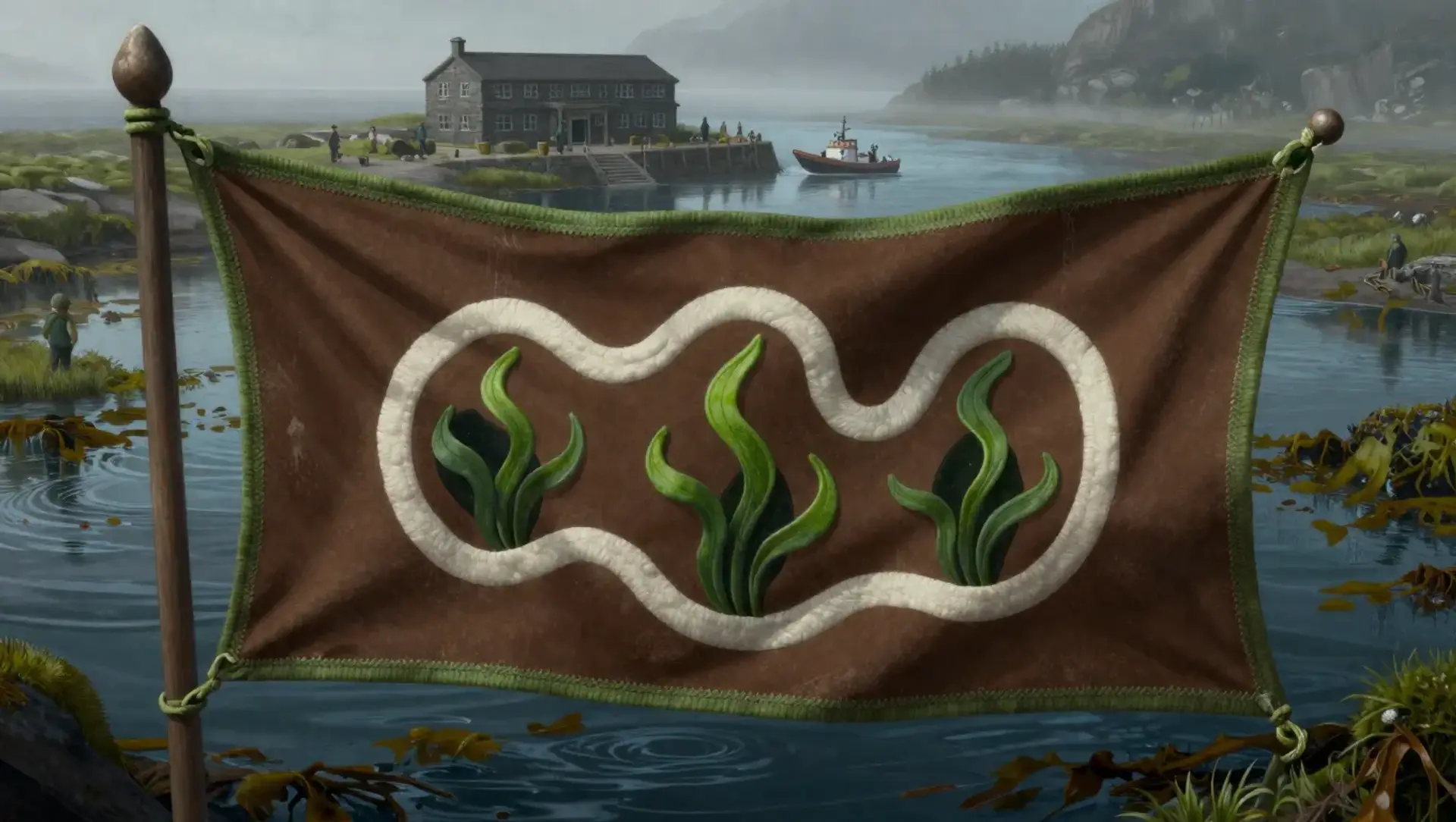
Tide-pool green, Salt white, Silt brown
- An open white tide-line
- Three kelp blades
- A salt-marked green cord worn by members on patrol
Standing
What they say they want
What they are doing now
Where it leads
A coast where villages can earn a living without exhausting the estuaries that feed them, and where every party using the shore shares responsibility for the damage it causes. Tessa hopes the Brine-Keepers can become a trusted mediator between coastal communities and Anemora's inland trade, not a private force that must punish every violator.
How others see them
Among coastal villagers, the Brine-Keepers are respected as practical stewards who know when a channel is safe and when a harvest must wait. Traders often view them as obstructive, and some laborers fear that their limits protect fish more readily than paychecks. Their skiffs are welcome in small harbors, but a Keeper's ledger can make a merchant's season much more complicated.
People
5 ranks
Reeve of the Brine-Keepers
Steady, direct, and slow to threaten. She listens closely, asks precise questions, and becomes formidable when someone treats a community's livelihood as expendable.
- Reeve1 member
Tessa Brine-Sown speaks for the compact, settles disputes between its branches, and calls emergency closures. Her decisions are usually brought to a council of local representatives, but immediate threats give her broad discretion.
- Tide-Wardens9 members
Veteran fishers and coastal rangers who patrol estuaries and fjords, check catches, record water conditions, and inspect vessels suspected of violating local rules.
- Meadow-Stewards23 members
Kelp-farmers, herbalists, and harvest managers who tend processing grounds, teach root-sparing harvest methods, maintain shared stores, and monitor the health of salt-grass meadows.
- Salt-Seals11 members
Divers and discreet investigators who trace underwater damage, clear blocked channels, gather evidence of illegal dredging, and sometimes sabotage gear they judge irreparably harmful.
- Tidebound Members70 members
Village fishers, gatherers, guides, and supporters who attend seasonal meetings, keep local observations, and help enforce agreed closures. Their membership is broad but their formal authority is limited.
Other key members
- Kett Senior Tide-Warden and patrol coordinator
- Salla Vesk Meadow-Steward responsible for shared stores and medicinal kelp
- Olek Salt-Seal diver and covert operations organizer
- Pirk of Whistlehead Village delegate and emerging rival for the Reeve's influence
How they are organised
- Support the compact's basic rule that nursery grounds and tide-meadows must be allowed to recover.
- Agree to report catches, observed damage, or unusual water changes honestly to the relevant local stewards.
- For patrol or diving duties, demonstrate practical skill and accept training in safe coastal work.
- Do not sell protected catches or knowingly hide illegal dredging from the village meeting.
Relations
6 factionsKelpmead's estuary harvesters rely on the Brine-Keepers to protect nursery beds and bargain against buyers who would take the whole season's yield at once. Their support can falter when quotas threaten immediate income.
Operations
What they do
How they do it
Services for hire
- Village HospitalityFree for welcomed guests; a donation of labor or food is appreciatedA place to sleep and basic meals in participating coastal villages, subject to local space and seasonal shortages.
- Kelp Remedies and Coastal SuppliesCustom faction privilege: 30% discount from participating KeepersLocally prepared aquatic supplies and common alchemical kelp remedies. Availability depends on harvest and stock; these benefits are faction-specific, not general D&D rules.
- Estuary PassageNo fee for recognized allies; safe passage may be delayed during closuresGuidance through familiar estuary waters and advance notice of hazardous shoals, seasonal restrictions, and patrol routes.
- Tide-Warden StandingGranted by local chapter after sustained serviceA recognized member may receive the custom title Tide-Warden, access to rare underwater preparations, and help from available skiff crews. The title grants local trust, not universal legal authority.
What they can do
What they have
Where they are weak
Territory
Headquarters
KelpmeadThe Tide-Meadows Office stands above Kelpmead's wet ground on dark stone footings. Its lower rooms hold catch ledgers, water samples, and bundles of dried kelp; its roof is used to dry salt-grass when the weather allows. A tide board outside records water height and closures in broad strokes of green and white. When the estuary wind turns, the whole office smells of brine, mud, and crushed herbs.
Lands they hold
Outposts
- The White MarkThe estuary mouth near KelpmeadA simple tide post whose painted marks show water height and current seasonal closures. Its name is a warning: locals say a sudden white line on the posts means the estuary has turned dangerously foul.
- Net-EndThe sheltered inlet below WhistleheadA low store shed and skiff mooring used by Tide-Wardens patrolling nearby nursery waters. The name shortened from the old instruction to tie boats at the net's end, where the channel remains deep enough at low tide.
- The Root BedsA salt-grass meadow on the outer edge of the Kelpmead flatsA shared work ground where Meadow-Stewards teach harvesters to cut useful growth without stripping the living base.
Secrets
Plot hooks
5 hooks- 1The Poacher's Drag-NetLow-level, suitable for characters around levels 1–2; investigation, negotiation, or a tense dockside confrontation.Reward: Custom faction standing, local room and board, and a share of recovered aquatic supplies.Syndicate-backed trawlers are sweeping a protected nursery near Whistlehead. Tessa asks the party to find the dock where the illegal nets are stored and secure proof before the crews sail again. The trawler owners claim they have permits, but the permit marks do not match the local tide records.
- 2Polluted RunoffLow to moderate, suitable for characters around levels 2–3; tracking, environmental hazards, and a confrontation at an illicit worksite.Reward: Custom faction standing, aquatic supplies, and access to local alchemical kelp remedies.A foul-smelling slurry reaches Kelpmead on the ebb tide, followed by aggressive Silt-Eater Fjord-Crabs attacking gatherers. The party must trace the discharge upstream, protect workers who may be afraid to talk, and determine who owns the illegal refining operation before evidence vanishes.
- 3The Silt-Vent BreachModerate, suitable for characters around levels 3–4; hazardous terrain, creature threat, and a choice about whether to prioritize the nursery, nearby workers, or the investigation.Reward: Custom faction standing, rare underwater alchemical preparations, and a favor owed by coastal villages.Over-dredging has collapsed a coastal trench, releasing sulfurous gas and disturbing a ravenous Cliff-Gloom Wyrmling. The Keepers ask the party to protect the nursery beds, drive the creature away or defeat it, and help stabilize the damaged trench. The collapse may have exposed a route to evidence of the hidden mill.
- 4The Cut LineModerate, suitable for characters of any tier; social investigation with consequences for the faction's internal balance.Reward: Faction influence, access to coastal guides, or leverage in a future negotiation.A Salt-Seal diver is accused of sabotaging legal cargo gear after a damaged trawler nearly wrecked in fog. The party can investigate the sabotage, uncover whether the trawler was operating in a closed nursery, and decide whether the diver's action saved the coast or crossed a dangerous line.
- 5What the Tide CarriesHigh-stakes regional investigation; suited to a campaign arc, with political pressure and possible retaliation rather than a single decisive battle.Reward: A lasting alliance with the Brine-Keepers, public recognition among coastal communities, and a meaningful change to regional trade or pollution rules.Evidence from multiple villages points to a coordinated effort to disguise refining waste as natural runoff. The party must follow the records from estuary to mill, protect witnesses, and bring the findings to a public meeting before the next shipping season begins.
Work they offer
What gets in the way
Rumours
Connections
Media
0 imagesNo images yet.
Turn Brine-Keepers into a sheet
A high-res, share-ready sheet you can post or print.