
The Tectonic Cults
From its beginnings as a miners’ warning circle, the movement grew by offering route knowledge, shelter, and purpose to people neglected by more powerful interests. The collapse at the old stone barrier changed its direction: believers saw a reply from the deep, while skeptics saw a preventable disaster. The resulting split gave the movement its enduring contradiction. It still preserves valuable safety knowledge, yet it increasingly uses that knowledge to choose where and how to cause damage. The Cult established influence around the Obsidian Vaults by controlling access to vents, passages, and old workings. Its members became sought-after guides before they became feared saboteurs. As its doctrine hardened, the Cult began to treat the ancient containment systems as instruments of oppression. Its raids for relics and seismic mana-crystals have brought it into open conflict with Ward-Master Korath and with settlements that depend on stable air and water. Today its reach is strongest near the Vaults and along major fault lines, but its cells are divided over the scale of the awakening they seek.
The Tectonic Cults
- Type
- Fanatical religious…
- Size
- 75 members
- Reach
- Locally dominant around…
- Base
- Obsidian Vaults
Overview
From its beginnings as a miners’ warning circle, the movement grew by offering route knowledge, shelter, and purpose to people neglected by more powerful interests. The collapse at the old stone barrier changed its direction: believers saw a reply from the deep, while skeptics saw a preventable disaster. The resulting split gave the movement its enduring contradiction. It still preserves valuable safety knowledge, yet it increasingly uses that knowledge to choose where and how to cause damage. The Cult established influence around the Obsidian Vaults by controlling access to vents, passages, and old workings. Its members became sought-after guides before they became feared saboteurs. As its doctrine hardened, the Cult began to treat the ancient containment systems as instruments of oppression. Its raids for relics and seismic mana-crystals have brought it into open conflict with Ward-Master Korath and with settlements that depend on stable air and water. Today its reach is strongest near the Vaults and along major fault lines, but its cells are divided over the scale of the awakening they seek.
How it began
The Tectonic Cults began as a small circle of Oread miners and route-keepers who met after Kaelen’s discovery of troubling signs in the deep stone. At first they mapped unstable passages, recorded strange tremors, and warned communities away from unsafe workings. Their earliest gatherings were practical affairs: chalked routes, shared water, and arguments over which tunnels could still be trusted. Their turning point came when a mining operation broke through an old stone barrier and caused a collapse. Survivors claimed they heard Terravorus answer from beyond the broken rock. Kaelen came to believe the tremor was proof that the surface was drawing too heavily on a sleeping power. The circle divided. Some wanted to seal the breach and keep the warnings quiet; others saw the collapse as a sacred summons. The latter formed the first Seismic Heralds and began recruiting among displaced miners, pariah communities, and those who had lost kin to hazardous excavations. Over time, protective route-work became a doctrine of liberation. The Cults began to treat ancient seals as shackles, and sabotage as a necessary warning to surface interests. Their largest triumph was securing a network of passages around the Obsidian Vaults. Their gravest setback was a premature breach that filled an inhabited gallery with sulfurous fumes. The disaster was officially blamed on a failed excavation. Inside the Cult, it became the defining argument between those who would open the deep at any cost and those who fear the thing their faith may awaken.
How to know them
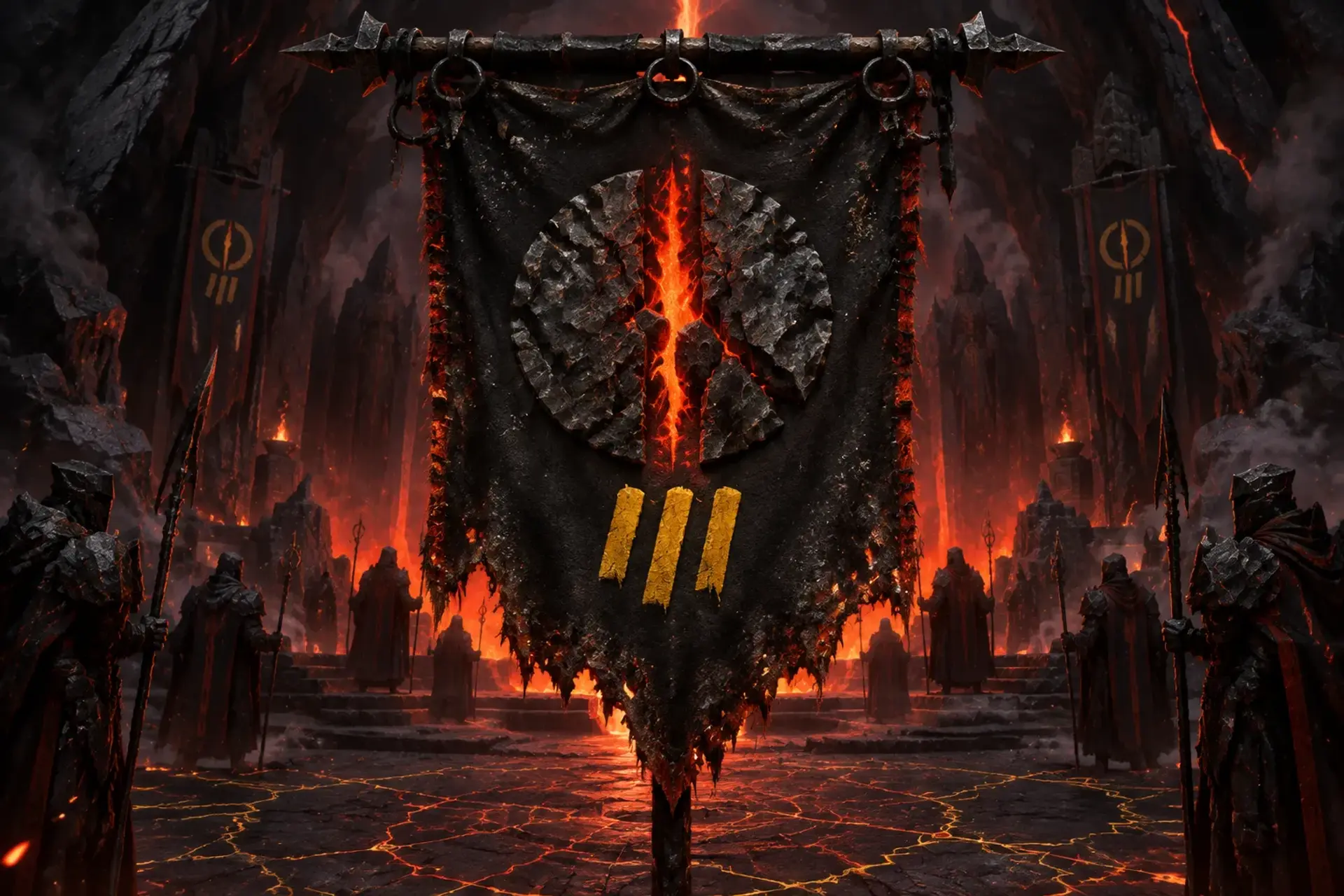
Basalt black, Sulfur yellow, Furnace red
- A split black-stone disk marked with a red fissure
- Three strokes copied from an old fault survey
- A heated iron ring worn by some members as a sign of service at a vent shrine
Standing
What they say they want
What they are doing now
Where it leads
The Cult imagines a world in which the deep earth is no longer mined, mapped, or sealed by surface powers. It wants the Under-Roots’ routes and resources governed by those who live below, with primordial forces released as guardians or instruments of a new order. Whether such a world could exist without catastrophic devastation is the question the Cult refuses to answer.
How others see them
To some deep communities, the Cults are dangerous saboteurs who may poison the very tunnels everyone shares. To others, they are the only people willing to resist those who treat the Under-Roots as a resource to be taken. Their scouts are known for accurate warnings; their raiders are feared for making those warnings come true.
People
5 ranks
High Speaker and Core-Herald
Quiet, persuasive, and intensely certain. Malakor offers food and shelter before asking for loyalty. He can show genuine tenderness to the dispossessed, yet accepts mass danger as a price worth paying for what he calls liberation.
- High Speaker1 member
Malakor Earth-Eater directs doctrine, assigns major operations, and claims final authority over when a seal may be approached.
- Seismic Heralds5 members
Priests, occult specialists, and interpreters of tremors who map fault lines, locate gates, conduct rites, and advise the High Speaker. Their order is named for the five marked stations on an obsolete survey plate.
- Slag-Borne Zealots18 members
Basalt-armored shock troops recruited from radicalized Oreads, Drow pariahs, and Dao mercenaries. They protect shrines, escort expeditions, and hold captured passages.
- Fault-Breakers11 members
Infiltrators and saboteurs who use charges, resonant wedges, and local knowledge to obstruct tunnels or damage air and water infrastructure. Their title derives from an old military map marking a breach as Fault-Breaker 2.
- Cinder-Votaries40 members
Initiates, scouts, supply handlers, and sympathetic residents who carry messages, gather rumors, and maintain the Cult’s scattered shrines. The name is a worn corruption of a miners’ term for those assigned to tend vent fires.
Other key members
- Ward-Master Korath Keeper of the seal-key and principal local opponent
- Sethri Route guide and uncertain ally
- Ktagh of Station 4 Fault-Breaker organizer
How they are organised
- Accept that the surface’s claims to the deep are not automatically legitimate.
- Swear to protect the Cult’s routes, shrines, and members from hostile intrusion.
- Complete a supervised descent to a fault shrine or undertake a meaningful act of service for a deep community.
- Do not enter a sealed vault or take a relic without authorization from a Herald.
Relations
9 factionsSome outcast Oreads cooperate with the Cults because they share knowledge of deep routes and distrust surface authorities. Their support is practical, not unconditional.
Operations
What they do
How they do it
Services for hire
- Fault-line escortNegotiated favor, shared intelligence, or a substantial trade paymentA guide familiar with selected routes through Sub-Levels 2–4. The Cult will not guarantee that every passage remains safe.
- Tremor readingA service owed to a local cell, or payment in tools, food, or reagentsAccess to a shrine where a Herald can compare a party’s observations with the Cult’s records of local tremors.
- Deep-forged suppliesTrade or a favor, with prices changing according to trustElemental gem reagents and heat-resistant equipment gathered or acquired by the Cult. Quality and safety vary by source.
What they can do
What they have
Where they are weak
Territory
Headquarters
Obsidian VaultsThe Cults’ central refuge occupies chambers and old excavation galleries within the Obsidian Vaults, a settlement of roughly 340 residents in the Abyssal Fractures. Their most sacred meeting place is called the Hearth of the Shattered Core, a name translated from an older miners’ phrase whose original meaning has been lost. It is a cavern warmed by volcanic vents, its basalt floor scored with fault maps and its walls stained orange by mineral vapor. The Cult keeps its relics behind guarded stone screens, while its outer galleries conceal routes used by pilgrims, smugglers, and raiding parties. The settlement is not wholly theirs: residents, wardens, and other workers continue to live and trade in the same precarious enclave.
Lands they hold
Outposts
- Vent Marker 2Under-Roots Sub-Level 2, near an active volcanic ventA listening shrine used to interpret tremors and shelter scouts during periods of dangerous gas flow. Its name comes from the number on an old vent survey.
- The Sundered HearthUnder-Roots Sub-Level 3, beside a collapsed routeA recruitment and supply chamber named by corruption of an older miners’ phrase for a warm refuge beside broken stone.
- Fault Station 7Under-Roots Sub-Level 4, near a sealed fault gateA concealed watch post where the Cult records movement around the lower seals. The designation survives from an obsolete military map.
Secrets
Plot hooks
5 hooks- 1The Intake MarkPersonal, adaptable to a low-level investigation or rescueReward: Safe passage, local trust, or evidence about the Cult’s internal divisionsA character with a connection to mining or route-keeping receives an anonymous map marking a threatened air-scrubber intake near Survey Station 4. The map’s author asks them to stop the attack without exposing the informant.
- 2Unlocking the Third FaultRegional crisis, suitable for a dangerous mid-campaign operationReward: A settlement’s gratitude, access to route records, or a captured cache of seismic crystalsFault-Breakers prepare seismic mana-charges near Survey Station 4. If the charges rupture the scrubber intakes, sulfurous gas may fill upper tunnels. The party must identify the correct fault branch, evacuate vulnerable workers, and decide whether to capture or destroy the charges.
- 3The Sealed Core RelicHigh-stakes relic pursuit involving competing claims and hazardous terrainReward: Custody of the seal-key, a temporary alliance, or evidence concerning the old stone barrierThe Cult sends a raiding party after Ward-Master Korath’s seal-key. The party may defend the Obsidian Vaults, pursue the thieves through unstable passages, or negotiate with a Cult cell that claims Malakor’s intended use of the key is reckless.
- 4Awakening of the Basalt LeviathanCampaign-scale confrontation with severe environmental and moral stakesReward: A chance to avert a catastrophe, uncover ancient containment records, or force a change in Cult leadershipA hidden fault shrine begins to shake as the Cult performs a breach rite. An immense presence stirs behind the stone, identified by the Cult as a Basalt Magma-Titan. The party must stop the rite, find a way to restore the damaged containment, and decide whether collapsing the cavern roof will save the region or entomb nearby communities.
- 5The Route That Must Not Be ReadSocial and exploratory challenge with consequences for several communitiesReward: A fault-line shortcut, access to a shrine, or leverage over the CultMalakor offers the party a secret route through Sub-Levels 2–4 in return for stealing a survey record from a settlement. The record could expose the route-keepers who first met after Kaelen’s discovery, but it may also contain the only reliable map of a failing seal.
Work they offer
What gets in the way
Rumours
Connections
Media
0 imagesNo images yet.
Turn The Tectonic Cults into a sheet
A high-res, share-ready sheet you can post or print.