
Valley Stewards
The council began as a compact among communities recovering from catastrophic rain and slope failure. Early Stewards gained trust by organizing shared labor rather than claiming ownership of the water. Their authority grew as terraces expanded and the same channels came to serve several settlements. A watershed moment came roughly 60 years ago, when an upper basin diverted meltwater to save its own grain and sent a destructive surge through lower terraces. The council intervened, opened emergency channels, and imposed a binding release schedule. The resulting rule saved much of the harvest, but also established that the Stewards could override local water claims during an officially declared danger. Over time, the council added timber quotas, seasonal levies, and route inspections to its responsibilities. Its emergency grain stores have carried settlements through lean years, while levy disputes and uneven enforcement have earned lasting resentment. Today the Stewards are neither simply village servants nor a distant government. Their authority rests on the visible usefulness of their work, and every flood season tests whether people still believe that the shared rules protect them.
Valley Stewards
- Type
- Regional civic authority…
- Size
- 280 members
- Reach
- High across settled valleys
- Base
- First Rain Market
Overview
The council began as a compact among communities recovering from catastrophic rain and slope failure. Early Stewards gained trust by organizing shared labor rather than claiming ownership of the water. Their authority grew as terraces expanded and the same channels came to serve several settlements. A watershed moment came roughly 60 years ago, when an upper basin diverted meltwater to save its own grain and sent a destructive surge through lower terraces. The council intervened, opened emergency channels, and imposed a binding release schedule. The resulting rule saved much of the harvest, but also established that the Stewards could override local water claims during an officially declared danger. Over time, the council added timber quotas, seasonal levies, and route inspections to its responsibilities. Its emergency grain stores have carried settlements through lean years, while levy disputes and uneven enforcement have earned lasting resentment. Today the Stewards are neither simply village servants nor a distant government. Their authority rests on the visible usefulness of their work, and every flood season tests whether people still believe that the shared rules protect them.
How it began
The Valley Stewards trace their beginning to a season remembered in local accounts as the Three-Day Rain. A succession of storms tore open terrace walls, sent mud through farmsteads, and left the lower paths choked with fallen timber. In the aftermath, village elders, water-keepers, and stoneworkers began meeting at First Rain Market to coordinate repairs and assign shared labor. Their first agreements were practical rather than grand: clear the channels together, keep the steepest slopes rooted, and store a portion of each harvest for the next flood. The name Valley Stewards is a plain English rendering of an older title for those entrusted with shared water. The original word has been lost from common speech, but it survives in an old seal whose inscription no one can confidently read.
How to know them
Moss green, Rain-washed slate, Pale clay
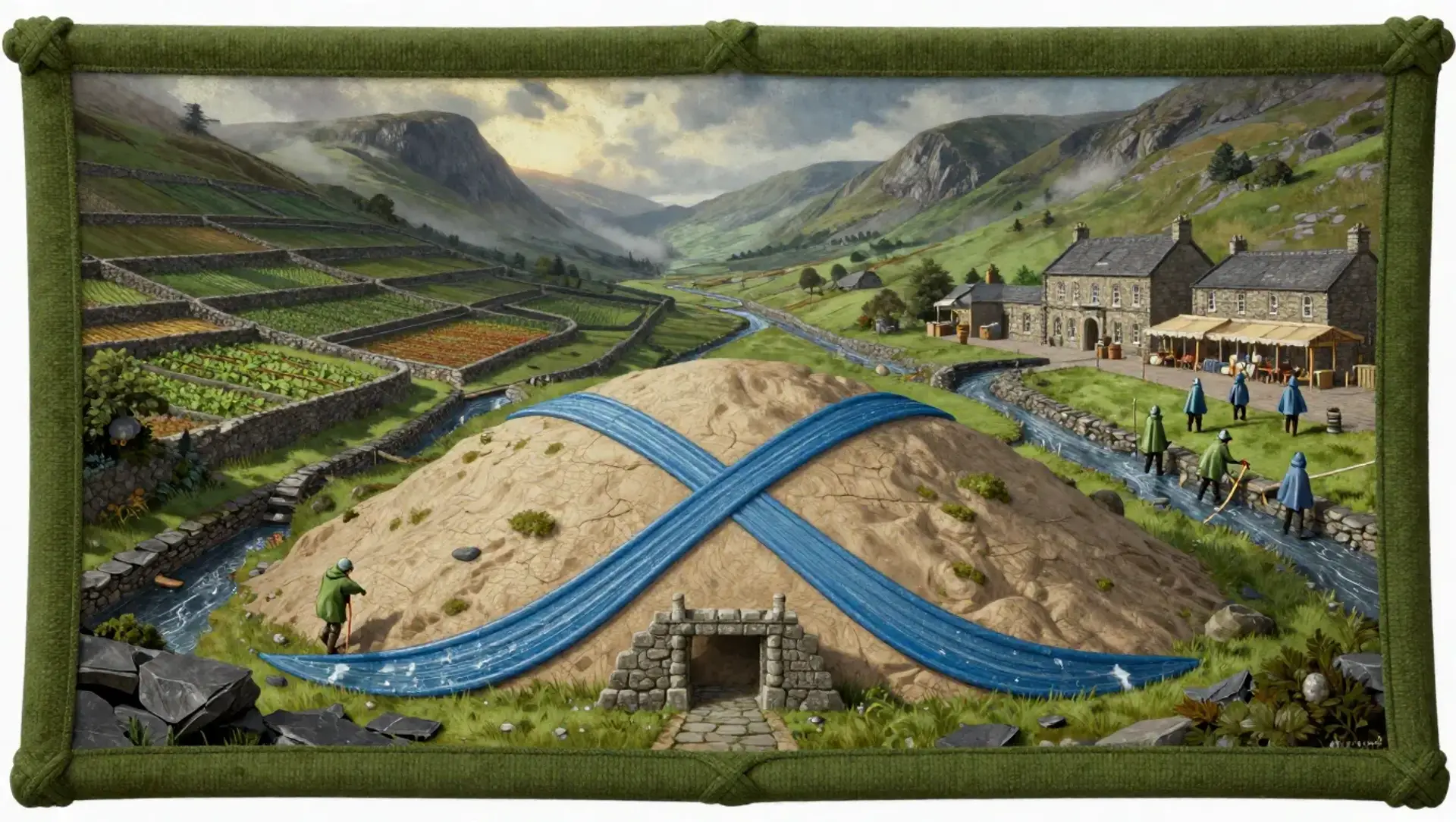
- A stepped hillside crossed by three blue water lines
- A small stone gate carved on official notices
- Green cords worn by Sluice-Wardens during field inspections
Standing
What they say they want
What they are doing now
Where it leads
A valley network able to feed its people and withstand extreme weather without surrendering local self-rule. The Stewards hope to make shared infrastructure reliable enough that cooperation becomes more valuable than any single hamlet's short-term advantage.
How others see them
Among settled communities, the Valley Stewards are valued when water runs clear, a bridge survives a storm, or emergency grain arrives on time. They are also known for ledgers, inspections, and rules that can feel remote to people living far from First Rain Market. Farmers often trust an experienced Sluice-Warden more than a senior council member; timber crews tend to assume an inspection means a fine is coming.
People
6 ranks
First Steward
Calm, attentive, and difficult to hurry. He lets people finish speaking, then asks who will bear the cost if their proposal fails. His patience can look like hesitation to those demanding an immediate ruling.
- First Steward1 member
The elected chair and public voice of the council. Sets priorities, calls emergency sessions, and must justify extraordinary levies before representatives of the settled valleys.
- Basin Council11 members
Senior delegates from major settled basins and market routes. Approves seasonal quotas, arbitrates disputes between branches, and can limit the First Steward's emergency authority.
- Sluice-Wardens36 members
Field engineers and inspectors who assess terrace walls, clear channels, monitor meltwater, and coordinate repairs across connected watersheds.
- Levy-Collectors24 members
Clerks, assessors, and guards stationed at markets and crossings. Record harvests and timber duties, distribute stores, and refer contested assessments to the Basin Council.
- Canopy Watch31 members
Forest wardens who mark permitted cuts, inspect replanting, and close unsafe logging areas. They may warn or escort a crew away, but major penalties require a hearing.
- Seasonal hands and local delegates180 members
Carpenters, carriers, surveyors, storekeepers, and hamlet representatives brought into service during repairs, inspections, harvest accounting, and flood preparation.
Other key members
- Sefra Senior Sluice-Warden and Haddon's most trusted field engineer
- Tamas of the Lower Steps Levy-Collector assigned to Survey Seven Ford
- Gethra Canopy Watch captain responsible for camp inspections
How they are organised
- New members must learn the valley's shared-water rules and the emergency signals used during flood and slope failure.
- Field officers must complete a supervised season of inspection, repair, or record-keeping.
- Members swear to record disputed assessments and water releases accurately, even when the truth embarrasses the council.
- The Stewards accept people from any local community, but a person responsible for fraud or deliberate damage to shared infrastructure may be barred.
Relations
6 factionsThe market's growers rely on the Stewards to keep irrigation channels open and emergency grain moving. They support the council in public, but object when assessments ignore a poor harvest.
Operations
What they do
How they do it
Services for hire
- Sluice and slope inspectionFree to residents during an emergency; otherwise labor or a modest contribution to the repair storesAssessment of damaged terraces, drainage channels, and water gates, with a written repair priority when staff are available.
- Emergency storesNo charge for households whose losses are verified; other requests require repayment in grain or serviceTemporary access to emergency grain stores during crop failure, flood isolation, or a documented shortage.
- Basin mediationA small local levy or an agreed share of the recovered goodsDispute hearings for contested water shares, land boundaries, timber quotas, and harvest assessments.
- Hazard-route guidanceUsually covered by local duties; exceptional escorts require council approvalA Sluice-Warden or Canopy Watch guide leads travelers around unstable slopes, closed channels, or active landslide zones.
What they can do
What they have
Where they are weak
Territory
Headquarters
First Rain MarketThe Steward's Hall stands beside the sheltered market plaza at First Rain Market. Its lower floor is built of dark local stone, with a wide covered porch where people can wait out sudden rain and argue over measures without blocking the produce stalls. Above the public records room, wooden galleries hold irrigation maps, levy ledgers, and rain gauges. The hall's oldest feature is a long stone channel set into the floor, used to demonstrate how water will divide between disputed terraces. During hearings, the sound of trickling water carries through the room while wet wool, clay, and crushed herbs scent the air.
Lands they hold
Outposts
- Ford levy officeSurvey Seven FordRecord caravan cargo, assess crossing duties, distribute flood notices, and coordinate with river-pilots when the gorge becomes dangerous.
- Canopy Watch postCold Rain CampMonitor timber quotas, verify replanting, and warn logging crews when saturated slopes or heavy rain make cutting unsafe.
- Steward's HallFirst Rain MarketHouse the Basin Council, public records, water maps, and the regional grain reserve.
Secrets
Plot hooks
5 hooks- 1The Dammed SluiceLevels 3–4, or an equivalent low-level challengeReward: Faction standing, paid work, and access to local shelter and produceA sluice feeding terraces near First Rain Market has jammed behind a fresh fall of stone. Aggressive subterranean beasts occupy the blocked channel, and water is already backing into the fields. Haddon asks the characters to clear the obstruction while Sefra maps a safe route through the flooded works.
- 2The Levy RiotsLevels 4–5, or an equivalent social and combat challengeReward: Faction standing, a negotiated settlement, or leverage over the local timber tradeA remote terrace hamlet refuses its timber levy, arguing that a Syndicate buyer falsified the trade rate and left families in debt. The characters can inspect records, question the buyer, and mediate before Levy-Collectors arrive with guards. A violent resolution could leave the hamlet isolated when the next flood comes.
- 3Sluice-Gate SabotageLevels 5–6, or an equivalent high-stakes hazard challengeReward: Major faction standing, emergency authority, and evidence about the saboteursSomeone has rigged the main reservoir dam above Survey Seven Ford with seismic charges. The characters must find and disable them before a surge reaches settlements below. Haddon wants the danger contained; Tamas insists that the public must be warned, even if panic disrupts the evacuation.
- 4The Buried WaterlinePersonal or local investigation, scalable to the partyReward: A family alliance, local trust, and access to an old valley surveyA family asks a character with local ties to prove that its terrace was wrongly marked for abandonment after a slope inspection. The old map appears to show a buried drainage channel beneath the land. Recovering the original survey could save the farm, but also reveal why the channel was sealed.
- 5Bread Above the GorgeRegional crisis, suitable for a party at any levelReward: Regional gratitude, enduring allies, and influence over future council policyA storm has cut off several hamlets, and the central grain reserve is too small to supply them all. The characters must choose a route, persuade settlements to share stores, or uncover why a promised shipment never arrived. Every hour spent deciding allows the rain to rise around the paths.
Work they offer
What gets in the way
Rumours
Connections
Media
0 imagesNo images yet.
Turn Valley Stewards into a sheet
A high-res, share-ready sheet you can post or print.