
Do Not Wake the Cairns
About 1,600 years ago, Vǫrðheimr rose as a fortified northern kingdom to resist demon armies pouring from the Maelstrom Rift in the Sea of Dark Waters. For almost two centuries its people fought alongside an alliance of neighboring nations. The alliance eventually defeated the invading armies and stabilized the rift, preventing the Abyss from sending armies into the mortal world again. The victory did not bring lasting prosperity. Neighboring nations withdrew support, distant supply lines failed, and the kingdom's isolated northern outposts became too costly to hold. Over the following century Vǫrðheimr dissolved. Its descendants adapted to the land rather than trying to rebuild its walls, becoming the wandering tribes of the north. Do Not Wake the Cairns traces its ancestry to one of those last garrisons. In the centuries since, the clan learned to follow great beasts across the Scarred Lands, especially woolly mammoths, and built a culture around seasonal movement, shared stores, and care for the herd. The clan's defining watershed came when a thaw exposed a sealed Vǫrðheimr chamber beneath a migration path. A demon presence escaped and took several people before the clan's hunters and a neighboring war band forced it back behind the broken gate. The survivors chose not to abandon the route. They marked every approach with cairns and swore to keep watch, making the clan's warning-name a public vow. In later generations, the clan established frequent trade with Sune's Gift and became one of the Scarred Lands tribes that recognize Lisgardo as their overlord when its elected leader proves worthy by hunting a linnorm and bringing evidence to the tribal gathering. Today, trade, troll attacks, and the Emberbound's interest in the ruins have brought the clan's old duty into sharp conflict with the needs of its living people.
Do Not Wake the Cairns
- Type
- Semi-nomadic Northlander…
- Size
- About 108 people
- Reach
- Local
- Base
- Near Sune's Gift
Overview
About 1,600 years ago, Vǫrðheimr rose as a fortified northern kingdom to resist demon armies pouring from the Maelstrom Rift in the Sea of Dark Waters. For almost two centuries its people fought alongside an alliance of neighboring nations. The alliance eventually defeated the invading armies and stabilized the rift, preventing the Abyss from sending armies into the mortal world again. The victory did not bring lasting prosperity. Neighboring nations withdrew support, distant supply lines failed, and the kingdom's isolated northern outposts became too costly to hold. Over the following century Vǫrðheimr dissolved. Its descendants adapted to the land rather than trying to rebuild its walls, becoming the wandering tribes of the north. Do Not Wake the Cairns traces its ancestry to one of those last garrisons. In the centuries since, the clan learned to follow great beasts across the Scarred Lands, especially woolly mammoths, and built a culture around seasonal movement, shared stores, and care for the herd. The clan's defining watershed came when a thaw exposed a sealed Vǫrðheimr chamber beneath a migration path. A demon presence escaped and took several people before the clan's hunters and a neighboring war band forced it back behind the broken gate. The survivors chose not to abandon the route. They marked every approach with cairns and swore to keep watch, making the clan's warning-name a public vow. In later generations, the clan established frequent trade with Sune's Gift and became one of the Scarred Lands tribes that recognize Lisgardo as their overlord when its elected leader proves worthy by hunting a linnorm and bringing evidence to the tribal gathering. Today, trade, troll attacks, and the Emberbound's interest in the ruins have brought the clan's old duty into sharp conflict with the needs of its living people.
How it began
The clan says its founders were the last wardens of a northern fort whose name has been lost. When the Kingdom of Vǫrðheimr's scattered garrisons were abandoned, a band of survivors refused to leave the old roads unguarded. They took their families and the fort's mammoths onto the migration trails, carrying a warning from the gate-stones: never trust a quiet seal merely because it has held for one generation. The name Do Not Wake the Cairns began as that warning. It endured because elders say that changing it would tempt the very things the words caution against.
How to know them
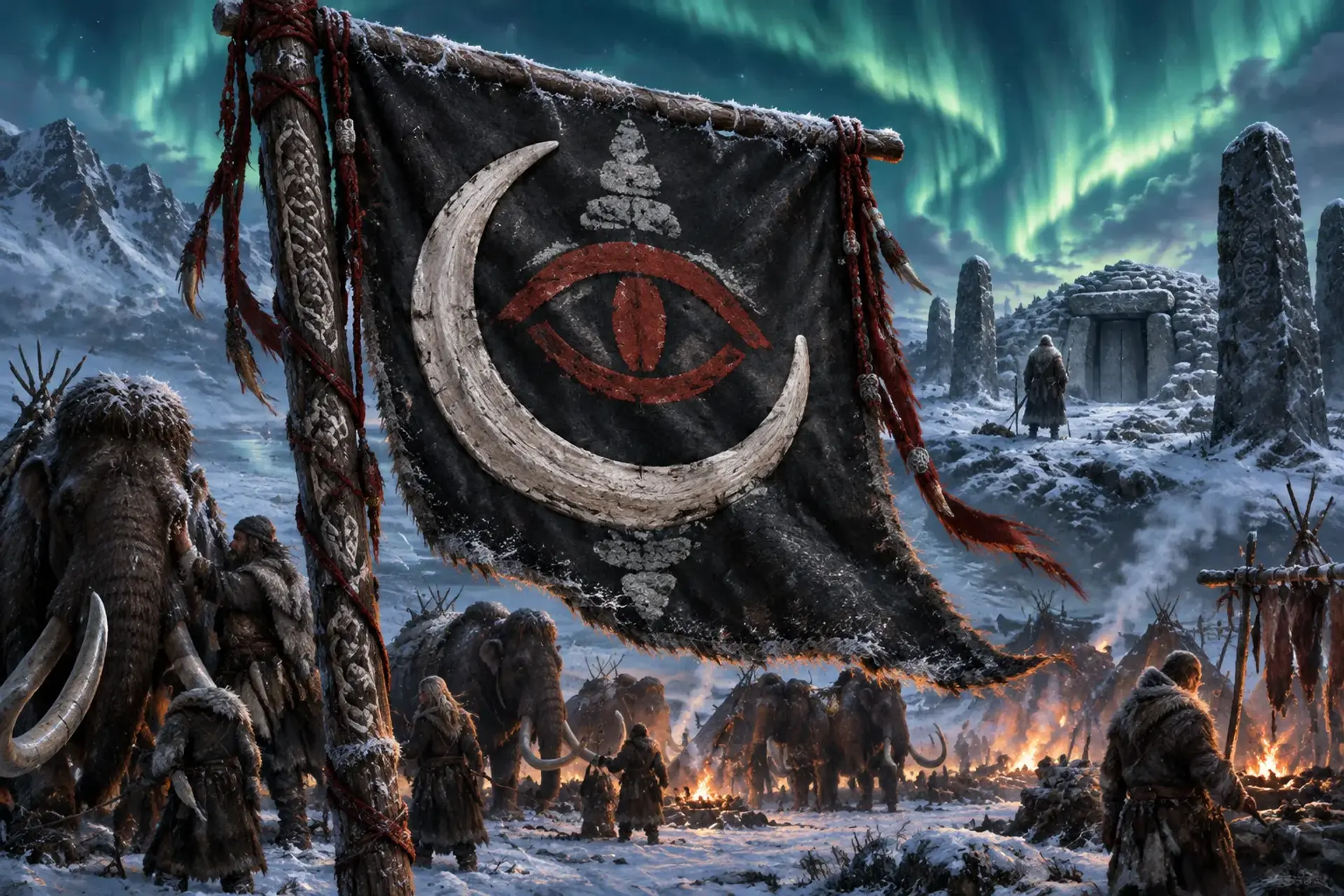
Mammoth-ivory white, Old-blood red, Lichen gray
- The unfinished closed-eye cairn-mark
- A white mammoth tusk worn as a sign of responsibility, not rank
- Red cords tied to trail markers to indicate danger or an obligation owed
Standing
What they say they want
What they are doing now
Where it leads
Remain a free-moving people with safe migration routes, healthy mammoth herds, and enough influence to keep distant powers from treating the north as an empty frontier. The clan hopes to preserve the old wards without becoming prisoners of them.
How others see them
In Sune's Gift, the clan is known as reliable traders who arrive with fine hides, strong pack animals, and news from the northern trails. Some townsfolk find their customs forbidding, especially their refusal to let buyers examine certain relics. Travelers regard them as formidable guides and dangerous enemies, though stories sometimes exaggerate their hostility to outsiders.
People
6 ranks
Trail-Mother
Measured and compassionate, with a talent for hearing what people avoid saying. She can be stubborn when outsiders treat the clan's traditions as quaint obstacles.
- Trail-Mother or Trail-Father1 member
The clan's current leader, chosen for judgment, generosity, and demonstrated ability to keep people and herds alive. Leads diplomacy and migration decisions but cannot command every family by decree.
- Hearth Speakers7 members
Represent extended family hearths and advise on disputes, food stores, marriages, and camp law. Major choices are settled by discussion until a workable consensus forms.
- Tuskwardens14 members
Experienced mammoth handlers, scouts, and hunters who coordinate herd movements, teach safe handling, and defend the animals. Their authority is strongest on the trail.
- Cairn-Keepers9 members
Oral historians and guardians of sacred ruins, warning stones, and burial places. They interpret inherited signs but do not claim infallibility.
- Trailfolk46 members
Adult hunters, gatherers, craftspeople, traders, and herders. Their consent matters in decisions that risk lives or alter a migration route.
- Young Steps31 members
Children and adolescents learning the routes, crafts, stories, and responsibilities of the clan. They take part in camp life but are not counted as full decision-makers.
Other key members
- Bren Senior Cairn-Keeper
- Cethri Tuskwarden and likely successor to Eira
- Dafydd Trader and potential source of a damaging scandal
- Ghazal Hearth Speaker and advocate for a closer Lisgardo bond
How they are organised
- Be a Northlander human by birth or clan adoption. The clan itself is composed entirely of Northlander humans.
- Share the work of the moving camp, including hunting, gathering, animal care, repair, or defense.
- Learn the clan's trail signs and agree not to take from a herd, burial place, or marked ruin without permission.
- Accept that survival decisions are made collectively and that a person's actions may put the entire migration at risk.
Relations
8 factionsTrade partners in Sune's Gift. The town buys mammoth leather, ivory, smoked meat, bonework, and trained pack animals; the clan buys grain, iron goods, lamp oil, and medicines. Both sides rely on the relationship, though disagreements over prices and sacred sites recur.
Operations
What they do
How they do it
Services for hire
- Trail guidanceTrade, a useful favor, or a fair exchange of suppliesA clan guide can lead travelers along known migration trails and identify safe camps, weather signs, and likely troll territory. Guides will refuse routes that risk a herd or sacred site without a compelling reason.
- Seasonal provisions and tradeCoin, metal goods, grain, or medicine of comparable valueThe clan trades cured hides, smoked meat, bone tools, and mammoth transport when available. Prices change with the season and the health of the herds.
- Mammoth handlingAn obligation to the clan, negotiated case by caseExperienced handlers can help acclimate animals to cold travel, heavy loads, and noisy surroundings. The clan does not sell mammoths to buyers it considers cruel or careless.
What they can do
What they have
Where they are weak
Territory
Headquarters
Near Sune's GiftThe clan has no permanent headquarters. In the cold months it gathers at a protected basin near Sune's Gift, where a ring of ancient stones shelters tents, animal pens, and communal smoke racks. The site is a seasonal camp rather than a town, and the clan leaves it before the ground becomes impassable.
Lands they hold
Outposts
- The winter campOn the high ground near Sune's Gift, used when the clan gathers for winter trade.Shelter people and herds, preserve food, conduct trade, and hold seasonal council.
- The sealed cairn lineAlong an old Vǫrðheimr road north of the clan's usual calving grounds.Mark approaches to a ruin and warn the clan when stones or ground show signs of disturbance.
Secrets
Plot hooks
5 hooks- 1The Calf Beyond the PassLow to moderate; travel hazards, negotiation or combat, and a rescue under time pressure.Reward: Clan hospitality, mammoth-handling knowledge, and a trade favor in Sune's Gift.A young Tuskwarden asks the characters to help rescue a mammoth calf trapped beyond a troll-occupied pass. The calf is alive, but the trolls have dragged an old Vǫrðheimr iron plate into their cave and it is making the nearby stones tremble.
- 2Terms at the CairnModerate; social negotiation, investigation, and the possibility of a dangerous breach.Reward: Access to historical knowledge, payment from the researchers, or lasting trust from the clan.The Emberbound request guides to a ruin whose entrance lies near a clan burial trail. Eira will permit a supervised visit, but Bren insists the researchers are concealing the purpose of their expedition. The characters must establish terms before either side takes matters into its own hands.
- 3The Iron That Should Not Be SoldModerate; investigation, social pressure, and moral choices about disclosure.Reward: A personal favor from Eira, a valuable trade contact, or evidence about the weakening ward.A trader in Sune's Gift accuses the clan of selling a stolen relic. The evidence points to Dafydd, but the item bears marks that suggest it came from the very seal the Cairn-Keepers have concealed. The characters can expose a smuggler, discover a larger danger, or protect the clan's reputation while pursuing the truth.
- 4Proof at the GatheringHigh; political maneuvering, wilderness travel, and a dangerous hunt if the evidence is challenged.Reward: Regional contacts, political influence, and the possibility of changing the terms of the clan's vassal bond.At the next gathering of the northern tribes, Lisgardo's elected leader arrives with proof of a linnorm hunt and demands renewed fealty. Ghazal supports the compact, while other Hearth Speakers fear the terms will restrict migration. The characters are asked to witness the debate, uncover a forged piece of evidence, or help determine whether the hunt truly meets tradition.
- 5The Road That Was AbandonedCampaign-scale; wilderness survival, large-scale threats, exploration, and choices affecting multiple communities.Reward: The clan's lasting allegiance, access to Vǫrðheimr secrets, and the power to determine what happens to a failing seal.Troll attacks drive a herd toward a buried fort, where the ward-stones begin to hum. The clan needs the herd saved, the trolls stopped, and the seal investigated before the seasonal migration becomes impossible. Evidence inside the fort may reveal the truth about the clan's founding sacrifice.
Work they offer
What gets in the way
Rumours
Media
0 imagesNo images yet.
Turn Do Not Wake the Cairns into a sheet
A high-res, share-ready sheet you can post or print.