Skip to content
CreatePricing
The Quiet Course's Binding Ring - AI-generated fantasy Hazard

The Quiet Course's Binding Ring

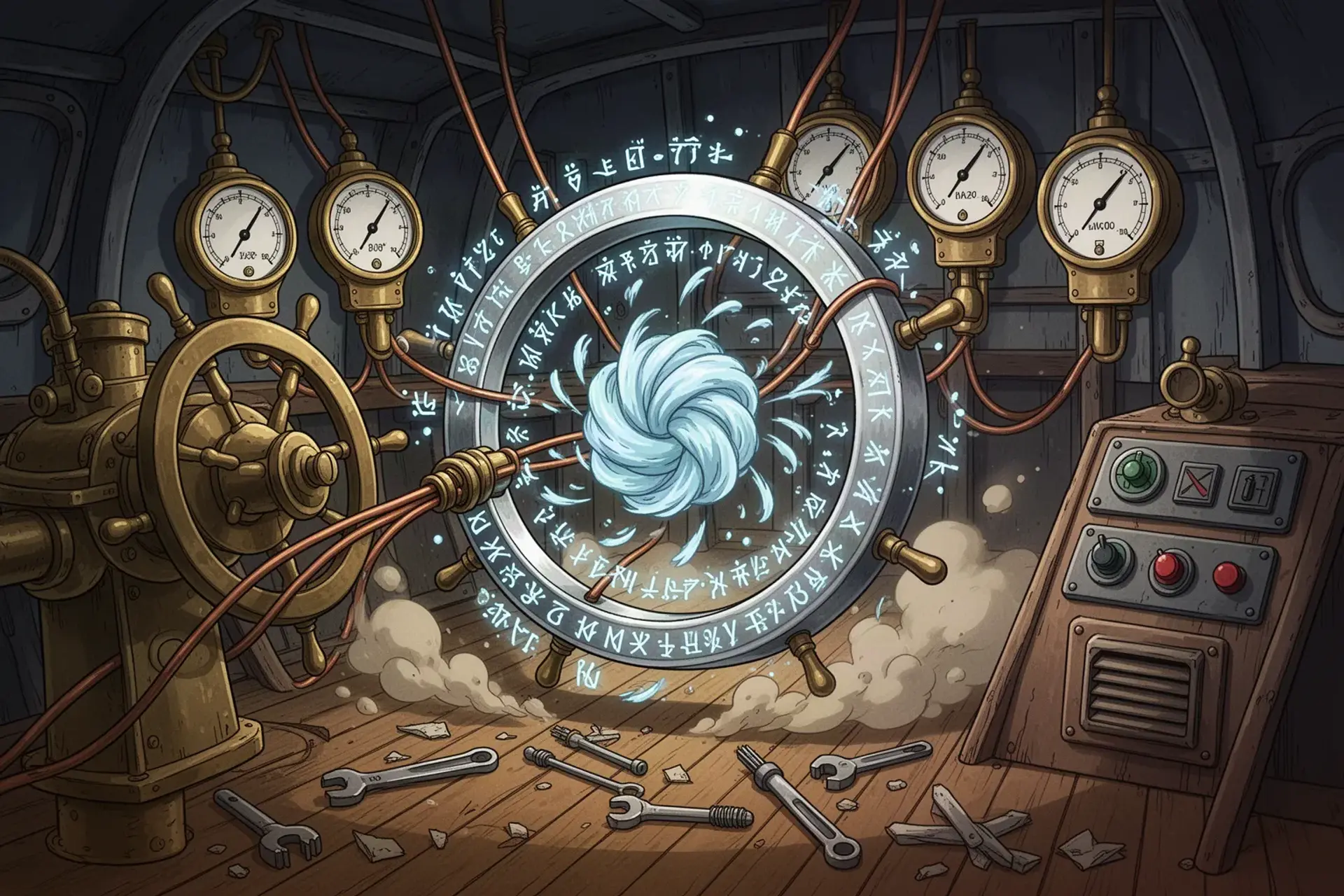
The binding ring is a brass-and-silver assembly holding the air elemental that drives the vessel. Covert course changes, tampering with its controls, or damage to the ship place increasing strain on the binding. The ring gives distinct warnings before it becomes dangerous, leaving a small crew time to respond. Its purpose at the table is to create a mounting problem during the hijacking, not to demand a fight.

Moderate. It uses a three-stage strain track, clear warning signs, and several ways to intervene. · Environmental / magical vessel hazard · Level 2

The Quiet Course's Binding Ring

The binding ring is a brass-and-silver assembly holding the air elemental that drives the vessel.
Disable
Stabilize the controls or…

At a glance

Level
2
Moderate. It uses a three-stage strain track, clear warning signs, and several ways to intervene.

Disable Stabilize the controls or reduce strain without breaking the elemental containment

Initiative No initiative of its own

The hazard

The binding ring is a brass-and-silver assembly holding the air elemental that drives the vessel. Covert course changes, tampering with its controls, or damage to the ship place increasing strain on the binding. The ring gives distinct warnings before it becomes dangerous, leaving a small crew time to respond. Its purpose at the table is to create a mounting problem during the hijacking, not to demand a fight.

  • Environmental
  • Magical
  • Airship
  • Escalating
Trigger
The hazard activates when the vessel is held off its filed course for 1 full round to conceal the hijacking, when someone interferes with the binding controls, or when the ring or its nearby engine supports are damaged. Begin at Stage 1.
Disable
Stabilize the controls or reduce strain without breaking the elemental containment. Two successful interventions settle the ring. Each intervention takes an action and uses the checks and consequences described under Countermeasures. A character can also stop the source of strain by restoring the filed course and ending interference or damage; this halts escalation but does not, by itself, settle a ring already at Stage 2 or 3. Deliberately breaking the ring is not a disable method and causes an immediate Stage 3 surge.
Initiative
No initiative of its own. Track strain at the end of each round during which its trigger remains active.
Routine
At the end of each round, if the pilot remains committed to the course diversion, interference continues, or the ring is damaged, advance strain by 1 stage. Resolve the new stage's effect immediately. At Stage 3, resolve the surge and then set strain to Stage 2. The ring cannot surge again until at least 1 round has passed.
Reset
After the cause of strain ends and the ring is settled, it resets automatically after 1 minute of steady flight. If the course is diverted again, interference resumes, or the ring is damaged before then, it starts at Stage 1.

Damage

Immunities
  • The bound elemental is immune to being charmed, frightened, or knocked prone while contained. This does not grant the ring or ship additional creature immunities.
Weaknesses
  • The ring is designed to respond to its marked course. Returning the vessel to that course and stopping interference halts escalation.
  • The emergency vent can safely bleed pressure when operated carefully, allowing a skilled character to reduce strain without breaking containment.

Effects

3
  • Stage 1: Uneasy Draft

    The ring produces a low, wavering hum. Gauges quiver and the contained wind leans against the direction of the ship's course. No damage occurs. At the end of each round that the pilot remains committed to the covert diversion, interference continues, or the ring remains damaged, strain advances by 1 stage. A successful intervention can reduce it as described under Countermeasures.

  • Stage 2: Crosswind Lash

    DC 11

    The hum becomes a shrill whistle, loose objects skate toward the ring, and the deck tilts sharply. Each creature within 10 feet of the ring must succeed on a Strength saving throw or be pushed 5 feet away from it. This movement does not push a creature into an obvious hazard if another direction is available. At the end of each round the source of strain continues, strain advances by 1 stage unless an intervention has reduced it.

  • Stage 3: Containment Surge

    DC 12

    The ring vents a contained burst of wind and pressure. Each creature within 10 feet must make a Dexterity saving throw, taking thunder damage on a failure, or half as much damage on a success. A creature that succeeds is not knocked prone; a creature that fails is knocked prone. The ring then falls to Stage 2 and cannot advance again for 1 round, giving the crew a chance to act. If the source of strain remains, it resumes advancing at the end of that round. This burst does not release the elemental.

Special rules

Strain Trigger.The hazard can be triggered by a sustained covert course diversion, interference with the binding controls, or damage to the ring or nearby engine supports. A single ordinary course correction does not trigger it. The DM should signal the first stage as soon as strain begins.

Compromised Pilot.If Cevrani remains compromised but the crew successfully settles the ring, it stays settled only while the vessel remains on a safe course. If Cevrani resumes the diversion, the hazard restarts at Stage 1 at the end of the next round. An unmarked passenger cannot normally command the dragonmark-bound helm. A character can instead help Cevrani resist, relay navigation information, stabilize the binding controls, or use another established means to restore the marked pilot's safe control; success stops the course-related trigger while Cevrani maintains the corrected course.

Pressure, Not a Combat Encounter.The ring is survivable for one level-2 character: its only direct damage is the Stage 3 burst, which allows a Dexterity save for half damage. Its warnings and action-based countermeasures are available before that burst occurs.

Spotting it

Discovery

The ring is visible in the engineering access bay.

Perception

No check is required to notice Stage 1 signs in the engineering bay.

Stop it

Signs of dangerStage 1: A low, wavering hum, trembling gauges, and a draft that pulls toward the ring. · Stage 2: A shrill whistle, loose objects sliding across the deck, and a sudden tilt in the ship. · Stage 3: The runes flash out of sequence, the air becomes painfully thin for a heartbeat, and every metal fitting rings like a struck bell.

Countermeasures

In short

Keep the ship on its filed course, stop tampering or damage, and reduce the ring's strain.

Its story

What it looks like

A brass-and-silver ring surrounds a fist-sized knot of pale blue air.

Why it is here

To provide a readable, escalating engineering crisis during the Quiet Hijacking, with choices that reward observation and cooperation while remaining manageable for a single level-2 character.

Who made it

The vessel's original elemental engineers, whose names were filed off the binding plate after a previous owner altered the ship.

Lore

The binding ring was designed to tolerate ordinary course corrections, not sustained secret deviations.

Where it is found

An elemental airship's engineering access bay beside the helm and binding ring.

Variants

Silent Binding: The hum is barely audible, but gauges and loose dust provide the same warnings. Increase the DC to notice its sound by 2, but do not change intervention DCs.
Salted Controls: A hijacker has jammed one tension wheel. The first physical intervention has disadvantage unless the character first uses an action to clear the obstruction.
Gentle Elemental: The bound elemental tries to help by pushing loose tools toward the correct control. A character who listens to or observes it can gain advantage on one Arcana or tool check.

Plot hooks

The pilot is under coercion or magical influence and keeps making small course corrections that worsen the strain. Crew members must decide whether to confront the pilot, seize the helm, or stabilize the ring while the diversion continues.
The course deviation is meant to avoid a patrol, but the detour passes over a settlement or landmark that could reveal who ordered the hijacking.
The ring's etched maker's mark matches an engineer, shipyard, or noble house involved in a later investigation.

Media

0 images

No images yet.

Visual sheet

Turn The Quiet Course's Binding Ring into a sheet

A high-res, share-ready sheet you can post or print.