
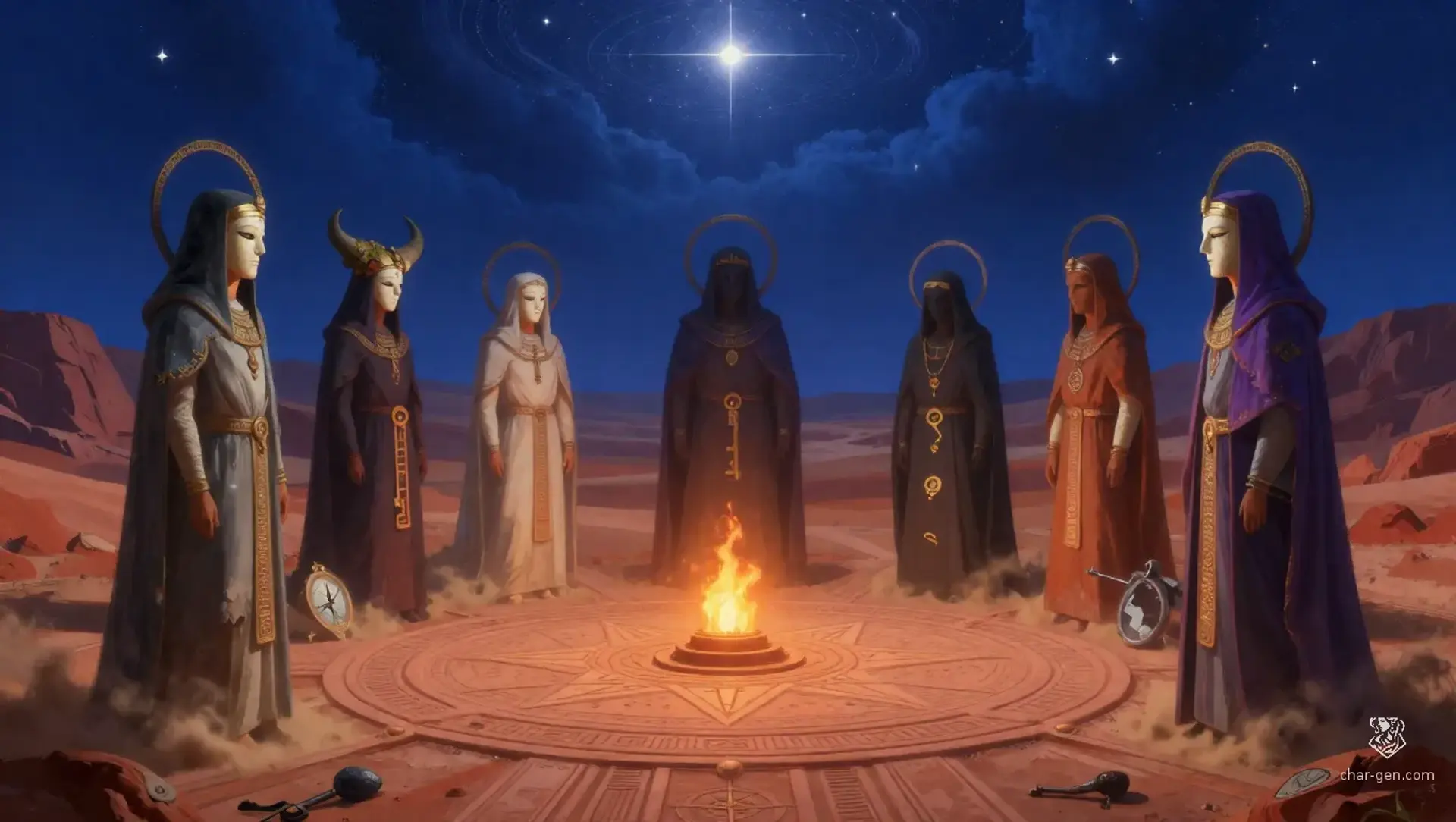
The Eightfold Covenant
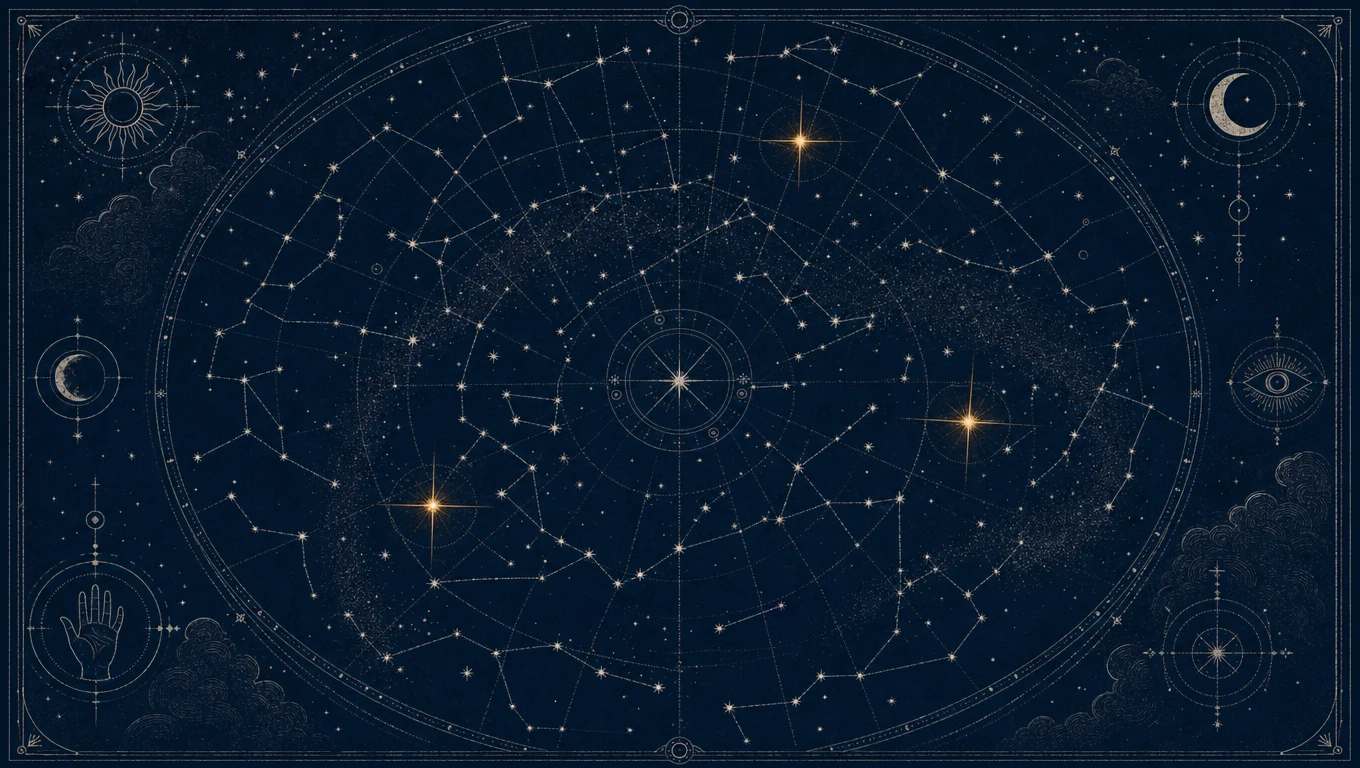
Origin
According to the oldest surviving tablets, the pantheon arose when eight mortal virtues and hungers were torn from a dying star that fell into the desert. Sheshara gathered the fragments into a covenant, but Suthen claimed the shadow cast by the star. The other powers emerged from the struggle, and the Nailground was formed from the impact. Every generation discovers evidence that the gods may once have been one being divided by betrayal.
Cosmology
The world hangs between two vast immensities: the White Above, where unspoken possibilities gather, and the Red Below, where every forgotten thing eventually sinks. The mortal world is the Nailground, pinned between them by eight divine powers. Sheshara forged the first covenant; Tazir of Red Mesa hammered its boundaries into place; Suthen carved the graves beneath them. Oruvaya breathed motion into the empty land, Gwelu gave it hunger and fertility, Brother Hask taught mortals to endure, Amaro Pell taught them to wander, and Dzhani taught them to desire what should remain buried.
Structure
The Covenant has eight recognized Paths, each devoted to one deity, but local shrines combine them according to regional custom. A Keeper of Keys interprets law and oaths; a Bell-Bearer carries news and organizes festivals; a Hammer-Brother or Hammer-Sister tends the sick and poor; a Boundary Warden records land; a Root-Mother or Root-Father oversees births and harvests; a Cord-Sealer conducts funerals and debt rites; a Road-Wager guides travelers; and a Quiet Listener guards secrets. The Paths cooperate publicly but compete through ritual challenges, legal disputes, pilgrimages, and acts of service. No temple may permanently exclude another Path without inviting the judgment of Sheshara.
Mortal Relations
The faith is practiced as the Eightfold Covenant, a loose frontier religion with no supreme priesthood. Most towns maintain a shared shrine containing eight objects: a key, a bell, a hammer, a red post, a seed, a sealed cord, a compass, and a mirror. Communities emphasize different gods according to their needs. Clerics and champions may serve one deity while acknowledging the others through seasonal rites. Religious disputes often become practical conflicts over land, debt, burial, freedom, and secrets. In play, divine magic should feel physical and weathered: dust storms, cracking clay, seedling growth, red thread, ringing metal, and sudden changes in the wind.
Afterlife
The dead arrive at the Last Water, a dry riverbed beneath a sky crowded with unmoving stars. Sheshara weighs each soul against its promises, while Oruvaya opens a road toward remembrance. Those who betrayed every oath are claimed by Suthen, who buries them beneath the world. Gwelu may steal a soul back if its unfinished work still serves the living. The dead fear that Dzhani keeps a second ledger, recording not deeds but the pain caused by them.
Turn The Eightfold Covenant into a sheet
A high-res, share-ready sheet you can post or print.