
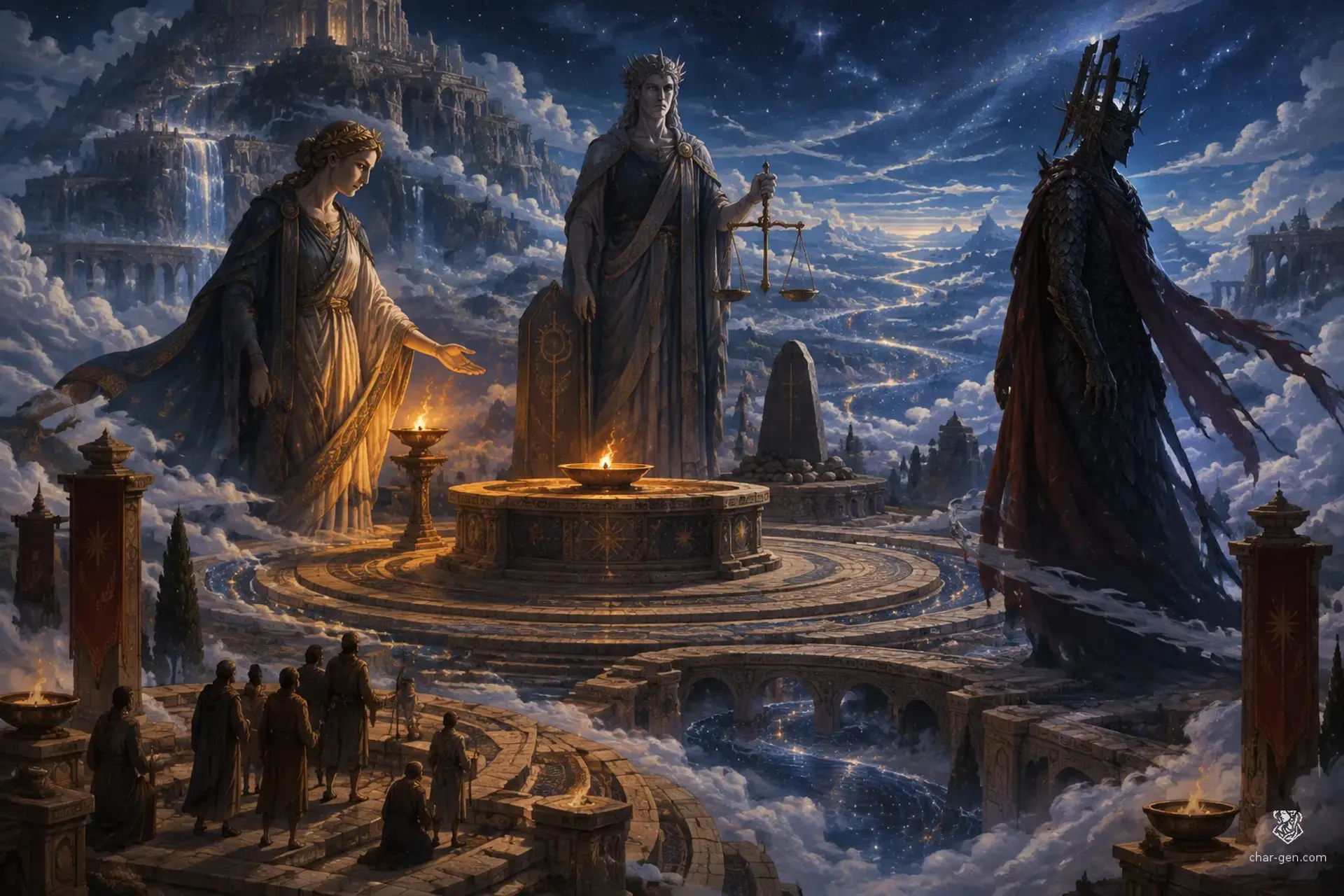
The Three at the River
The Three at the River
Invoke a god

Oru
Keeper of the Open Hearth
Symbol A lit oil lamp beneath an open hand.
Holy day The Open Door
- Make room at the table before asking who deserves a seat.
- Rescue the endangered first; settle the argument afterward.
- A community is measured by how it treats those who cannot repay it.
The gods
3Oru
Keeper of the Open Hearth
Greater Deity · Chaotic Good
Life and shelter, shared uneasily with Dain Mercer’s laws of passage · Courage to defy Vrzka’s predatory bargains
Affectionate, impulsive, and stubbornly hopeful. Oru remembers the names of the poor and powerful alike, but often acts first and negotiates with Dain Mercer afterward.
Faith
- Make room at the table before asking who deserves a seat.
- Rescue the endangered first; settle the argument afterward.
- A community is measured by how it treats those who cannot repay it.
Holy dayThe Open Door, held at the first spring planting, when households set an extra place and leave their doors unbarred until dawn.
Holy textThe Kindling Verses, a collection of brief stories and blessings passed from teacher to student, with no single authorized version.
RitesLight a wick for a stranger who has no safe home. · Share the first harvest meal with neighbors and travelers. · Tell a story of someone helped without expectation of reward.
Valueshospitality · mercy · bold generosity
Look
SymbolA lit oil lamp beneath an open hand.
- clay red
- honey gold
Animalsswallow · goat
AppearanceA broad-smiling figure with a face like polished amber, soft dark curls, and a mantle stitched from scraps of a hundred mortal garments. Oru’s eyes shine like lamps seen through rain.
Followers
WhoMidwives, cooks, village healers, shelter-keepers, wandering performers, and rebels who protect the vulnerable. Many ask Dain Mercer to witness their vows of mutual aid.
BeliefsOru’s faithful believe kindness is a force that can alter fate, though they do not mistake it for an excuse to ignore consequences. They teach that Dain Mercer’s measures are useful but incomplete, and that Vrzka’s apparent gifts always cost more than they promise.
The faith
How it began
According to the oldest temple story, the world began when the sleeping giant exhaled a river into the dark.
Oru kindled the first hearth beside it, Dain Mercer set stones along its banks, and Vrzka emerged from the first shadow cast by the fire. Each god claims a different meaning for that beginning.
The heavens
The world rests on the back of a sleeping giant, whose dreams become weather and whose sighs move the stars.
Oru tends the giant’s dream-fire so the world remains warm enough for life. Dain Mercer marks the boundaries between waking, dreaming, and death. Vrzka searches the giant’s dreams for a way to wake it and seize the power of its first breath.
Gods and mortals
The gods intervene through dreams, omens, answered prayers, and occasional unmistakable miracles, but they do not rule mortal nations directly.
Oru’s temples double as kitchens and refuges; Dain Mercer’s shrines are commonly attached to courthouses, bridges, and graveyards; Vrzka has no public temples, relying instead on hidden altars in counting rooms and abandoned gates. Clerics of all three may meet in the same town, where their disagreements are public, practical, and consequential.
After death
The dead cross the River of Reeds under Oru’s lanterns.
Those who kept faith with the living may rest in the Hearth Beyond, where Oru welcomes them; Dain Mercer weighs their deeds beside the river, while Vrzka waits at the far bank to claim souls who made bargains with her. The judgment is not final: a living community may petition for a departed soul’s return, though Dain Mercer demands a sacrifice of equal weight.
What people say, what is true
Players may hear
For the GM
Plot hooks
Conflicts
The wars
Oru believes mercy should outrank custom, while Dain Mercer insists that every gift creates an obligation.
Vrzka exploits the space between them, turning contracts into snares and crises into opportunities. Dain Mercer condemns her methods but still insists that bargains must be honored; Oru’s habit of sheltering those who break them strains both gods’ patience.
| Oru | Dain Mercer | Vrzka | |
|---|---|---|---|
| A | E | ||
| A | E | ||
| E | A |
Order of heaven
Structure
The religion has no single earthly head.
Local temples form hearth-circles devoted to Oru, civic shrines maintain Dain Mercer’s records, and small oath-bound societies honor Vrzka in secret. A triad of keepers—one from each tradition—may jointly mediate disputes, but none can overrule the others alone. This arrangement is called the Threefold Witness.
Theme
Hospitality, obligation, and the moral cost of power.
Tone
Mortal-engaged classical fantasy: divine power is real and close enough to affect daily life, yet the gods’ competing values leave room for mortal courage, negotiation, and choice.
Alignments
The three gods span compassionate freedom, impartial order, and predatory ambition: Oru is Chaotic Good, Dain Mercer is Lawful Neutral, and Vrzka is Neutral Evil.
Their disagreements shape worship without dividing the pantheon into simple factions.
Media
0 imagesNo images yet.
Turn The Three at the River into a sheet
A high-res, share-ready sheet you can post or print.