
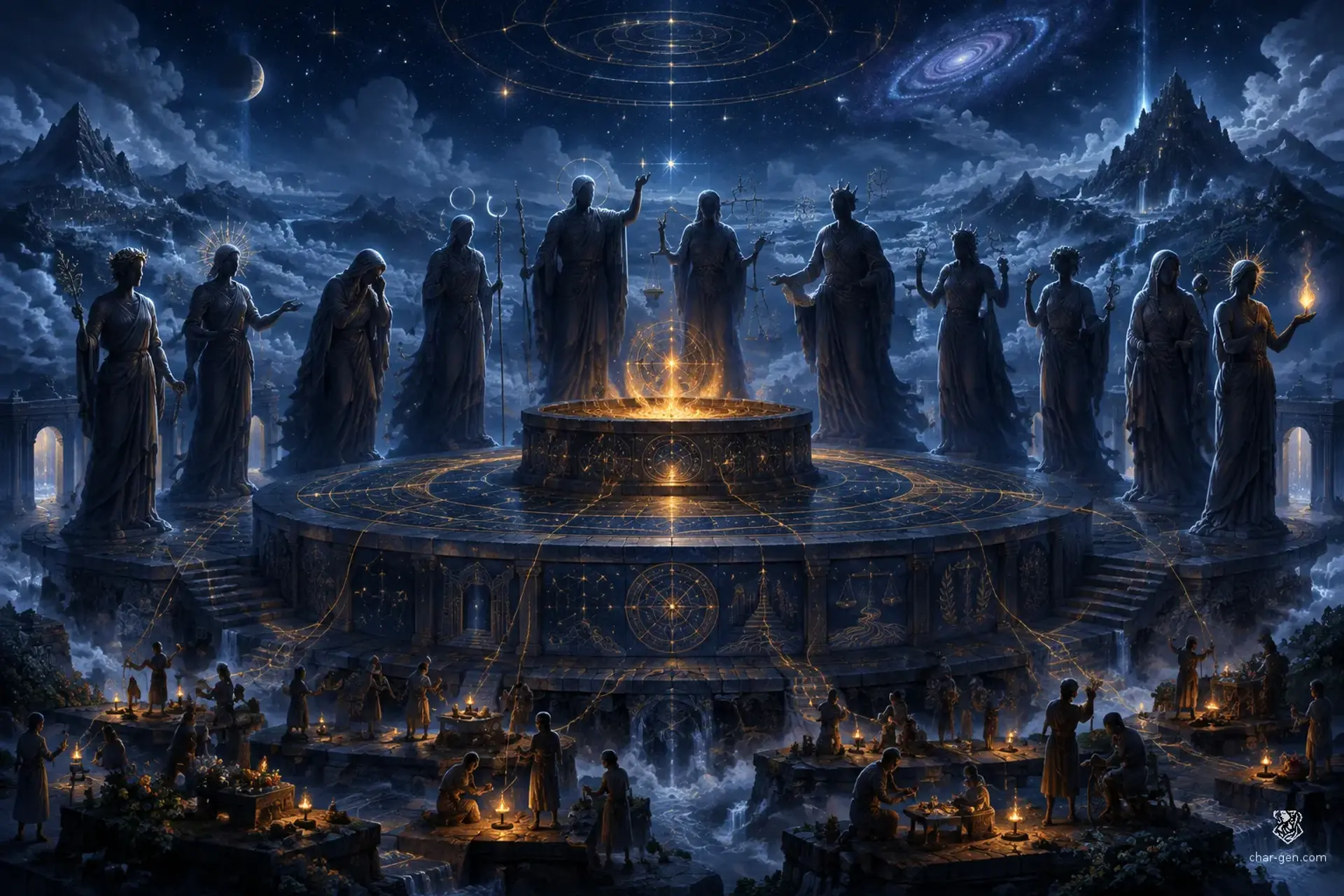
The Covenant of Twelve
The Covenant of Twelve
Invoke a god

Brann
Keeper of the Boundaries
Symbol A balanced scale set over a closed gate.
Holy day The Day of Open Gates
- Keep the promises that others depend upon.
- A law that cannot protect the vulnerable must be repaired.
- Hear both petitioner and accused before judging.
The gods
12Brann
Keeper of the Boundaries
Greater · Lawful Good
Order, guardianship, and sworn duty; Brann's laws are upheld by Jand's craft and illuminated by Ayo of Sunmere.
Steady, patient, and exacting. Brann respects honest dissent but has little patience for promises made carelessly.
Faith
- Keep the promises that others depend upon.
- A law that cannot protect the vulnerable must be repaired.
- Hear both petitioner and accused before judging.
Holy dayThe Day of Open Gates, when towns renew their charters and hear petitions from strangers.
Holy textThe Measured Oath, a collection of laws, judgments, and accounts of duties fulfilled.
RitesSpeak a promise before witnesses and record it in a public ledger. · Leave a gate unbarred for one hour on the Day of Open Gates. · Offer a portion of one's wages to repair a bridge, wall, or courthouse.
ValuesJustice · Reliability · Restraint
Look
SymbolA balanced scale set over a closed gate.
- Bronze
- Deep blue
AnimalsOx · Hound
AppearanceA broad-shouldered figure with iron-gray hair, a plain bronze circlet, and a judge's staff notched with the names of old laws.
Followers
WhoJudges, magistrates, city guards, oathbound travelers, and leaders trying to make fair institutions.
BeliefsFollowers believe that laws are a shared shelter, not a weapon for the powerful. They cite Ayo of Sunmere as proof that authority must be visible and accountable.
The faith
How it began
In the beginning, Oru raised the first land from the dark sea, and Ayo of Sunmere kindled the dawn upon it.
Brann drew boundaries so living things could have homes, while Jand gave shape to tools and dwellings. The other gods arrived through the needs and choices of the first peoples: grief called Heshai, journeys called Ketu, and invention called Qesh. After disputes threatened to tear the young world apart, the Twelve swore a covenant to remain engaged with mortals rather than rule them from afar.
The heavens
The world was shaped from a dark, formless sea by Oru, who raised land with a song.
Ayo of Sunmere kindled the first dawn; Brann set boundaries between land, sea, and sky. The Twelve now sustain creation through a living covenant with mortals: prayers, promises, labor, and remembrance all exert real influence on the gods and the world's balance.
Gods and mortals
The gods answer prayers through dreams, omens, brief manifestations, and clerics, but they also depend on mortal remembrance and action.
Temples function as civic institutions: they provide shelter, keep records, settle disputes, organize harvest stores, and mediate between rival communities. Mortals may challenge a god's clergy, alter local rites, or persuade a deity through collective action.
After death
The dead cross the River of Names, where Oru weighs their deeds against the promises they made.
Eleri Vask tends the peaceful halls beyond, while Suthen guides the restless toward a second chance. No soul is wholly beyond Brann's judgment, but even Brann cannot erase a name freely given.
What people say, what is true
Players may hear
For the GM
Plot hooks
Conflicts
The wars
Brann and Ketu dispute whether law should bend to mercy; Ayo of Sunmere and Seshai argue over whether truth should be revealed at once or guarded until it can be borne.
Grom's hunger for upheaval alarms Oru, while Mavira and Heshai compete over who best protects those displaced by change. Jand and Qesh quarrel over the proper limits of craft and invention.
| Brann | Ayo of Sunmere | Seshai | Oru | Eleri Vask | Jand | Grom | Heshai | Ilyo | Ketu | Mavira | Qesh | |
|---|---|---|---|---|---|---|---|---|---|---|---|---|
| A | A | E | E | |||||||||
| A | E | E | A | |||||||||
| E | E | A | A | |||||||||
| A | E | A | E | |||||||||
| E | A | E | ||||||||||
| A | A | E | E | |||||||||
| E | A | E | A | |||||||||
| E | A | A | E | |||||||||
| A | E | E | ||||||||||
| E | A | E | A | |||||||||
| A | E | A | E | |||||||||
| A | E | A | E |
Order of heaven
Structure
The religion has no single supreme temple.
Each region maintains a council of Twelve Lamps, with one shrine or recognized representative for each deity; local customs determine which voices lead. Seasonal gatherings rotate among communities, and disputes between temples are heard by mixed councils rather than a permanent priestly hierarchy. Clergy may serve several deities when their work overlaps, but vows to one god do not erase obligations to the others.
Theme
Divine power is inseparable from mortal responsibility: the gods offer guidance, shelter, and wonder, but people shape how those gifts are used.
Tone
Mortal-engaged classical fantasy: gods walk in legends and occasional encounters, temples serve living communities, and divine conflicts matter because they touch ordinary lives.
Alignments
The Twelve span the full moral and ethical range: benevolent guardians, stern arbiters, practical neutrals, and dangerous powers.
Their disagreements are genuine, but none is simply a force of evil or good.
Media
0 imagesNo images yet.
Turn The Covenant of Twelve into a sheet
A high-res, share-ready sheet you can post or print.