
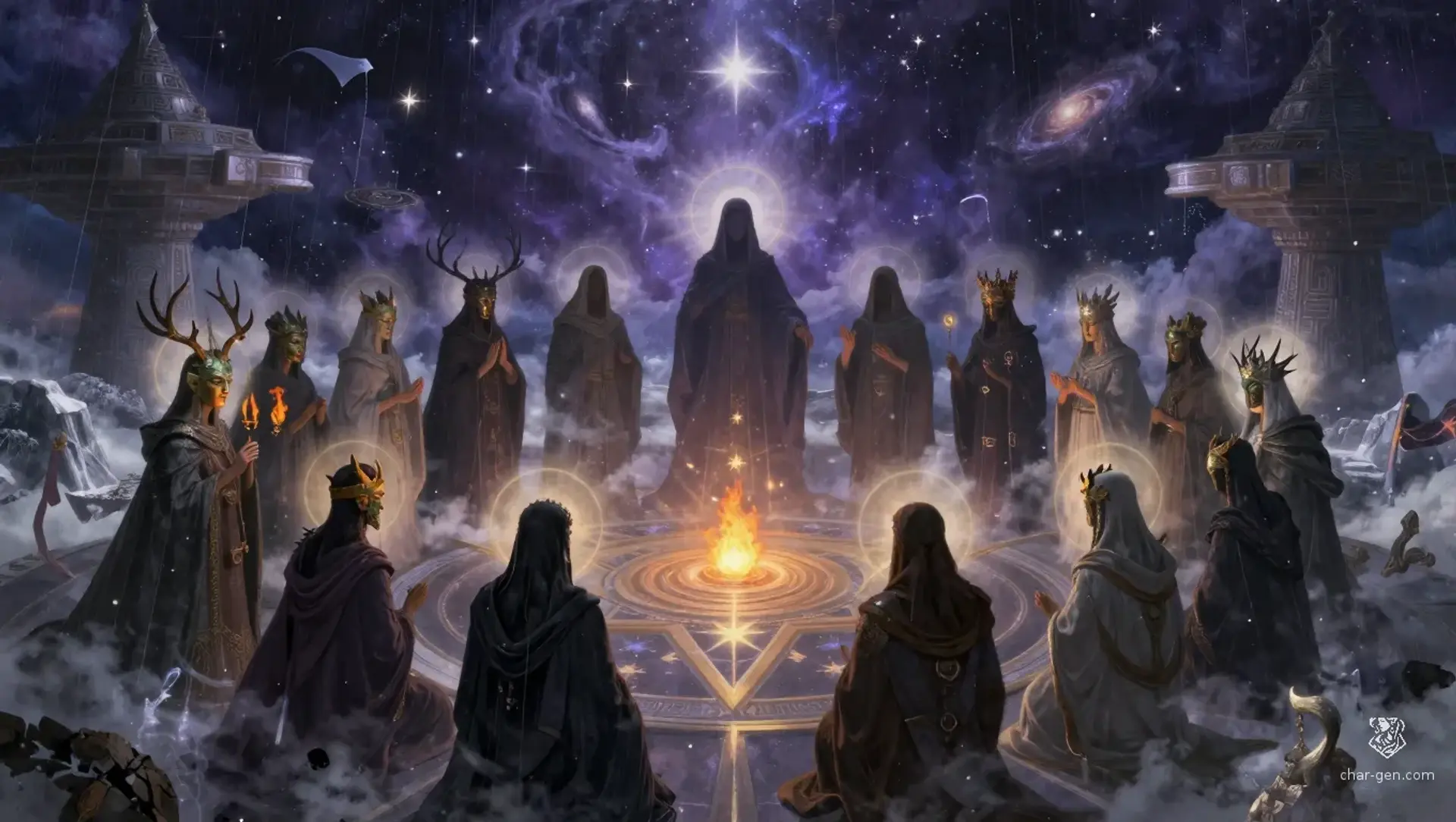
The Covenant Ascendant
Origin
The Twelve began as mortals from rival peoples who united after the old pagan gods turned devotion into a weapon. They learned that the gods could be wounded through mortal refusal: broken sacrifices, abandoned temples, exposed lies, and communities acting together. In the final rebellion, each of the Twelve killed or helped kill an old god, absorbing a fragment of its essence. Their ascension was accidental, agonizing, and irreversible. They swore to rule differently, but their divine powers still echo the beings they overthrew.
Cosmology
The universe is a living cycle called the Turning Covenant. Creation, growth, death, memory, and renewal are not separate realms but movements within one vast wheel. The old gods were parasitic beings who tried to freeze the Turning in their own image. When the Twelve killed them, their divine remains became stars, storms, sacred mountains, and prophetic dreams. The pantheon now governs the mortal world through influence, avatars, miracles, bargains, and occasional direct intervention.
Structure
The religion has no single earthly hierarchy. Instead, it is a network of Twelve Traditions, each with its own temples, priesthoods, vows, festivals, and sacred duties. Most cities maintain a Concord Chapel where representatives of several traditions cooperate on public needs. Above local clergy are wandering Witnesses, who investigate miracles and doctrinal abuses. The highest religious authority is the Unfinished Covenant, a collection of disputed tablets said to contain the Twelve’s original promises. No priest may claim infallibility, because the pantheon’s central lesson is that divine authority must remain answerable to mortals. Vaul’s cults are outlawed in many lands, while Morvane and Caldris maintain hidden congregations within respectable institutions.
Mortal Relations
The pantheon is intensely mortal-engaged. Its temples function as hospitals, courts, shelters, schools, rebel cells, ranger lodges, funeral houses, archives, and public kitchens. The gods rarely issue simple commandments; instead, they answer petitions through omens, dreams, altered weather, animal behavior, sudden inspiration, recovered memories, and avatars who can be questioned. Mortal communities often belong to several cults at once, honoring Ara at birth, Liora during hardship, Sol at death, Aurelia during revolution, and Nymithria during harvest. Religious conflict is therefore personal and political rather than distant: every deity claims to have learned from the old gods’ cruelty, yet each risks recreating it in a new form.
Afterlife
The dead pass through Sol’s Ashen Gate, where their deeds are weighed against the wounds they caused and the lives they mended. Aurelia may rekindle the worthy as souls of renewal, while Ara guides them toward peaceful transformation. Those who cling to cruelty are hunted through the afterlife by Nymithria’s spectral beasts until they surrender their malice or are forgotten.
Turn The Covenant Ascendant into a sheet
A high-res, share-ready sheet you can post or print.