
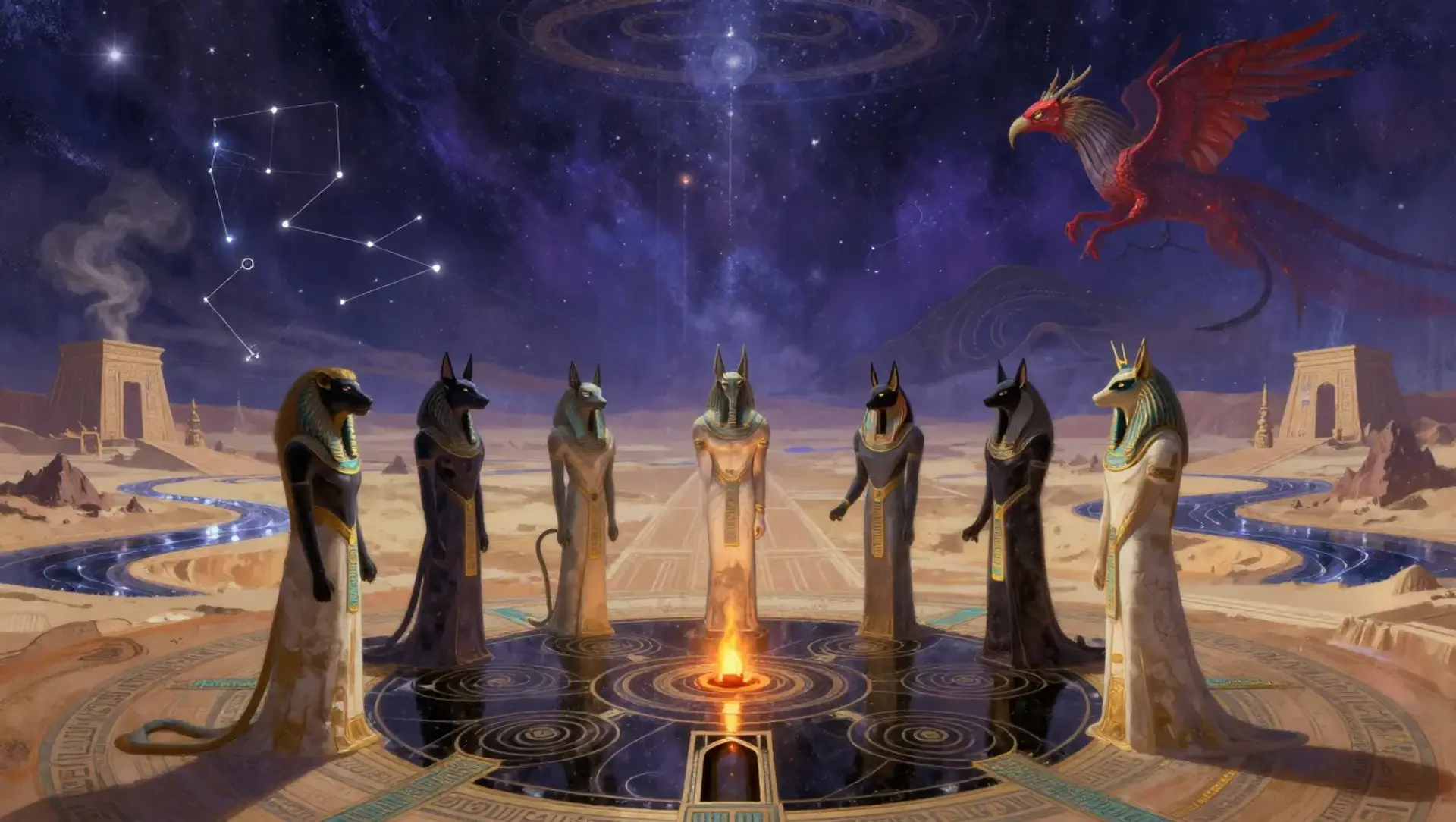
The Spiral Path
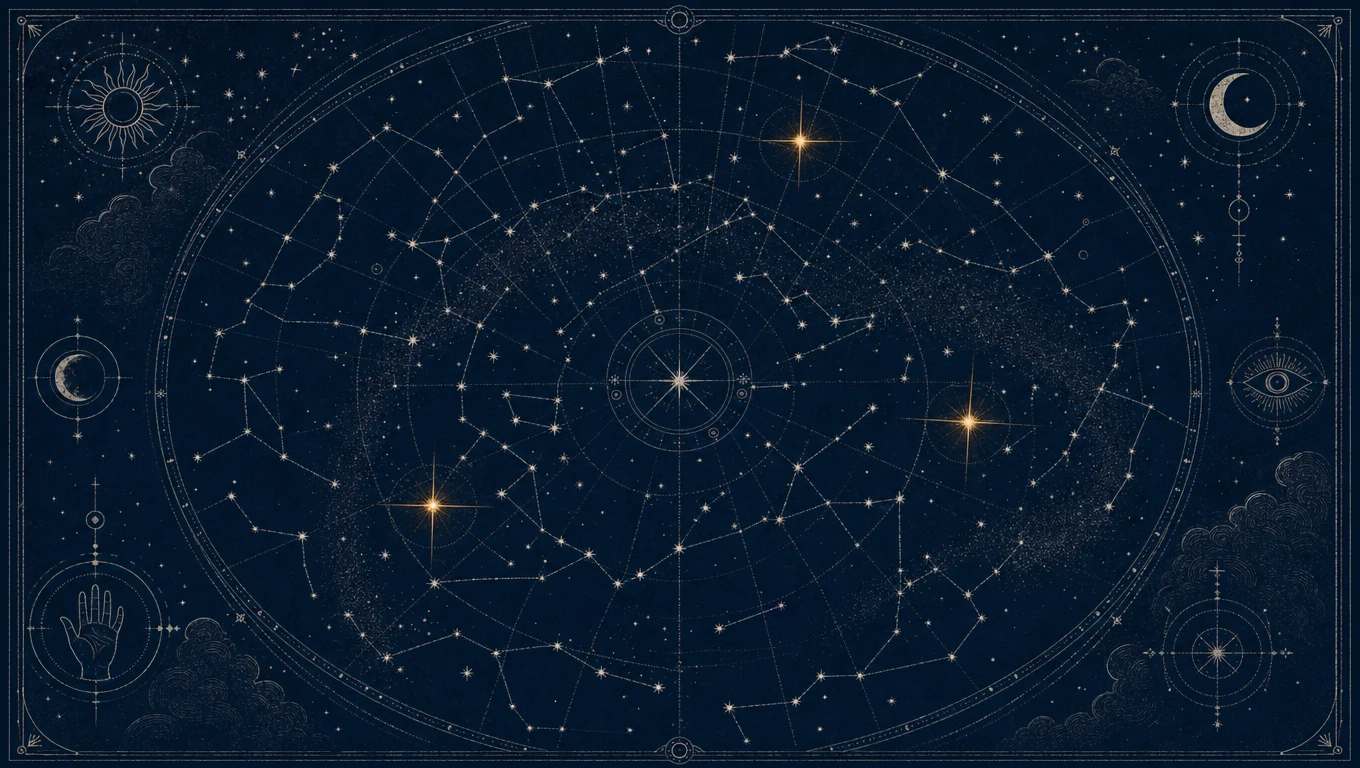
Origin
According to temple tradition, the first gods awoke beside a black river beneath an unfamiliar sky. Hathor followed a star reflected in its waters and found seven gates. Athum shaped tools from the gate hinges, Horus claimed the upper gate as a place of order, Sobek guarded the submerged passage, Bastet hid the private threshold, and Anubis learned to preserve the names of those who crossed. Set arrived last, not born but formed from the fear that the journey might have no meaning. The gods became a pantheon when they realized that every mortal life was another crossing of the same unknowable Path.
Cosmology
Reality is a chain of seven spirals called the Spiral Path. Each spiral is a stage of existence, and each mortal life is a temporary crossing between two unseen shores. The heavens are the Upper River of Stars, where Hathor's roads connect worlds. The mortal realm is the Middle Crossing, shaped by Athum's craft and Horus's sustaining sun. Beneath it lie the Veiled Currents watched by Sobek, the Hall of Remembering guarded by Anubis, and the Ashen Expanse where Set's destructive force gathers. The gods are not absolute creators but ancient travelers who learned to steer portions of the Path.
Structure
The religion is organized into seven complementary callings rather than a strict hierarchy. Starwardens serve Hathor as guides, dream-readers, merchants, and explorers. Artificers of Athum maintain workshops, hospitals, and arcane colleges. Hearthclaws of Bastet protect families, secrets, and intimate communities. Sunwardens of Horus administer justice, defense, and civic works. Reed-Seers of Sobek patrol rivers, wilderness borders, and dangerous knowledge. Gatekeepers of Anubis conduct funerals, preserve history, and mediate inheritance. Set has no recognized priesthood, only scattered ruin-cults called the Unmoored. Major temples contain seven chambers arranged around an open central path, but each shrine may emphasize a different deity.
Mortal Relations
The Spiral Path is less a centralized church than a network of shrine-houses, roadside temples, family altars, river sanctuaries, workshops, observatories, and tomb chapels. Clergy are called Waykeepers and usually serve one deity while acknowledging all seven. A Waykeeper's authority comes from experience, service, and successful transitions rather than lineage. Communities often consult Hathor for journeys, Athum for healing and craft, Bastet for household matters, Horus for law and leadership, Sobek for uncertain roads, and Anubis for death. Set's cults infiltrate every institution by promising shortcuts, revenge, and freedom from consequence.
Afterlife
The Spiral Path teaches that death is not judgment's end but the opening of the Seventh Gate. Anubis preserves each soul's memories and weighs its readiness for onward travel. Hathor guides the fortunate through star-roads, while Athum repairs souls fractured by mortal experience. Those who embrace change continue toward stranger worlds; those who cling to a single identity become echoes in the Silent Desert, where Set's darkness slowly erases them. Even the gods are travelers, and no soul is believed to remain forever in one realm.
Turn The Spiral Path into a sheet
A high-res, share-ready sheet you can post or print.