
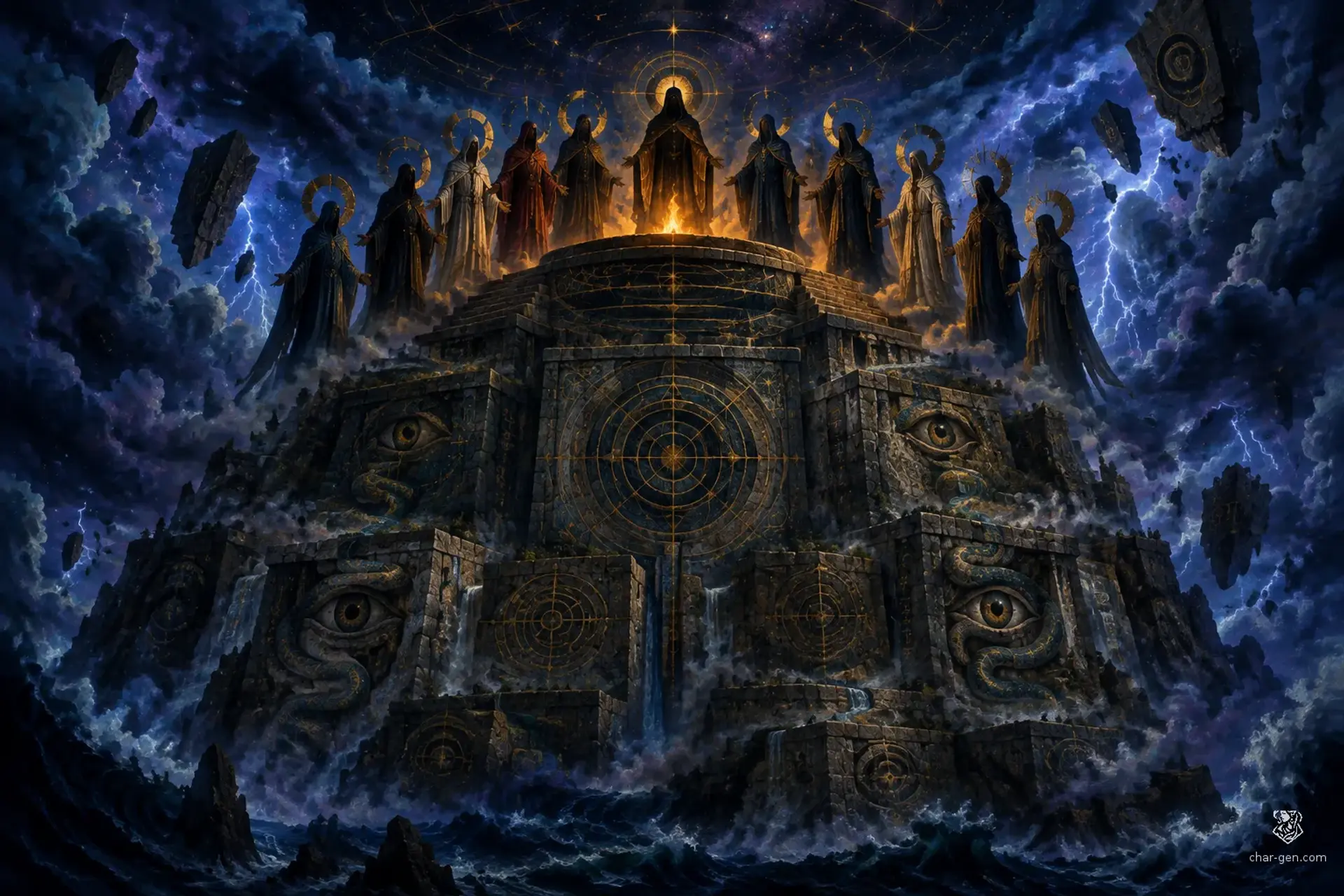
Shojun
Shojun
Invoke a god

Qhapaq
The High Measure
Symbol A mountain beneath a balanced sun-disc.
Holy day The Weighing
- Remember the debts you incur.
- Judge deeds, not rank.
- Keep the old measures even when they wound.
The gods
11Qhapaq
The High Measure
Greater · Lawful Neutral
memory and judgment, which Seshali corrupts into obsessive recollection
Implacable, patient, and convinced that a harsh law is kinder than a world without law.
Faith
- Remember the debts you incur.
- Judge deeds, not rank.
- Keep the old measures even when they wound.
Holy dayThe Weighing, held at the first harvest moon.
Holy textThe Measures of Qhapaq, a set of stone tablets whose lines rearrange when read aloud.
RitesRecite the names of the dead before settling a dispute. · Mark a new covenant on clay, then bury it beneath a threshold.
ValuesOrder · accountability · continuity
Look
SymbolA mountain beneath a balanced sun-disc.
- copper
- ochre
Animalscondor · vicuña
AppearanceA towering judge in layered copper robes, with a sun-disc for a face and a shadow shaped like a mountain.
Followers
WhoJudges, archivists, rulers, and families who fear that forgotten obligations will destroy their communities.
BeliefsFollowers believe the world's decline began when people ceased to remember the gods' laws. They honor Qhapaq's judgment but fear that Seshali has poisoned memory itself.
The faith
How it began
Shojun's gods claim they shaped the world before its first sunrise, raising mountains from the dark sea and assigning every living thing a place in the old pact.
Their names were later stricken from histories after their rivalries brought catastrophe. Centuries of neglect warped their natures, and now the forgotten assembly returns through corrupted memory, anger, and need.
The heavens
Before time had a name, the gods raised the world from a dark sea and set it beneath a roof of stars.
They bound its seasons, births, and deaths with a pact recorded on stone. As mortals forgot the old gods, the pact's inscriptions faded: its protections became curses, its blessings became hungers, and the gods themselves grew warped by neglect. Each forgotten prayer now acts like a crack through which divine influence seeps.
Gods and mortals
The gods rarely appear openly, but their influence spreads through dreams, inherited customs, and the sudden return of obsolete symbols.
Communities disagree over whether to revive their worship, suppress it, or bargain with particular gods for protection. Shrines are often built into ruins, and a village that restores one may gain a harvest while losing the ability to sleep without hearing the old prayers.
After death
The dead descend through the Nine Quiet Terraces, where their memories are weighed against the harm they caused and the kindness they withheld.
Qhapaq keeps the scales, but Seshali whispers into the judgment, and the condemned may be claimed by any god whose name they carried in life. Few souls find rest: the forgotten dead become dim, hungry echoes that drift back toward the world.
What people say, what is true
Players may hear
For the GM
Plot hooks
Conflicts
The wars
Qhapaq insists the gods must be remembered to preserve the world's order, while Seshali profits from the fear and madness that their return brings.
Mzimba seeks to mend mortal minds, but Xalli teaches that grief is a door best left open. Dakan hunts Grom's war-cults; meanwhile, P'achak and Vusho dispute who may command the dead. Iru tries to keep the assembly bound by its ancient pact, though Yali and Bruk each plan to break it for different reasons.
| Qhapaq | Seshali | Mzimba | Xalli | Dakan | Iru | P'achak | Grom | Bruk | Yali | Vusho | |
|---|---|---|---|---|---|---|---|---|---|---|---|
| E | A | A | E | ||||||||
| E | E | A | A | ||||||||
| A | E | A | E | ||||||||
| A | E | E | A | ||||||||
| A | E | A | E | ||||||||
| E | A | E | A | ||||||||
| A | A | E | E | ||||||||
| A | E | E | A | ||||||||
| E | A | A | E | ||||||||
| A | E | A | E | ||||||||
| A | E | E | A |
Order of heaven
Structure
Shojun is an assembly rather than a unified church.
Its old temples were organized around local obligations: a judge served Qhapaq, a hearth-keeper Bruk, and a funeral guide P'achak. With the pantheon forgotten, surviving practices have splintered into household rites, secretive cults, and revival movements. The gods have no uncontested chief, though Qhapaq claims the right to interpret the ancient pact. Priests may honor several gods while choosing one patron, and rival congregations argue over whether the gods should be remembered at all.
Theme
The cost of forgetting, the danger of inherited power, and the corruption that grows when fear fills the space left by vanished faith.
Tone
Wrathful, haunted, and morally unsettled.
Divine attention is rarely gentle: even sincere worship may invite obsession, grief, hunger, or violence, while communities struggle to decide whether the old gods are protectors, captors, or both.
Alignments
The assembly spans benevolent, neutral, and malign powers, but its old laws have grown cruel.
Its two Greater Gods are Qhapaq and Seshali; the remaining nine are Lesser Gods, Demigods, or Outsiders.
Media
0 imagesNo images yet.
Turn Shojun into a sheet
A high-res, share-ready sheet you can post or print.