
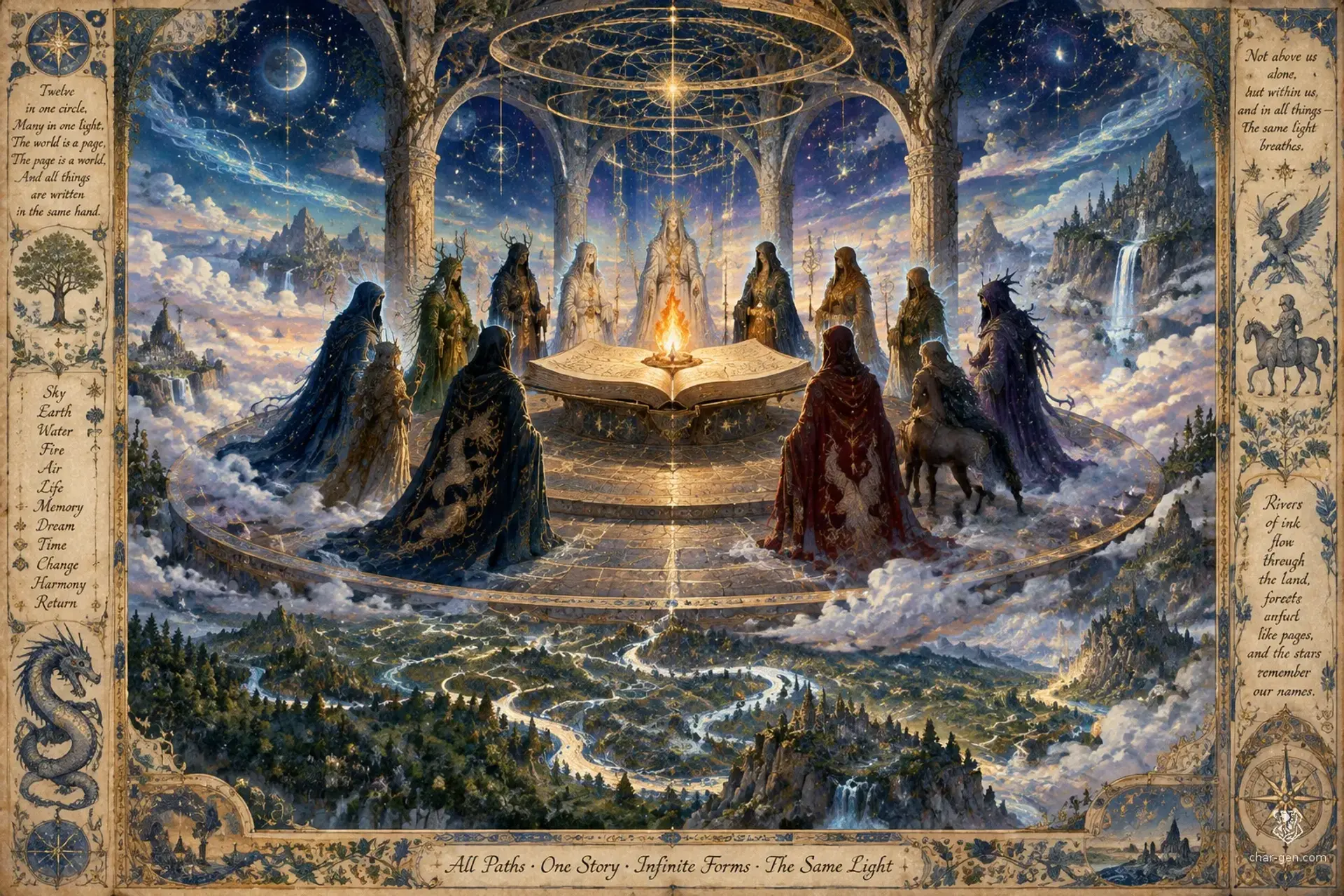
The Draconic Tomes
The Draconic Tomes
Invoke a god

Sythra
The First Breath
Symbol A silver dragon wing sheltering a sprouting seed.
Holy day First Dew
- Offer a beginning to those who ask for one.
- Guide without taking another’s choice away.
- Let hope be practical.
The gods
12Sythra
The First Breath
Greater · Neutral Good
Dawn and renewal; Brann says Sythra’s first light is a welcome, never a command. · Safe passage; she lights the Rootways that Mavrik tends.
Gentle, curious, and quietly brave; she gives the lost time to find their own direction.
Faith
- Offer a beginning to those who ask for one.
- Guide without taking another’s choice away.
- Let hope be practical.
Holy dayFirst Dew, celebrated at the first spring sunrise.
Holy textThe Book of Open Skies
RitesLeave clean water at a crossroads. · Speak one hope aloud at sunrise, then name one action that might help it grow.
Valueshope · hospitality · choice
Look
SymbolA silver dragon wing sheltering a sprouting seed.
- silver
- mist blue
Animalsswallow · white stag
AppearanceA tall draconic centaur with pearl-gray scales, translucent wings, and a mane that drifts like mist through pine needles.
Followers
WhoWayfinders, healers, travelers, and draconic centaur families beginning a new season or undertaking.
BeliefsFollowers believe every dawn is a modest promise, not a guarantee, and that helping someone make a beginning honors Sythra.
The faith
How it began
According to the oldest shared story, the First Breath descended as a dragon-shaped wind and circled the world.
Wherever its hooves touched, magic stirred through root and river. The earliest draconic centaurs gathered those signs into living pages—bark, song, stone, and ink—and the Twelve became their divine keepers. The faith treats this account as sacred poetry, not a test of belief.
The heavens
The world is a living manuscript written by the First Breath: land is its parchment, rivers its flowing ink, and stars the pinpricks where the page shows through.
The gods are its keepers, not its authors. Magic is the script beneath visible things, and nature is that script made flesh. The pantheon teaches that no one can read the whole book alone.
Gods and mortals
The faith is practiced by draconic centaurs in family shrines, traveling libraries, river sanctuaries, and communal groves.
Temples are often open-sided halls built around a living tree or spring. Priests are called page-keepers, but authority is shared with healers, elders, and local stewards. The gods welcome other peoples as guests and students; no ancestry is barred from prayer, learning, or service.
After death
The kind dead travel the Rootways, a green-lit trail beneath the world, where they may rest among remembered forests or choose to return as a spring, a starling, or a guiding dream.
Sythra keeps the wayfinding lamps; Brann welcomes those who wish to linger. No soul is punished for being afraid or unfinished.
What people say, what is true
Players may hear
For the GM
Plot hooks
Conflicts
The wars
Sythra and Korr debate whether dangerous magic should be sealed or taught with care.
Thalen’s patient cycles frustrate Mavrik’s urge to mend every wound at once, while Oonai and Gwyrr disagree over whether wild places should be named and mapped. Heshka and Draum dispute what a promise can rightly bind. Pella often mediates, though Ylven’s playful riddles can make disputes worse before they improve. Ceth and Vask guard rival interpretations of the oldest draconic texts; both insist that their quarrel must never harm the people those texts are meant to serve.
| Sythra | Korr | Thalen | Mavrik | Oonai | Gwyrr | Heshka | Draum | Pella | Ylven | Ceth | Vask | |
|---|---|---|---|---|---|---|---|---|---|---|---|---|
| E | A | A | ||||||||||
| E | E | A | A | |||||||||
| A | E | A | ||||||||||
| A | E | A | ||||||||||
| A | A | E | ||||||||||
| A | E | A | ||||||||||
| A | A | E | ||||||||||
| A | A | E | ||||||||||
| A | E | A | ||||||||||
| E | A | E | A | |||||||||
| A | E | A | ||||||||||
| A | E | A |
Order of heaven
Structure
The religion has no universal hierarchy.
Local circles of page-keepers tend shrines and archives, while seasonal gatherings send chosen speakers to a council called the Turning Page. Decisions are made by consensus where possible; disagreements are recorded rather than erased. Each community keeps a living copy of the Twelve’s teachings, adding local songs and careful commentary without altering the older text.
Theme
Nature and magic as intertwined forms of living knowledge, honored through curiosity, care, shared learning, and room for disagreement.
Tone
Kind
Alignments
Varied, with a gentle emphasis on mercy and stewardship: two Greater deities, six Lesser deities, two Demigods, and two Outsiders.
Their disagreements are real, but none is wholly evil.
Media
0 imagesNo images yet.
Turn The Draconic Tomes into a sheet
A high-res, share-ready sheet you can post or print.