Where the canals ring with bells, every harvest has a price.
SMSaffron March
Overview
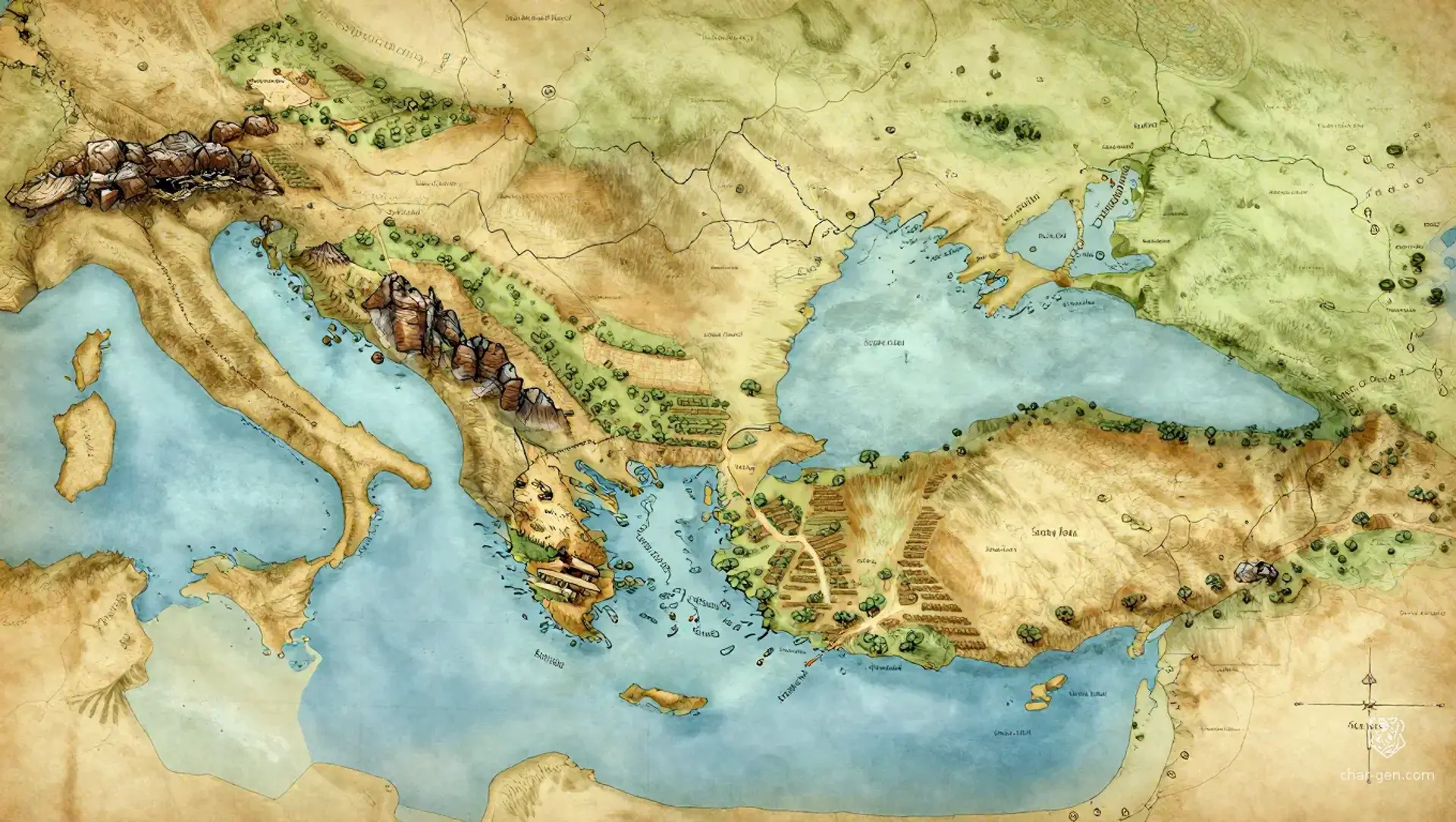
The Saffron March is a nation-sized sweep of warm plains, river valleys, and salt-bright coast, where a chain of city-states shares canals but competes fiercely for trade. Most roads pass through vineyards, grain fields, and market towns, while older caravan tracks cross the drier uplands. Magic is familiar in daily life, from warded granaries to water-divining charms, yet good wells, sound agreements, and reliable escorts remain essential. The region offers room for journeys, intrigue, and settlement-scale adventures.
Cultures
The Saffron March blends market customs shaped by warm-season harvests and old caravan traffic.
The River Chime communities prize shared water rights and public music.
The Saltwind coastfolk keep seasonal sailing rites and maintain kin ties across the gulf.
Places
5 settlements
Large · Harbor citySaffron QuayA leading port and venue for league negotiations.Its council halls and crowded docks host rotating regional assemblies.
Medium · Market townRainbell MarketA grain and livestock market at a busy road junction.Its name recalls the first rain bells once rung to announce winter storms.
Small · Riverside townCicada FordA river crossing and caravan stop.Summer insects fill the ford with a steady chorus, and its old stones guide travelers across.
Small · Hill townLate FigA rural center for fruit, wine, and pottery.Terraced orchards surround a hill town known for its late-ripening harvest.
Small · Coastal villageSalt HushA coastal saltworks and fishing settlement.The flats grow strangely quiet when the tide retreats, leaving broad pans for salt gathering.
How they spread
PatternSettlements cluster along rivers, canals, and the coast, with farming villages spaced around wells and roads. The uplands have fewer permanent communities and more seasonal camps.
The Southwind Road links inland markets to the gulf ports.
The Chime River route carries grain and pottery between canal cities.
The Old Caravan Track crosses the northern plains toward neighboring lands.
Dangers and hooks
3 threats
Most dangerous · HighThe Dry WellsWater shortage and civic unrestMost active in the northern uplands during late summer.
The Silted ChoirHighAquatic supernatural danger
Unnatural voices have been heard beneath the Salt Hush flats at low tide.
Trackside KnivesModerateBandit crews
They strike caravans along isolated stretches of the Old Caravan Track.
Hazards of the land
Flash floods can sweep through dry ravines after winter storms.
Summer heat and failed wells threaten travelers far from settled roads.
Bandit crews target caravans on isolated stretches of the old tracks.
Plot hooks
1
The Night GateInvestigationA canal gate has begun opening at night, flooding fields downstream and threatening a fragile water treaty.Starts: The sluice keepers at Bellwater Sluices seek discreet investigators.Reward: A charter for safe canal passage and a share of recovered tolls.
2
Tracks in the Dry GrassWilderness expeditionA caravan carrying rare iron tools vanished between market towns, leaving only fresh wheel tracks that turn toward the dry uplands.Starts: Merchants at Rainbell Market offer a contract to find the caravan.Reward: Payment, recovered cargo, and a favor from the Fig Ledger.
3
Voices at Low TideMysterySalt workers at the flats report voices beneath the crust, and several have disappeared during low tide.Starts: A foreman at Salt Hush requests help before the next harvest shift.Reward: Salt shares, a tide chart, and a charm against drowning.
4
The Stolen First BellIntrigueA harvest festival has become the target of a quiet campaign to discredit the city-state pact.Starts: The festival stewards at Late Fig ask outsiders to identify the saboteurs.Reward: A purse of silver and an invitation to regional council sessions.
The land
Climate and ground
ClimateMediterranean, with hot dry summers, mild wet winters, and occasional violent seasonal storms.
TerrainMostly rolling plains and low plateaus, crossed by fertile river valleys and scattered rocky rises.
Biomes
Olive groves and vineyards, Open grain plains, Coastal scrub and salt marsh, River meadows
Waters and borders
Waterways
The Chime River, The Reedwater, The South Canal, The Blue Salt Gulf
Borders
The Blue Salt Gulf lies to the south.
The Flint Ridges mark the northern edge.
The Reedwater lowlands separate the east from neighboring lands.
The western boundary follows dry uplands and old caravan tracks.
On the road
Summer roads are exposed and wells can be far apart.
Canal ferries shorten journeys but may close during flood season.
Caravans travel most safely between market towns in guarded groups.
Landmarks
The Bellwater sluices regulate the largest canal network.
The Salt Hush flats shine with crusted salt at low tide.
Cicada Ford is crossed by an ancient line of carved stepping stones.
The Late Fig terraces cling to low hills above the central valley.
Landforms
Wide grain plains
Low limestone ridges
Shallow coastal bluffs
Fertile river deltas
Resources
Fertile alluvial soil
Salt and clay
Olive groves and hardwood shrubs
Copper deposits in the northern ridges
Power
Rule
GovernmentA loose league of self-governing city-states bound by trade agreements, shared canal law, and rotating assemblies.
SeatThe council chambers at Saffron Quay host rotating regional assemblies, while each city-state keeps its own seat of rule.
StabilityGenerally stable through trade pacts, though water disputes and rivalry among city-states periodically threaten the peace.
Laws
Canal water is rationed by publicly posted seasonal allotments.
Market weights must be inspected at the first bell of each trading day.
Armed companies may not cross city boundaries without a local writ.
Factions
Bellwater CompactCity-state alliance
Influence: Strong along the inland waterways and influential in regional councils.The Bellwater Compact is a league of canal cities that coordinates tolls, floodworks, and river patrols.
Fig LedgerMerchants' guild
Influence: Substantial in markets, warehouses, and local courts.The Fig Ledger seeks uniform weights and a secure road network for its member merchants.
Dry Season WardensRural militia
Influence: Respected in the plains, though their reach weakens near the coast.The Dry Season Wardens protect wells, granaries, and rural communities from raiders and drought.
Faiths
The First Bloom
Influence: Common in farms and small towns, with modest influence in civic life.Household prosperity, orchard fertility, and the turning of seasons.
The Chime Rite
Influence: Strong among canal workers and city magistrates.River balance, measured generosity, and the keeping of oaths.
Saltwind Devotions
Influence: Most visible in coastal settlements and merchant fleets.Safe passage, clear skies, and remembrance of the dead at sea.
People and trade
Who lives here
How manyDense around canals, ports, and market towns, with broad rural stretches between them.
Main peoples
Plains farmers and vineyard keepers
Canal-city artisans and traders
Coastal sailors and salt workers
Other peoples
Hill-country herders, Traveling caravan families
Languages
Marcher Common, River Cant, Old Saffron
Trade
WealthProsperous overall, with merchant wealth concentrated in the city-states and modest means in the countryside.
Work
Grain and olive cultivation
Textile and pottery craft
Canal shipping and coastal trade
Exports
Olive oil and dried figs, Dyed cloth and fine ceramics, Wheat, wine, and salt
Imports
Iron tools and worked metal, Timber and ship pitch
Markets
Saffron Quay, Rainbell Market, Cicada Ford
History and secrets
The Saffron March grew from river farms and coastal trading posts into a league of proud city-states. Its canals made the plains rich, but control of water has repeatedly tested civic alliances. Old caravan tracks still cross the region, linking inland markets to the gulf, while common trade laws help keep rival councils from turning disputes into open war.
Key events
Old Canal Era
The First Water AccordSeveral canal towns agreed to share floodgates after rival diversions ruined the harvest.
Sailcloth Era
The Southwind CrossingCoastal merchants opened a regular route that brought new goods and customs into the plains.
Dry Years
The Wellbound CompactA long drought drove rural communities to fortify wells and negotiate new water rights.
Secret 1 · GM only
An older aqueduct still carries water beneath the league's public canals.Found by: Old survey marks beneath the central sluices do not match the present canal map.If found: A hidden aqueduct could end recurring shortages or give its discoverers leverage over several city-states.
Secret 2 · GM only
A quiet network has been diverting grain into concealed storehouses.Found by: The same unfamiliar seal appears on sealed grain jars from rival cities.If found: Exposing the scheme could avert famine, but might provoke a trade war.
Connections
Media
0 images
No images yet.
Visual sheet
Turn Saffron March into a sheet
A high-res, share-ready sheet you can post or print.