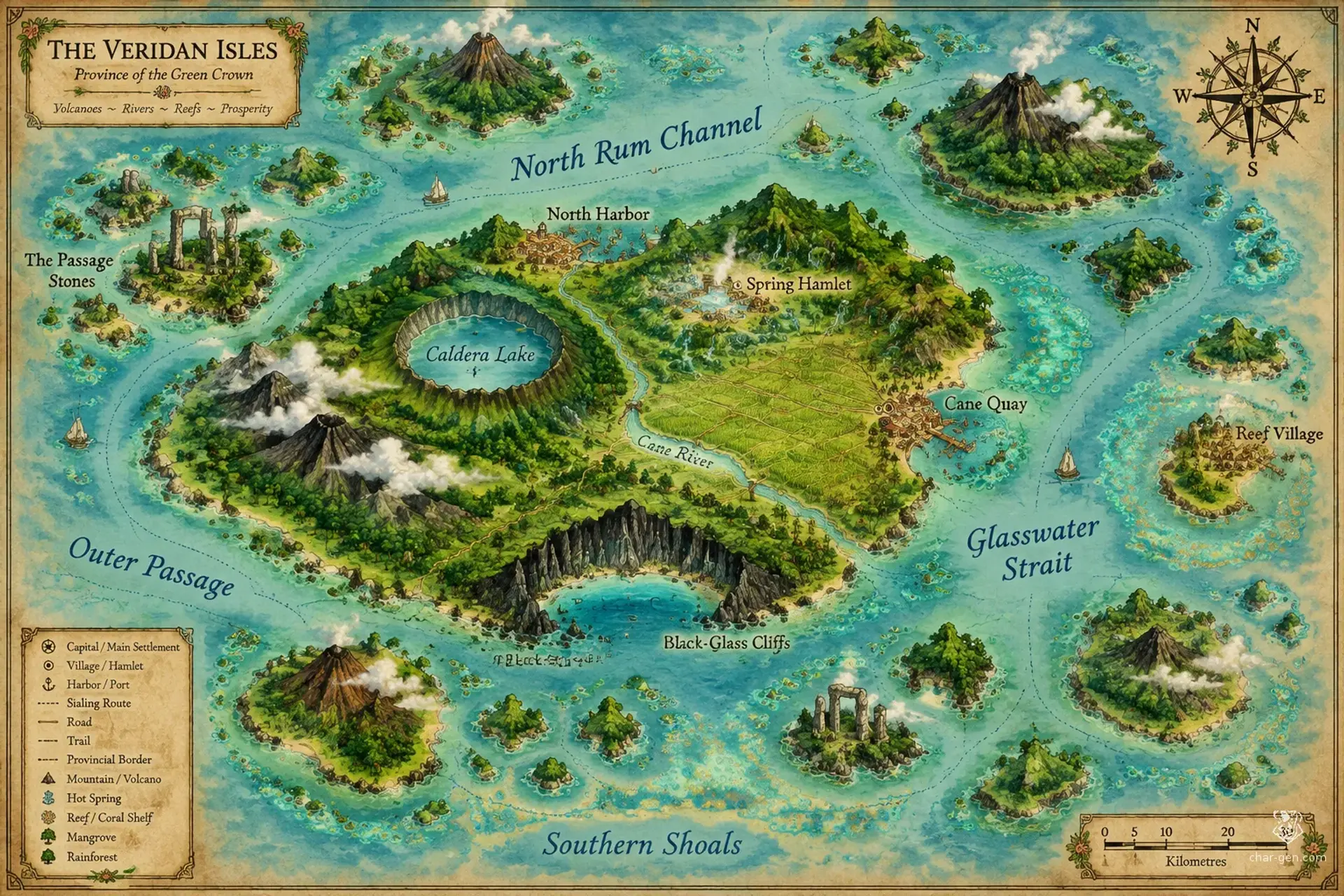
Where green volcanoes watch over a thousand restless sea roads.
NINorth Rum Islands
Overview
The North Rum Islands are a tropical province of forested volcanic islands, reef-bound channels, and fertile coastal plains. Dormant cones rise above sugar fields and village gardens, while busy sea lanes connect scattered harbors to distant ports. Local councils preserve customary claims to land and water, even as merchants and estate owners compete for influence. Low magic is woven into practical life through weather lore, sacred places, and a few objects of uncertain power.
Cultures
Island village traditions shaped by kinship, seafaring, and customary stewardship of land and reefs.
Coastal trading communities blend local practice with habits borrowed from distant ports.
Sugar estates preserve imported customs that are increasingly adapted to island life.
Places
4 settlements
Large · Harbor townNorth HarborCouncil meeting place and principal port.A busy anchorage where rotating councils meet and ships replenish water and provisions.
Large · Port townCane QuaySugar processing and export center.Warehouses, cane presses, and crowded worker quarters line its tidal riverbank.
Small · Coastal villageReef VillageFishing community and reef stewardship center.Local pilots and fishers maintain strong customs and closely guard knowledge of nearby channels.
Small · Forest-edge hamletSpring HamletUpland farming stop and trail junction.Terraced gardens and a communal spring support travelers crossing the forested interior.
How they spread
PatternMost communities cluster on leeward coasts, river mouths, and broad lowland terraces. The steep interiors and outer reefs have few permanent residents, though seasonal camps and watchposts are common.
Common kinds
Fishing villages on sheltered bays.
Sugar-growing hamlets along fertile plains.
Harbor towns at channel crossings.
Forest-edge settlements near freshwater springs.
Trade routes
The North Rum Channel links the major northern harbors.
The Cane River route carries sugar from inland fields to the coast.
The Glasswater Strait connects eastern villages to outer-island markets.
Dangers and hooks
3 threats
Most dangerous · HighThe Turning SquallsNatural hazardSeasonal storms sweep the channels with little warning and can isolate whole islands.
Reef RunnersModerateCriminal network
Smugglers use local knowledge to move untaxed cargo and sometimes sabotage rival vessels.
Ashback BeastsModerate.Monstrous wildlife
Large territorial reptiles haunt the warm ravines and occasionally raid isolated farms.
Hazards of the land
Cyclones and sudden squalls can wreck ships and flood low settlements.
Reef channels and submerged volcanic rock threaten unfamiliar vessels.
Forest leeches, venomous animals, and fever-bearing insects trouble inland travelers.
Unstable slopes and hot springs mark dormant volcanic ground.
Plot hooks
1
The False ChannelInvestigationA string of navigation markers has been moved, sending merchant ships onto a dangerous reef and threatening to disrupt several routes.Starts: A pilot asks the party to inspect the markers near North Harbor.Reward: A local passage chart, safe harbor rights, and a share of recovered cargo.
2
Bitter WaterExplorationWorkers at a remote cane estate report that fresh water has turned bitter, and nearby gardens are beginning to fail.Starts: The estate foreman offers payment for a discreet journey upriver.Reward: Coin, healing supplies, and a negotiated claim to a stretch of forest land.
3
The Drowned AgreementFaction conflictA wrecked vessel contains a sealed treaty that could settle a contested reef, but two factions want it found first.Starts: A fisher brings a water-damaged scrap of the treaty to a village council.Reward: A favor from the Reef Council and a valuable share of recovered trade goods.
4
Harbor Before the StormDiplomacyA cyclone is approaching while rival crews refuse to share a sheltered anchorage needed for repairs.Starts: A harbor assembly asks the party to broker a truce before the storm arrives.Reward: Free passage on several routes and the trust of local ship crews.
The land
Climate and ground
ClimateTropical, with warm wet months, a drier trade-wind season, and occasional severe cyclones.
TerrainA 150-to-300-mile island chain of forested volcanic islands, low coastal plains, reefs, and sheltered bays; many volcanic cones are dormant and heavily overgrown.
Biomes
Tropical rainforest.
Coastal mangrove and tidal flats.
Sugar-cane lowlands.
Cloud forest on volcanic slopes.
Waters and borders
Waterways
The North Rum Channel, The Cane River, The Glasswater Strait
Borders
Open sea to the north and east.
The Outer Passage to the west.
The southern shoals and neighboring island waters to the south.
On the road
Inter-island travel is fastest by sail, but currents and reefs demand local pilots.
Rain-swollen tracks can become impassable in a single afternoon.
Cyclones may close harbors and strand travelers for days.
Landmarks
A vast caldera lake fed by warm springs.
A line of black-glass cliffs above a sheltered bay.
A maze of mangrove channels used by local pilots.
Ancient stone markers that align with safe seasonal passages.
Landforms
Forest-covered volcanic ridges.
Broad sugar-growing coastal plains.
Jagged coral shelves and outer reefs.
Steep, cloud-wrapped inland valleys.
Resources
Hardwood and medicinal plants.
Volcanic glass and fertile soils.
Sugar cane, fish, and shellfish.
Power
Rule
GovernmentA loose island confederation of village councils, harbor assemblies, and negotiated agreements with estate owners and foreign traders.
SeatCouncil sessions rotate among the principal harbor settlements, with records kept at North Harbor.
StabilityGenerally stable through negotiation and shared custom, but strained by estate expansion, disputed land rights, and shifting trade alliances.
Laws
Village councils retain customary authority over communal land and fishing grounds.
Foreign merchants must register cargo and pay harbor dues.
Cutting timber in protected headwaters requires local consent.
Reef sanctuaries are closed to fishing during designated seasons.
Factions
Reef CouncilVillage confederation
Influence: Strong across village councils and the eastern islands.Protect customary fishing grounds, sacred sites, and village authority from outside claims.
Passage FactorsMerchant consortium
Influence: Strongest in the larger harbors and among coastal settlements.Keep shipping lanes reliable and secure favorable trading privileges.
Cane CompactPlanter alliance
Influence: Considerable in the western lowlands, but contested by local communities.Expand cane production while securing labor, land, and access to fresh water.
Faiths
Way of the First Canoe
Influence: Widespread in villages and among many coastal crews.Honoring ancestors, voyaging traditions, and the reciprocal duties between people and sea.
Keepers of the Living Places
Influence: Strong in rural communities and among customary land stewards.Seeking balance with forests, springs, reefs, and the spirits believed to dwell in particular places.
The Bright Tide
Influence: Visible in larger ports and among foreign traders.A distant sea-and-sun faith brought by merchants, emphasizing vows, safe passage, and charitable harbor service.
People and trade
Who lives here
How manyModerate along sheltered coasts and fertile valleys, sparse in steep interiors and smaller outer islands.
Main peoples
Island village communities with Māori-inspired voyaging and kinship traditions.
Coastal traders and ship crews from several neighboring shores.
Sugar-cane farmers and estate workers.
Other peoples
Retired sailors and shipwright families.
Small communities of foreign factors and interpreters.
Languages
Rumish, spoken across most islands.
Trade Cant, common in harbors and aboard merchant vessels.
Old Imperial, retained in estate records and formal contracts.
Trade
WealthUneven; prosperous merchants and estate owners coexist with village economies based on shared labor and local exchange.
Work
Sugar-cane cultivation and refining.
Fishing, boatbuilding, and coastal shipping.
Timber gathering and inter-island trade.
Exports
Cane sugar and molasses.
Dried fish, hardwood, and woven mats.
Volcanic glass and carved shellwork.
Imports
Iron tools and weapons.
Grain, fine cloth, and medicines.
Markets
North Harbor, Cane Quay, Outer Passage Market
History and secrets
The islands were settled by skilled voyagers who built communities around reefs, forest clearings, and dependable anchorages. Centuries of inter-island exchange created shared customs without erasing local identities. Foreign shipping brought new wealth and sugar estates, along with disputes over land and labor. Recent storms have strengthened cooperation among the harbors, though their agreements remain vulnerable to merchants seeking exclusive control of the busiest routes.
Key events
Early Settlement
The First CrossingsVoyagers settled the chain and established customary routes between its bays, reefs, and forested uplands.
Middle Generations
The Harbor OpensA dormant cone collapsed into the sea, creating a sheltered harbor that became a meeting place for island councils.
Trade Expansion
The Cane ContractsForeign traders introduced large-scale cane planting, changing land tenure and drawing new ships into the chain.
Recent Years
The Shared LanternsA series of storm seasons forced rival harbors to coordinate rescue, repair, and passage signals.
Secret 1 · GM only
The ancient markers describe a submerged channel that opens safely only during a rare combination of tide and current.Found by: Compare old stone passage markers with the direction of the warm currents at low tide.If found: A hidden channel could let a careful fleet bypass the busiest harbors and reshape regional trade.
Secret 2 · GM only
A sealed cavern beneath the cliffs holds a cold spring and untouched deposits of volcanic glass.Found by: Listen for hollow echoes beneath the black-glass cliffs after heavy rain.If found: The cavern could reveal the islands' volcanic history and a source of valuable glass, but opening it may destabilize the slope.
Secret 3 · GM only
The earliest sugar contracts promise shared ownership of certain lowlands to village councils, a clause later copies omit.Found by: Find the original cane contracts in the damp archive of an old harbor storehouse.If found: The documents could invalidate several estate claims and provoke a struggle over land and labor.
Media
0 images
No images yet.
Visual sheet
Turn North Rum Islands into a sheet
A high-res, share-ready sheet you can post or print.