
Yeperinbe
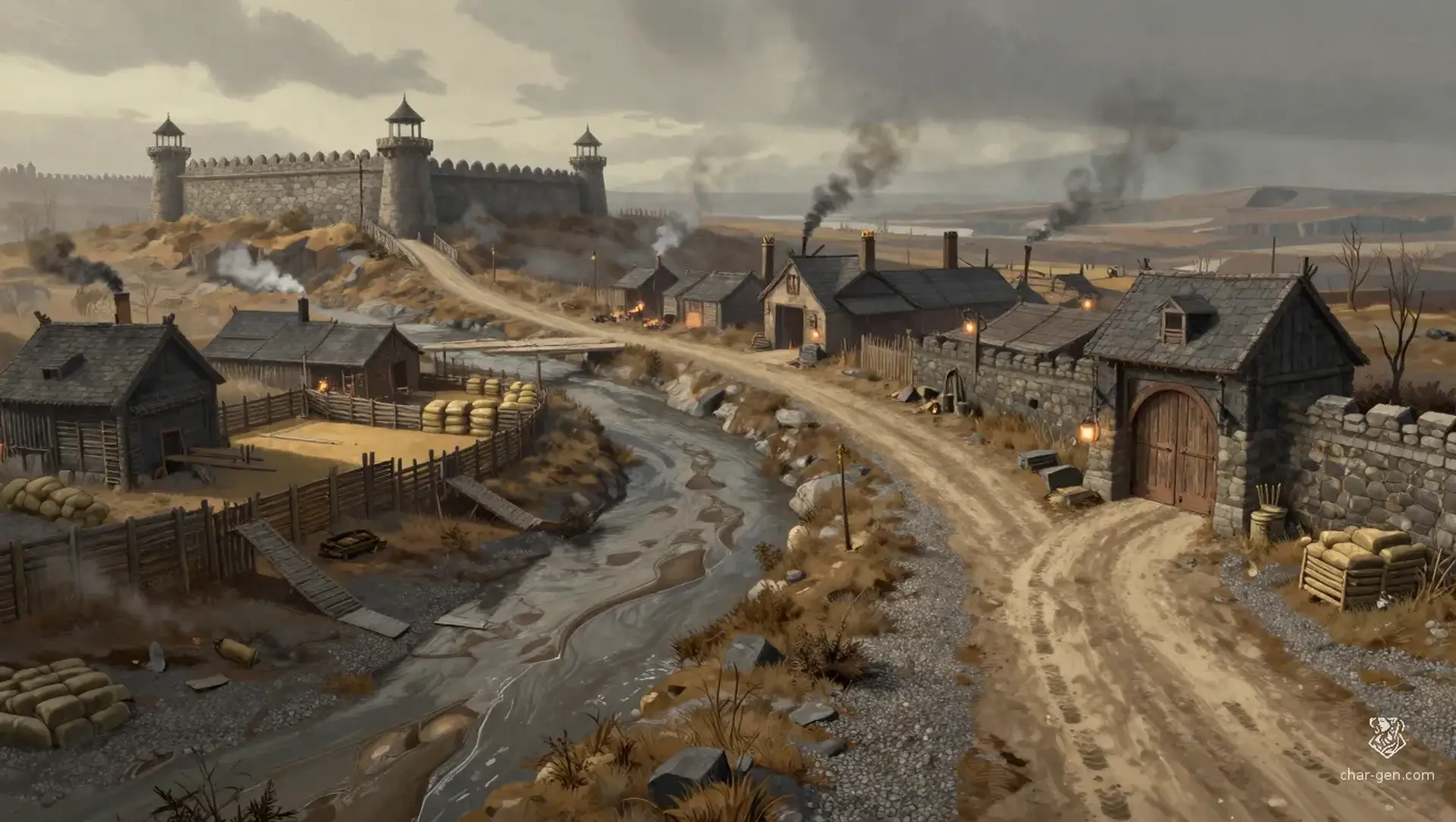
Yeperinbe began as a supply outpost at a wind-scoured ridge above a river ford and the crossing of two old roads. It survived by feeding armies, repairing wagons, and taking in refugees after Rekx raids pushed farther into the borderlands. Now it is a fortified market town of palisades, stone bastions, grain yards, and clustered workshops. Its real strength is logistics, but its real weakness is that everyone knows a shortage here can kill people fast.
Yeperinbe
- Population
- 4,800
- Rule
- Captain Mera Voss
- Wealth
- Modest and uneven
- Defence
- High
Overview
Yeperinbe began as a supply outpost at a wind-scoured ridge above a river ford and the crossing of two old roads. It survived by feeding armies, repairing wagons, and taking in refugees after Rekx raids pushed farther into the borderlands. Now it is a fortified market town of palisades, stone bastions, grain yards, and clustered workshops. Its real strength is logistics, but its real weakness is that everyone knows a shortage here can kill people fast.
Atmosphere
Yeperinbe feels like a town that never fully takes its armor off. Wagon ruts cut through mud packed by boots, rain, and ash from the border roads. Sellers call out over hammering smithies, and soldiers share benches with displaced families who still keep their bundles tied tight. People are practical, watchful, and quick to help once trust is earned. Every conversation carries a second concern: who is short on grain, who is lying, and who has been seen near the west gate after dark.
Culture
- The Hearth Mother, who blesses food, shelter, and births
- The Road Saint, patron of travelers, couriers, and wardens
- The Quiet Lantern, a funeral and remembrance cult favored by refugee families
Humans, Dwarves, Halflings, Elves, Gnomes
Economy
- Military supply and caravan provisioning
- Blacksmithing, wheelwrighting, and leatherwork
- Grain farming on the sheltered lower fields
- River tolls and escort contracts
- Harnesses, wagon parts, and repair work
- Salted grain, hard bread, and ration flour
- River rope, nails, and field tools
- Tanned hides and road cloaks
- Fine cloth, lamp oil, and spices from the ports
- Charcoal, pitch, and quality steel
- Books, map copies, and clerical supplies
- Medicines and devotional items
Geography
Ways in and out
Places to see
- Ford BridgehouseA squat bridgehouse where every cart crossing the ford is inspected. The upper floor serves as a lookout, while the lower room is full of old toll marks, broken spear shafts, and carved names of people who never returned from patrol.
- Hammer RowA row of low workshops packed against the inner wall. Hammers ring from dawn to dusk, and apprentices sleep above their benches when work runs late. This is where the town's practical skill lives, and where arguments often settle into bargains.
- The Quiet Lantern YardA small burial ground and candle court kept by refugee families and temple attendants. The names are written on painted wood, cloth scraps, and scraps of slate, because many of the dead arrived without proper records.
Power
3 factionsGovernment
Laws
Trouble
- The town is running out of trust before it runs out of food.Supplies are vanishing from sealed stores, but the ledgers do not show a break-in. Someone is using legitimate wagon traffic, old service gaps, or a hidden route under cover of ash to move goods out. Every missing crate makes the council accuse the wrong ally, and that is turning the town against itself.Involves
Captain Mera Voss, Tovin Pell, Bera Cale
- The leader's caution is becoming a weapon used against her.Mera Voss is brave and competent, but she delays hard decisions until she has perfect proof. That caution keeps her honorable and makes her easy to manipulate. Enemies know she will not publicly accuse anyone without evidence, so they keep feeding her partial truths and using the delay to move again.Involves
Captain Mera Voss, Sella Norr
- A paperwork problem is turning into a civil one.Refugee registration is breaking down. The council wants names, the camps want privacy, and the priests warn that fear is making neighbors inform on each other. If the records stay inconsistent, the town may deny rations to families who need them most, then blame the Ash Walkers for the resulting unrest.Involves
Bera Cale, Sister Elen Marr, Rusk Arden
Factions
- The Warden CouncilGovernmentThe Warden Council is the town's ruling body, but in practice it balances shortages, security, and public temper more than law. Its members argue constantly over rationing, gate access, and where the last good labor should be spent. They all fear panic. If the town believes supplies are being stolen, the Council risks losing the people it claims to protect.GoalsKeep Yeperinbe fed, armed, and open to trade without revealing how fragile the stores really are.Allies
- The Guild of Wheel and Hammer
- The Ford Wardens
RivalsThe Grain Tally House, The Ash Walkers
- The Guild of Wheel and HammerGuildThe Guild of Wheel and Hammer owns the practical life of the town. Smiths, wheelwrights, masons, and leatherworkers trust one another more than they trust soldiers. They are proud of the town's efficiency, but they resent being treated like servants of the wall. Their leaders want fair contracts, decent coal, and less emergency labor impressed from their apprentices.GoalsWin control over procurement and keep the town's workshop output in guild hands, even if that means withholding repairs from council projects.Allies
The Warden Council
RivalsThe Warden Council, The Grain Tally House
- The Ash WalkersRefugee NetworkThe Ash Walkers are a loose network of displaced families, camp cooks, translators, and grave-keepers. They keep records of the missing and know every hidden path into the town. They want recognition, housing, and the right to work instead of beg. Their fear is being blamed for sabotage they did not commit, which is already starting to happen.GoalsSecure permanent rights for refugees and expose who is diverting food and road supplies through the town's blind spots.Allies
Refugee tents and soup lines, The Quiet Lantern
RivalsThe Grain Tally House, The Rekx Cells
Defences
- A double palisade reinforced with stone bastions at the gate and ford side
- Three watchtowers linked by signal horn and lamp
- A ditch lined with sharpened stakes on the west approach
- Granaries built inside the wall so the town can endure a short siege
- A narrow stone bridge that can be broken by dropping the central span
Law and order
People and places
8 entriesWall captainCaptain Mera Voss Human Woman
A weathered wall captain with a voice built for commands and a habit of pausing before she speaks, as if listening for lies in the room. She wants the town secure and the council united, but she fears becoming the kind of leader who hangs an innocent person just to calm a crowd. She keeps a cracked shield in her office and polishes it herself.
Trade-masterSella Norr Human Woman
A merchant delegate with soft hands, sharp eyes, and a smile that never quite reaches her worry. She wants trade to keep flowing so the town does not starve, but she fears a blockade or panic that will collapse credit overnight. She keeps a dozen tags tied to her belt, one for every caravan she still owes an answer to.
Guild representativeDarek Stonehand Dwarf Man
The guild's elected voice is a broad-shouldered dwarf mason with a laugh that sounds like a mallet hitting iron. He wants apprentices protected and workshop contracts fairly shared, but he fears the guild becoming nothing more than a labor pool for the wall. He always carries a spare chisel and uses it to pick splinters from his fingers while thinking.
Refugee advocateBera Cale Half-elf Woman
The refugee advocate keeps lists, names, and testimonies in neat bundles tied with red thread. She wants the displaced families recognized as full citizens of the town, but she fears being used as a scapegoat if sabotage is proven anywhere near the camps. She speaks softly, but every camp child in Yeperinbe knows her by name and follows her with impossible trust.
Temple scribeSister Elen Marr Human Man
A lean priest-astrologer with ink on his cuffs and too many candles in his room. He wants the dead named properly and the missing counted honestly, but he fears the town will become cruel enough to forget its own losses. He often whistles under his breath while copying reports, a habit that unnerves soldiers and comforts the bereaved.
Provisioning storeThe Last Bolt Kept by Hella Marr
A cramped but indispensable provisioner near the gate where every traveling company ends up sooner or later. The shelves hold nails, tallow, rope, dried meal, tent stakes, field kits, and replacement buckles, all priced by urgency as much as by value. The owner keeps a second storeroom hidden behind flour sacks, not for profit, but to ensure the town can survive one more bad week.
TavernThe Cooper's Rest Kept by Orna Vale
A long, low tavern built from salvaged beams and stone at the foot of Hammer Row. The common room smells like barley stew, wet wool, and lamp smoke. There is a separate side table for news and disputes, where a person can settle accounts before the whole room takes a side. The walls are covered with route marks, old campaign nails, and thank-you tokens.
ProvisionerThe Grain Tally House Run by Tovin Pell
A broad, soot-dark provisioning hall near the east gate where wagon loads are weighed, sealed, and signed out. The floor is marked with old tally lines, and a side room stores emergency rations for patrols and refugee kitchens. Everyone in town needs this place, and everyone suspects it of hiding more than it admits.
Events
Lately
- Three ration wagons went missing between the east gate and the Tally House, even though the escorts returned on time.The council has tightened inspections, and rumors of inside work are spreading faster than the facts.
- Ash was found in a clean line along the west road after a windstorm, as if it had been poured from sacks or carried in footprints.Sentry shifts were doubled, and farmers now avoid the west approach after dusk.
- A refugee camp child identified a watchman who had been seen entering a sealed service passage, then vanished before giving a full statement.Bera Cale is under pressure to explain the missing witness, and the Wallguard wants names.
Calendar
- First Frost, every yearLedger DayThe Warden Council opens the ration ledger in public and announces winter allotments. Bakers, farmers, and soldiers all watch the numbers closely, because one bad tally can start a week of shouting, bargaining, and quiet theft.The twist · GM only
- Midsummer's EveAsh Lantern VigilA lantern march circles the palisade and ends at the ford shrine, where families name the dead from raids and roads. It is the town's closest thing to joy, though everyone notices which names are missing from the candles.The twist · GM only
- Seven days after every full moonFord MarketCarters from the outlying farms bring grain, tool iron, and salted meat into the gate yard for inspection. The market swells, debts are settled, and soldiers hire extra hands for ditch work or wall patching.The twist · GM only
History
Yeperinbe was never meant to be a city. It became one because the border kept bleeding, the roads stayed important, and enough people refused to move on. Its official story says disciplined planning built the town. The older story is uglier and truer: refugees, shortages, emergency walls, and a dozen quiet bargains made it possible to survive.
- FoundingThe First YardA watch post and wagon yard were built at the ridge to support patrols along the old road junction. The ford made it useful, and the ridge made it defensible enough to hold against raiders.
- Thirty years agoThe Winter FlightAfter the first major Rekx raid burned the river farms, the outpost swallowed a flood of refugees. The town did not plan to grow, but it had walls, grain, and work, so people stayed and built more of both.
- Twelve years agoThe Red Ash IncursionOfficials still praise the town's brave hold during the Red Ash Incursion, but old soldiers say the raid failed because the Rekx guides got lost in the smoke and because two local carters quietly cut the bridge ropes early.
- Current eraThe Ledger YearsThe Council now claims the town has always been self-sufficient, but the oldest granary beneath the wall was built with emergency stone from a neighboring fort. That help is politely forgotten whenever the town boasts about its independence.
Secrets
3 secrets · 5 rumours- Secret 1 · GM only
- Secret 2 · GM only
- Secret 3 · GM only
Rumours
Plot hooks
3- 1The Light WagonA caravan master begs the party to escort a delayed grain wagon to the Grain Tally House. The wagon arrives too light, the driver swears no one touched it, and the ash on the wheels matches the ash gathered near the west gate.
Investigation · Starts with Sella Norr · Reward: 50 gp in trade credit, plus access to restricted supplies
- 2The Lanterns BelowA refugee child claims to have seen lanterns moving under the wall at night. The child cannot explain the route, but knows which soldiers were supposed to be on watch and which one was missing. The trail leads into a forgotten service passage that was never fully sealed.
Mystery · Starts with Bera Cale · Reward: A safehouse, letters of passage, and 25 gp
- 3Ash on the LintelA string of town fires looks accidental until the same soot pattern is found on every burned door. The marks point to a small network of loyalists and smugglers, but the real target is the council itself. Someone wants Yeperinbe to turn on its leaders before the next ration announcement.
Sabotage · Starts with Captain Mera Voss · Reward: Militia support and a sealed writ
Media
0 imagesNo images yet.
Turn Yeperinbe into a sheet
A high-res, share-ready sheet you can post or print.