Skip to content
Create
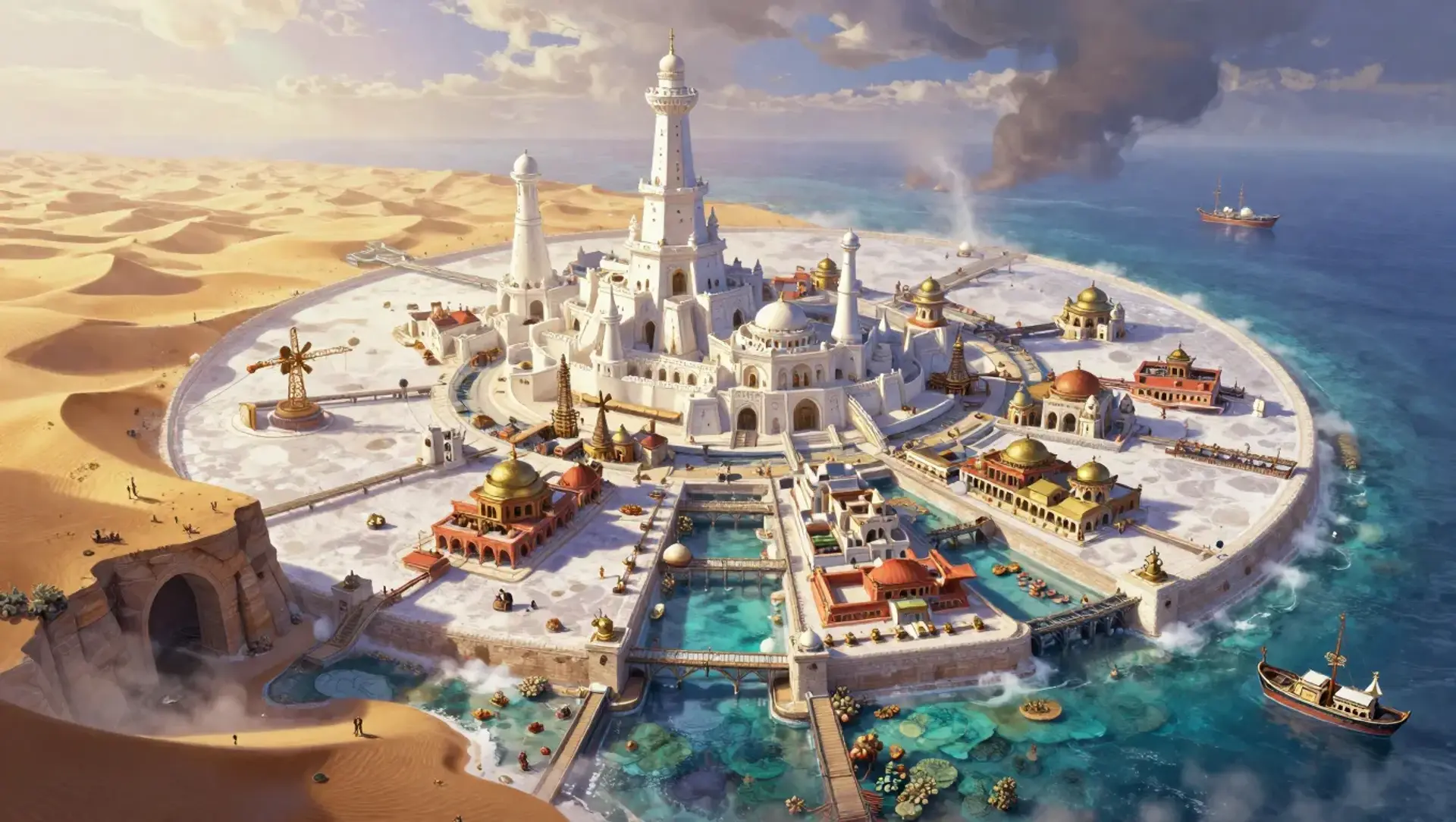
Qasr al-Miraj - AI-generated fantasy Settlement

Qasr al-Miraj

Qasr al-Miraj is a legendary coastal port of the Sultanate of Verulana, built where desert dunes collapse into turquoise water. White-limed sandstone towers rise from a crescent salt-flat, linked by suspended walkways and cooled by wind-catchers. Its four major zones descend from the palace citadel to the tide-pool wharves, engineered sluices, and submerged ruins. Qasr survives because it controls water, harbor access, and the safest crossing between Verulana’s inland city-states and the southern sea.

Major Coastal Settlement and Maritime Trade Hub

Qasr al-Miraj

Where the desert drinks the sea, every white wall hides a tide-mark.

TypeMajor Coastal Settlement and Maritime Trade Hub
PopulationApproximately 18,000 permanent residents, swelling to more than 25,000 during major convoys and seasonal trade festivals. Humans form the largest population, joined by Genasi, Tidekin, Dragonborn, Dwarves, Elves, Halflings, and transient sailors from across Aethelia. The upper tiers are dominated by palace servants, officials, and merchant families, while dock laborers, divers, smugglers, and artisans crowd the lower districts.
WealthVery wealthy in aggregate, visibly unequal in practice. Merchant houses maintain tiled villas and private cisterns, while dock laborers live in crowded salt-brick rooms and pay heavily for drinking water.
GovernmentSultanate administration overseen locally by a hereditary Qasr Regent and the Pearl Directorate
ReadinessQasr’s official garrison is disciplined but politically divided. The palace guard protects the High Bastion first, the wharf watch protects trade, and private merchant marines defend their own warehouses. During a declared emergency, all three answer to the crown, though orders can be delayed by bribes, forged seals, or deliberately confusing signal codes.
Qasr al-Miraj is a legendary coastal port of the Sultanate of Verulana, built where desert dunes collapse into turquoise water. White-limed sandstone towers rise from a crescent salt-flat, linked by suspended walkways and cooled by wind-catchers. Its four major zones descend from the palace citadel to the tide-pool wharves, engineered sluices, and submerged ruins. Qasr survives because it controls water, harbor access, and the safest crossing between Verulana’s inland city-states and the southern sea.

Qasr al-Miraj shines like a blade left in the sun. Salt dust skitters over white stone, brine breathes through the sluices, and bells ring whenever the tide changes beneath the city. Heat bends the streets into false horizons, while shaded courtyards smell of cardamom, wet rope, lamp oil, and coral dust. Everyone here watches reflections, because the city’s most important doors are rarely where they appear.

Gallery

No images yet. Click to add.

Connections

Geography

RegionThe southern coast of the Sultanate of Verulana, where inland desert routes meet the southern sea and several unstable elemental aquifers approach the surface.
ClimateHot, arid, and salt-heavy. Days bring white glare and furnace winds from the dunes, while nights carry cool sea fog through the lower districts. Sudden squalls can flood the wharves and turn the salt-flat streets into reflective sheets.
TerrainA crescent-shaped white salt-flat beneath fortified cliffs, with desert dunes pressing against the upper roads and tidal pools, coral shelves, sea-locks, caves, and submerged ruins below.
Travel Links
Inland caravan roads lead toward Verulana’s elemental city-states.Coastal dhows connect Qasr with southern ports and isolated islands.The Sirocco Veil maintains concealed routes through tide caves and smuggler grottos.The Coral Sluices provide controlled access to the Sunken Gate and lower harbor channels.

Culture

Qasr teaches that survival belongs to those who understand exchange. Water, information, protection, and silence all carry a price, though the price is not always coin. Public dignity matters greatly, yet private bargains govern nearly everything. A person who keeps a promise made before witnesses earns lasting respect. A person who breaks one may find every door in the city appearing open, while none will let them pass.

Races
HumansGenasiDragonbornTidekinDwarvesElvesHalflings
Religions
The elemental traditions of VerulanaThe Dawn Compact’s imperial ritesLocal sea and sun venerationAncestor shrines maintained by merchant families
Arts & Entertainment

Qasr favors performances built around illusion, rhythm, and controlled danger. Storytellers recite epics from balconies while mirrored dancers create impossible doubles below. Tide-callers perform with shell horns during harbor feasts, and competitive navigators race skiffs through the Coral Sluices by memory alone. Wealthy patrons commission living mosaics made from colored salt, crushed coral, and glowing magical residue gathered from the Sunken Gate.

History

Government

LeaderRegent Samira al-Hadid, the crown’s appointed governor of Qasr al-Miraj
Sultanate administration overseen locally by a hereditary Qasr Regent and the Pearl Directorate
Key Laws
All public cisterns, sluices, and desalination works are crown property.Water theft is punished by seizure of property, forced labor, and public marking.Unlicensed salvage from the Sunken Gate is treated as treasonous interference with Verulanan security.Foreign vessels must declare cargo, crew, and intended destination before entering the Salt-Crest Wharves.Political correspondence may be confiscated under emergency authority.
Problems
Qasr may face a water crisis before the next deep-tide convoy arrives.

The city’s oldest cistern is losing pressure, but Regent Samira al-Hadid refuses to announce the failure because the news would trigger panic and expose her mismanagement. She has ordered Tariq Nassar to falsify pressure reports while quietly buying every available water barge.

A crackdown on smuggling could silence the only people preventing an international conflict.

The Sirocco Veil is using the Sunken Gate to move correspondence between Verulana’s rival city-states. Samira wants the route destroyed, while Captain Idris Vey knows the route is also carrying evidence that could prevent a regional war.

Qasr’s trade war is being engineered from within the government.

A political conspiracy is manufacturing attacks on foreign ships and blaming the Free Captains. The forged evidence passes through official customs seals, suggesting that someone inside the Pearl Directorate wants martial law.

Economy

Industries
Maritime tradeSalt processingPearl divingWater managementShip repairInformation brokerage
Scarcity

Fresh water is carefully rationed outside the palace districts. Timber, quality iron, and trustworthy navigators are also scarce. The city has enough food during ordinary seasons, but a damaged cistern or blocked sluice can raise prices within hours.

Wealth LevelVery wealthy in aggregate, visibly unequal in practice. Merchant houses maintain tiled villas and private cisterns, while dock laborers live in crowded salt-brick rooms and pay heavily for drinking water.
Exports
Desalinated waterSalt and preserved foodPearls and shellworkElemental glassLuxury textilesNavigation charts
Imports
GrainMetal toolsTimberArcane reagentsForeign weaponsRare books and political correspondence

Defenses

ReadinessQasr’s official garrison is disciplined but politically divided. The palace guard protects the High Bastion first, the wharf watch protects trade, and private merchant marines defend their own warehouses. During a declared emergency, all three answer to the crown, though orders can be delayed by bribes, forged seals, or deliberately confusing signal codes.
Fortifications
The High Bastion crowns the cliff and commands every approach from land or sea.Salt-Crest watchtowers use polished signal mirrors to track ships across the southern sea.The Coral Sluices can be sealed into a maze of crushing tidal locks.The Sunken Gate is protected by submerged chains, coral wards, and hidden ballista platforms.
The Salt-Crest Guard(Approximately 700 soldiers, 90 harbor watchmen, 24 mounted patrol riders, and 11 palace-trained elemental adepts)

The Salt-Crest Guard combines armored infantry, mounted desert patrols, tide-trained skirmishers, and a small corps of elemental spellcasters. Its officers understand the city’s locks and rooftops better than any invading army. The guard is strongest inside the Bastion and weakest among the hidden grottos below the wharves.

Law & Order

crime Level
High in the wharves and hidden grottos, moderate in the Bastion districts, and unusually sophisticated throughout the customs houses. Theft is common, but forged permissions, arranged disappearances, and controlled scandals are the city’s most profitable crimes.
enforcement
The Salt-Crest Guard patrols openly, while Pearl Directorate inspectors audit cargo and water access. The Sirocco Veil maintains its own quiet justice in the lower districts. Residents often seek Veil arbitration when official courts would seize their homes or expose their families.
typical Punishment
Minor offenses bring fines, confiscation, or several days of dock labor. Water crimes bring branding and forced service. Major smuggling, sabotage, or unauthorized ruin exploration may result in imprisonment beneath the High Bastion, exile into the desert, or execution by drowning during a public tide ceremony.

Calendar of Events

Visual sheet

Turn Qasr al-Miraj into a sheet

A high-res, share-ready sheet you can post or print.