Skip to content
Create
Bir al-Nadim - AI-generated fantasy Settlement

Bir al-Nadim

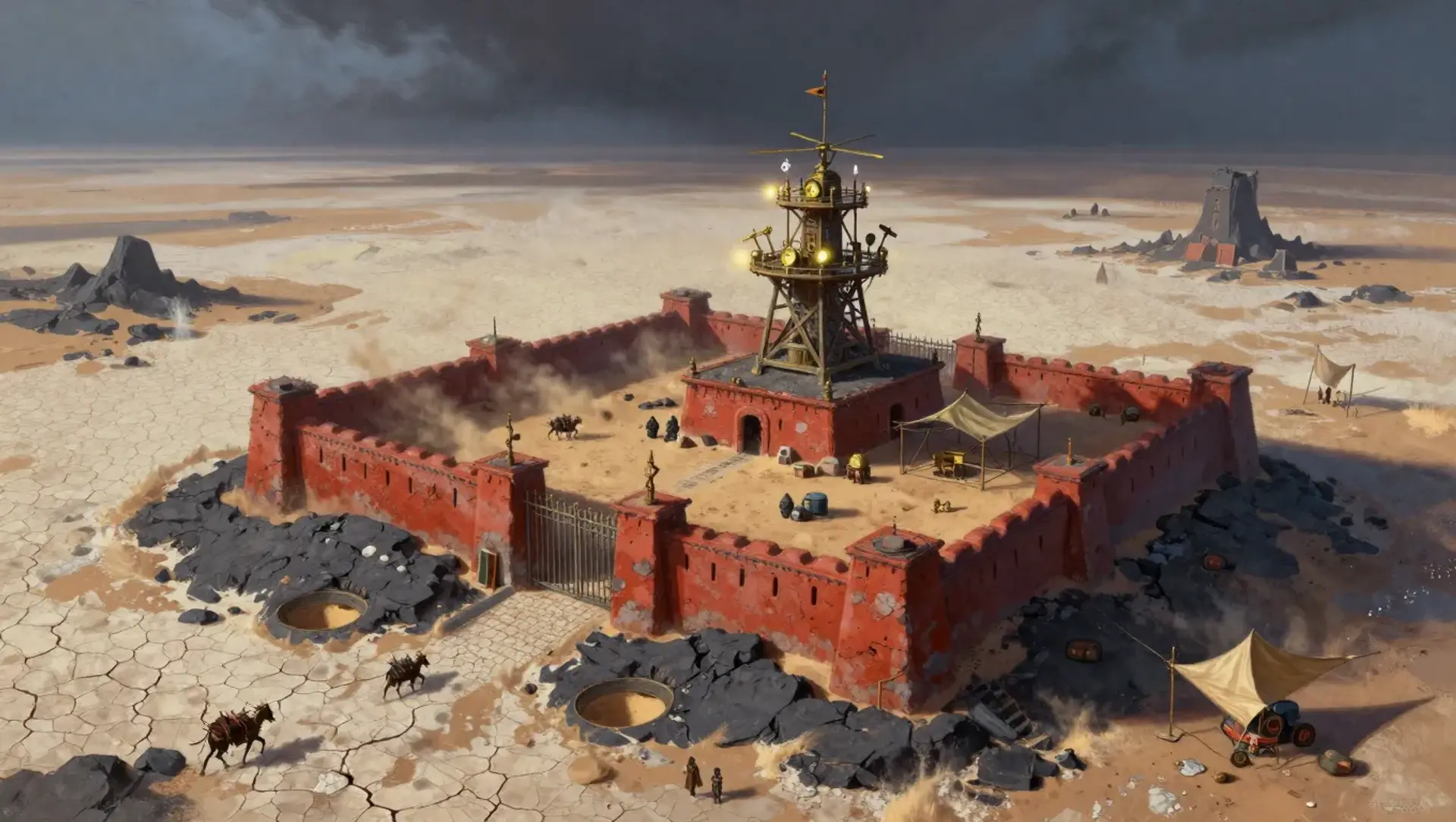
Bir al-Nadim stands alone on the salt-flats of the Sunken Sun, a dark, low redoubt surrounded by glare, wind-carved ridges, and miles of rolling mineral crust. Its tower flashes coded messages toward fortified routes and distant imperial stations. Below, a deep-aquifer well keeps 120 permanent and transient residents alive. The post offers refuge, but every visitor is measured against dwindling water, hidden maps, and dangerous official lies.

Remote imperial survey post and emergency desert refuge

Bir al-Nadim

A water post where every storm warning arrives with a price.

TypeRemote imperial survey post and emergency desert refuge
PopulationApproximately 120 permanent and transient residents, including 38 imperial survey scouts and cartographers, 27 meteorological and telemetry staff, 18 Saltwatch rangers, 14 caravan workers, 9 wellkeepers, and roughly 14 travelers, laborers, and dependents at any given time.
WealthModest by imperial standards, but strategically valuable. Bir al-Nadim handles little coin directly. Its true wealth lies in safe passage, accurate forecasts, and information that powerful officials would rather keep buried.
GovernmentImperial survey prefecture with emergency military authority
ReadinessThe rotating desert rangers keep weapons, waterskins, climbing gear, and signal lamps ready at all times. During a storm warning, every resident has an assigned task. The post can resist a small raiding band, but its defenses become unreliable if the cistern pumps fail or the tower’s heliograph is damaged.
Bir al-Nadim stands alone on the salt-flats of the Sunken Sun, a dark, low redoubt surrounded by glare, wind-carved ridges, and miles of rolling mineral crust. Its tower flashes coded messages toward fortified routes and distant imperial stations. Below, a deep-aquifer well keeps 120 permanent and transient residents alive. The post offers refuge, but every visitor is measured against dwindling water, hidden maps, and dangerous official lies.

Salt wind rasps over black basalt, carrying the bitter smell of mineral dust and hot stone. Heliograph mirrors flash in the white glare while canvas shutters hammer against their frames. Beneath the redoubt, water drips steadily into the cistern, each drop counted by habit and law. Bir al-Nadim feels less like a village than a clenched fist, holding back weather, thirst, and the shifting desert.

Gallery

No images yet. Click to add.

Connections

Geography

RegionThe eastern approaches of the Sunken Sun, where fortified caravan routes cross the desolate salt-flats of Verulana.
ClimateExtremely hot and dry, with sudden pressure changes, violent sandstorms, cold nights, and mineral haze that turns sunlight copper-white.
TerrainBir al-Nadim occupies a low basalt rise above a broad salt basin. The ground seems solid from a distance, but crusted flats conceal collapse-pits, buried ruins, and heated vents.
Travel Links
A fortified caravan route toward Verulana's southern stationsAn unreliable northwestern trail toward the Tomb of the Ash LordA heliograph chain linking imperial survey postsBuried pre-Sultanate tunnels beneath the cistern

Culture

Water is shared, records are guarded, and panic is treated as a public hazard. Residents respect practical courage more than rank, especially when someone holds a gate during a storm or gives up a private ration. Imperial service is viewed with mixed feelings. Most people want the post protected, but few believe distant officials understand what survival costs here.

Races
HumansDwarvesGenasiDragonbornHalflings
Religions
The Dawn Compact's civic ritesPoreseta lunar observancesLocal ancestor and well-keeper traditions
Arts & Entertainment

Bir al-Nadim has little room for formal art, so residents decorate water jars with tally marks, personal prayers, and tiny painted maps. Evening entertainment centers on the barracks recitation of route songs, weather wagers, and arguments over whether a scout’s compass points toward north or toward the nearest safe road. The best storytellers are those who can describe a storm without repeating themselves.

History

Government

LeaderPrefect Samira Holt, an exacting human cartographer who believes every crisis can be controlled by better records. Her flaw is not cruelty but denial. She alters reports when the truth might trigger evacuation, imperial censure, or a rush toward the buried ruins.
Imperial survey prefecture with emergency military authority
Key Laws
Water theft is punished by confiscation, public ration reduction, and expulsion after a formal hearing.No map, telemetry ledger, or recovered relic may leave the post without the prefect's seal.During a storm warning, all residents must report to assigned labor, watch, or shelter duties.Duels, private excavations, and unlicensed elemental magic are forbidden within the walls.
Problems
The post may lose its only sweet-water source, but admitting that fact could cause a lethal mass departure.

The aquifer's flow is falling, and the weather station predicts that the salt basin will shift beneath Bir al-Nadim within months. Samira Holt has hidden the worst readings, placing the settlement at risk.

Someone in Arcanterra wants the buried site isolated, and the post is being used to enforce that secrecy.

An intercepted heliograph message orders the tower to redirect caravans away from a newly exposed ruin and to destroy any independent maps found there. The order bears an imperial cipher that Samira Holt refuses to discuss.

Economy

Industries
Imperial surveyingWeather observationCaravan resupplyEmergency refugeArtifact recovery
Scarcity

Sweet water is the settlement's defining scarcity. The aquifer remains viable, but its flow has weakened by a third over the last season. Food, lamp oil, paper, and metal parts are also tightly rationed between supply convoys.

Wealth LevelModest by imperial standards, but strategically valuable. Bir al-Nadim handles little coin directly. Its true wealth lies in safe passage, accurate forecasts, and information that powerful officials would rather keep buried.
Exports
Survey mapsStorm and seismic telemetryRoute warningsRecovered pre-Sultanate artifacts
Imports
Food and grainLamp oilArrows and crossbow boltsReplacement glass and brass instrumentsHealing supplies

Defenses

ReadinessThe rotating desert rangers keep weapons, waterskins, climbing gear, and signal lamps ready at all times. During a storm warning, every resident has an assigned task. The post can resist a small raiding band, but its defenses become unreliable if the cistern pumps fail or the tower’s heliograph is damaged.
Fortifications
A double basalt-and-adobe perimeter wall with narrow firing slitsA single iron-banded gate protected by a sand trap and murder holesA raised survey tower that doubles as a watchpostA concealed emergency passage from the cistern to the outer corral
The Saltwatch Detail(18 rangers and caravan guards, supported by 9 armed survey scouts)

A rotating detail of desert rangers backed by imperial survey scouts and several experienced caravan guards. They know the salt-flats well, but their divided loyalties make them poor at obeying orders that seem designed to protect paperwork instead of people.

Law & Order

crime Level
Low in ordinary times, but rising sharply around water theft, forged route papers, sabotage, and relic smuggling.
enforcement
The Saltwatch Detail patrols the walls and cistern. Prefect Samira Holt conducts hearings with written evidence, while Ranger-Captain Idris Vale relies on witness testimony and practical judgment. During storms, emergency authority overrides ordinary procedure.
typical Punishment
Minor offenses mean ration fines, labor duty, or temporary confinement. Serious theft or sabotage brings confiscation, public trial, and expulsion into the salt-flats, though execution is reserved for murder or deliberate poisoning of the cistern.

Calendar of Events

Visual sheet

Turn Bir al-Nadim into a sheet

A high-res, share-ready sheet you can post or print.