
Tide-Break Anchorage
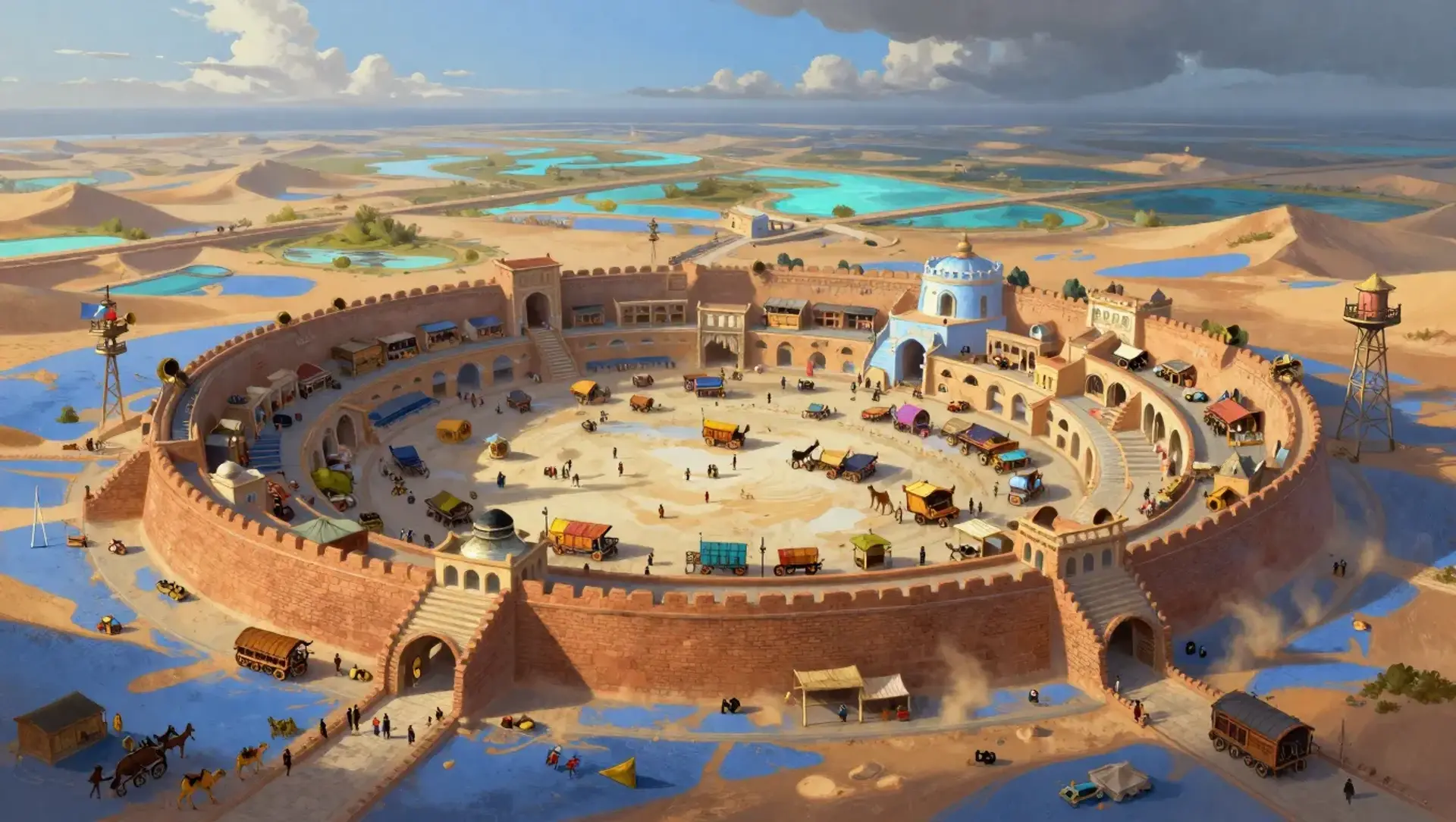
Tide-Break Anchorage occupies a terraced basin where blue-tinted dunes descend toward the inland edge of the Sapphire Silt Coast's salt marshes. Its ramparts rise in rings around the Great Caravan Basin, with storehouses built into the dune walls and cisterns descending beneath them. Inland roads converge here before splitting toward Port Qamar, the southern wastes, and the Sultanate's mining routes. The town survives because every major route needs its water, repairs, permits, and guards.
Tide-Break Anchorage
Where every caravan buys water, a map, and one more reason to distrust the road.
“Tide-Break Anchorage smells of wet stone, hot spices, mule sweat, and brine carried inland on restless wind. Blue sand grits between every floorboard. Water Genasi wardens patrol beneath dripping awnings while Air Genasi scouts call warnings from the watchtowers, their voices carried through brass speaking horns. Every district feels temporary, crowded by merchants who sleep lightly, guards who count exits, and officials who know one delayed caravan can starve half the coast.”
Gallery
Connections
Geography
Culture
Tide-Break Anchorage teaches that nothing arrives alone. Every crate depends on a road, a beast, a guard, a cistern, and someone willing to sign for the loss. Hospitality is generous but conditional, and promises are witnessed carefully. Locals distrust anyone who claims to work without a patron. The town's defining belief is that trade is safer when every powerful interest must publicly owe something to someone else.
The town favors practical spectacles. Caravan guards compete in shield bouts, water dancers perform in shallow public basins, and Air Genasi musicians play reed instruments that bend with the wind. Storytellers recite shipping disasters as comic epics, usually while salt-dredgers gamble with carved pearl counters. The most respected performers are route-callers, people who can memorize a journey's landmarks, hazards, tolls, and safe wells after hearing it once.
History
Government
A sealed lower cistern is filling with seawater despite intact tidal locks. Magistrate Samira Vale has ordered the breach hidden until after the Compact Table, because revealing it would let the Inland Factors seize emergency control of the water supply.
Three caravans have vanished between the North Road and Tide-Break Anchorage. The Wind-Trackers' Office blames raiders, while the Dredgers' Assembly claims the missing cargo was diverted through marsh channels by licensed factors.
Economy
Fresh water becomes scarce during prolonged heat or when coastal storms disrupt the tidal locks. Reliable draft animals are also difficult to replace after a bad season. The most dangerous shortage is trustworthy information. False maps, forged permits, and invented storm warnings can be worth more than stolen cargo.
Defenses
A mixed force of Water Genasi harbor wardens, paid town guards, and veteran caravan escorts. Their commanders train together but answer to different employers, which becomes dangerous during disputes over cargo, tolls, or emergency rationing.
Law & Order
- crime Level
- Moderate, with theft, fraud, cargo substitution, smuggling, and occasional violence between caravan crews. Murder is rare in public districts but common enough in the marshes to frighten witnesses into silence.
- enforcement
- The Breakwater Watch patrols gates and markets, while merchant factors maintain private guards for their storehouses. Water Genasi wardens inspect locks and cisterns. Air Genasi scouts enforce travel closures. Jurisdiction overlaps constantly, creating opportunities for anyone clever enough to carry several contradictory permits.
- typical Punishment
- Fines in gold pieces, confiscation of cargo, forced labor repairing roads or cisterns, and temporary expulsion beyond the walls. Serious smuggling leads to public branding of the right palm and permanent loss of caravan privileges.
Calendar of Events
Turn Tide-Break Anchorage into a sheet
A high-res, share-ready sheet you can post or print.