
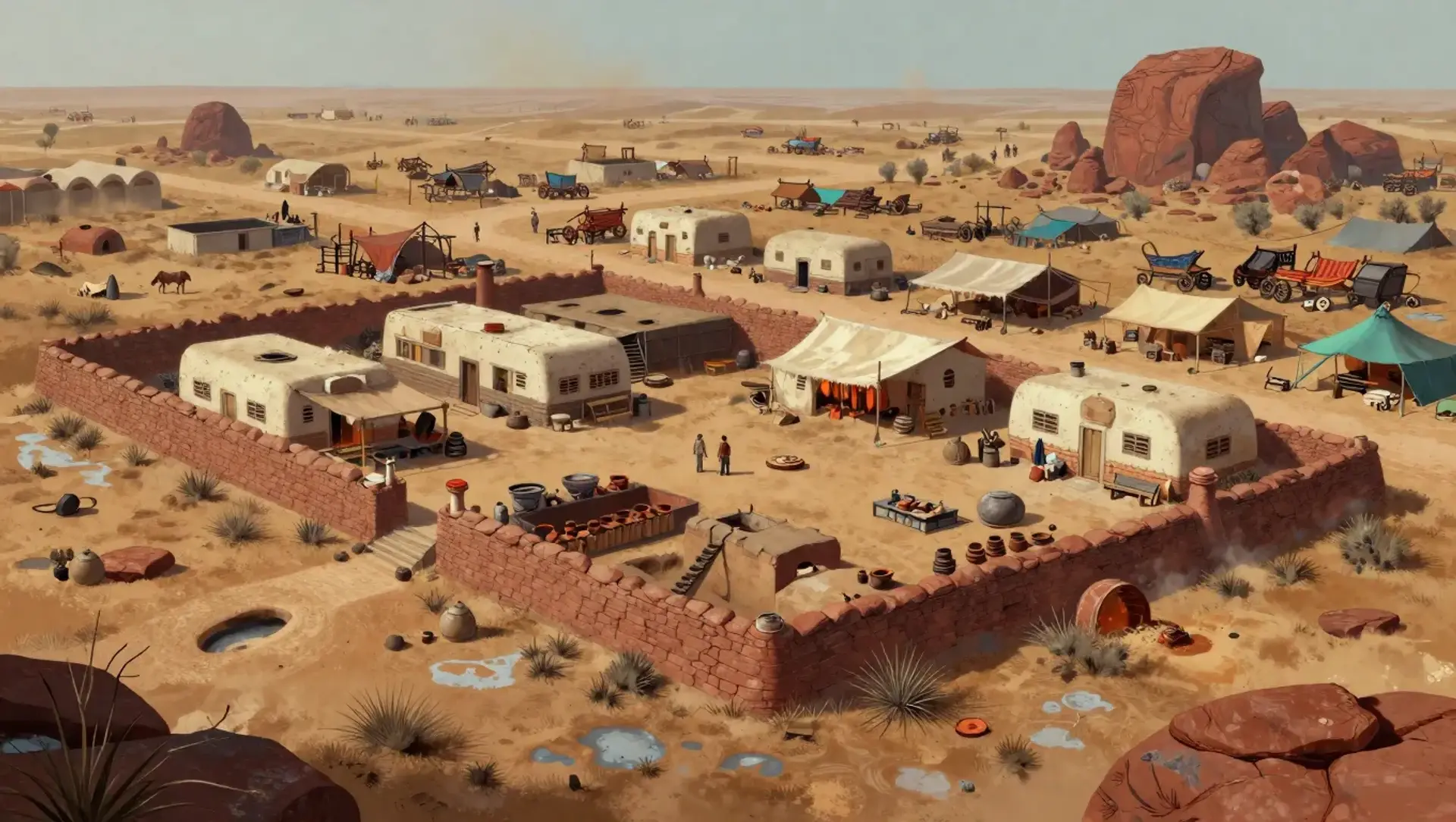
Ochre-Kiln
Ochre-Kiln stands half a mile from the warded Gild-Way, close enough to profit from passing caravans but far enough to avoid the garrison's inspections and tariffs. Its workshops occupy shallow excavations in the gravel plain, where natural heat vents reduce fuel costs and harden clay quickly. Canvas awnings connect the districts, and every building has a shaded cistern alcove. The settlement survives by making frontier necessities and asking fewer questions than Sand-Gate.
Ochre-Kiln
A kiln-built caravan town where every useful thing gets a second firing.
“Ochre-Kiln smells of hot clay, lamp oil, and crushed sage beneath a sky bleached nearly white by the sun. Kiln fires throb behind earth-carved walls, sending orange light through vent slits after dusk. Caravan bells clatter along the warded Gild-Way, while grit rasps against every shutter and tooth. Everyone watches the road, because prosperity arrives on wagons and trouble arrives on foot.”
Gallery
Connections
Geography
Culture
The settlement teaches that nothing useful should be discarded, whether clay, iron, a promise, or a person. Craft skill earns respect more reliably than birth, wealth, or imperial credentials. Bargaining is expected, waste is shameful, and public generosity is treated as a form of reputation-building. Most residents believe survival depends on cooperation, though every workshop quietly measures how much power it can keep for itself.
Ochre-Kiln favors practical beauty. Potters score bowls with family marks, weavers dye protective cloaks in rust red and storm gray, and scrap-wrights decorate repaired wagons with bright metal scraps. Evening entertainment gathers around cooling kilns, where workers trade caravan songs, recite exaggerated repair stories, and wager on whose glaze will survive the next firing. Outsiders are welcomed quickly, but trusted only after sharing water.
History
Government
The ward-stones along the Gild-Way are being subtly realigned, causing caravans to take longer routes and avoid Ochre-Kiln. Mara Pell suspects sabotage but refuses to alarm merchants before identifying the culprit.
The deepest cistern is losing water despite sealed walls. The Kiln Guild blames careless scavengers, while the Shadeweavers claim the water is being diverted toward an illegal workshop beneath the settlement.
A proposed contract would make Ochre-Kiln an official military supplier, bringing security and coin but placing its workshops under Sand-Gate inspection.
Economy
Water, quality iron, and dependable food are always scarce. The settlement can produce excellent goods but cannot replace damaged tools or replenish cisterns without caravan traffic. A failed ward-stone or delayed convoy can raise prices sharply within days.
Defenses
The Kiln Watch is a rotating militia of artisans, teamsters, and caravan guards. Members carry clubs, spears, light crossbows, and ceramic signal flasks that burst into colored smoke. Its veterans know the alleys, roof paths, and service tunnels better than any visitor.
Law & Order
- crime Level
- Moderate. Theft, fraud, and smuggling are common during caravan season, while violent crime is rare because everyone depends on one another's labor and water access.
- enforcement
- The Kiln Watch handles ordinary disputes, while Reeve Mara Pell convenes public hearings in the Secondary Bazaar. Guilds often investigate crimes involving their own members, creating obvious conflicts of interest. Sand-Gate officials intervene only when imperial property, taxes, or the Gild-Way itself is involved.
- typical Punishment
- Restitution, public labor, loss of workshop privileges, or temporary expulsion from the bazaar. Serious violence, sabotage of cisterns, and tampering with the Gild-Way are punished by exile, usually with the offender's name marked on a ceramic warning tile.
Calendar of Events
Turn Ochre-Kiln into a sheet
A high-res, share-ready sheet you can post or print.