
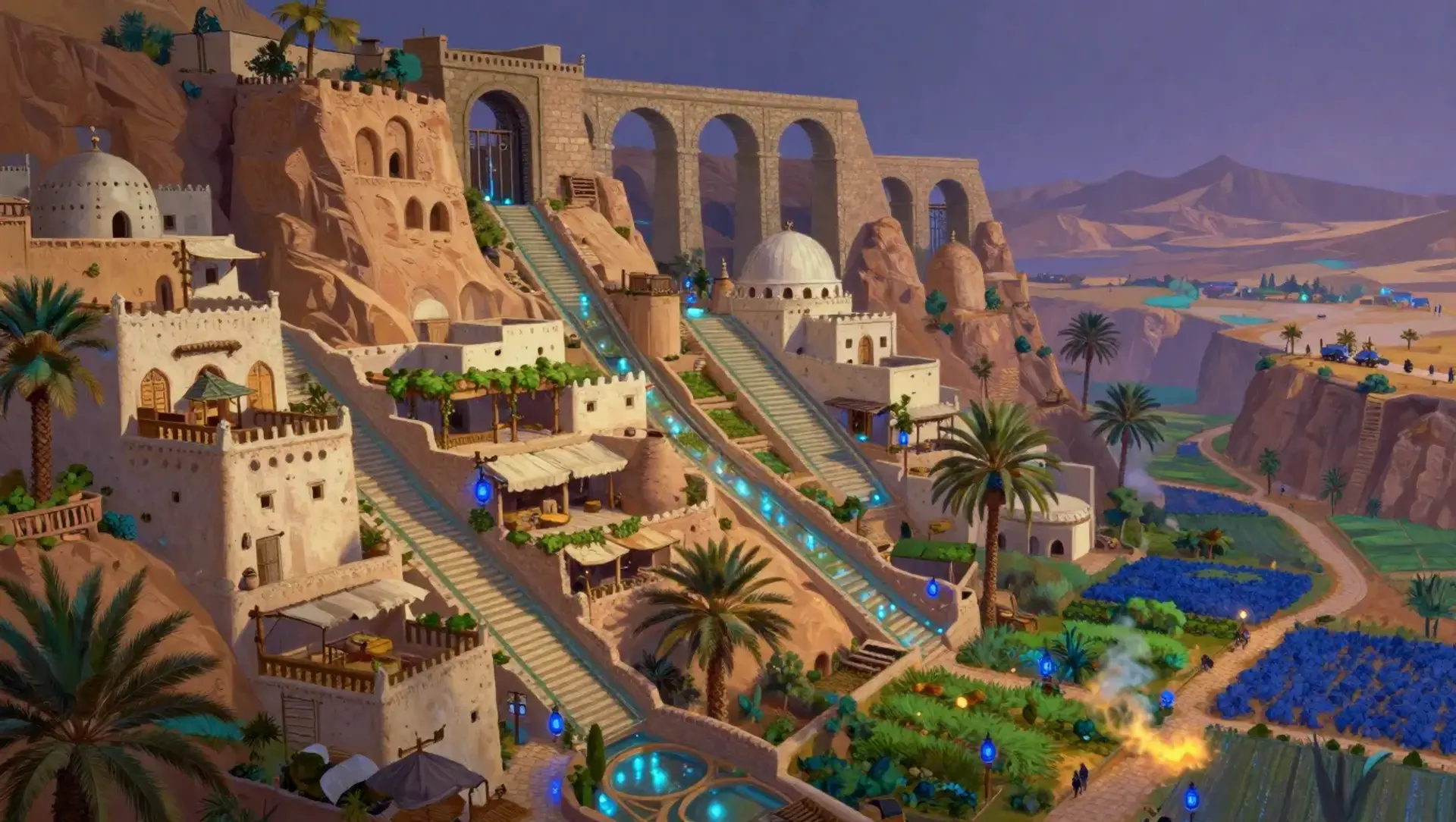
Qaryat al-Mastaba
Qaryat al-Mastaba climbs the western slopes of the Crown Oasis in a sequence of broad agricultural benches. Its upper districts catch the first sun and receive water from the High Sluice Junction. Its lower districts process, sell, and pack the harvest bound for Virdal and distant caravan routes. The town is prosperous enough to attract merchants and fugitives, yet dependent enough on regulated water that a single blocked gate can become a political crisis before nightfall.
Qaryat al-Mastaba
A green staircase of farms, gates, and granaries where every harvest begins with a water argument.
“Qaryat al-Mastaba smells of wet stone, crushed dates, sun-warmed grain, and camel sweat. Water murmurs through channels beneath nearly every street, while bells mark the opening and closing of sluice gates. At midday, white walls throw hard light across the terraces. By dusk, the whole town glows with lanterns reflected in irrigation pools, and every conversation eventually turns toward harvest shares, water rights, or the next tax collection.”
Gallery
Connections
Geography
Culture
Water is treated as a shared trust, but harvest is treated as personal proof of worth. Qaryat al-Mastaba praises patience, exact recordkeeping, and public generosity while quietly rewarding those who can redirect blame. A person who wastes water is shunned faster than a thief. A person who steals water for a starving household may be forgiven, provided the theft does not threaten the next planting.
Terrace life favors practical beauty. Families paint geometric bands around water jars, sing work chants in alternating voices, and compete to grow the heaviest dates or brightest indigo. Evening entertainment gathers around shadow screens in the Vintner's Court, where performers dramatize old irrigation disputes with masks, reed flutes, and exaggerated magistrates. Hospitality is measured by shade, cool water, and whether a guest leaves with food wrapped for the road.
History
Government
Water reaching the lower benches has fallen sharply, though the High Sluice Junction records show normal flow. Growers accuse the Silo Consortium of diversion, while the magistrate suspects sabotage by the Free Channels.
The Benchholders' League plans a coordinated refusal to pay the next tithe. If the Crown responds with grain seizure, the town may revolt before the next planting cycle.
An anonymous ledger claims that famine reserves were sold through Virdal under false names. The ledger is authentic, but revealing it could trigger panic and leave the town without legal emergency stores.
Economy
Water remains plentiful in the Crown Oasis, but access is scarce during peak heat. Good timber, metal tools, and reliable labor are also expensive. The town's greatest hidden scarcity is trustworthy storage space, since official silo tallies do not always match the grain actually present.
Defenses
A mixed force of watch officers, terrace wardens, and rotating irrigation crews. They are disciplined around gates, channels, and storehouses, but divided over whether the town serves its growers or the Sultanate's tax collectors.
Law & Order
- crime Level
- Moderate. Theft, smuggling, forged measures, and water diversion are common enough to have specialized punishments, while serious violence remains unusual because everyone depends on the same narrow streets and channels.
- enforcement
- The Bench Wardens patrol by district and rotate between gate duty, market inspections, and night channel watches. The Crown Tithe Office maintains its own investigators. Water-Singers can demand access to major sluices, but their authority is spiritual and customary rather than absolute.
- typical Punishment
- Fines or restitution for minor offenses, followed by supervised labor on channels or terrace walls. Repeated water theft can bring seizure of property, public branding with blue dye, and exile from the Crown Oasis. Political crimes are transferred to Virdal for judgment.
Calendar of Events
Turn Qaryat al-Mastaba into a sheet
A high-res, share-ready sheet you can post or print.