Skip to content
Create
Zafar al-Rimal - AI-generated fantasy Settlement

Zafar al-Rimal

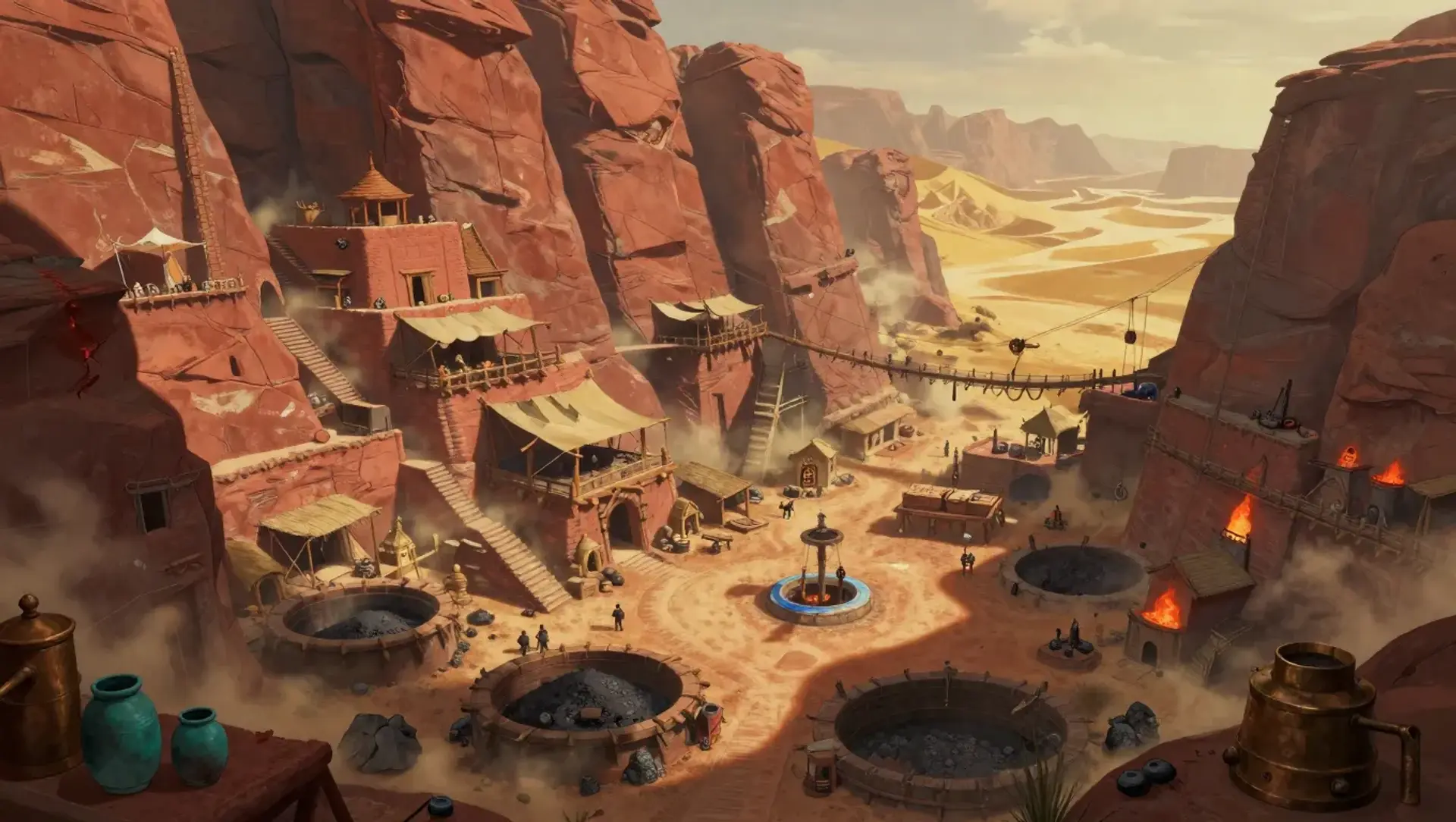
Zafar al-Rimal clings to the sides of a dry wadi where sandstone ravines expose mineral seams and fragments of a civilization older than the Sultanate. The settlement survives because the canyon offers shade, defensible terraces, and access to a deep aquifer reached by the communal well. Its defining truth is simple and dangerous: the village was built over a buried pre-Sultanate machine that slowly shifts the surrounding rock, and its tremors are being hidden because they reveal extraordinarily valuable relic chambers.

Small mining and salvage settlement

Zafar al-Rimal

A cliffside mining camp where every tremor reveals a debt, a relic, or a buried door.

TypeSmall mining and salvage settlement
PopulationApproximately 650 permanent residents live in Zafar al-Rimal, including independent prospectors, excavation laborers, salvage mechanics, foundry workers, provisioners, and their families. Another 50 to 100 traders, teamsters, assessors, and caravan guards pass through during an ordinary month. The population swells during opening season, then contracts sharply when water prices rise or tremors close the lower shafts.
WealthPoor but strategically valuable. Independent miners often possess valuable finds on paper while lacking food, water, or secure ownership of their claims.
GovernmentA practical settlement council overseen by a hereditary well-warden, with major decisions requiring witnesses from miners, foundry workers, provisioners, and caravan interests.
ReadinessZafar al-Rimal has no formal garrison. About thirty experienced miners, caravan guards, and foundry workers can form a watch within minutes, armed with picks, crossbows, clubs, and improvised shields. Their readiness is good against bandits and poor against organized troops, monsters from the deep shafts, or anyone capable of attacking the settlement's water supply.
Zafar al-Rimal clings to the sides of a dry wadi where sandstone ravines expose mineral seams and fragments of a civilization older than the Sultanate. The settlement survives because the canyon offers shade, defensible terraces, and access to a deep aquifer reached by the communal well. Its defining truth is simple and dangerous: the village was built over a buried pre-Sultanate machine that slowly shifts the surrounding rock, and its tremors are being hidden because they reveal extraordinarily valuable relic chambers.

Heat shimmers above Zafar al-Rimal, turning every distant ridge into wavering gold. Ore dust coats tongues, teeth, and sweat-darkened scarves. From the canyon floor comes the steady clang of hammers, the hiss of cooling metal, and the groan of pulley-lifts hauling stone toward the terraces. Beneath that familiar labor, the settlement listens for deeper sounds, because every tremor may mean profit, collapse, or something waking below.

Gallery

No images yet. Click to add.

Connections

Geography

RegionThe Sunken Sun, a treacherous lowland basin within the Sultanate of Verulana.
ClimateArid desert climate with punishing midday heat, cold nights, sudden dust storms, and flash floods that roar through the wadi after distant rain.
TerrainZafar al-Rimal occupies a dry sandstone ravine. Adobe terraces cling to the cliff faces, while deep shafts descend through mineral-bearing bedrock into buried pre-Sultanate structures.
Travel Links
A fortified caravan route leads west toward larger Verulanan markets.A rough eastern trail reaches abandoned excavation camps and older shaft mouths.A dry wadi route can shorten travel across the Sunken Sun, but becomes lethal during flash floods.

Culture

The settlement respects anyone who works, shares water, and warns others before bringing down unstable stone. Reputation matters more than legal ownership, though both are constantly contested. Residents distrust distant officials and corporate syndicates, yet many accept their contracts when debts, injuries, or dry wells leave no alternative. A useful person may be forgiven for almost anything except hiding danger from the next shift.

Races
HumansDwarvesGenasiDragonbornGnomes
Religions
Household and communal hearth traditionsVerulanan elemental mysticismAncestor veneration among miners and salvage families
Arts & Entertainment

Zafar al-Rimal favors practical art shaped by harsh conditions. Salvage mechanics decorate tools with colored wire, etched tin, and fragments of glazed relic tile. At night, workers gather around the communal hearth for drum rhythms, call-and-response work songs, and stories judged by how accurately they describe a cave-in. Gambling centers on ore samples, pulley races, and guesses about which shaft will fail next.

History

Government

LeaderWarden Samira Qadir, keeper of the Oasis Well and nominal head of the Hearth Council. Samira is decisive, generous with water, and dangerously unwilling to admit when she has lost control of events.
A practical settlement council overseen by a hereditary well-warden, with major decisions requiring witnesses from miners, foundry workers, provisioners, and caravan interests.
Key Laws
The communal well belongs to every permanent resident and cannot be sold, sealed, or diverted without a public hearing.Any miner who conceals a collapse, trapped worker, or unstable relic chamber loses their claim and may be exiled.Syndicate contracts must be read aloud at the communal hearth before witnesses.No excavation may proceed after three warning tremors in one day.
Problems
The settlement's water supply is failing, and its leader is hiding the evidence.

A series of tremors has cracked the well's inner lining, but Samira has ordered repairs hidden until the current syndicate contracts are completed. If the shaft network shifts again, the settlement may lose its only reliable water source.

A disputed contract could transfer Zafar al-Rimal's most valuable ground to an outside syndicate.

The Verulanan Prospecting Combine claims the deepest shafts under a contract signed by Samira's late predecessor. Independent miners insist the contract excludes relic chambers and was altered after the original witness died.

Economy

Industries
Deep-shaft miningRelic salvageSmall-scale smeltingExcavation equipment repairCaravan provisioning
Scarcity

Water, sound timber, skilled healers, and trustworthy structural engineers are scarce. The settlement can smelt ore, but it cannot replace damaged machinery or support a large influx of workers without outside supplies.

Wealth LevelPoor but strategically valuable. Independent miners often possess valuable finds on paper while lacking food, water, or secure ownership of their claims.
Exports
Heat-resistant oreRefined trade ingotsSalvaged pre-Sultanate architectural fragmentsRepair parts for excavation equipment
Imports
Water and preserved foodTimber and ropeIron tools and crossbow boltsLamp oil, canvas, and replacement pulley components

Defenses

ReadinessZafar al-Rimal has no formal garrison. About thirty experienced miners, caravan guards, and foundry workers can form a watch within minutes, armed with picks, crossbows, clubs, and improvised shields. Their readiness is good against bandits and poor against organized troops, monsters from the deep shafts, or anyone capable of attacking the settlement's water supply.
Fortifications
The upper terraces can be sealed by dropping timber-and-iron barricades across the main stairways.A bell-line runs between the excavation pits, foundry yards, and communal hearth to signal collapses, raids, and flash floods.The deepest shaft entrances have reinforced stone collars, though several supports are secretly compromised.
The Shaft Watch(30 regular volunteers, with another 40 residents able to fight in an emergency)

The Shaft Watch is a rotating militia selected from miners, mechanics, and caravan hands. Its members know every stair, lift, and emergency tunnel, but they are divided over whether the settlement should defend independent claims or protect syndicate shipments.

Law & Order

crime Level
Moderate. Theft, contract fraud, equipment sabotage, and water ration violations are common. Serious violence is less frequent because most residents depend on one another during cave-ins.
enforcement
The Shaft Watch investigates immediate threats, while Warden Samira Qadir convenes public hearings at the communal hearth. Syndicate guards enforce company contracts in the pits, creating constant jurisdictional friction.
typical Punishment
Restitution, loss of claim, public labor repairing stairs or supports, and temporary water ration restrictions. Repeated sabotage or violence can result in exile into the Sunken Sun, though this sentence is rarely carried out without a caravan escort.

Calendar of Events

Visual sheet

Turn Zafar al-Rimal into a sheet

A high-res, share-ready sheet you can post or print.