Skip to content
CreatePricing
Sinter-Bench - AI-generated fantasy Settlement

Sinter-Bench

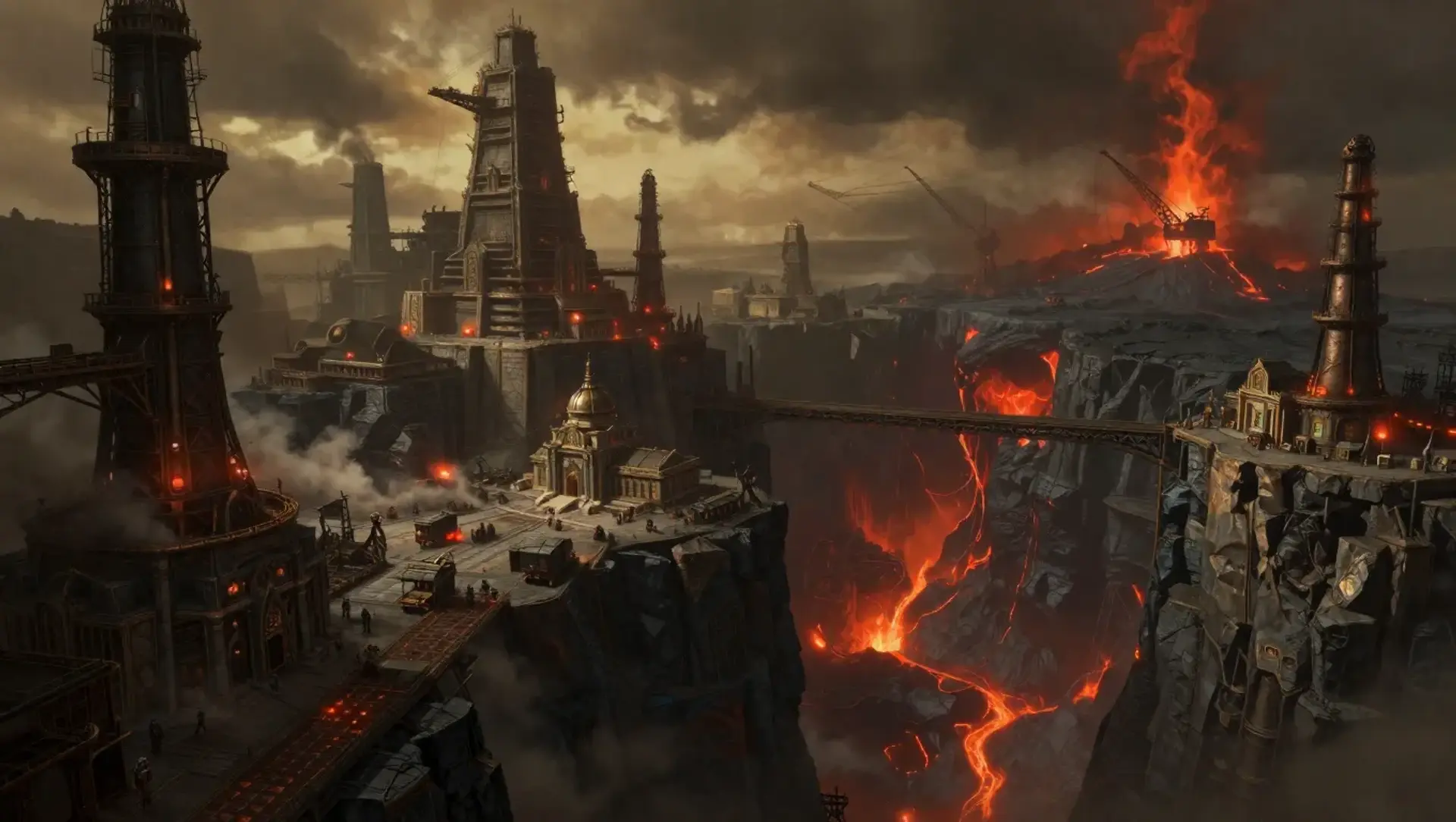
Sinter-Bench occupies a series of terraced basalt ledges cantilevered over an active volcanic blast-chasm. Heavy gantries link council halls, ore lifts, worker barracks, shrines, and refineries across the red-lit void. The town exists because the ledges sit directly above converging ore veins and an old leyline grate that drives its furnaces. Every useful road, bridge, and building is therefore also a pressure point in the realm’s industrial heart.

Industrial Council Seat & Refinery Settlement

Sinter-Bench

Where every hammerstroke is counted, and something beneath the ledges counts back.

TypeIndustrial Council Seat & Refinery Settlement
PopulationApproximately 11,400 permanent residents, including refinery workers, council clerks, guards, artisans, priests, merchants, and dependent families. During major extraction seasons, the population rises by another 1,500 to 2,000 transient miners, caravan hands, mercenaries, apprentices, and contract negotiators.
WealthSinter-Bench is wealthy in contracts, machinery, and refined materials, but unevenly prosperous. Councilors and refinery masters live comfortably, while most laborers survive on regular wages that vanish into food, rent, masks, and debt.
GovernmentIndustrial oligarchic council governed through refinery houses, appointed foremen, and standardized production law.
ReadinessSinter-Bench is well defended against raiders and poorly prepared for internal revolt. The garrison drills against sabotage twice each week, but many soldiers are tied to escort duty, strikebreaking, and protection of refinery shipments. Emergency bells are reliable, though several lower-tier crews have learned to ignore them after repeated false alarms.
Sinter-Bench occupies a series of terraced basalt ledges cantilevered over an active volcanic blast-chasm. Heavy gantries link council halls, ore lifts, worker barracks, shrines, and refineries across the red-lit void. The town exists because the ledges sit directly above converging ore veins and an old leyline grate that drives its furnaces. Every useful road, bridge, and building is therefore also a pressure point in the realm’s industrial heart.

Sinter-Bench smells of hot iron, sulfur, and wet ash. Hammers beat across the ledges from dawn until the night-shift bells, while orange light pulses through grates beneath every gantry. Fine metallic grit settles on teeth, ledgers, and windowsills. The town feels prosperous only from a distance. Up close, quotas, heat, and old grudges press against one another until every conversation seems ready to spark.

Gallery

No images yet. Click to add.

Connections

Geography

RegionThe Cinderfall Reaches, within Aethelgard’s industrial southern provinces.
ClimateHot, dry, and ash-laden, with sudden heat gusts rising from the blast-chasm. Daylight often appears copper-colored, and temperature drops sharply only during rare wind shifts from the outer plateaus.
TerrainTiered basalt shelves, vertical quarry faces, slag channels, furnace courts, narrow bridges, and a volcanic chasm crossed by cranes and suspended walkways.
Travel Links
A guarded basalt road leads north toward the Obsidian Spire.Ore lifts descend toward the lower extraction terraces and Cinderfall.A dangerous ash road runs south toward the outer refineries.Sealed maintenance tunnels connect the town to older leyline infrastructure.

Culture

Sinter-Bench praises usefulness, endurance, and measurable results. People respect anyone who can repair a cracked brace, meet a furnace deadline, or admit a mistake before it kills someone. Yet the town’s pride has a hard edge. Workers who slow production are called burdens, while councilors hide behind procedure when quotas become impossible. Mutual aid exists, but it often begins as an argument over who is responsible.

Races
DragonbornKoboldsDwarvesHumansHalf-DragonsGoblins
Religions
The Five Wyrm-Temples maintain small chapels for laborers and officials.Forge-veneration rites honoring the First Ember are common among refinery crews.Private ancestor shrines are tolerated if they do not interrupt production.
Arts & Entertainment

Music here is made from work, not ornament. Shift-drummers coordinate furnace crews, glassblowers perform controlled flame dances, and children play a game called Spanfall by balancing on marked stones beside safe gantries. The most admired artisans can make a blade sing at a precise pitch. Tavern audiences value technical mastery, endurance, and dangerous novelty more than beauty, though old workers still favor mournful songs about the Great Ember Rift.

History

Government

LeaderMaster Assessor Bék Tarsa, a careful, soft-spoken councilor whose visible flaw is paralysis under uncertainty. He delays decisions until every faction has offered contradictory evidence, then calls the delay prudence.
Industrial oligarchic council governed through refinery houses, appointed foremen, and standardized production law.
Key Laws
All Star-Sand must be weighed, stamped, and entered into a public production ledger.Unauthorized access to a leyline grate is punishable by confiscation of tools, imprisonment, and branding.Strikes are legal for one day, after which participants may be charged with obstruction of the realm’s war industry.Private armed conflict between refinery houses is forbidden within the council district.Any person who discovers a dangerous flaw in a furnace or gantry must report it before the next shift bell.
Problems
The town must choose between immediate economic collapse and a likely magical industrial disaster.

The new Star-Sand quota cannot be met without overloading the oldest leyline grate. Several councilors know this, but each fears being the first to recommend a production halt.

A labor crisis is concealing a struggle over what lies beneath Sinter-Bench.

Workers have begun disappearing from the night shifts. The official explanation blames ash poisoning, but the missing laborers were all assigned to maintenance tunnels beneath the council district.

Economy

Industries
Star-Sand refinementArcane-Steel forgingBasalt quarryingLeyline grate maintenanceIndustrial arbitration and contract enforcement
Scarcity

Fresh food, clean water, timber, and safe housing are scarce. The town can produce weapons faster than it can feed its workers, and water prices rise sharply whenever ashfall closes the southern road.

Wealth LevelSinter-Bench is wealthy in contracts, machinery, and refined materials, but unevenly prosperous. Councilors and refinery masters live comfortably, while most laborers survive on regular wages that vanish into food, rent, masks, and debt.
Exports
Star-SandArcane-SteelRefined oreTemple armamentsIndustrial tools and furnace parts
Imports
GrainFresh waterTimberMedicinal herbsCloth and leather goods

Defenses

ReadinessSinter-Bench is well defended against raiders and poorly prepared for internal revolt. The garrison drills against sabotage twice each week, but many soldiers are tied to escort duty, strikebreaking, and protection of refinery shipments. Emergency bells are reliable, though several lower-tier crews have learned to ignore them after repeated false alarms.
Fortifications
Three basalt gatehouses control access to the upper ledges and council district.Retractable iron bridges can isolate each refinery tier above the blast-chasm.The Gratewatch maintains warded shutters, firebreak channels, and emergency ropeways.Seven ballista platforms overlook the main approaches and the deepest gantries.
The Gratewatch(Approximately 420 full-time guards, supported by 900 trained refinery workers during an emergency.)

A disciplined force of refinery guards, bridge wardens, and veteran furnace crews equipped with shields, spears, light crossbows, and heat-resistant work gear. Their loyalty is divided between the council, their guilds, and the foremen who control their pay.

Law & Order

crime Level
Moderate and rising. Theft, illegal smuggling, sabotage, and assault are common around the lower refineries, while council corruption is treated as a civil dispute unless someone dies publicly.
enforcement
The Gratewatch investigates most crimes, but refinery masters control access to witnesses and records. The Bench of Measures handles contracts, weights, debt, and industrial injuries. Lower-tier workers often rely on the Redhand Compact for protection before approaching the watch.
typical Punishment
Fines, wage seizure, tool confiscation, forced labor on hazardous maintenance shifts, or brief imprisonment. Serious sabotage brings branding and exile from the Cinderfall Reaches. Councilors and refinery masters usually face loss of license rather than bodily punishment.

Calendar of Events

Visual sheet

Turn Sinter-Bench into a sheet

A high-res, share-ready sheet you can post or print.