Skip to content
Create
Qaryat al-Ramad - AI-generated fantasy Settlement

Qaryat al-Ramad

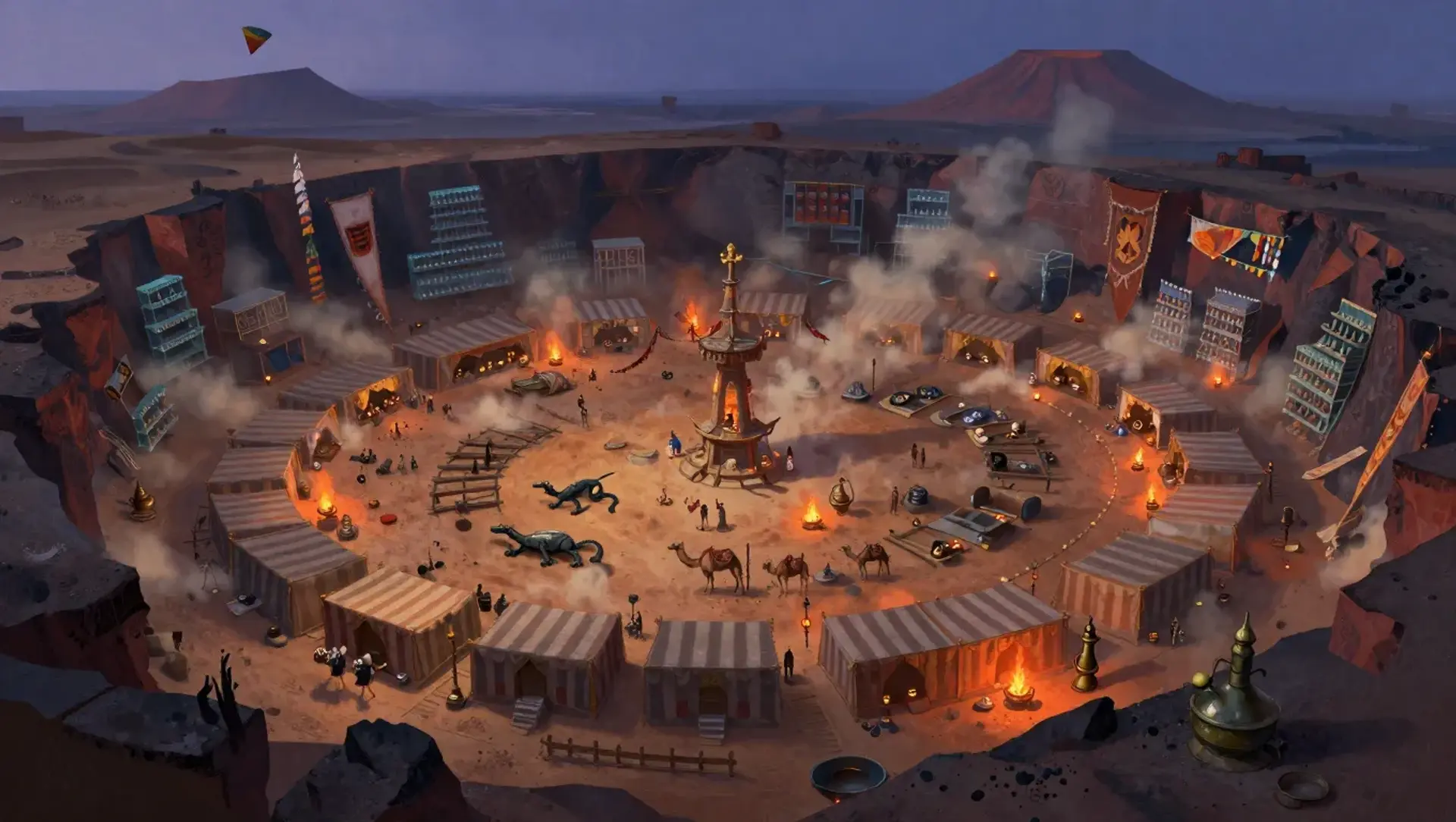
Qaryat al-Ramad is a seasonal tent city gathered inside a broad volcanic caldera where black dunes pile against sheltered stone and several deep water veins meet beneath the ash. Its pavilions form concentric rings around the barter grounds, with corrals, shrines, cookfires, and caravan yards arranged according to old migration law. It is the Ash-Dune Waste's safest place to trade, provided every visitor respects the water measures and leaves before the caldera becomes a trap.

Nomadic Seasonal Exchange Market and Migration Camp

Qaryat al-Ramad

Where every bargain begins with a cup of water and ends before the dunes move.

TypeNomadic Seasonal Exchange Market and Migration Camp
PopulationApproximately 800 to 1,500 transient residents, including desert clans, herders, caravan merchants, guides, artisans, scavengers, pilgrims, and Verulanan officials. The population changes with migration cycles, water conditions, and the success of the season's trade.
WealthModerate in trade goods, poor in permanent coin. Most transactions use gold pieces, silver pieces, measured water, animals, labor, or binding favors. The settlement's richest residents conceal their wealth in portable goods.
GovernmentSeasonal council of clan elders, merchant witnesses, and the elected Sandwarden commander.
ReadinessQaryat al-Ramad can dismantle its central market within an hour and begin a controlled migration before most attackers understand the camp is moving. Its defenders are excellent scouts and skirmishers, but clan rivalries make unified command difficult. The settlement is strongest when protecting water and weakest when several disputes erupt at once.
Qaryat al-Ramad is a seasonal tent city gathered inside a broad volcanic caldera where black dunes pile against sheltered stone and several deep water veins meet beneath the ash. Its pavilions form concentric rings around the barter grounds, with corrals, shrines, cookfires, and caravan yards arranged according to old migration law. It is the Ash-Dune Waste's safest place to trade, provided every visitor respects the water measures and leaves before the caldera becomes a trap.

Qaryat al-Ramad smells of goat hair, hot iron, cardamom, and dust baked hard beneath the sun. Hundreds of voices bargain beneath striped pavilions while bells clink from laden camels and broad-footed ash lizards. At dusk, cooking fires stain the caldera walls orange, musicians tune reed pipes, and clan banners snap in the descending wind. Everyone arrives carrying news, grievances, and a reason to leave before the dunes shift.

Gallery

No images yet. Click to add.

Connections

Geography

RegionThe eastern frontier of the Sultanate of Verulana, within the Ash-Dune Waste.
ClimateExtremely hot and dry by day, sharply cold after sunset. Ash winds can erase tracks within minutes, while elemental heat rises from buried ember-beds and thermal springs.
TerrainA broad volcanic caldera surrounded by black dunes, ashglass shelves, buried roads, ember-beds, and narrow ravines used as migration lanes.
Travel Links
The Ember Road leads west toward Verulanan border markets.The Buried Causeway runs east through the Ash-Dune Waste toward old ruins and ashglass seams.Seasonal clan trails lead north to grazing basins and south toward thermal springs.Caravan guides can reach larger Verulanan settlements, but only with sufficient water and a recognized escort.

Culture

Water is trust made visible. Every guest receives a measured cup before business begins, and wasting it is remembered longer than any unpaid debt. Pride matters, but so does practical generosity, because today's rival may be tomorrow's guide through a storm. Qaryat al-Ramad respects people who keep promises under pressure, speak plainly in council, and know when to lower their weapons before someone else does.

Races
HumansGenasiDragonbornDwarvesHalflingsTieflings
Religions
Veneration of ancestral spirits and honored clan deadElemental traditions focused on fire, air, and enduranceSmall shrines to Poreseta, the Silver Moon
Arts & Entertainment

Qaryat al-Ramad favors art that travels well. Story-singers preserve genealogies through repeated verses, while dancers use veils, bells, and hooked staffs to imitate desert beasts. Skilled leatherworkers decorate water skins with clan histories, and children compete to identify distant caravans by silhouette alone. During the market, performers trade songs for meals, shelter, or introductions. A dull performance is tolerated, but a false genealogy sung in public is treated as a serious insult.

History

Government

LeaderSafiya al-Ramad, First Keeper of the Measures, a brilliant negotiator who cannot admit uncertainty in public. She hides every doubt behind ceremony and increasingly relies on forged certainty from outdated maps.
Seasonal council of clan elders, merchant witnesses, and the elected Sandwarden commander.
Key Laws
Water is measured publicly, and tampering with a cache is punishable by exile.Weapons may be carried, but drawing one inside the barter rings requires a witnessed challenge.No clan may claim a spring, market ring, or migration trail permanently.A guest who accepts water is owed a hearing before being judged.Breaking a sworn trade agreement requires compensation in goods, service, or blood-price.
Problems
The camp may be forced to migrate early, abandoning trade and exposing thousands of people to the open waste.

Three water caches are producing bitter, metallic water, and Safiya refuses to move the camp because doing so would reveal that the official migration map is wrong.

A dispute over one caravan could become a violent contest for control of the entire market.

The Ashglass Consortium has offered private security contracts to several clans, creating armed groups that answer to merchants instead of the council.

Economy

Industries
Seasonal livestock exchangeCaravan brokerageBeast trainingLeatherworking and weavingDesert navigationRelic salvage
Scarcity

Reliable water, healing magic, worked timber, and high-quality metal are scarce. A healing potion or a sound waterskin can command more practical value than a jeweled ornament during the final days of the market.

Wealth LevelModerate in trade goods, poor in permanent coin. Most transactions use gold pieces, silver pieces, measured water, animals, labor, or binding favors. The settlement's richest residents conceal their wealth in portable goods.
Exports
Trained desert beastsWoven goat-hair clothLeather water skinsAshglassRare desert herbsScavenged relics from buried roads and ruins
Imports
GrainManufactured metal toolsWeaponsArmorSaltWaterSpell components

Defenses

ReadinessQaryat al-Ramad can dismantle its central market within an hour and begin a controlled migration before most attackers understand the camp is moving. Its defenders are excellent scouts and skirmishers, but clan rivalries make unified command difficult. The settlement is strongest when protecting water and weakest when several disputes erupt at once.
Fortifications
The caldera's narrow entrances can be blocked by woven barricades and overturned supply wagons within minutes.Scout pickets patrol the rim on trained ash lizards and desert camels.Subterranean water caches are hidden beneath false wells and guarded by rotating clan watches.Signal kites, bronze mirrors, and drum codes warn the camp of raiders, storms, or approaching beasts.
The Sandwardens(Approximately 90 trained defenders, supported by 200 to 300 clan riders when the camp faces an existential threat.)

The Sandwardens are a rotating force of mounted scouts, beast-handlers, and caravan guards drawn from every major clan. They defend the camp, escort vulnerable travelers, and enforce the limits of the water law. Their authority lasts only while the current market council recognizes their commander.

Law & Order

crime Level
Moderate. Theft, fraud, beast rustling, and sabotage are common during the market, while murder is rare but politically explosive.
enforcement
The Sandwardens investigate publicly, question witnesses in the open, and use clan guides to track suspects. They prefer restitution and exile over imprisonment, since the camp has little permanent infrastructure for holding prisoners.
typical Punishment
Repayment at triple value, public water service, loss of trading privileges, or temporary exile into the Waste. Cache tampering and deliberate poisoning can result in permanent outlaw status.

Calendar of Events

Visual sheet

Turn Qaryat al-Ramad into a sheet

A high-res, share-ready sheet you can post or print.